Skip to content

Henrico legislators tout 'historic progress' with passage of housing, energy bills; call on Spanberger to pass cannabis bill
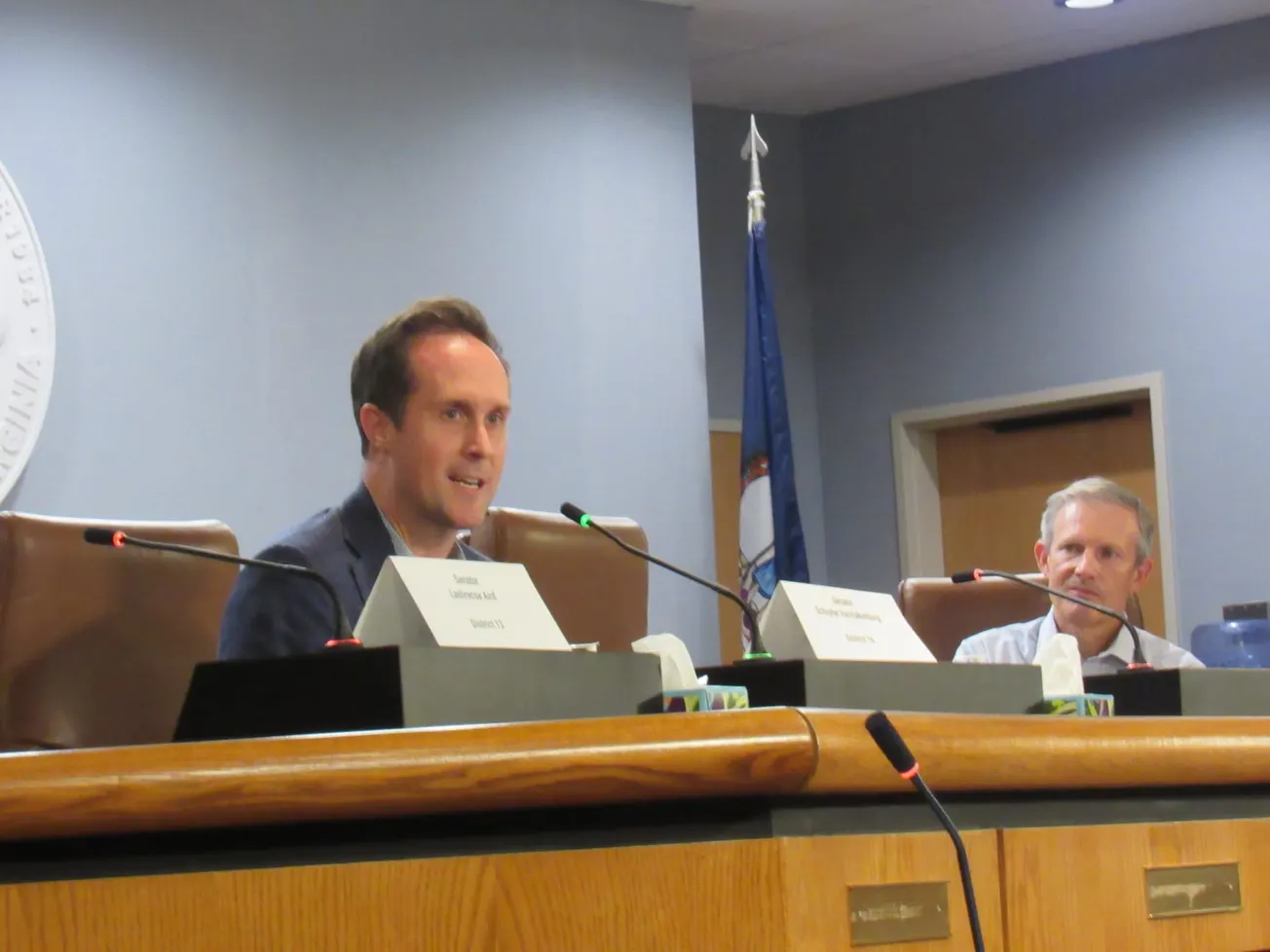
Virginia State Sen. Schuyler VanValkenburg (left) and Del. Rodney Willett at a Henrico town hall May 13, 2026 (Liana Hardy/Henrico Citizen)

Six of the seven state legislators representing parts of Henrico County, all Democrats, held a town hall May 13 to update community members about how bills from the General Assembly would impact Henrico.

The legislators said that they “delivered on affordability” this session, prioritizing several bills aiming to reduce housing and energy costs. Sen. Schuyler VanValkenburg said he continued his focus on increasing housing supply in the state to combat rising housing prices, passing bills that create state loans for mixed-income housing and require localities to allow manufactured housing.

While housing is a statewide issue, rising costs have particularly hit Western Henrico, VanValkenburg said, because although Henrico continues to build more housing, other nearby localities have not kept up the pace.

“I can go to any part of Western Henrico and find someone talking about the housing crisis. It could be the people in the neighborhood next to me, in working-class apartments that are paying $2,500 to $3,000. It could be the folks on River Road who are trying to downsize and can’t, or families in Short Pump who aren’t able to afford living here anymore,” he said. “Our dirt in Henrico continues to skyrocket because no one else is building.”

VanValkenburg also carried bills requiring greater use of solar energy from state suppliers like Dominion Energy, and Del. Destiny LeVere Bolling passed several bills aiming to improve electric grid utilization in the state.

Legislators also highlighted legislation aimed to improve local and state healthcare; Del. Rodney Willett passed bills that add more oversight over Virginia’s nursing homes – following several highly-publicized incidents of abuse and neglect at nursing homes in Henrico. Sen. Lashrecse Aird also passed a bill that would discontinue the use of PFAS chemicals at Richmond International Airport in Eastern Henrico.

Aird also made a public plea to Gov. Abigail Spanberger to approve her bill to establish and regulate a retail market for marijuana in Virginia.

“This is a public safety matter and a health matter. If you go into any of these vape shops or smoke shops and take a look around, there are products being sold illegally, and also they are harmful,” Aird said. “Until we have an adult marketplace, a regulated marketplace, we continue to expose individuals to unsafe products.”

“We’ve worked on this bill for so long,” said Willett. “We’ve been waiting for four years – four years ago, we legalized recreational use of marijuana, and we’ve been sitting here.”

Henrico business owner Evan Somogyi, who runs Kulture Smoke and Vape Shop in Western Henrico, said that illegal shops and products have overrun the local market and made things worse for both legal businesses and customers.

“I’m one of the good guys, and I don’t think it’s fair,” he said. “There are so many good guys in the commonwealth, and we're all being punished because of all bad actors. The black market is running Virginia right now.”

Along with the cannabis bill, Henrico legislators also expressed support for a bill co-patroned by Bolling that would have repealed existing prohibitions on collective bargaining for public employees in the state – but was vetoed by Spanberger last week. 

In a May 15 statement posted to her social media, Bolling said she was “furious” about the governor’s veto of the collective bargaining bill.

“This was a moment that demanded courage from our governor, and instead, workers got a veto,” she wrote. “This veto was wrong. And Virginia workers will not forget it.”

Henrico legislators at a May 13 town hall. (Liana Hardy/Henrico Citizen)

Legislators also discuss Flock cameras, data centers, and technology in schools

Audience members questioned legislators on several hot-button issues in the region, including the increasing number of Flock cameras. Henrico County currently has 109 Flock cameras throughout the county, all of which are license-plate readers, according to Henrico Police Chief Eric English.

The Virginia General Assembly is in “a very weird place politically” on the issue of Flock cameras, said VanValkenburg, and has failed to produce any productive legislation on Flock license plate readers because of split opinions. Due to a current lack of state regulation, the issue has fallen more on localities, said Bolling.

“We’re seen cases where Flock cameras have saved lives, they’ve found kidnappers and all the other things. But there’s still so many questions of, is this the right thing? And if so, where do you put them? And what are the guardrails around them?” she said. “Please attend our board of supervisors meetings, write comments, if you have strong feelings either way.”

Audience members also asked legislators about their views on data centers, with data center projects popping up across the Richmond region.

Sen. Lamont Bagby said he believes data centers are “necessary” but should be regulated in terms of where they are located and how much they are contributing in taxes.

“We support economic development. We don't support the continuance of providing those tax incentives where they're not needed. We're interested in making [data centers] pay their fair share. You're going to see those steps being taken in this budget,” Bagby said. “At first, we did provide tax incentives initially to lure data centers in, but sometimes you can lure some things to the house, and then there's too many of them.”

Discussions also have continued at the General Assembly about what role the state should play in potentially limiting or regulating the use of technology in schools, said VanValkenburg. Spanberger recently signed legislation that would strengthen Virginia’s phone ban in schools, but many school divisions, including Henrico Schools, have students use laptops in class – even in elementary school.

VanValkenburg, who is also a history teacher at Glen Allen High School, said that next year’s General Assembly session will focus heavily on this issue.

“I always tell parents in my classroom, the one-to-one laptop initiative and technology in the classroom, it’s a lot different now than it was five years ago, because social media and AI are different than they were five years ago,” he said. “So there’s got to be a reassessment about technological use in general for best practices for student achievement.”


Liana Hardy is the Citizen’s government and education reporter. Support her work and articles like this one by making a contribution to the Citizen.

Comments