
Virginia localities raise $119M for school construction through targeted sales tax
Lawmakers advanced proposals this year to give counties and cities statewide the option to levy the tax
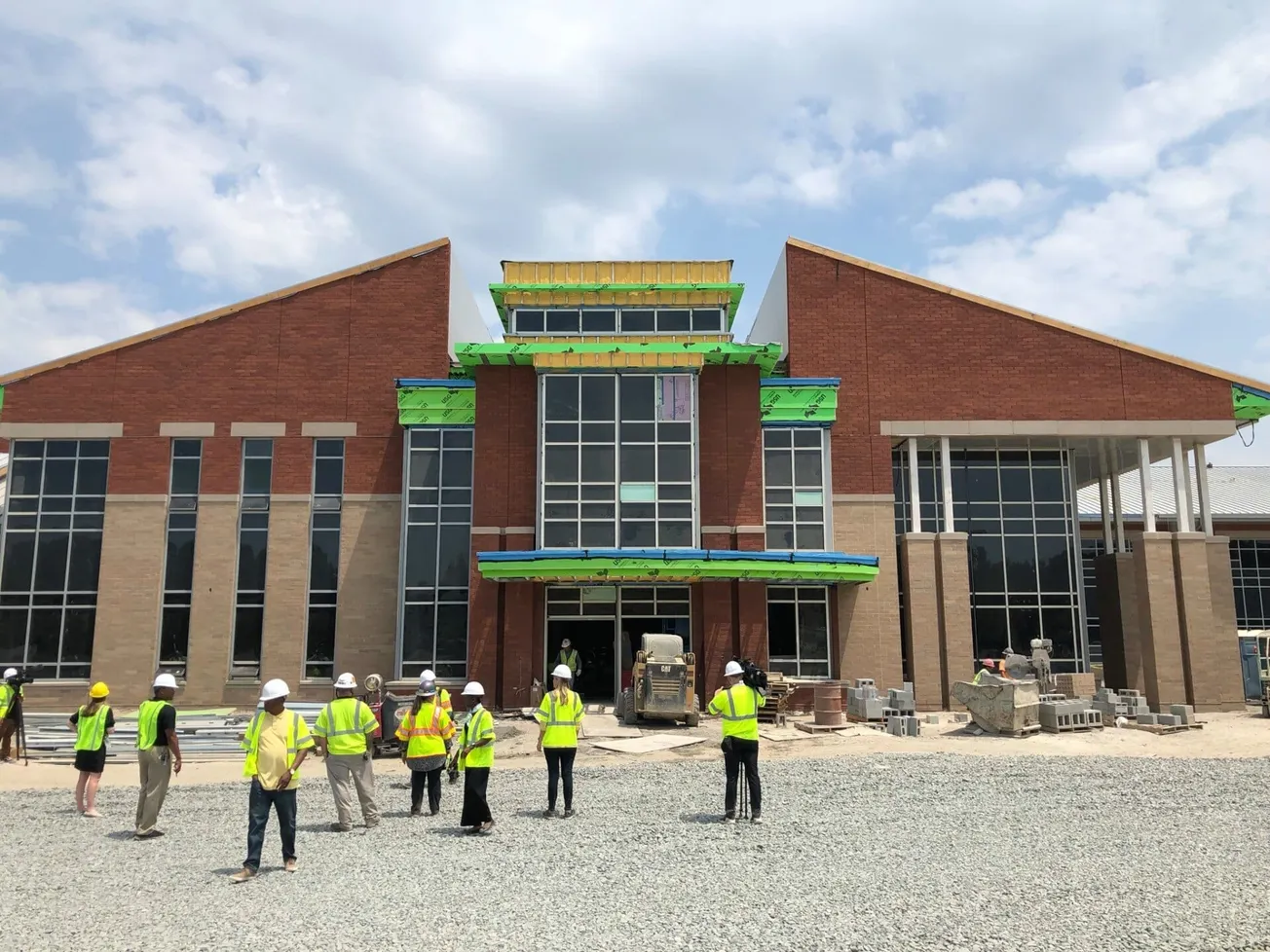
Over the past five years, several Virginia localities have generated just $119 million total from a targeted sales tax to fund school construction and maintenance, fueling calls to expand the tax statewide.
When lawmakers first established the tax in 2021, a state survey showed over half of Virginia’s schools were more than 50 years old, with replacement costs in the billions.
House Education Committee Chair Sam Rasoul, D-Roanoke, said the totals further emphasize the need for the commonwealth to do more to address aging buildings.
Rasoul, along with Sen. Jeremy McPike, D-Prince William, proposed legislation to allow all counties and cities in the state to impose an additional local sales and use tax, at a max rate of 1%, strictly for public school capital projects. Both measures were ultimately added to their respective chamber’s budgets and is part of the combined budget legislative negotiators released Friday.
Rasoul said that while $119 million is a small fraction of what the commonwealth needs, “it’s a good start to be able to help localities have another tool in their toolbox.” He continued, “The commonwealth needs to do more to help with school construction, but one thing we can be doing is at least help some localities help themselves.”
Voters in each locality would decide through a referendum whether to adopt the additional local sales tax to fund school construction and maintenance.
Virginia’s localities are only allowed to exercise powers granted by the legislature, including changing sales taxes. As a result, only nine localities — including the city of Danville and the counties of Charlotte, Gloucester, Halifax, Henry, Mecklenburg, Northampton, Patrick, and Pittsylvania — can currently levy a 1% sales tax for school projects.
Danville has collected the most, with $30 million in three years, according to data from the Department of Taxation obtained through a FOIA request. In fiscal year 2025, tax revenue for school construction and maintenance varied unevenly across the nine localities, with significant per-student variation.
Danville, which has levied the special tax for three years, generated the highest tax revenue per student enrolled in the district, at approximately $2,171.
That’s more than four times the per-student amount in Pittsylvania ($478). Most other localities collected between roughly $950 and $1,260 per enrolled student, while per-resident (total population) contributions ranged from $63 to $276.
McPike said that the state’s revenue figures highlight the urgent need for school construction funding and the proposal’s key feature—local option through voter referendums.
“The core of the issue is that we are billions behind, and we still have kids in classrooms with leaky roofs and air conditioning that often breaks,” McPike said, adding, “and we know that overall localities need ways to pay for school construction, and the beauty of it is, this is one thing they have the option to do.”
“I know (the proposal) in discussions of including it in the budget, which is great, because ultimately this also has to go to voters if the locality decides to move forward with it, and the voters get to decide—it’s the purest form of democracy.”
These figures indicate the amount of school tax revenue each area can generate based on its local tax base. The per-student numbers reflect the total tax revenue divided by the number of students enrolled in each district, rather than the amount spent or paid by any individual student or resident.
In a recently adopted resolution, the Charlottesville City School Board said it supported efforts to expand the 1% sales tax for school construction.
The board said in its resolution that utilizing a local option sales tax allows Charlottesville to diversify revenue streams and reduce the burden on local property owners by sharing school infrastructure costs with visitors and commuters who utilize the city’s commercial corridors.
Members added that if the city gains this legislative authority, the school board encourages “collaborative efforts with the city council to advance a local referendum, allowing the citizens of Charlottesville the opportunity to invest directly in the future of our children, our schools, and our community’s infrastructure.”
Del. Cia Price, D-Newport News, has lobbied for such a measure in her home district, but the effort wasn’t successful. Price emphasized the importance of funding safe, modern school facilities in Virginia, amid federal funding cuts.
Price said she would love for Newport News students to have schools like those she has toured elsewhere, where the environment is “welcoming and encouraging for creativity and not oppressive and dark and hard to breathe.” She added, “I think all Virginia students deserve that.”
The school tax proposal’s supporters are eager for the state budget to be finalized. To place the referendum on the November ballot, lawmakers must adopt the language by June 29 so it can be properly advertised. State law requires referendums to be ordered at least 81 days before the election.
Senate Majority Leader Scott Surovell, D-Fairfax, is cautiously supportive of the idea that a local sales tax has become a useful tool for certain localities that dislike raising real estate taxes, and acknowledges it has generated a “decent amount of revenue” for school construction.
Surovell stressed, however, that Virginia faces a multi‑billion‑dollar backlog in school construction and maintenance. He argued that a Northern Virginia casino, which he proposed, could have been one of the “easiest” ways to close part of that gap, but Gov. Abigail Spanberger vetoed it.
The proposal would have removed the Fairfax County Board of Supervisors’ authority to advance a casino referendum, Spanberger explained in her veto statement.
The Senate and House are set to return to Richmond Monday to deliberate the budget, which will take effect July 1.
Virginia Mercury is part of States Newsroom, a nonprofit news network supported by grants and a coalition of donors as a 501c(3) public charity. Virginia Mercury maintains editorial independence. Contact Editor Samantha Willis for questions: info@virginiamercury.com.