Some former felons, eligible to vote this summer, are in registration limbo
While a pending constitutional amendment to automatically restore voting rights to people with felony convictions who have served their sentences awaits Virginians’ approval or rejection in a statewide referendum later this year, thousands of people who should never have lost their right to vote in the first place remain in limbo during this summer’s congressional primary elections.
After a court ruled earlier this year that certain felony convictions should not have resulted in loss of voting rights, Virginia’s Department of Elections had until June 1 to comply with the order to rectify the situation.
Instead, on June 1, the department sent an advisory to election officials indicating that they should not deny peoples’ applications but to not fully process them either.
“Please note that records available through the felon search may have been affected by the updates to the Agency Felony Prohibited table. ELECT will provide additional guidance on reviewing felony history soon,” the June 2 advisory obtained by The Mercury read.
The crux, Nolef Turns director Sheba Williams said, is that some people with felony convictions who should be eligible to vote this summer are nervous to register because it is a crime to lie on applications.
“When they get to their application, there is a question about whether or not you have been convicted of a felony,” Williams explained.
For people whose felonies don’t count towards prohibition of voting, they are unsure if they should check the box or not. So, with early voting for the congressional midterms beginning June 18, relevant applicants are stuck waiting as the process plays out.
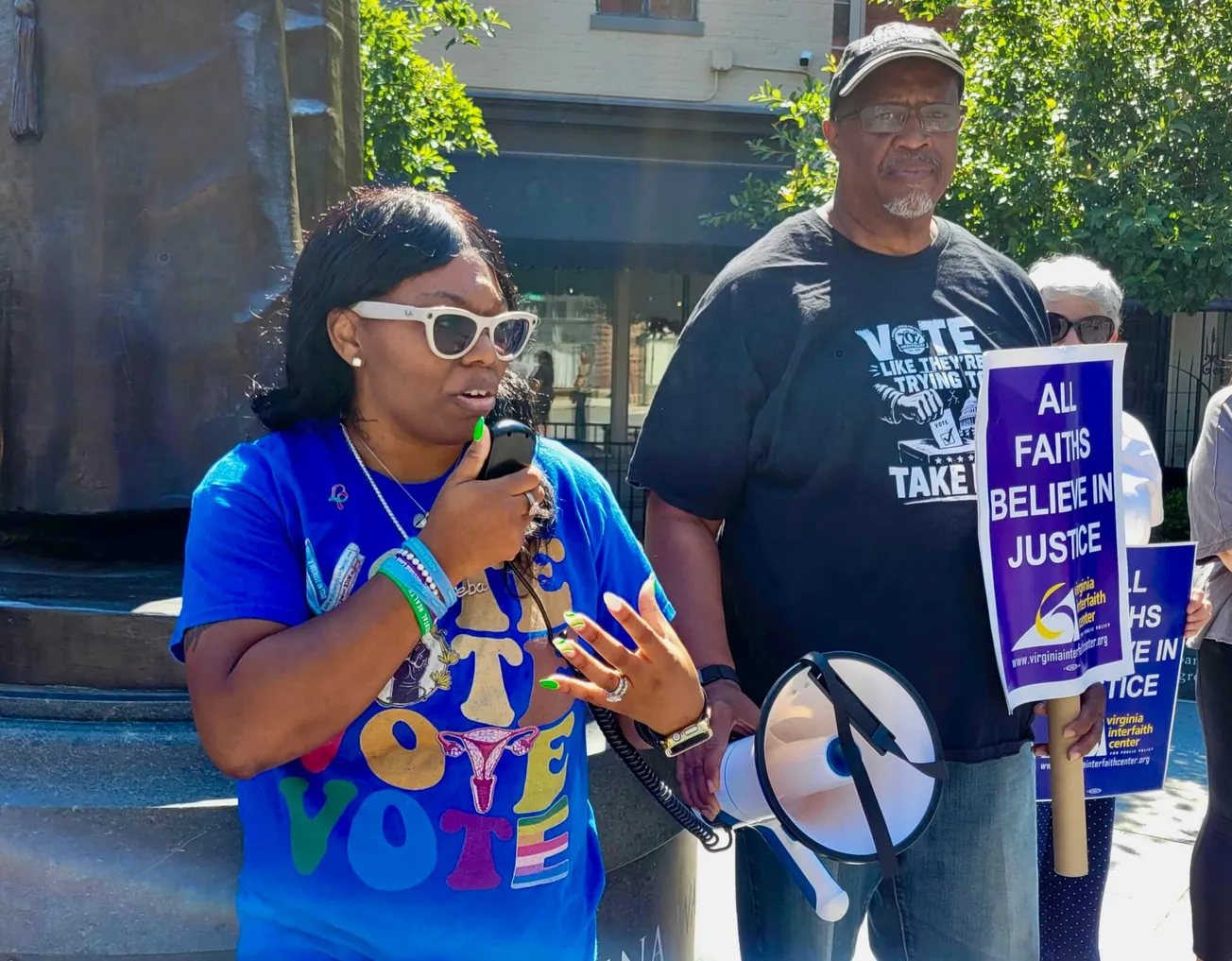
Williams organized a press conference in Richmond on Wednesday along with the Virginia Interfaith Center For Public Policy and Bridging the Gap Virginia. Each group has advocated for criminal justice reform and voting rights laws and some have helped returning citizens navigate post-incarceration life.
Quadaire Patterson and his wife Santia Nance attended the event. The couple has ramped up their criminal justice advocacy, starting when Patterson was still incarcerated. Though he’s helped shape laws before and after his 2024 release, he has still been unable to vote.

“As I think back to my crime when I was 19 years old, I had no awareness of the political systems that are in play,” Patterson said.But now at 38, having spent about half of his life behind bars, Patterson said he understands how important it is to engage in democracy. The importance of the right to vote hits closer to home now that he and his wife have a 14-month-old daughter, Trinity.
“If we ever want to repair this broken system, if we ever want to repair our broken communities, we have to fully allow returning citizens to participate in the civic processes,” Patterson said.
The case at the core of the matter stemmed from a series of 1870 laws called the Readmission Acts, which allowed former Confederate states to re-enter U.S. Congress after the Civil War. The laws had barred states from constitutionally disenfranchising people other than those convicted of crimes considered common law at the time.
“We create crimes every year but we never revisit and say ‘what did we get wrong?’ and I think that is a barrier too,” Williams said.
Following the suit, Attorney General Jay Jones’ office has been drafting lists of crimes that could be applicable to the ruling.
Congressional primaries will take place Aug. 4 and the deadline to register to vote in those elections is July 24.
Virginia Mercury is part of States Newsroom, a nonprofit news network supported by grants and a coalition of donors as a 501c(3) public charity. Virginia Mercury maintains editorial independence. Contact Editor Samantha Willis for questions: info@virginiamercury.com.