Tech, staff, stability key to new Glen Allen group home for adults with intellectual disabilities
The single level, four-bedroom Houston Home on a quiet street in Glen Allen under two shade trees with its white siding and green shutters looks like any of the other well-tended and manicured houses in the quiet neighborhood.
But from the front door, touches show the new developmental disabilities community home on Long Meadow Drive in Glen Allen is specially designed to serve and provide peace, comfort, stability, empowerment and belonging for four men with intellectual disabilities and the staff who care for them.
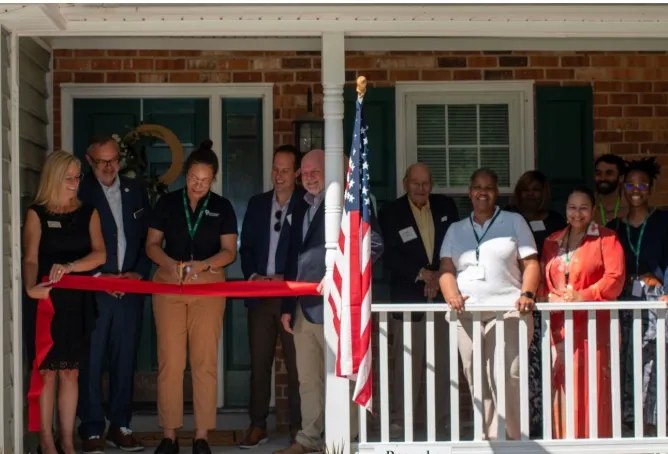
That was the description of the house given in a prayer provided at the recent ribbon cutting at HopeTree's Houston Home by the organization’s chaplain.
HopeTree Family Services is supported by the Virginia Baptist Children’s Home & Family Services Foundation and is a mission partner of the Virginia Baptist General Association of Virginia.
The Houston Home is named for a family whose son benefited from HopeTree’s services and to honor the family that supported the organization with a donation. The home is one of the social service agency’s 17 adult group homes across the state.
“When you drive by, you won't know it's a group home. We're just part of the neighborhood,” said HopeTree President and CEO Jon Morris at the Houston Home's recent ribbon cutting.
HopeTree bought the one-level home to specifically serve residents who are aging.
“One-story living is much safer for our residents,” Morris said. “We have increased technology in the home, which will be an increase of value added when it comes to safety for our residents. It's four bedrooms, which means we can give a lot more personalized care and attention to our residents. So I think it's a wonderful community, a wonderful neighborhood, a wonderful location, and our residents are just going to love it.”

Cameras and badge readers on doors and medicine cabinet keep a record of residents, staff and medical services provided.
Inside, the renovated home includes a typical and up-to-date bathroom, kitchen, dining room, living room and back porch, with wide door jams that accommodate wheelchairs, as well as an office for staff to get work done and a medical room for disbursing medications.
“HopeTree passes 30,000 meds every single month,” Morris said. “Our med closets are secure and are accessed by a card reader. Also, our eMAR, which is our medication record, all of that is electronic. And so, this home really does have the latest technology.”
The homes are staffed 24 hours a day, 365 days a year. Every HopeTree home has a staff supervisor as well as a regional manager. Morris estimated that costs run $400,000 a year to run the home with food, electricity, transportation costs, staffing and training.
For residents, a sense of belonging
At one time the state segregated adults with intellectual and developmental disabilities into training centers or hospitals. Those hospitals were closed as they were found to have violated the Americans with Disabilities Act and the Olmstead decision, which require states to provide services in integrated, community-based settings.
The main idea behind group homes for adults with intellectual disabilities is to provide a safe, home-like residence in a regular neighborhood. They replace large institutions with community living, offering professional daily support while helping residents build independence, social connections and a sense of belonging.
A dozen or so non-profit, for profit and faith-based organizations in the area provide housing for developmentally disabled adults. Henrico Area Mental Health and Developmental Services also provides residential services to adults age 18 and older that are diagnosed with intellectual disabilities.
“We are a highly regulated organization, so a lot of training goes into what we do as well as the support staff,” Morris said. “It was a significant renovation cost to the interior of the home, but we plan to be here for the long-term and that was a much better way to go about it with finding the one-story home.”
Some residents are very independent. Some residents will either cook for their housemates, or they'll help with the cooking. Some will hold jobs and some require a little more support. Numerous residents go to group day services provided by other organizations that may include job training services and community coaching.
“There's a variety of services for our residents, like transportation. We don't provide all of them, but we do partner with other organizations that provide those services,” Morris said.
With staff, residents plan their activities for the week, considering events in the area to attend like concerts, movies or bowling and put it to a vote.
Most all HopeTree Houston Home residents are from the Richmond area, living closeby so their family members can come see them. Many residents will go home with their families on certain weekends and accompany them to outings like church.
“Proximity is very important,” Morris said. “That's why we are spread out across the state, so we can help serve the individuals in those communities.”
Since the July 14 ribbon cutting, three residents have moved into the Houston Home, with officials reporting a positive transition.
"They are settling into their new home well, and our Developmental Disabilities Ministry team continues to support them as they adjust," Denashia Dunnaville, HopeTree Family Services marketing and communications manager wrote in an email. "We're excited to see them enjoying the space and the opportunities the home provides."
There is currently one remaining opening at the Houston Home for an adult with intellectual and/or developmental disabilities
Dina Weinstein is the Citizen’s community vitality reporter and a Report for America corps member, covering housing, health and transportation. Support her work and articles like this one by making a contribution to the Citizen.