Skip to content

SCC considers making data centers shoulder more of the cost of transmission lines
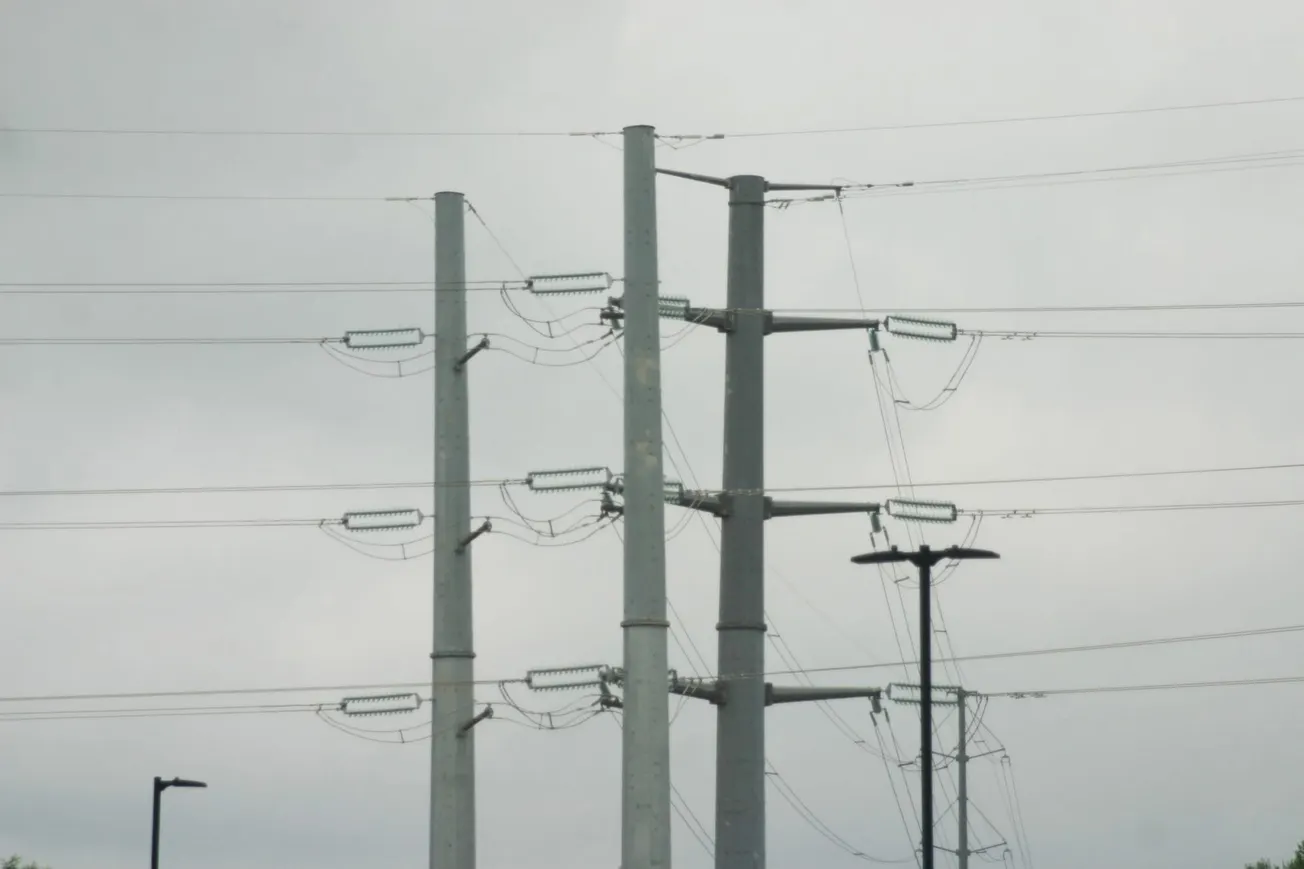
Transmission lines for a data center in Prince William County, VA. (Photo by Shannon Heckt/Virginia Mercury)

Consumer advocates have joined Gov. Abigail Spanberger’s administration to argue that high-load customers like data centers should pay for the high-voltage lines that solely serve them, a stance now playing out as part of Dominion Energy’s case with state regulators to determine how power line costs should impact customers’ utility rates. 

Transmission lines serve as a power highway that enable more power to be carried further between power sources and substations. Smaller distribution lines may split off of them, like exit ramps. 

In Virginia, the cost to build transmission lines appears on ratepayers’ monthly utility bills as the Rider T-1 portion of the bill. 

Dominion wants to recover about $1.5 billion in costs from customers to build out the transmission grid. The utility first told the State Corporation Commission that this would lead to an estimated increase of $2.90 per month for the typical household that uses 1000 kilowatt hours over the same period.

In its rebuttal testimony filed June 30th, Dominion refined that number to .94 cents per month, based on new calculations of returning customers that purchase their power through retail choice and the SCC’s newly-established 85% transmission demand charge for high-load customers via a GS5 rate that kicks in next year.  

The governor’s office, through testimony Chief Energy Officer Josephus Allmond filed on July 9, pushed for data centers to pay for all transmission lines that would otherwise not be built “but for” the existence of new data centers.

It is up to the commission to determine if that cost allocation calculation method should be implemented.

“Any network or substation upgrades that would not have been triggered but for a large load customer should be assigned directly to that customer, shielding regular Virginia families from subsidizing commercial extension,” Deputy Chief Energy Officer Louise White also testified on Tuesday.

The data center industry opposes this plan, and representatives have repeatedly said they already pay transmission infrastructure costs legally allocated to them by the commission. 

A lawyer for Microsoft, which has over a dozen data centers in Virginia, argued Tuesday before the SCC that the commission specially ordered this Rider T-1 case following the biennial rate case for Dominion. The request for the special case did not include language to examine changing the methodologies for assigning costs, they said. 

The lawyer also argued that the three-month process would not be enough time to examine those potential changes.

During the General Assembly’s regular legislative session, Sen. Russet Perry, D-Loudoun, sponsored a bill directing the SCC to examine how the plan for data centers to pay for transmission lines that serve only the industry. 

While the bill ultimately did not make it out of the House, the senator testified on Tuesday in Dominion’s current case in support of the “but for” method.

“When the need for new transmission infrastructure is driven by the extraordinary electric demand of data centers, the costs of that infrastructure should be assigned to the customers creating that need,” Perry said.

In Dominion’s 2024 integrated resource plan, the company outlined 203 transmission projects. SCC staff reported in that plan that “data centers are the single highest driver of the company’s load forecast and the single highest driver of transmission projects and their associated costs” according to testimony from Andrew T. Boehnlein, a manager in the State Corporation Commission’s Division of Public Utility Regulation. 

The governor’s office also recommended that data centers have the option to pay upfront for transmission project costs as another means to shield ratepayers. They also requested a dedicated technical conference to address underlying transmission planning and operations challenges.

“This would allow stakeholders and the Commission to thoroughly examine current transmission planning processes, evaluate holistic cluster study approaches, and explore ways to integrate cost-effective technologies like grid-enhancing technologies and advanced conductors into transmission planning,” White said.

The commission will consider Dominion’s proposed recovery costs and the potential change to cost allocation methodology over the coming weeks. So far, commission staff has not argued against it in the utility’s filings. 

The SCC has until Aug. 1 to make a decision.


Virginia Mercury is part of States Newsroom, a nonprofit news network supported by grants and a coalition of donors as a 501c(3) public charity. Virginia Mercury maintains editorial independence. Contact Editor Samantha Willis for questions: info@virginiamercury.com.

Comments