Million-dollar federal contribution will help connect Sandston neighborhood to public water
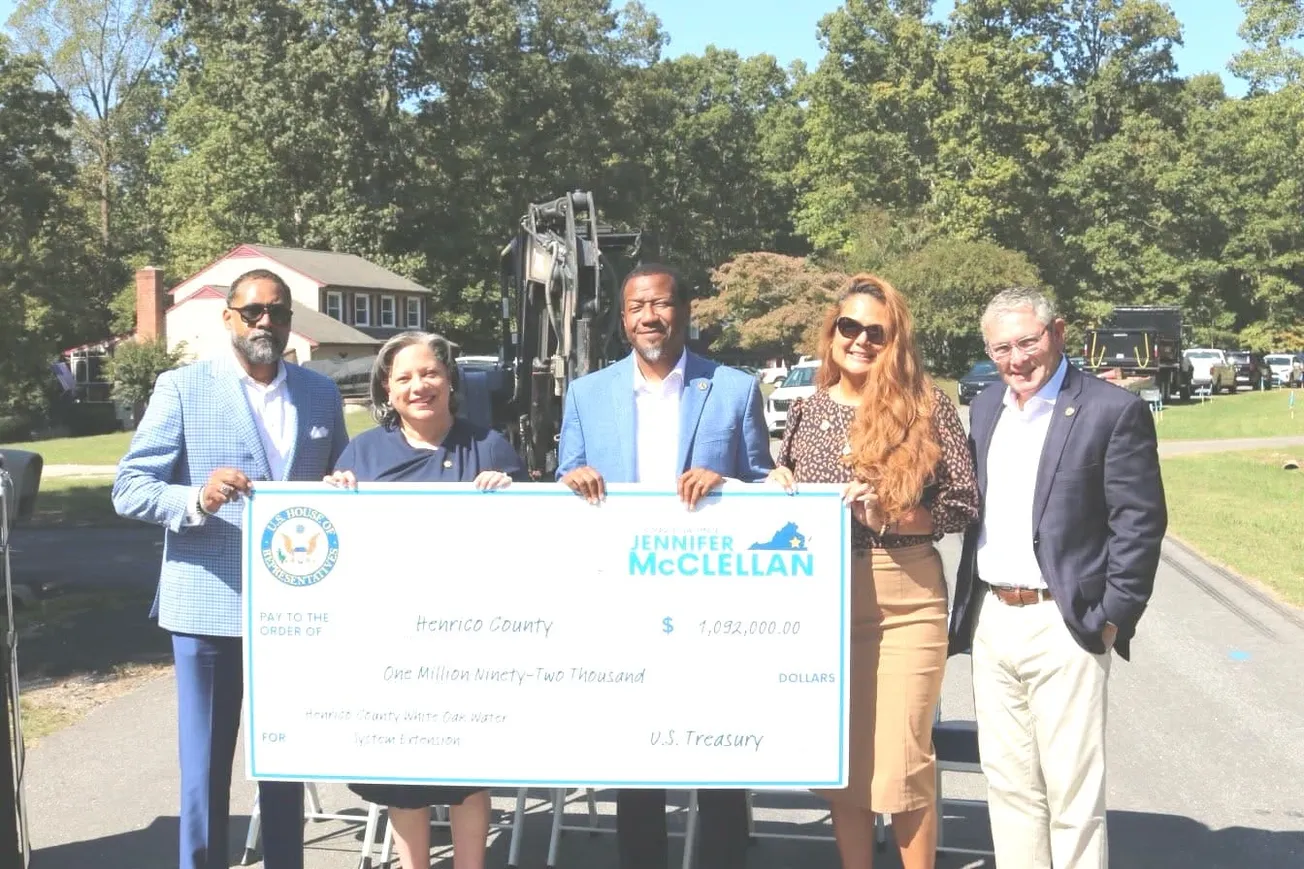
A few residents of an Elko neighborhood looked on Oct. 8 as U.S. Representative Jennifer McClellan (D-04-VA), alongside county officials, announced a $1.092-million federal investment to extend public water services to their Cedar Ridge neighborhood.
The funds will help the county install more than 5,000 feet of water lines to serve the neighborhood's 41 customers, connecting them to the closest existing water line about 1,000 feet away. Residents currently use private wells and will have the option to continue doing so if they choose.
The federal funding, secured by McClellan through the congressional appropriations process, contributes to a project to extend county water service within the White Oak Swamp watershed.
“Phase one of this project will provide about 4.5 miles in this initial project of the overall 35 miles when it is completed to make sure that we are providing public water services and removing potentially contaminated private water, so that the residents here know the water that they drink is safe and clean,” McClellan said.
The project is part of Henrico County's ongoing effort to expand access to public water and sewer service for residents who currently rely on private systems. Officials already have spent more than $64 million in American Rescue Plan Act funding to extend water and sewer to a number of portions of the county and expect all of those ARPA projects to be completed within the next year, Henrico Public Works spokesperson Beth Sanmartin told the Citizen.
Those projects to date have provided about 400 customers with the option to connect to county water and sewer lines, with connection costs covered by the county.
There are about 6,500 customers in Henrico currently served by private wells and about 8,500 using septic tanks, she said.
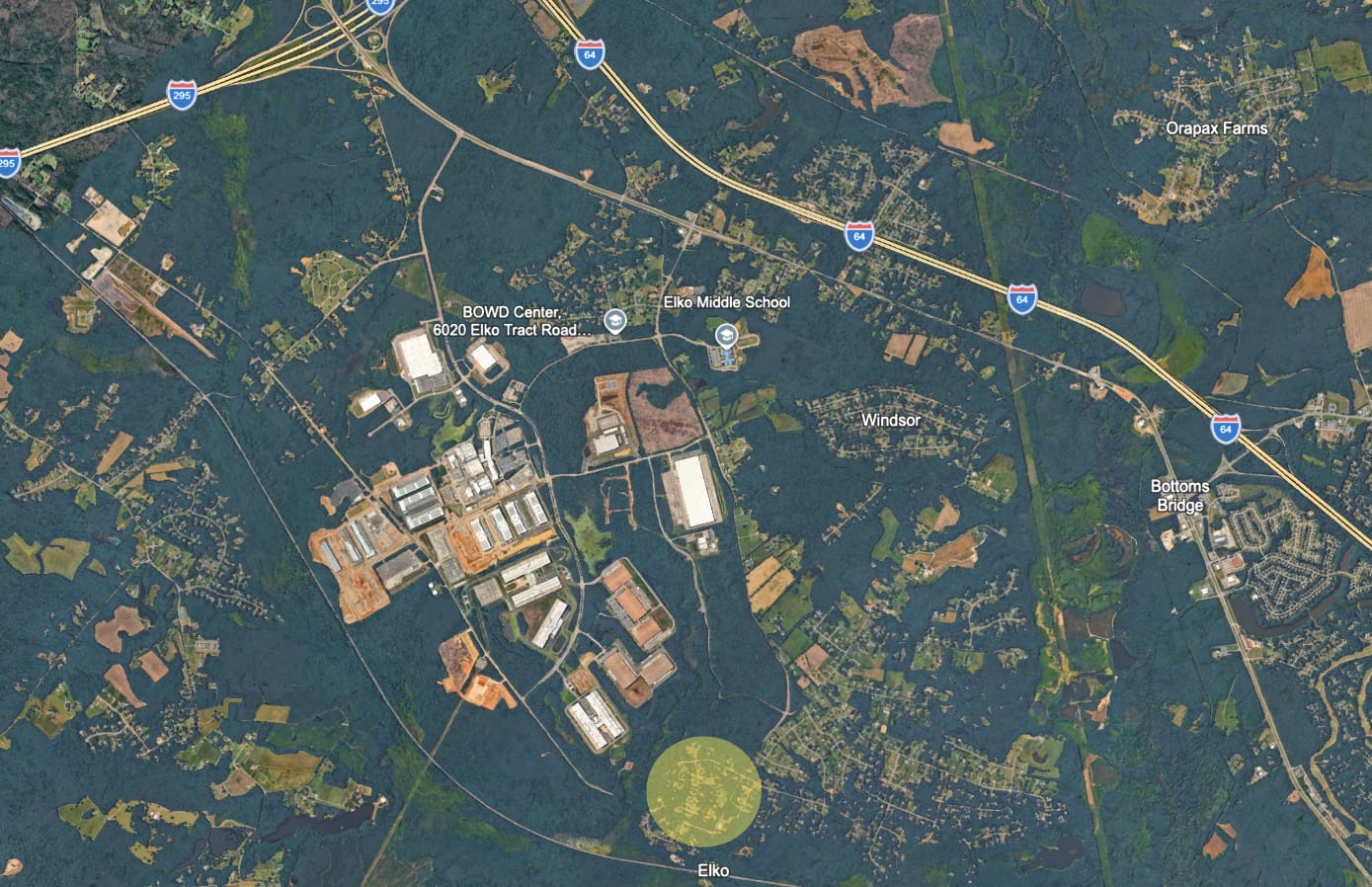
Cedar Ridge residents rely on private wells in Eastern Henrico, where PFAS (per- and polyfluoroalkyl substances) contamination detected in the Chickahominy River Basin and White Oak Swamp Creek has raised concerns about groundwater quality.
PFAS chemicals are used in firefighting foams and numerous industrial and consumer products and considered "forever chemicals" because they break down very slowly in the environment. Certain PFAS have been linked to increased cholesterol levels, reduced immune responses, liver effects and increased risks of some cancers.
In 2022, Henrico County reported the presence of PFAS in 30 residential wells near Sandston. The county has a free program to test private wells for the chemicals and as of 2025, collected nearly 400 PFAS samples from 335 residential properties.
The county also has provided free whole-house filtration systems to residents whose wells exceeded applicable PFAS thresholds. According to a July 2026 report from the National Association of Clean Water Agencies, Henrico had installed 28 such systems, with four additional installations scheduled, and was covering their ongoing maintenance costs.
A definitive source of PFAS contamination detected in the Chickahominy River Basin and White Oak Swamp Creek has not been established, though firefighting foam used at Richmond International Airport and at the former Virginia Air National Guard location there are considered possible sources. The airport is facing a Nov. 15 deadline to develop and present to the Virginia Aviation Board a plan for discontinuing the use of PFAS firefighting materials by Jan. 1, 2030.
Cedar Ridge connections will take 18 to 24 months
The new federal funding builds upon the county's ongoing connection efforts and will cover connection fees for 41 homes along Red Coach Lane, where last week's announcement took place, and the entire Cedar Ridge neighborhood.
“We recognize that some residents may prefer having their own well, and that's fine,” Varina District Supervisor Tyrone Nelson said. “Nothing wrong with that. Our goal is not to take that choice away – it is to make sure that you have another option in case you need it, because of the challenges of ongoing maintenance, drought conditions or other conditions such as potential groundwater contamination.
“This $1 million investment builds on the work underway and it brings us yet another step closer to ensuring that residents have access to safe, clean and dependable drinking water. These investments are also part of our county's broader commitment to making sure that our public water system is not only accessible, but it is reliable and resilient for all of our residents.
County officials estimated the connection to Henrico’s water for the Cedar Ridge residents would take between 18 months and two years.
“At the end of the day, this is about more than pipes and infrastructure. It's about giving families peace of mind, protecting public health, and making sure that every resident has access to safe, reliable drinking water,” Nelson said.
Eastern Henrico residents who are interested in knowing whether or not they fit in the area that is targeted of concern for needing water filtration or to receive Henrico County water connections should reach out to Nelson's office at (804) 501-4208, or email him directly at varina@henrico.gov, he said.
PFAS and data center concerns
Residents watching the announcement expressed a mix of relief and skepticism regarding the timeline and broader environmental changes.
Red Coach Lane resident Randall Rains, a retired wastewater plant employee, said he has dealt with low well water levels during droughts for decades and welcomed the new option.
“During summers, during droughts, we don't have enough water that goes into our wells,” said Rains. “It gets too low for the pump to pump, so you do without water. My neighbor Terri [Myers], she ran out of water, and I would use my deep well when I had it put in, put a garden hose over here and fill her well up where she could bathe and drink and do everything.”
Rains estimated that the project would take longer than the officials’ timeline.
“We’ve been waiting a long time for this. Now that they're bringing water and they're saying they're going to waive some fees, that is outstanding. Now I'm wondering and waiting to hear when the county sewer is going to come.”
Myers said she had been advocating for county water service and expressed concerns about the large, nearby data center development’s impact on water.
“We're very conservative. We're just a two-person household, and not watering lawns, not washing cars, not doing any of these things, and we're constantly running low on it, so I've been advocating and trying to get someone's ear in the county for a long time it's been about a five-year long effort.”
Both said one advantage of having a well is not having to pay the water bills. Homes relying on private wells also were not subject to the same public water service interruption during the January 2025 regional water crisis.
“I might regret when I see the first bill, but no, this is a good thing,” Rains said. “I am curious to see how much the data centers, right over across that little creek right nearby, how much the demand is for water that they will require, and we'll see how the county meets that. They say they will, so we'll see.”
Data centers in Henrico only account for about 3% of the county's entire water usage, according to Henrico Public Utilities Director Bentley Chan.
“We do not anticipate anyone seeing any impact to their water supply due to data centers, as all data centers in Henrico are closed-loop systems as now required by Henrico County code,” Sanmartin told the Citizen.
(County zoning regulations generally require data centers to use closed-loop or recycled-water cooling systems, although alternative systems may be approved through a provisional use permit, according to county code.)
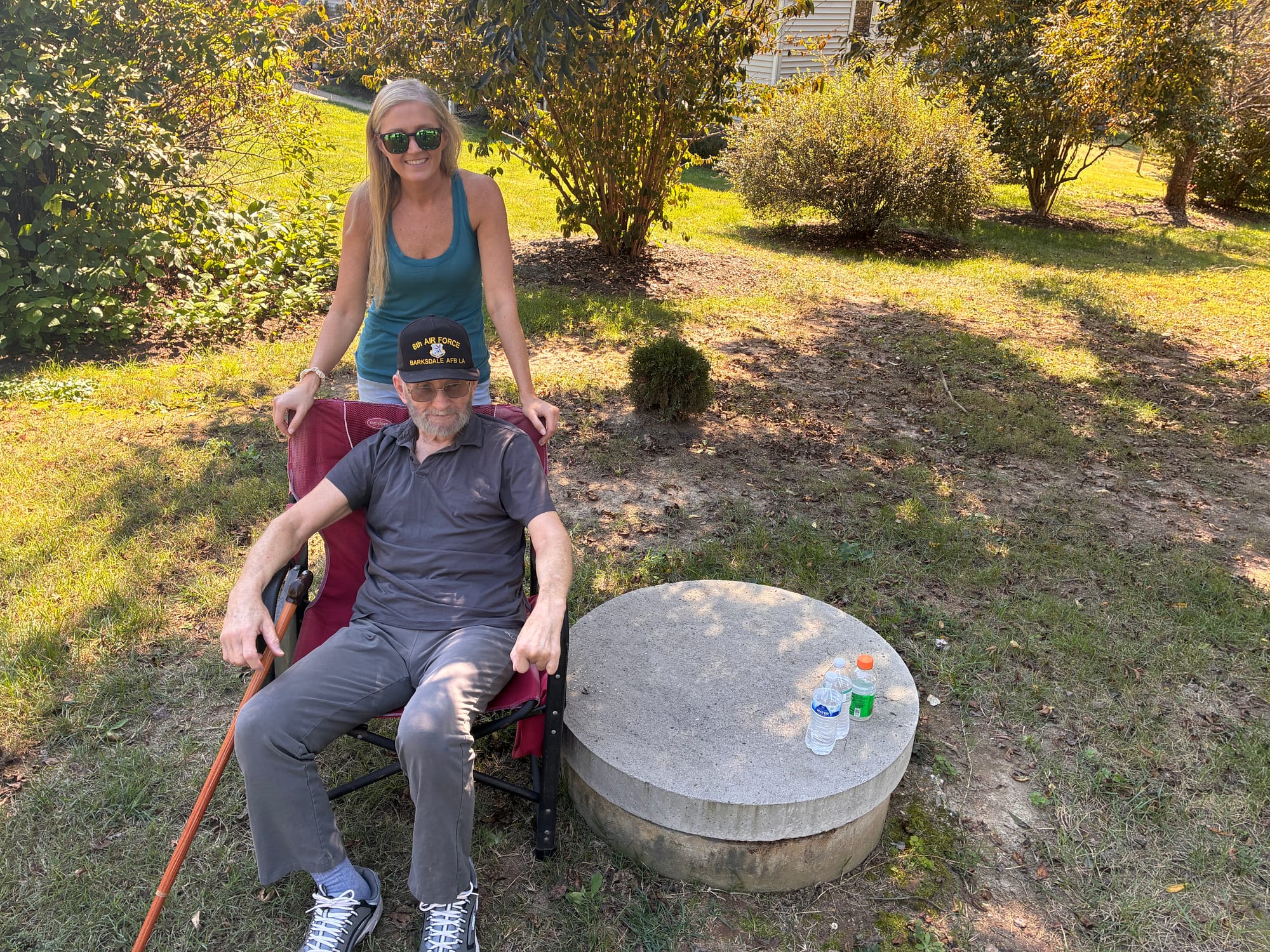
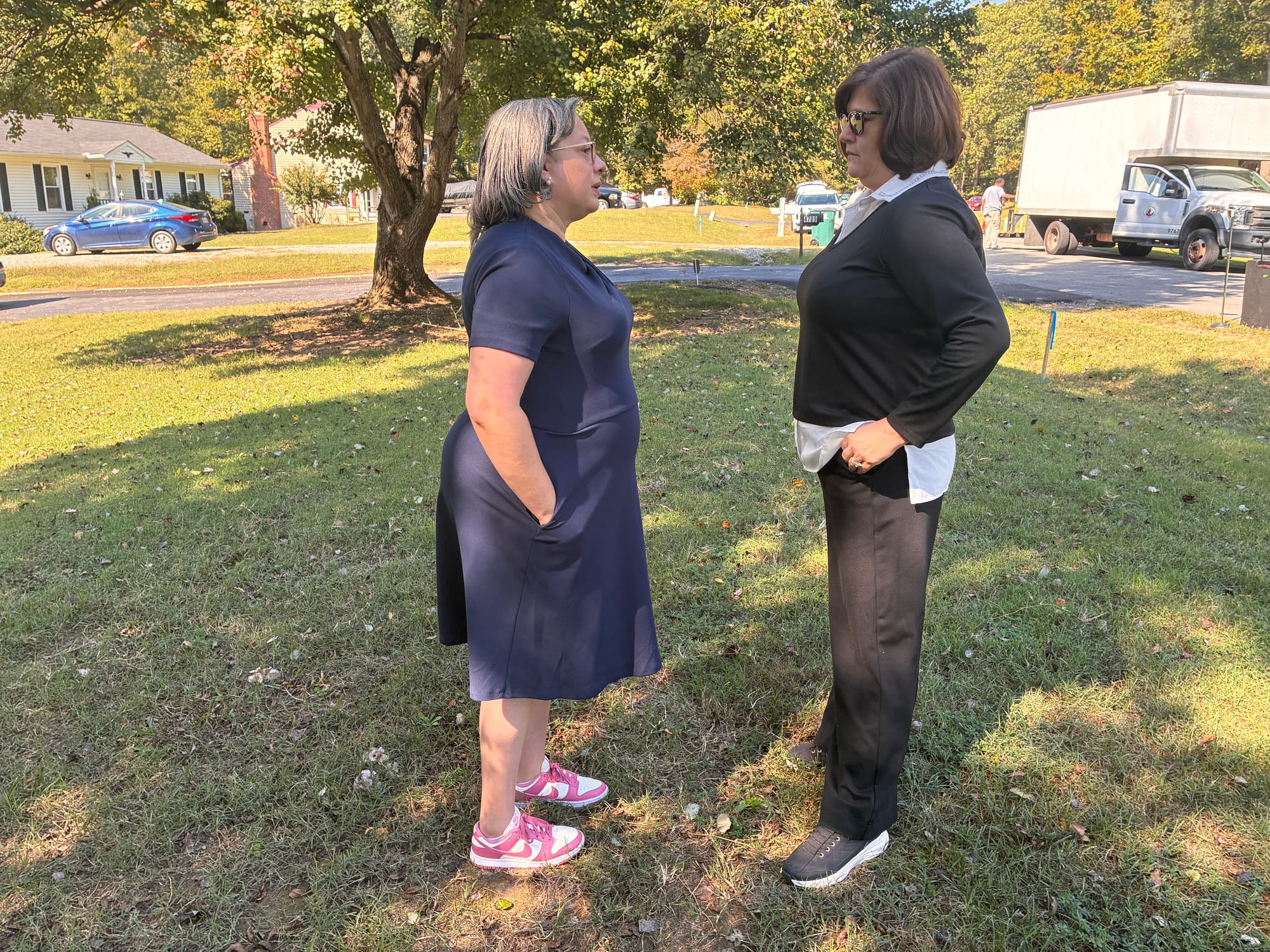
Red Coach Lane resident Randall Rains (left) sat in the shade next to his covered well to watch officials announce federal contributions to a Henrico County water connection for his and his neighbors' homes. His daughter, Laura, stood behind him. Above, at right, Red Coach Lane resident Terri Myers (right) spoke with U.S. Representative Jennifer McClellan. (Dina Weinstein/Henrico Citizen)
Myers acknowledged the efforts of Chan, who she said responded to her appeals and helped put the project in motion.
She also noted that the neighborhood is deeply affected by the data centers being built around it.
“They're pretty much encompassing the neighborhood, and so to get an artesian well, which the well companies told me may or may not solve the problem, was about $20,000,” said Myers. “I just could not understand how we couldn't have access with all of this [building] on Technology Boulevard happening, why would we not have access as longtime residents here in this area to county water?
“It's not a cheap thing. It's a basic necessity of life. We live in a county. We pay taxes in the county.”
Myers said she believes the data centers have not only changed the rural nature of the neighborhood but have lowered their property values with the bright lights and an audible hum.
Down the street, another neighbor (Sean Long) expressed confidence in the water filtration systems installed in homes in the neighborhood, mixed with concern about them freezing during the winter, along with skepticism that the neighborhood would receive county water connections in the timeline expressed by officials.
Long said that the massive data center construction has increased noise, traffic and light pollution, which he believes may affect property values and local water demand.
“We moved to the country for a reason, and it's not the country anymore,” Long said. “You can't walk on this road anymore. People come flying down through here, 50, 60 miles an hour when it's 35 miles per hour here. We've been trying to get the county to change it to 25 to put speed humps in. They won't do that,” Long said.
“At 4 o'clock in the morning, I'm letting dogs or something out, and that's all you can hear is the hum of the data centers. Before, you could just see stars. You can't see that anymore. It's all just white light. Looks like the wintertime when it snows, and you walk outside, and you got like that pinkish haze. You might see the moon. You ain't gonna see no stars.”
Dina Weinstein is the Citizen’s community vitality reporter and a Report for America corps member, covering housing, health and transportation. Support her work and articles like this one by making a contribution to the Citizen.