Changes to federal benefits this week, with more on the way, likely to impact hunger in Henrico
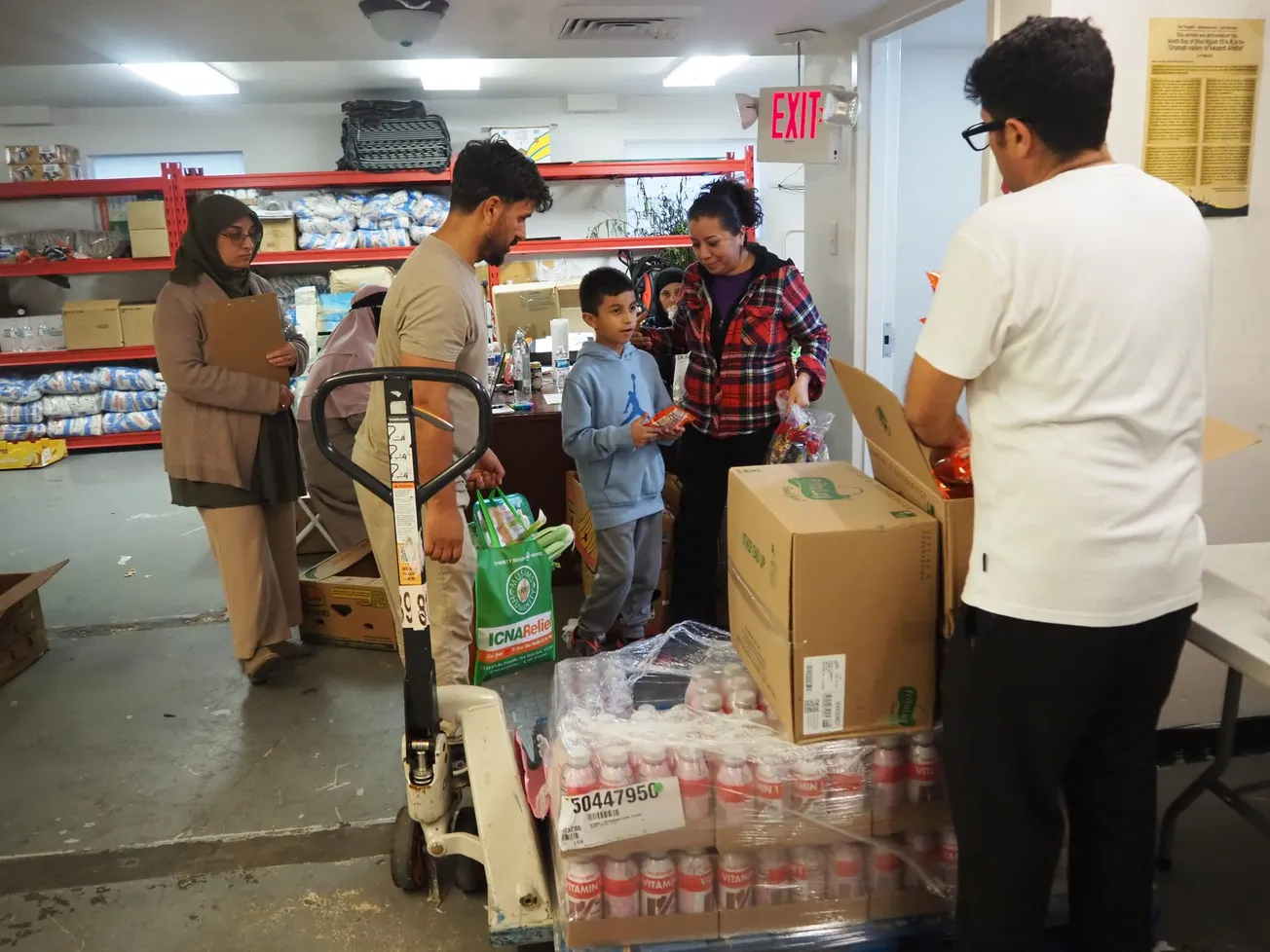
Suhail Udin and his family made it into the United States last year just before the doors to refugees slammed shut. Born and raised in Afghanistan, he and his family fled to Pakistan when the Taliban took over the country, and Udin burned all evidence of academic and professional achievements. Those credentials would have resulted in extreme harm or worse.
A refugee resettlement agency helped the Udin family with housing in Henrico County where his children enrolled in schools.
Here, the 36-year-old father of five started from scratch. His English skills helped him get a job working nights at an Amazon warehouse, where he earns an additional $2 an hour for the night shift to help support his family.
At first, Udin, his wife and five children received government benefits to help them buy food – $640 a month from the Supplemental Nutrition Assistance Program (or SNAP) to buy groceries and $723 a month from Temporary Assistance for Needy Families (or TANF), which helped him with rent and other expenses.
But suddenly the support for food and expenses stopped. He and his family also stopped qualifying for health insurance through Medicaid, adding another concern.
“My salary is not enough,” Udin said.
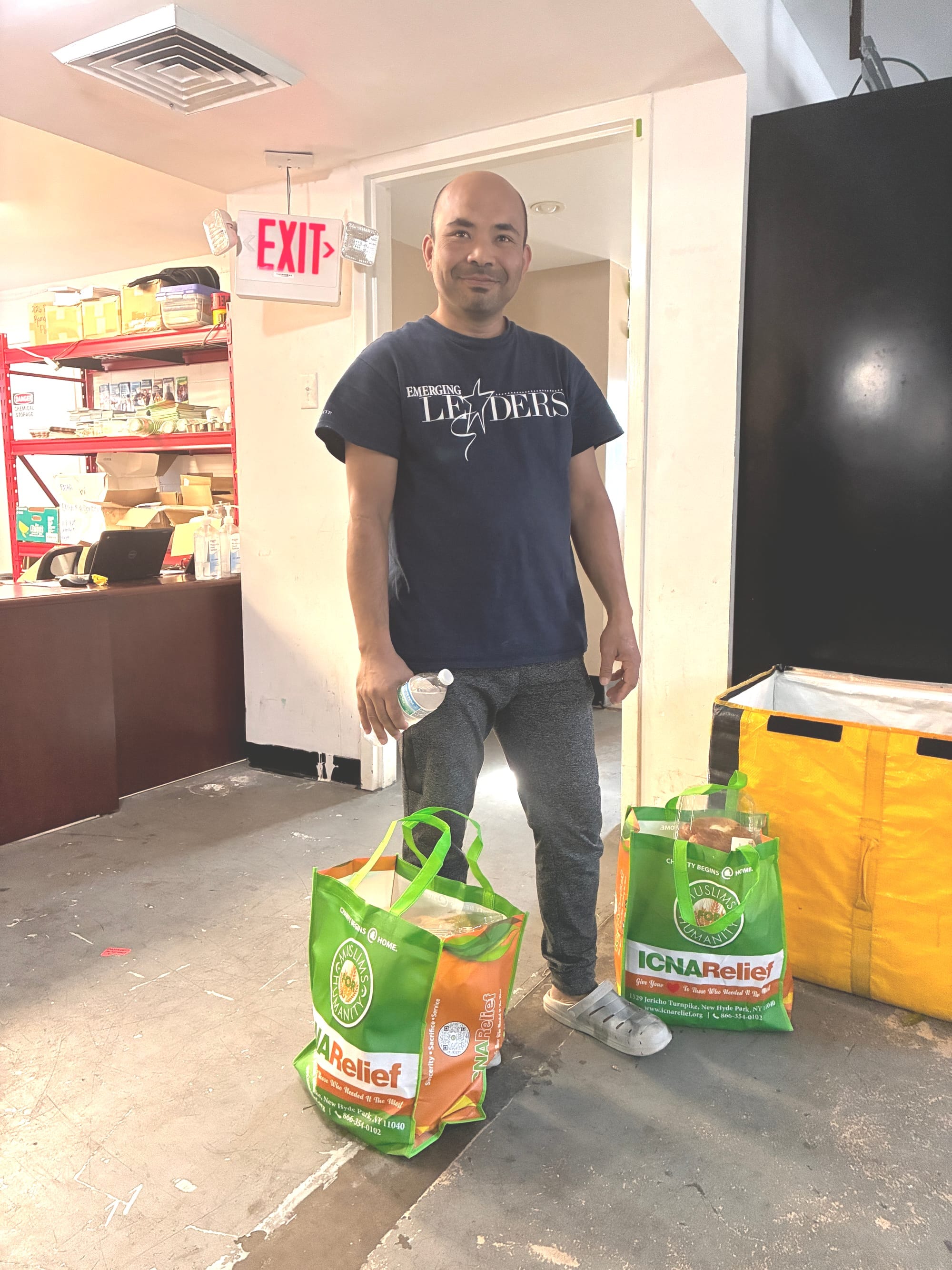
His family’s sudden need for food led him to drive around to food pantries around Henrico County like ICNA Food Relief on Lafayette Avenue, the LAMBS Basket at Oakview Avenue and Commonwealth Catholic Charities at Rolling Hills Drive where he was able to receive diapers for his baby.
“It's too much stress. It takes time. And some of the food we can't eat,” Udin said of the unfamiliar foods provided at some food pantries that, on occasion, have been expired.
H.R. 1 – the "One Big Beautiful Bill Act" signed into law July 4, 2025 by President Donald Trump – immediately narrowed SNAP eligibility for refugees and several other categories of lawfully present immigrants, though recipients began losing benefits later in 2025 and into 2026 as the changes were implemented.
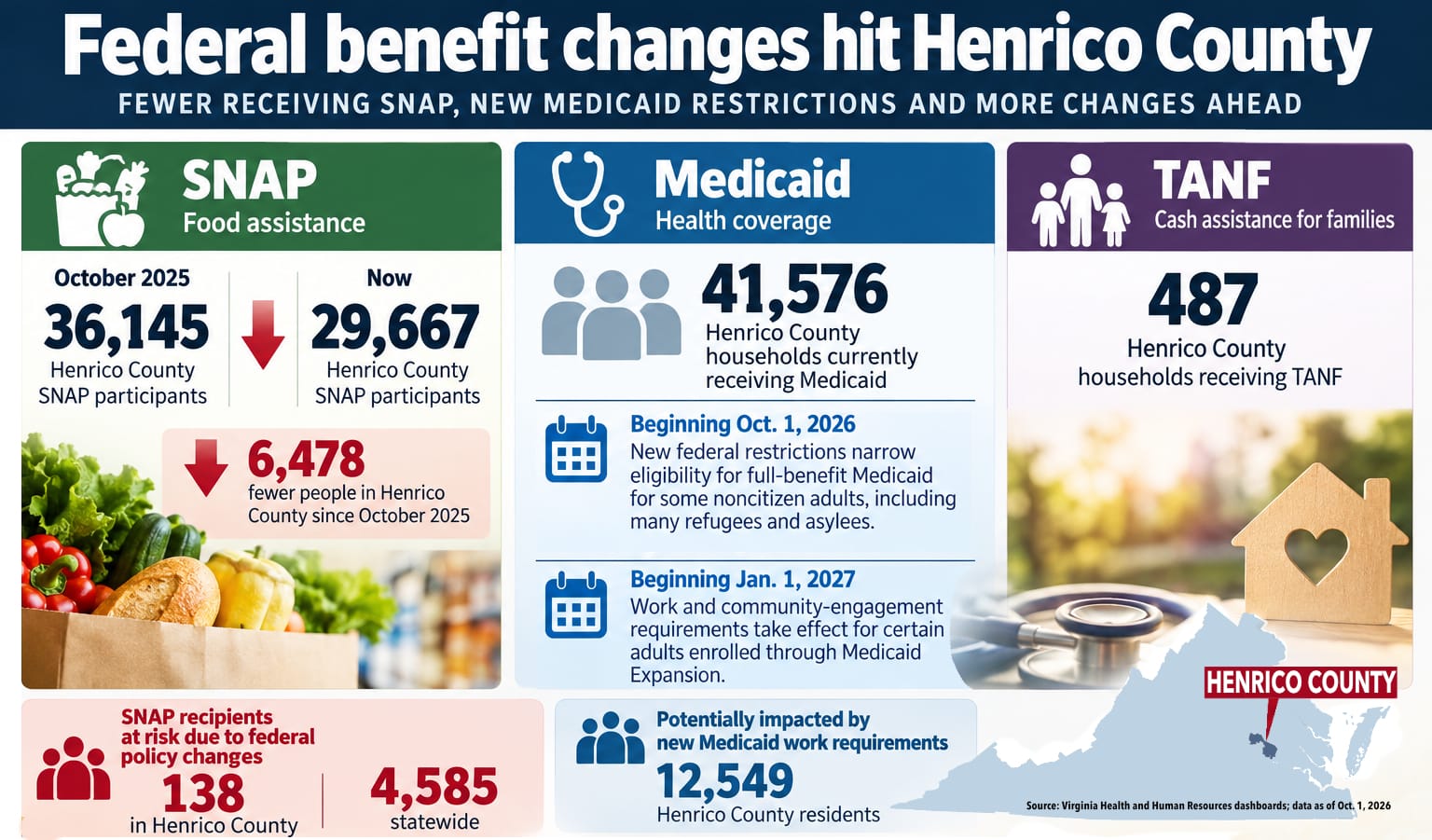
Henrico SNAP participants decline by nearly 6,500
But Udin and other refugees are not the only people losing SNAP. Nationwide, SNAP participation fell by more than 5 million people (nearly 13%) between July 2025 and June 2026, according to the Center for Budget and Policy Priorities.
Udin is among a statewide SNAP caseload that has fallen by more than 110,000 people since July 2025, according to CBPP data. The think tank showed the number of Virginians receiving SNAP declined from more than 816,500 in July 2025 to about 704,500 in May 2026.
Last October in Henrico County, 36,145 people benefited from SNAP in some way.
Now the Virginia Health and Human Resources dashboard shows a drop of 6,478 people in the total number of SNAP participants, with 29,667 current SNAP recipients in Henrico County.
“New work requirements and immigration rules started for SNAP in November and December of 2025,” said Freddy Mejia, who spoke to the Henrico Citizen earlier this year in his former role of policy director at the Commonwealth Institute for Fiscal Analysis. He is now Virginia's deputy secretary of finance.
“So, certainly, we can assume that some, if not a good chunk of those individuals, were impacted by these changes.”
The Virginia Health and Human Resources dashboard shows 41,576 Henrico County households currently receiving Medicaid benefits. An estimated 138 SNAP recipients in Henrico County may be at risk of losing benefits due to recent federal policy changes, with 4,585 at risk statewide, according to the dashboard.
New federal restrictions that took effect Oct. 1 narrowed eligibility for full-benefit Medicaid for some noncitizen adults. Nonpregnant adults generally must be U.S. citizens or nationals, lawful permanent residents, Cuban-Haitian entrants or migrants from nations covered by the Compact of Free Association to qualify.
The change makes several other categories of lawfully present immigrants, including many refugees and asylees, ineligible for full-benefit Medicaid based on those statuses.
Starting Jan. 1, 2027, Virginia will implement federal work and community-engagement requirements for certain adults enrolled through Medicaid Expansion.
Another Virginia Health and Human Resources dashboard lists the number of Henrico County residents potentially impacted by new Medicaid work requirements as 12,549.
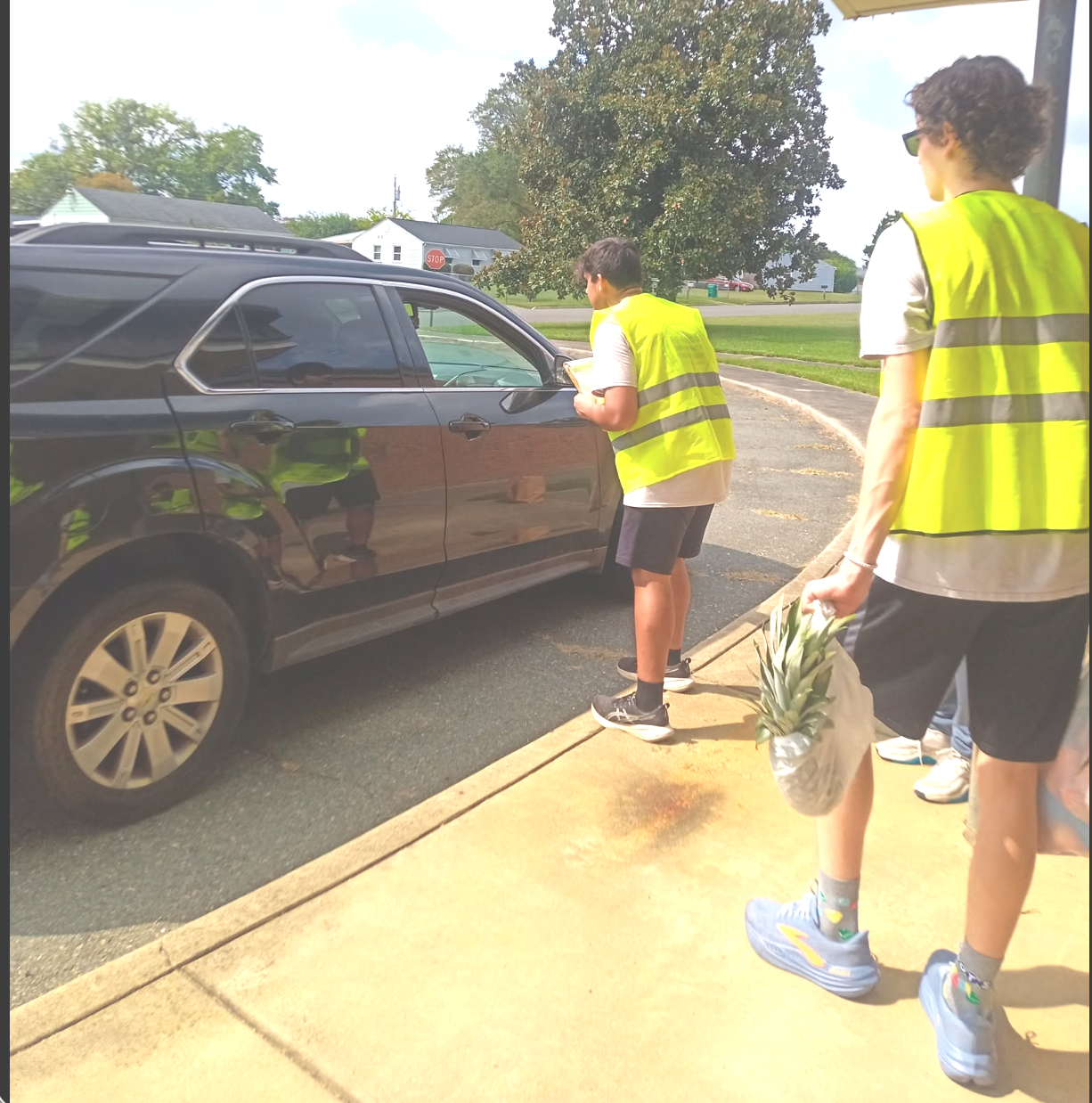
An increased demand
Inflation, rising insurance costs and changes in health coverage are among the factors contributing to surging demand for free clinics across Virginia from roughly 75,000 in 2022 to more than 100,000 annually, according to Virginia Association of Free and Charitable Clinics CEO Rufus Phillips.
Beginning Jan. 1, the state also will be required to redetermine eligibility every six months for Medicaid Expansion adults subject to the new requirements, rather than once a year.
Julie Bilodeau, CEO of CrossOver Healthcare Ministry said that will result in instability, with people who are qualified for Medicaid cycling in and out of benefit.
"All of our appointments are full every week for new patients. We fill up and more people are reaching out trying to get services at CrossOver than we can accommodate currently," said Bilodeau. "It will be very challenging to try to ramp up to meet the demand that's coming, which is a combination of Medicaid cuts and the reductions in the Affordable Care Act subsidies. So, what we expect to see is a significant increase in people who don't have health insurance trying to reach out to safety net providers. And our challenge at CrossOver is to try to increase our capacity to meet that demand and that's what we're working on."
Bilodeau said the most likely place for people to go when there are no openings at free and charitable clinics is emergency rooms. CrossOver already is seeing some indications that emergency room numbers are increasing as the number of uninsured increases.
The same increased demand goes for Henrico County area food banks.
“What we saw last July to where we are this July, it's almost a 20% decrease in SNAP recipients in Henrico, and that's over 7,000 people,” said Aaron McClung, chief development and health strategy officer at Feed More, the Central Virginia food bank.
“That would be great if we knew that the unemployment rate was dropping. What we typically see in the past, is SNAP tracks to the general economy, unemployment rate. But what we've seen in the past year during that same period of time is the unemployment rate ticks up in Henrico and around the region. Those two things are going in the wrong directions. They're not tracking the way you'd want to see that.”
Last fiscal year, Feed More’s 30 partners in Henrico distributed about 3.7 million pounds of food. The year prior, it was 3.3 million pounds, showing a 400,000-pound increase in food distributed last fiscal year, which is an increase of more than 10%.

Feed More and food pantry agencies also saw last autumn, particularly with the government shutdown, a lot of uncertainty and misinformation and lack of clarity around benefits being continued. Changes with H.R. 1 bring more uncertainty.
“What we've heard from our pantry partners is a lot of benefits have been reduced. We've heard from a lot of our partners that individuals who are coming to pantries have had their benefits cut 100%, and a lot of people, throw up their hands,” McClung said.
“There are a lot of people out there that say, ‘Hey, this is just not worth the trouble. The paperwork is onerous, it's confusing, and it's hard to navigate.’ So unfortunately, some of those folks just choose not to engage. That is disconcerting.”
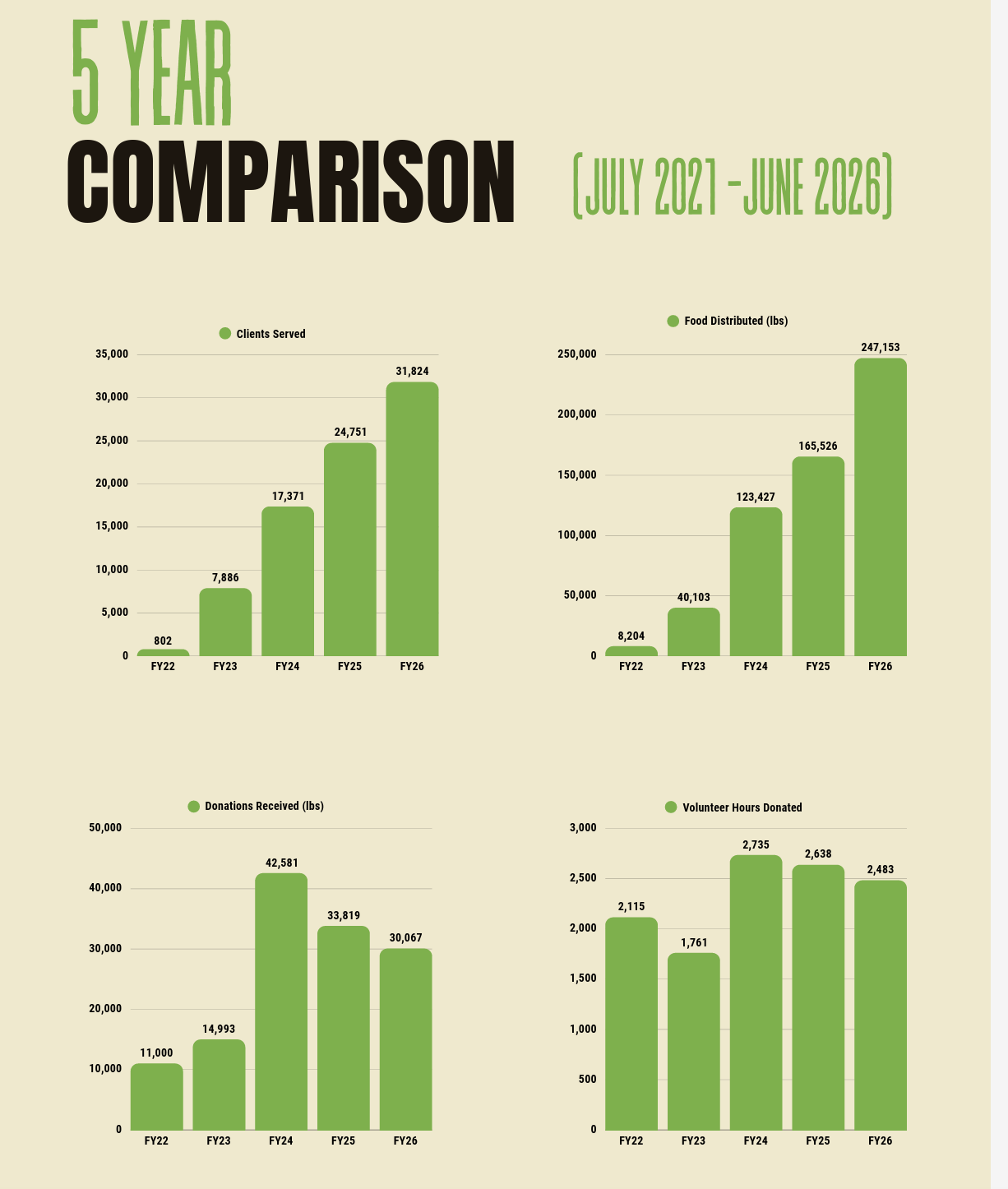
People throwing up their hands at applying for food or medical aid because the complexity of the process is disturbing, because those who need food support may go hungry which will impact their health.
The growing need for food has meant an increase in people repeatedly relying on Feed More's food distribution partners in Henrico, which include Henrico Community Food Bank, church-based locations, 16 schools and Meals on Wheels.
These supports are meant to be designed to support episodic use in a personal emergency or a relatively short-term basis. But people losing long-term benefits are increasingly seeking free resources.

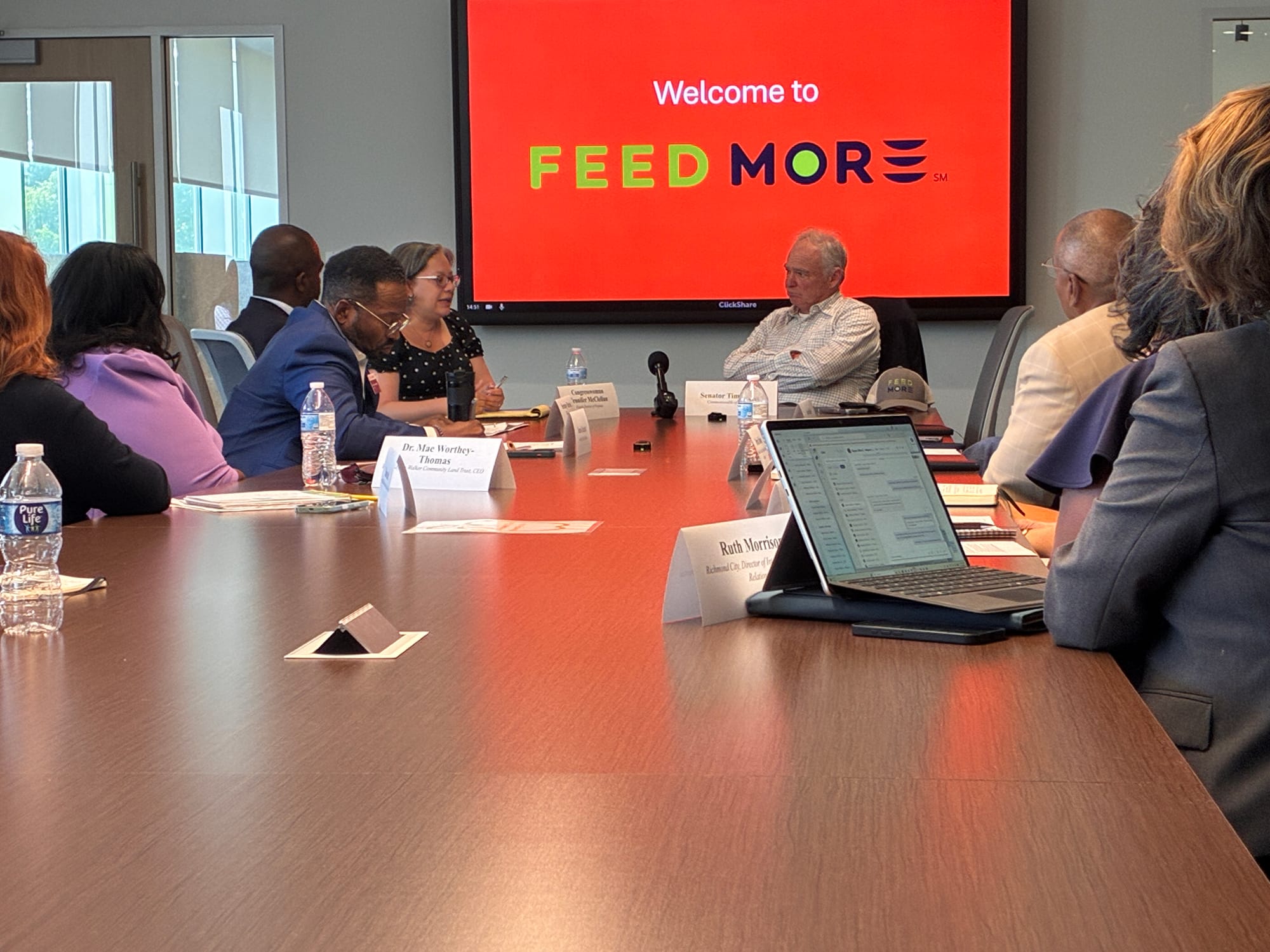
Scenes from a recent visit to Feed More by U.S. Senator Tim Kaine of Virginia and U.S. Representative Jennifer McClellan (Fourth District), both of whom voted against H.R. 1, as did Virginia Senator Mark Warner. Kaine and McClellan held a roundtable with Marvin B. Figueroa, secretary of health and human resources, and other community and nonprofit leaders, pledging to work legislatively to address hunger and medical care access for those in need. (Dina Weinstein/Henrico Citizen)
'It's a crisis that we're facing'
Food pantries like ICNA Relief are distributing food to more than 100 families a week with that number steadily growing as the organization, with volunteers, conducts distributions at schools along with housing developments in Henrico and beyond where people are in need. At a recent fundraiser, ICNA leaders appealed to the public for donations to fill their shelves, refrigerators and freezers as demand grows.
Volunteers there and at the agencies and Feed More play a key role in food preparation, boxing, backpack stuffing, deliveries and also making donations.
The Commonwealth Catholic Charities diaper closet and food pantry are also busier than ever.
“You can't buy diapers with WIC and SNAP. The demand for diapers and baby supplies is through the roof. The food pantry as well is having higher access than ever,” said Julia Scheidemantel, CCC program supervisor of refugee resettlement.
“People need access to food. All we all talk about in this country is how expensive food is. There are people that are fully employed and don't have enough money to pay for the food that they need.”
For large refugee families, with food-based cultures, the cuisine is important to people's happiness and their background Scheidemantel said.
“When you don't have that, it's not only the heartbreak in scarcity of going hungry, but it's a loss of lifestyle in culture that deeply affects our clients,” said Scheidemantel who sees hunger and scarcity directing refugees and other people to food pantries as terrifying.
“It hurts people not being able to eat. It hurts the health of the public, and the health of the community as a whole,” Scheidemantel said. “Nothing good can come from individuals and families going hungry. It taxes the health care system. It creates harm on our communities just interpersonally between people. It's just awful. It's a crisis that we're facing.”
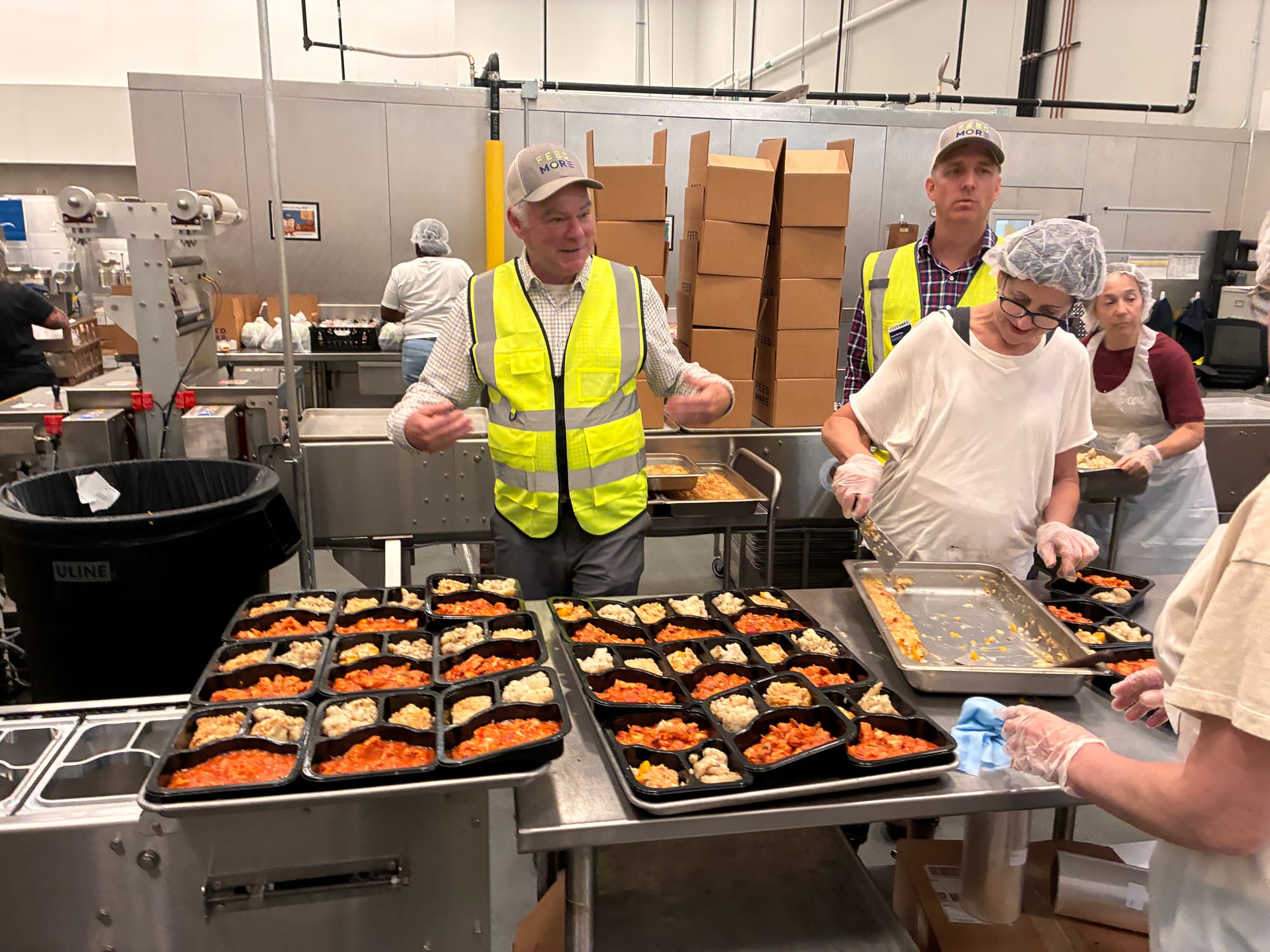
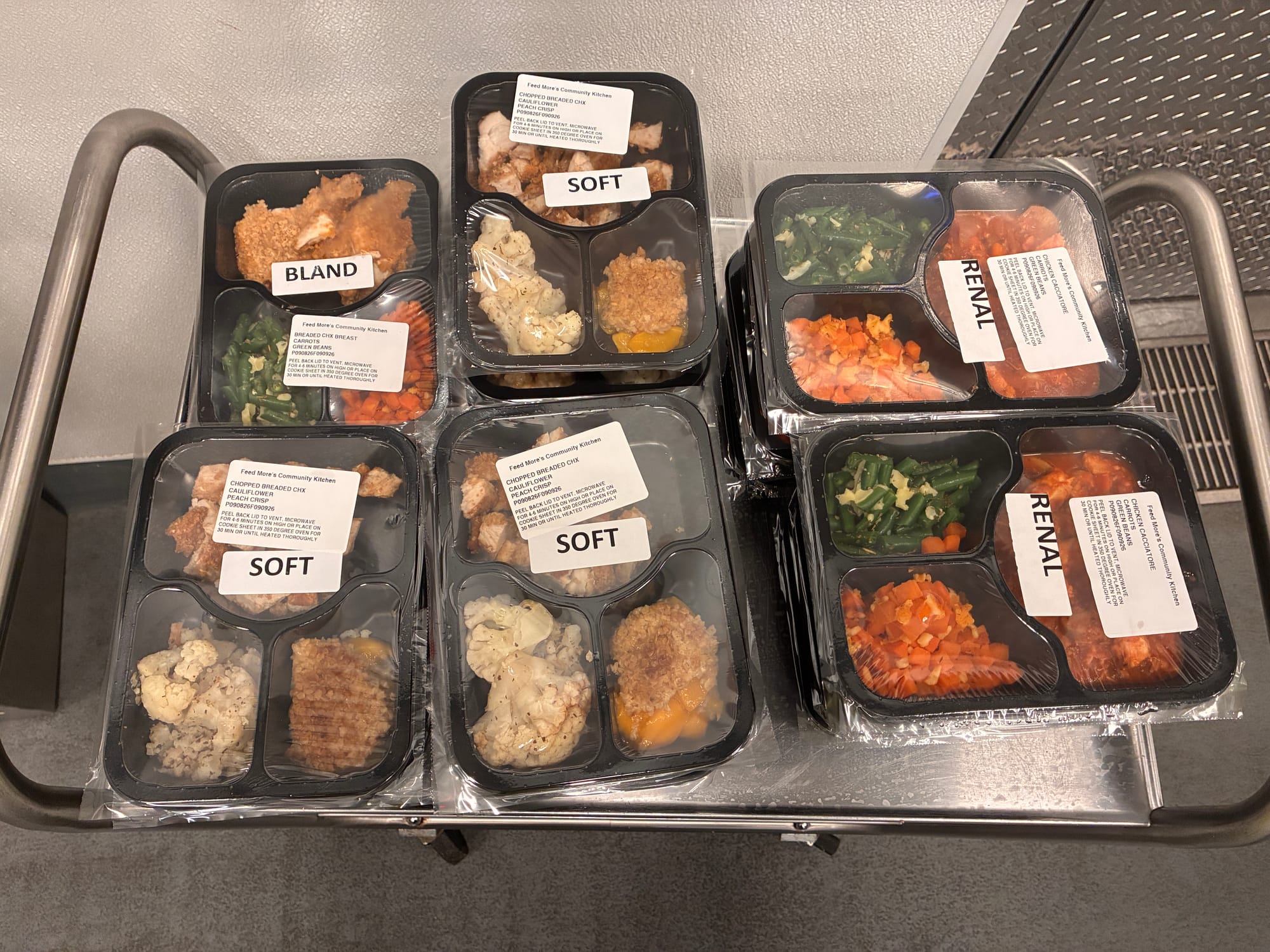
Virginia U.S. Senator Tim Kaine spoke with volunteers at Feed More who prepared Meals on Wheels trays which will be distributed to homebound seniors around the region. (Dina Weinstein/Henrico Citizen)
Feed More leaders are paying close attention to seniors and children, who can receive SNAP benefits as members of a household but generally rely on an adult to apply for and manage those benefits on the household’s behalf.
“They might be part of a household that accesses SNAP, but if those benefits are cut, our concern is that a disproportionate number of children may be affected,” McClung said. “That has a translated effect to things like free and reduced school lunches at the school-based level. We know that within our Meals on Wheels for seniors about 25% to 30% of those homebound seniors are also receiving SNAP benefits.”
Feed More’s unique No Kid Hungry grant working with Henrico schools focuses on helping to provide SNAP support in Henrico County Public Schools.
“If we see people coming to pantries multiple times we’ll reach out and say, 'Hey, do you know about this program?' There's a lot of education that needs to happen with some of these programs. People might not be aware of them,” McClung said.
Feed More staffers helped Henrico residents with more than 200 SNAP applications last year.
Udin expressed resilience to his challenges providing sustenance for his family.
“My family and other Afghan families, they are trying to adjust because they passed harder time in life than now, in Afghanistan and in Pakistan," Udin said. "In the past, they lived with just bread and water. We adjusted in this life, and we run through it because of the past. And now we try to get a better life than our past.”
Dina Weinstein is the Citizen’s community vitality reporter and a Report for America corps member, covering housing, health and transportation. Support her work and articles like this one by making a contribution to the Citizen.