
An inside look at Henrico Police’s new social media monitoring technology

Henrico Police is using new threat-detection software to get ahead of potential conflicts before they happen, but a Henrico official already has sounded the alarm on how the technology could pose privacy risks for residents.
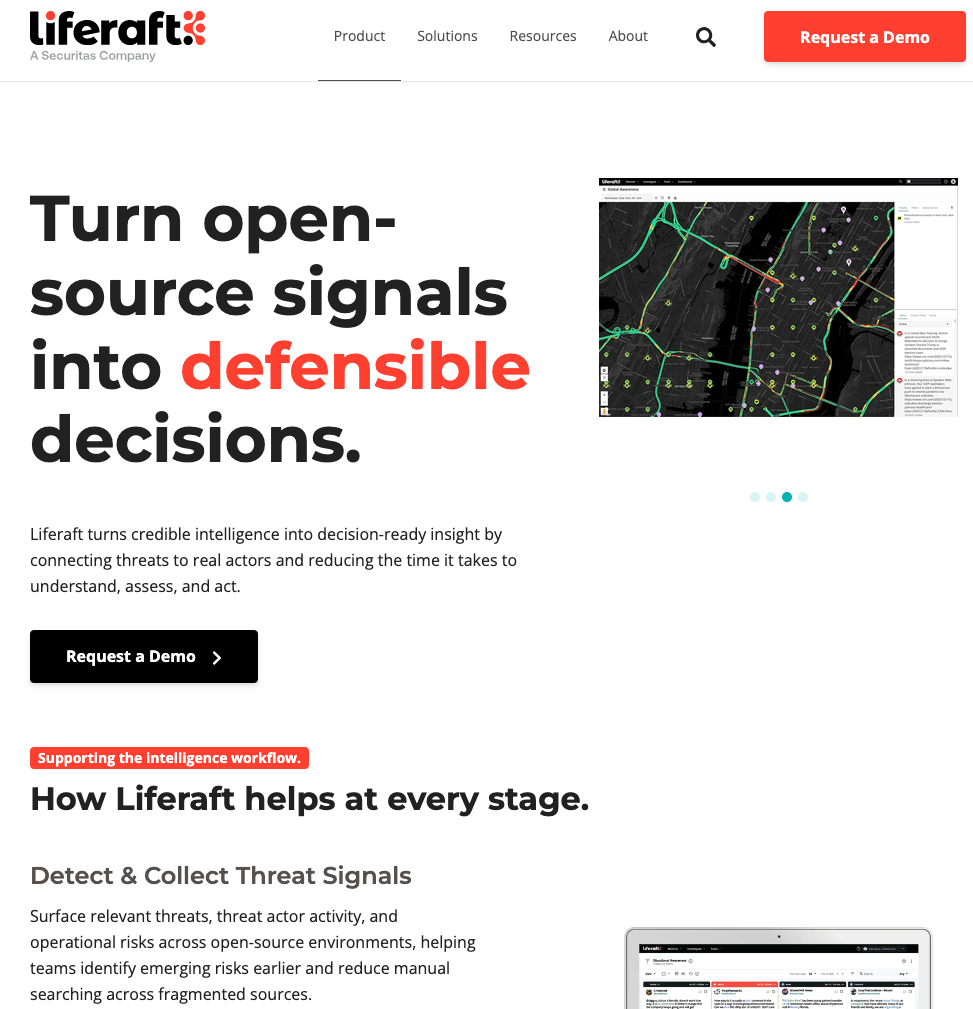
In April, the Henrico Board of Supervisors approved HPD’s $106,000 purchase of the Liferaft platform as a part of the department’s $117-million budget for 2026-2027. The open-source intelligence, or OSINT, technology monitors publicly-available content and profiles on social media and the internet, flagging violent language and detecting potential threats.
During his budget presentation to the board, Henrico Police Chief Eric English said the software would be an “invaluable asset” to the department, allowing officers to monitor planned protests, threats to public officials, threats to schools or religious facilities, and “growing anti-government sentiment” across social media posts.
“We want to get ahead of those things,” he said. “We just want to make sure that we’re doing all we can to try to prevent crime from occurring in Henrico. And we think Liferaft gives us that opportunity.”
Liferaft, a security company founded in 2014 and based in Canada, claims to have more than 100 clients, including government organizations and private businesses, across 20 different countries.
The platform monitors open-source data – public social media accounts, publicly-available internet pages and forums – and cannot be used to access private accounts, English said.
Using Liferaft, officers can connect all the previous online content an individual has publicly posted, painting a full picture of someone’s online activity. Officers also can search online content with key words, looking for any statements inciting violence, to quickly identify potential threats.
“I could go on Facebook right now and see anybody’s page – this platform is no different,” said English. “All it does is connect those individual comments that may rise to a level of concern, giving us all the data in one bucket so we can look at it. Whereas now, if somebody threatens you, that means we’ve got to try to find the person’s page and scramble through it.”
Liferaft continuously collects publicly available data and flags activity by keywords, entities, locations, risk categories defined by the purchaser, according to the platform’s own website. Liferaft also provides real-time, location-based alerts for flagged content.
'You have to make sure you take [school] threats seriously'
Henrico has seen a rising number of threats made against schools during the past few years, often threats made from students inside the building. Due to recent outbreaks of school gun violence, HPD takes those threats extremely seriously, English said, and plans to use Liferaft to get ahead of any potential school incidents.
“There’s been more and more threats made at schools over the last four or five years. We get a lot of kids in school that make threats inside that school,” he said. “Many years ago, a kid would make a threat at school and we would hardly do anything with it. But nowadays, you have to make sure you take all those threats seriously.”
English said he has also seen more threats made against local public officials in recent years. In 2023, County Manager John Vithoulkas was granted a protective order against two people who had posted online videos of Vithoulkas’ house, information about the date and location of Vithoulkas’ daughter’s wedding, and other threatening statements.
Liferaft allows officers to monitor any open-source content posted by any internet user, but English said that HPD will be narrowly focused on situations in and impacting Henrico County. That would include monitoring planned protests, but English emphasized that Liferaft would not be used “to interfere with lawfully-protected speech or activities” and officers would instead be looking for any violent language or threat associated with planned events.
“We’ve had protests across this country that have had violence associated with them,” he said. “When you have a protest or counter-protest, it could be [online] conversations that are taking place that may raise our eyebrows in terms of, ‘is this something that could lead to violence?’ It’s those types of things we need to look at.”
When it comes to next steps after officers identify a threatening or concerning statement, English said the response would depend on the specific language used or content posted.
“It depends on what level it leads to. Does it lead to the level where it’s an actual crime, where there’s an actual threat? I think it gives us an opportunity to just monitor that,” he said. “If it leads to language that leads to an arrest or a crime, then we would take action on that. Otherwise, we would just continue to try to monitor that, or see if there’s some strategies we need to put in place to make sure that nothing occurs because of the rhetoric that’s going on.”
Unanswered questions about Liferaft's use of AI, deep and dark web searches
But just before the Henrico Board of Supervisors’ vote on the county budget at an April 14 meeting, Three Chopt District supervisor Misty Roundtree voiced concerns about HPD’s purchase of Liferaft, as well as the department’s continued partnership with surveillance company Flock Safety.
Roundtree – who ultimately voted in support of the proposed county budget, including the purchase of Liferaft – said that Liferaft was “arguably even more concerning” than the county’s use of Flock cameras, with little to no parameters set at the state level on how officers can use the software.
“If there’s nothing in place that says what those parameters can be, and Liferaft literature itself specifically advertises its utility in monitoring protests and civil unrest, then who determines what is a problematic protest or civil unrest?” she said. “So my pictures that I have posted on my own social media at a ‘No Kings’ rally with my son mean that I exist, or my son exists, somewhere on a watch list because of Liferaft?”
Roundtree also said that after looking at Liferaft’s own website and other outside sources, she believes the platform uses artificial intelligence and geolocation technology, as well as “predictive flagging” – meaning the platform identifies accounts that have not posted threatening material but display posting patterns that suggest to Liferaft’s algorithm that the accounts could post threatening content in the future.
“My comments are not about any concern of wrongdoing by Police Chief English,” Roundtree said. “This is about a technology that is evolving and expanding far beyond the grasp most of us can begin to understand.”
In response to Roundtree’s comments on Liferaft using “predictive flagging,” English said that he “does not know what [Roundtree] may actually mean by that” and is unaware of any kind of predictive flagging component of Liferaft.
He also said there was “no reason” for HPD to use the software in a way that targets one particular demographic or to document individuals attending legal and peaceful protests such as a “No Kings” rally.
“Where’s the threat in that? There is absolutely no threat in that. So why would we look at that? That is not our purpose. That’s not how we would use the platform,” English said. “It would need to be something that’s threatening, that we can see harm coming to someone or coming to this county. That isn’t somebody just attending a protest.”
English also said that the platform does not have an AI component and use of the platform will not involve officers “going in and looking at the deep web or the dark web.”

However, Liferaft’s website states that the platform utilizes AI through “Liferaft iQ” – an AI engine that “powers key features across the platform,” including “advanced geocoding” to identify precise geographical locations and “Live Insights” to “proactively highlight high-risk behavior.”
The website does not clarify if the Liferaft iQ AI engine is separately used or purchased from the main Liferaft platform or automatically integrated, but outside websites stated that the AI-powered Liferaft iQ would be "seamlessly integrated into the existing Liferaft platform.”
The Citizen reached out to Liferaft’s team for clarification on the platform’s AI integration, as well as Henrico Police to clarify whether HPD’s purchase of Liferaft included Liferaft iQ, but did not receive responses by the time of this article’s publication. But more than two weeks after the initial request, a Henrico Police official said the agency was still working to provide that information. (This article will be updated when that occurs.)
English also said that officers will not be looking through content on the deep web or dark web by using Liferaft, but the platform’s website states that the software combines intelligence from the surface web, deep web, and dark web “into a single platform,” allowing users “a more complete view of potential threats without switching between multiple tools or disconnected investigations.”
By the time of publication, Liferaft’s team and HPD also had not responded to the Citizen’s inquiries about the platform’s ability to group information from the surface web with information from the deep web and dark web by the time of publication.
No other entities besides HPD will be able to access Liferaft data, English said, but emphasized that public users can already view any open-source data on the Internet.
“There are no guardrails on open-source data. People have already posted it out there for anybody and everybody to see,” he said. “We would only be looking for information, open-source data, that is a threat to someone or a threat to this county. And there will be parameters internally for us on how we utilize that data.”
Similar to HPD’s use of Flock cameras, English said that purchasing Liferaft is necessary for a department struggling with staff vacancies and serving a county that is growing in population.
“Manpower in law enforcement is not where it needs to be for us. Technology really assists us in trying to close that gap,” he said. “We have to consistently look at technology that’s going to make law enforcement more efficient, because we’ve just got to keep up. Anything we can have that helps us be more effective and solve crime a lot quicker, it prevents further crime from occurring.”
Liana Hardy is the Citizen’s government and education reporter. Support her work and articles like this one by making a contribution to the Citizen.