Virginia ranks among top states for highway safety and mobility benefits, but challenges remain
National study finds Virginia provides a significantly safer travel environment than other roads
A new study shows that Virginia is one of the best states in the country for delivering safety and mobility benefits with the commonwealth generating an estimated $1.95 billion in safety and reliability value as a result of fewer crashes, less property damage and more dependable travel.
Still, researchers said, there is still more work to be done.
The research study was conducted by national transportation research nonprofit TRIP and examined drivers’ use of the interstate system, and its condition and benefits to travelers. Virginia ranks tenth among the most beneficial states; California tops the list, creating $7.3 billion.
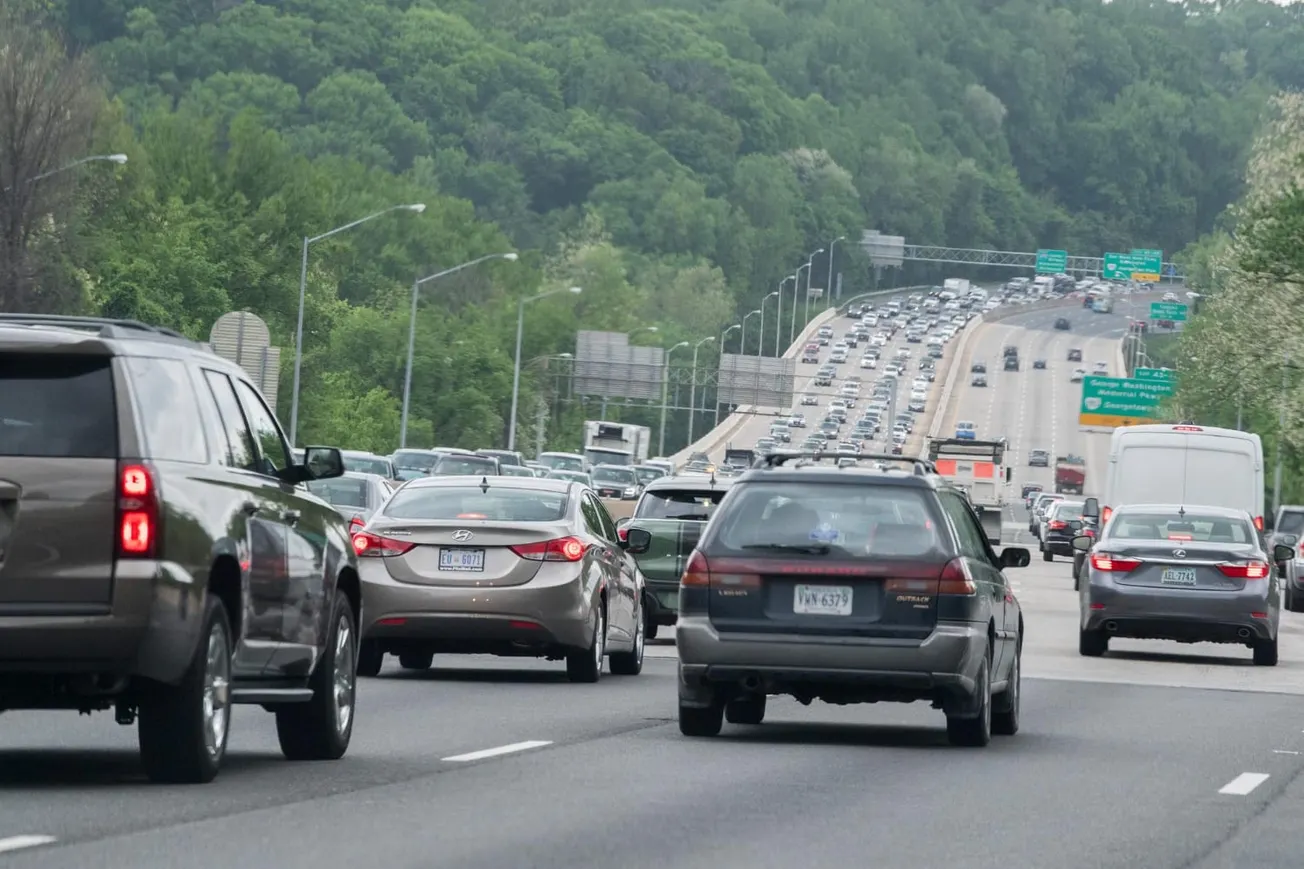
In addition to the millions in benefits, the study found that Virginia provides a significantly safer travel environment than other roads and supports freight movement and statewide mobility. However, Virginia still faces increased traffic demand, with nearly half of urban interstate mileage congested, and aging infrastructure.
Bill Pugh, transportation and climate director for the Coalition for Smarter Growth, argues that while interstates funded by the federal government are comparatively safe, the most dangerous roads are state-owned arterials in urban areas, and funding should go to fixing them.
“If we’re making safety investments, it’s not expanding interstates, which in some cases can make safety worse. Rather, the priority should be fixing dangerous arterials … maintained by the state,” said Pugh.
Researchers found that traveling on Virginia’s highway system is “more than twice as safe as on all other roadways,” due to built-in safety features like median barriers, paved shoulders, a minimum of four lanes and complete separation from cross traffic and rail lines.
They also found that the state saved approximately 206 lives in Virginia in 2024, equal to roughly $766 million in annual economic safety benefits.
Between 2000 and 2024, researchers found that Virginia’s traffic volume grew by 26%. During the same period, 49% of Virginia’s urban interstate highways were congested during peak travel periods in places such as Hampton Roads, Northern Virginia and Richmond.
Other factors that contributed to Virginia’s ranking include the fact that heavy-duty trucks make up 11% of vehicles that travel on Virginia’s highways, which researchers say can accelerate pavement deterioration. About 9% of the state’s interstate pavement is in poor or mediocre condition, the study found.
In terms of bridge condition, the report stated that 81% of Virginia bridges are in fair condition while 1% are in poor condition.
The Virginia Department of Transportation, which is responsible for a growing list of maintenance projects including ones on the interstate highway system, reported that pavement resurfacing has risen as much as 45% since 2019.
The nonprofit Transportation for America found in its study of U.S. transportation spending that Virginia prioritized bridge investments more heavily than many states between 2018 and 2024.
But Virginia’s roadway pavement conditions have worsened, making it one of the states with the greatest increase in poor-condition roads between 2018 and 2024, that study stated.
Between 2018 and 2024, the same data showed that Virginia spent just 58 cents on road maintenance for every dollar spent on road expansion.
The organization argued for stronger “fix-it-first” policies that require maintaining existing roads before expanding transportation systems.
About $3 billion per year in state funding is dedicated to road maintenance and operations statewide, with at least an additional $600 million per year going to local road maintenance programs.
Last year, VDOT announced an initiative to use artificial intelligence to improve operational efficiency and allocate maintenance funds more effectively.
Virginia Mercury is part of States Newsroom, a nonprofit news network supported by grants and a coalition of donors as a 501c(3) public charity. Virginia Mercury maintains editorial independence. Contact Editor Samantha Willis for questions: info@virginiamercury.com.