Skip to content

Va. officials celebrate the bald eagle’s comeback and centuries as national symbol

Wildlife experts say the nation’s symbol has rebounded dramatically, but human-related threats remain a challenge
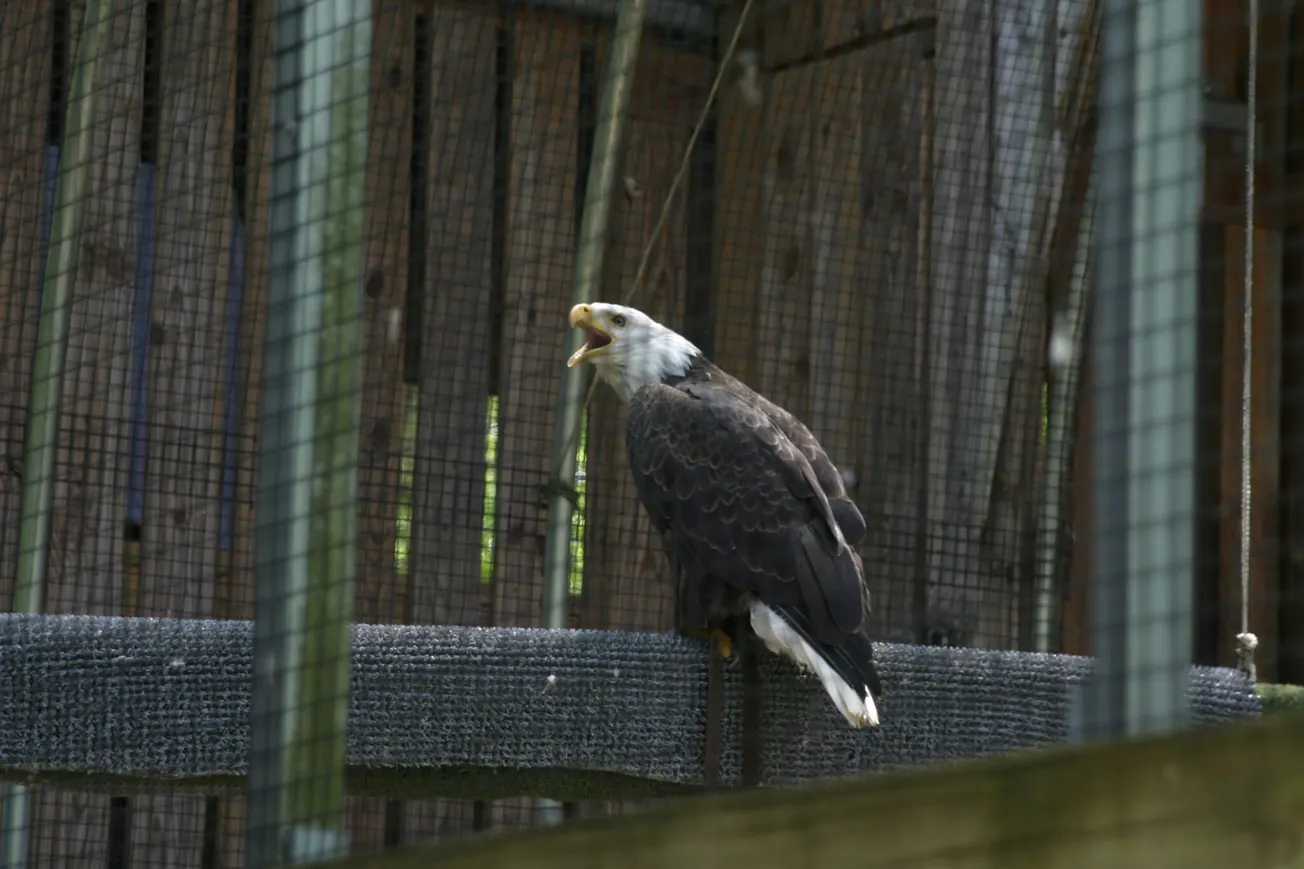
A bald eagle at the Wildlife Center of Virginia May 15, 2026. (Photo by Shannon Heckt/Virginia Mercury)

The bald eagle became a national symbol in 1782, appearing on the U.S. seal and government documents. But despite representing the country for almost 250 years, the raptor did not officially become the nation’s bird until 2024, when Congress passed legislation declaring it so and then-President Joe Biden signed it into law.

Virginia lawmakers, conservationists and wildlife experts are working to protect the species’ future, as the nation prepares to mark its semiquincentennial this summer.

A bald eagle at the Wildlife Center of Virginia May 15, 2026. (Photo by Shannon Heckt/Virginia Mercury)

Since 1940, the Bald and Golden Eagle Protection Act has imposed strict penalties for killing eagles or possessing their feathers, eggs or nests.

The stately bird — whose screech is less dramatic than movies often suggest, with filmmakers frequently replacing the call with that of a red-tailed hawk —  at times came close to extinction because of habitat loss and the pesticide DDT. 

A rehabilitated falcon at the Wildlife Center of Virginia May 15, 2026. (Photo by Shannon Heckt/Virginia Mercury)

By the mid-1960s, there were an estimated 400 nesting pairs left nationwide, including about 30 in Virginia. But federal protections over the years helped populations rebound enough for the birds to be removed from the endangered species list. 

On Friday, Secretary of Natural and Historic Resources David Bulova spoke to a small crowd at the Wildlife Center of Virginia in Waynesboro, a wildlife hospital and rehabilitation center, about how his father took him to places along the Virginia coast in the 1970s to see one of the last remaining eagles nesting areas.

“He did it on purpose, mostly because we didn’t think that I would grow up to be an adult and ever actually get to see a live eagle,” Bulova said. “My heart still fills with joy when I see them all living. There are a lot more of them. But that’s really why my heart still fills with joy, because we did something very special.”

The Wildlife Center of Virginia treats wildlife ranging from salamanders to black bears and takes in an estimated 4,500 animals each year. Last year, 76 bald eagles were brought to the center for care. So far this year, 23 eagles have been treated for injuries or poisonings. On Friday, a female bald eagle was inside the facility undergoing surgery for wounds suffered in a fight with an osprey.

A bald eagle undergoes surgery at the Wildlife Center of Virginia May 15, 2026. (Photo by Shannon Heckt/Virginia Mercury)

Meg Gammage-Tucker, president of the center, said that while the bald eagle population has recovered well — with 1,500 breeding pairs now in Virginia — threats to their health and habitats remain, which is evident on how many of the birds come through their doors.

“Yes, the population’s going up. But the population has ongoing conservation issues and many of these, I’m sorry to say, are based on human activity,” Gammage-Tucker said.

One of the center’s animal ambassadors is Buddy, a bald eagle that has lived at the facility for 18 years after being found with avian pox that left his beak misshapen. Buddy now participates in public events and educational presentations and recently met King Charles III during the monarch’s visit to the commonwealth. 

Gammage-Tucker also highlighted a recently passed law creating the Wildlife Corridor Grant Fund, which allows Virginians to donate through certain Department of Motor Vehicles transactions. The money is used to help fund infrastructure projects aimed at protecting wildlife from roadways.

She said the nation’s 250th anniversary this year offers an opportunity to highlight and reflect on the significance of the bald eagle as both a national symbol and a conservation success story. 

A bald eagle at the Wildlife Center of Virginia May 15, 2026. (Photo by Shannon Heckt/Virginia Mercury)

Bulova said the story of the eagle’s recovery demonstrates how policy changes can help protect the natural world.

“It’s a bird that represents our nation, but it’s a bird that also represents what we could do together as a community and as a nation to go ahead and move us forward and impact our natural resources,” Bulova said.


Virginia Mercury is part of States Newsroom, a nonprofit news network supported by grants and a coalition of donors as a 501c(3) public charity. Virginia Mercury maintains editorial independence. Contact Editor Samantha Willis for questions: info@virginiamercury.com.

Comments