
Skip to content

Spanberger marks first 100 days with focus on healthcare, housing and energy affordability

State budget progress uncertain as governor awaits lawmakers’ spending plan
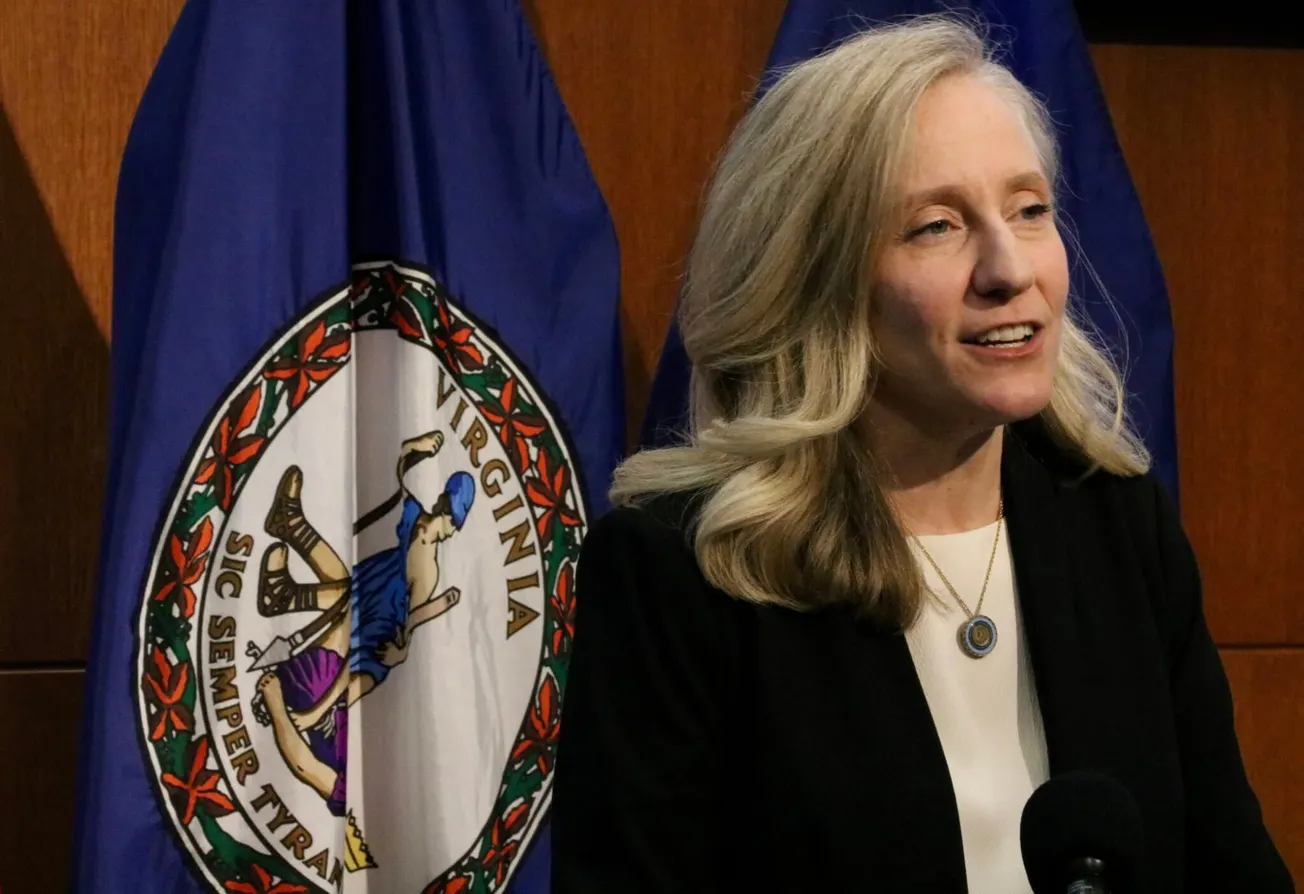
Virginia Gov. Abigail Spanberger speaks to press on April 27, 2026 at an event in Richmond touting policy accomplished during her first 100 days in office. (Photo by Charlotte Rene Woods/Virginia Mercury)

Gov. Abigail Spanberger celebrated her first 100 days in office Monday in Richmond by touting her administration’s progress on healthcare, housing, and energy affordability measures. 

She had less to say, however, about the delayed state budget, which lawmakers haven’t finalized but must send to her desk for signature in the coming weeks. 

“I’m happy to report that on our 100th day in office, the entire ‘Affordable Virginia’ agenda is now law,” Spanberger told reporters in Capitol Square Monday morning. “We are continuing to provide practical, tangible solutions for people in every corner of the commonwealth.”

She pointed to successful bills to lower the price of insulin for diabetes treatment, establish a paid family and medical leave program and prevent pharmacy benefit managers from inflating prescription drug costs.

About a third of the state budget is slated for various healthcare initiatives, many stemming from lawmakers’ ideas on how to make up for federal funding shortfalls

The governor didn’t respond directly to questions about progress on the budget, but said that the state will need to be “aggressive” in addressing healthcare priorities.

Regulating pharmaceutical middle men

On the pharmacy benefit manager bill, the governor commended the legislature’s bipartisan cooperation, as several GOP lawmakers with pharmaceutical backgrounds helped champion the measure. 

The legislation sets requirements for pharmacy benefit managers when submitting claims and requires health insurance carriers use a pass-through pricing model. 

Pharmacy benefit managers are the middlemen that negotiate drug prices between health plans, manufacturers and pharmacies. Critics have argued that they operate with little transparency so it is hard to see how much negotiated savings are passed onto consumers. 

Reforming the profession in the state has been ongoing work in recent years that Spanberger said was a priority to continue. 

Virginia pharmacists, particularly independent pharmacists in rural or underserved areas, have long-supported the reforms and echoed the benefits of the bill at a meeting with the governor later Monday morning at HOPE Pharmacy in Richmond’s East East.

“That ‘trust’ word, it can nibble away all the problems that we have as independent pharmacists throughout the community,” said HOPE pharmacist Shantelle Brown. She and others emphasized how local pharmacies are often people’s first or easiest access point for healthcare.

Exterior of HOPE Pharmacy in Richmond. (Photo by Charlotte Rene Woods/Virginia Mercury)

Revamped housing and energy policies

Spanberger also took a victory lap on housing and energy policies that made it to her desk,  noting that they had been part of her agenda on the campaign trail last year. 

An expansion of the state’s eviction reduction program and legislation to leverage the state’s bonding authority to support the development of new affordable housing were among the hundreds of bills she has signed in recent weeks.

Amid growing concerns about rising energy costs, the governor also signed measures to allow utilities to sign agreements with high load energy customers — like data centers — to invest in new substations that only serve them. This will shield ratepayers from absorbing those added costs. 

Data center policy, a defining issue of debate amid the 2026 legislative session, is also holding up the state budget.

Senate lawmakers want to end a tax break for data centers while House legislators and Spanberger want to preserve the exemption to honor existing commitments and continue to attract the mega facilities to the state. 

As the budget deliberations continue, Spanberger will soon decide to either accept bills she’d sought amendments on or veto them.

When lawmakers reconvened last week, they accepted some of her tweaks and rejected others. An adjustment to the paid leave bill made the final cut while amendments to the prescription drug affordability board did not.

”All the bills I returned to them were bills that I agree with,” Spanberger said Monday, a possible hint that she’s less likely to veto those measures. 

100 days in, new governor’s approval ratings less than rosy

Early April polling indicated Spanberger had a 47% approval rating, the lowest early-term rating for a governor in several years. The results became fodder for online discourse, especially among conservative politicians and pundits. 

“I can’t believe what this new Governor, Spanberger, has done to the Commonwealth — So sad!” President Donald Trump posted online April 11. “She is adding so many Taxes, a Food and Beverage Tax, Digital Services Tax, Utilities Tax, and more.”

The proposed tax hikes Trump referenced were contained in bills introduced by some Democratic lawmakers this year that didn’t make it to the governor’s desk, prompting Spanberger’s communications team to issue a press release titled: “BREAKING: Governor Spanberger Does Not Sign Tax Bills the General Assembly Never Passed.”

Additionally, Spanberger had endorsed a controversial constitutional amendment to allow for a rare mid-decade redistricting of congressional maps. Voters approved it by a narrow margin last week. 

Virginia is among a handful of states to pursue map overhauls after Trump instructed Texas to fortify its GOP-held seats with a redraw last summer.

The redistricting amendment  is at the center of at least three ongoing lawsuits, with the state Supreme Court deliberating one lobbed by state Republican leaders Monday. 

“As the court continues to weigh the discussions this morning, my hope is that they will recognize just how seriously and how valid more than three million Virginians knew that election to be,” Spanberger said.

Looking ahead

As she reflected on the steps her administration and lawmakers have taken so far this year, Spanberger also noted the work still ahead this year, particularly with the state’s health and social services agencies. 

When she signs Virginia’s next budget, it could entail hundreds of millions of dollars earmarked for investments in state agencies, support for free clinics, and a way to potentially establish a state-level subsidy for people with Affordable Care Act insurance. 

Many of these priorities are spurred by federal action or inaction over the past year.  

A reconciliation bill Congress passed last summer could cause thousands of Virginians to lose Medicaid coverage or Supplemental Nutrition Assistance Program benefits.

Congress also didn’t renew special ACA subsidies, so far contributing to 33,000 Virginians dropping their insurance amid unattainable premiums. 

By investing in the additional compliance work for Medicaid and SNAP along with assistance for ACA users, the goal is to prevent eligible people from losing services and prevent public health impacts downstream to hospitals and free clinics, the governor reiterated Monday. 

“Certainly Virginia cannot make up for the loss of federal funds from (the reconciliation bill) and more and more, we are seeing the decision not to continue with ACA,” Spanberger said. “But Virginia has to be aggressive in how we contend with those impacts.”


Virginia Mercury is part of States Newsroom, a nonprofit news network supported by grants and a coalition of donors as a 501c(3) public charity. Virginia Mercury maintains editorial independence. Contact Editor Samantha Willis for questions: info@virginiamercury.com.

Comments