In the Garden: Winter-flowering cyclamens for indoor gardens
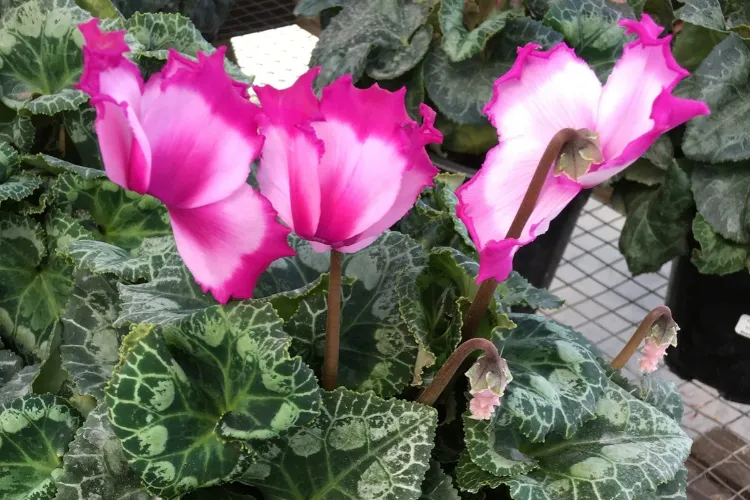
Add a splash of color to elevate your mood and brighten your home décor for up to three months of flowers with the florist cyclamen (Cyclamen persicum). Enjoy plain, ruffled, or bicolor butterfly-like flowers in white, pink, rose, red and lavender hovering over heart-shaped leaves with silvery highlights.
Recent introductions offer even more options. If you prefer blue, look for Blue Dragon with blue-violet blossoms. Double your pleasure with one of the double-flowered varieties, boost the fragrance with Absolu de Morel, and add a new look with open, upright-facing flowered varieties. Unusual varieties may be hard to find but let your favorite florist or garden center know you’re interested, and they may be able to help.
Whether you prefer the traditional cyclamen or something more unique, either is a great option for dressing up the dinner table, mantle or side table. Place the plant in a decorative container, basket or colorful tin alone or combined with complementary foliage plants. Or set it in a large glass vessel and mask the container with moss, stones or other decorative items.
Use miniature cyclamens as place card holders at your next event. Set them in their own pretty container, teacup or wrapped in pretty paper secured with a ribbon. Make everyone’s evening by sending guests home with their own cyclamen and care directions.
Try something different by growing them in water. Carefully remove the plant from the pot, loosen the soil, and rinse the roots and tubers until all the soil is gone. Fill a hyacinth vase with water up to the narrow neck and set the cyclamen in the cup at the top of the vase. Make sure the water does not touch the tuber but does cover at least some of the roots. Change the water regularly to keep it clean and fresh.
For cyclamens growing in soil, water thoroughly when the potting mix just below the soil surface starts to dry. Avoid watering the crown of the plant. If it stays too wet, the plant may rot. Pour off any excess water that collects in the saucer, decorative basket or foil wrap. Overwatering and letting plants sit in water leads to soggy soil and a decline in the plant’s health and beauty.
Make it easy by setting the potted plant on a saucer of pebbles. The excess water will collect in the saucer while the pebbles elevate the pot above the water. This reduces the risk of root rot, eliminates the need to pour off excess water, and boosts humidity as the water evaporates.
Remove any yellow leaves and faded flowers to keep your plant looking its best. Remove flowers as they fade. Regular deadheading increases the number of flowers and the length of bloom.
Don’t be alarmed when the leaves yellow and dry soon after the plant stops flowering. It is entering a natural dormant period. If you like a challenge, try forcing it into bloom a second time.
Simply cut back on watering when you notice the leaves begin to yellow. Then stop watering once all the leaves have dried. Allow the plant to rest, no water or fertilizer, for several months. Begin watering and fertilizing once new growth appears and place it in its preferred growing location. Then wait for a beautiful floral display.
Melinda Myers has written more than 20 gardening books, including the Midwest Gardener’s Handbook, 2nd Edition and Small Space Gardening. She hosts The Great Courses “How to Grow Anything” streaming courses and the nationally syndicated Melinda’s Garden Moment TV & radio program. Myers is a columnist and contributing editor for Birds & Blooms magazine. Her website is MelindaMyers.com.