In the Garden: Add a bit of gold to the garden
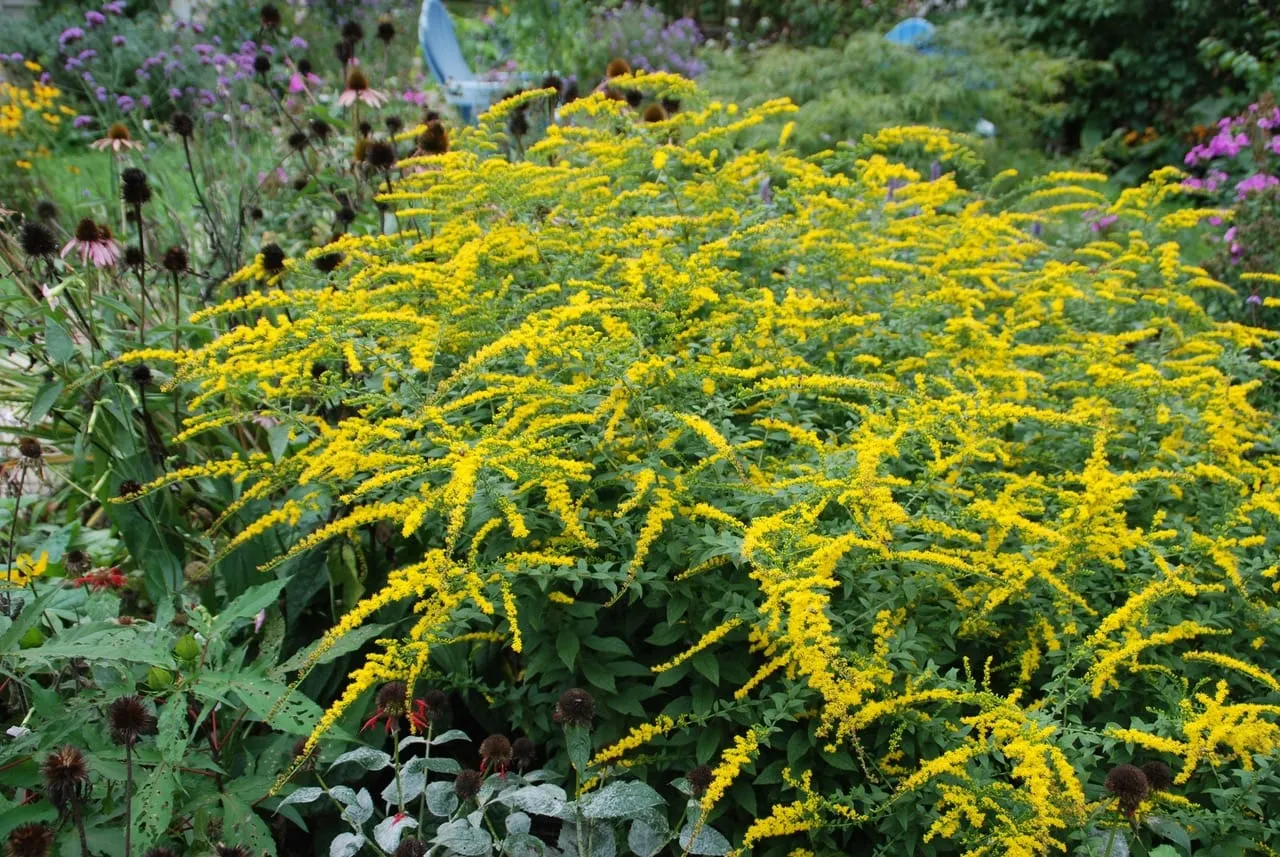
Boost the pollinator and songbird appeal in your landscape with the addition of goldenrods. You’ll enjoy the bright yellow flowers and many visiting pollinators and songbirds. With a wide range of native species and cultivars available you are likely to find one or more suited to your landscape.
Find out more about the various goldenrod species and cultivars trialed at the Mt. Cuba Center and Chicago Botanic Garden. Although goldenrods are often considered weedy and aggressive, Mt. Cuba found many species suited to home gardens.
Don’t worry about an allergic reaction to the flowers. It is the blossoms of the less noticeable ragweed often growing alongside the goldenrod that causes the problem. The two plants bloom at the same time with ragweed releasing an abundance of wind-borne pollen while goldenrod’s sticky pollen adheres to and is moved by insects.
Goldenrods, which are considered keystone plants, help support wildlife, serve as a host plant for many moth and butterfly caterpillars and provide late-season nectar and pollen for bees, wasps, butterflies, moths and beetles.
You’ll also enjoy watching the various birds visiting your goldenrod plants. Watch for dark-eyed juncos, warblers and ruby-crowned kinglets as they hunt for insects and feast on the seeds.
While there are many species to choose from, look for those suited to the growing conditions and that fit the available space. Look for clumping species and those considered less aggressive if you have limited time, space or desire to contain the spread of more aggressive types.
Fireworks (Solidago rugosa) was one of the highest-ranking goldenrods in both trials. It grows two to four feet tall, prefers full sun and is hardy in zones 4 to 8. Showy goldenrod (Solidago speciosa) prefers full sun, tolerates dry soil and is hardy in zones 3 to 8. For moister conditions and clay soil tolerance consider Ohio goldenrod (Solidago ohioensis). It grows in upright clumps about three feet tall and is hardy in zones 4 to 6. For shadier locations blue-stemmed goldenrod (Solidago ceasia) does not spread aggressively, grows two-to-three feet tall and is hardy in zones 4 to 8.
Take time this fall to look for opportunities to add this beautiful and ecologically important plant to your landscape. You, the pollinators and songbirds will be glad you did.
Melinda Myers has written more than 20 gardening books, including the Midwest Gardener’s Handbook, 2nd Edition and Small Space Gardening. She hosts The Great Courses “How to Grow Anything” streaming courses and the nationally syndicated Melinda’s Garden Moment TV & radio program. Myers is a columnist and contributing editor for Birds & Blooms magazine. Her website is MelindaMyers.com.