How public education has transformed in Virginia since the nation’s founding
On the cusp of the nation’s semiquincentennial, Virginia legislators, educators and communities are reflecting on how to meet the moment and overcome challenges that persist for public education and students here
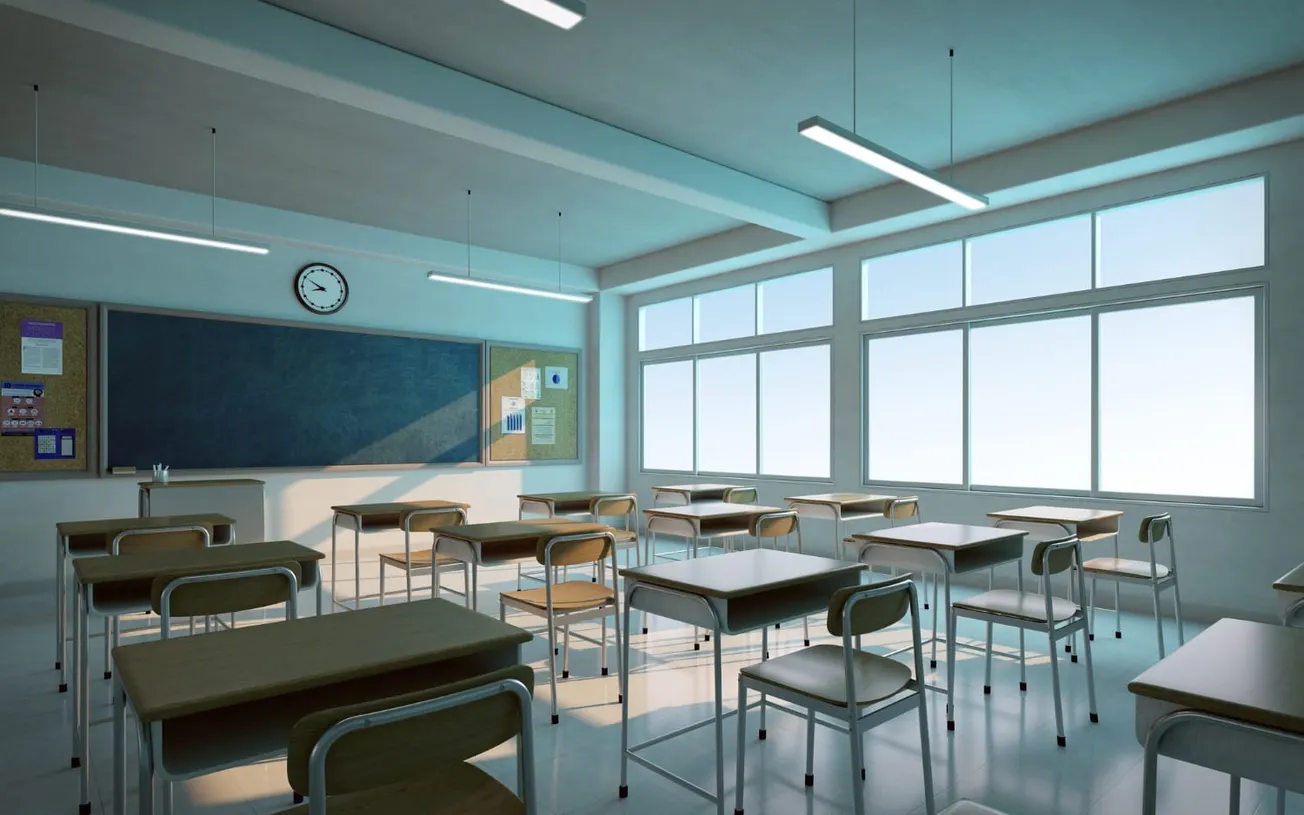
Like the United States, Virginia’s K-12 education system has evolved over the last two and a half centuries to better meet family needs and prepare students for the future. In the 250 years since America declared its independence, changes in policy, instruction, and technology have continually reshaped Virginia’s public elementary, middle and high schools.
On the cusp of the nation’s semiquincentennial, Virginia legislators, educators and communities are reflecting on how to meet the moment and overcome challenges that persist for public education and students here.
Newport News Democratic Del. Shelly Simonds — who has experience as a classroom teacher, local school board advocate and a legislative lobbyist for educational change — suggested Virginia’s next chapter focus first on “making teaching a true profession.”
Accomplishing this requires better pay, benefits like paid family leave, and modernized school schedules that align with the workday, Simonds said.
“We haven’t professionalized the teacher work day,” said Simonds. “If we want to retain the best and brightest teachers — because every child deserves excellent, highly qualified teachers — we’re going to have to examine some of these outdated practices. I think essentially we’re taking advantage of the good will of our teachers.”
The state also needs to update schools’ curriculum for a tech-driven future and review federal policies that could threaten the state’s workforce and economy, Simonds and other legislators said.
Education policy changes made learning more inclusive, standardized achievement
Virginia has always served as a laboratory for education policy in the United States.
In the colonial era and ensuing decades, key policy changes redirected state funds from religious to public schools, which broadened access to public education.
In the 1950s and 1960s, desegregation opened public schools to all students regardless of skin color or background, diversifying school demographics and boosting educational equity.

House Education Committee Chair Sam Rasoul, D-Roanoke, said public education in the state has evolved from elitism toward broader access, but warned that challenges remain.
“Statutorily, we have equal access and equity in education; however, in practice, we see the remnants not only of redlining, but that many poor neighborhoods have to suffer from lower access to resources due to the way we fund our schools, heavily reliant on local property taxes,” he said.
“We’re still fighting for equity in education and equality in access,” Rasoul added.
These policy developments culminated in the introduction of defined educational standards, ensuring a statewide baseline of academic achievement.
In 1995, Virginia created the Standards of Learning, setting expectations for student learning before graduation from public schools. This policy standardized benchmark outcomes for students and influenced statewide curriculum planning.
Since then, the state Board of Education has routinely updated these standards for each course subject, affecting instructional priorities and assessment.
“The standards-based movement isn’t about standardizing education. It’s about clear guardrails and high expectations for what students should learn,” said Chris Jones, executive director for the Virginia Association for Teaching, Learning and Leading (VATLL), an education advocacy group.
Beau Dickenson, the National Social Studies Leaders Association’s 2025 leader of the year, said standardized assessments matter but currently overemphasize rote knowledge rather than measuring what students can do with that knowledge.
Relatedly, having a standard for students to live up to is “noble,” said Del. Mike Cherry, R-Colonial Heights, but striking the right policy balance is key.
“I think (SOLs) were well-intentioned,” Cherry said. “I think the actual outcome has been, on some levels, a detriment to the learning environment. It’s become, in essence, teaching the test, so that you make sure they pass the test, not necessarily teaching all of the skills necessary that go beyond the test.”

While state policies have led to expanded standards and accountability, recent policy debates and reforms have coincided with more families choosing to homeschool or attend private schools, affecting public school enrollment and funding.
According to data collected from the Virginia Department of Education by the Home Educators Association of Virginia, homeschooling increased by 5.34% this year compared to the previous school year bringing the total of students to 66,117.
Rasoul attributed declining public school enrollment to declining birth rates, continued exploration of alternatives during the COVID-19 pandemic and the hyper-politicization of schools.
“Whether you be on the right or the left, there is a small frustration in recent years about how hyper-politicized public schools have become,” Rasoul said.
Most Democrats say public funds should continue to support the state school system. But with students turning to non-public school alternatives, some Republican lawmakers have called for public funds to be funneled to voucher programs for private schooling.
Del. Tom Garrett, R-Buckingham, said Virginia’s schools should teach students “how to think, and not what to think,” and argued that schools have moved “too far into the social realm” by addressing topics that should be up to parents to tackle with their children.
“I want schools to empower kids to be successful learners and critical thinkers, but some topics should remain with families,” Garrett said.
Shifts in instruction
For most of the state’s existence, Virginia’s educators taught using simple tools — chalkboards, textbooks and experience. As access to other materials and resources has grown, so has teachers’ knowledge, which they continue passing along to students.
But in recent years, critical thinking and customization have played a larger role, with educators and lawmakers realizing that not every student learns the same way and viewing each student as an individual with unique strengths, interests, and cultural backgrounds.
“(Virginia) is trying to move away from the one size fits all,” Jones said, “and really thinking about each student one at a time, and how they’re entering into their learning experiences, and then taking that information to get to where those standards say that each student needs to be at the end of their 13 years.”

The state is now placing more emphasis on assessing students before instruction begins, understanding each student’s current skill level, and providing support for those who need additional help and for those who are ready to move on to advanced coursework, Jones said.
Cherry criticized the state’s teaching model, citing pandemic-related learning loss and low reading levels as evidence that current approaches aren’t working.
“I think the idea that every student in every neighborhood that’s the same age is ready to learn the same information at the same time, there’s a fallacy in that, and I think it’s one of the big problems with public education now,” Cherry said.
Garrett added that Virginia educators must better prepare students for a globalized workforce.
“This is always going to be a moving target, because the skills that a young person needs to enter the workforce … is different in 1990 than it was in 2010, different in 2026 than it was in 2010,” Garrett said. “So we should always be looking at those.”
History and social sciences instruction have received extra scrutiny over the last few years, as public perceptions of what should be taught and how to teach it changed.
Dickenson said the state now implements history and social sciences lessons through inquiry-based methods rather than rote memorization.
“I was taught social studies in a very rote fashion, that it was all about names, dates, and places, and memorizing that information … and while that’s important, it’s not instructional best practice to just cover information,” Dickenson said.
Technology transforms and challenges
Democratic Lt. Gov. Ghazala Hashmi, a career educator, said technology has radically transformed classrooms, offering benefits for learning and beefing up critical thinking but creating challenges for schools trying to keep up with rapidly evolving applications and tools.
“Virginia is continuing to work to address the technological shifts, and we still have much more to do as we keep up with the pace of change,” Hashmi said.
The internet transformed curricula by vastly expanding access to information, Hashmi said, which makes information literacy — learning to discern reliable from unreliable sources — essential for students and the general public.

“Access to a global community of information puts considerable challenges on our students, on our educators,” Hashmi said. “We have to teach not just our students in the classroom, but the entire public on how to be able to discern information, how to be able to identify what is reliable versus what is not, and then how to be able to apply it effectively.”
Cherry said he has been impressed by the speed of electronic curriculum updates compared to the old printed textbooks. Meanwhile, others like Simmonds are raising awareness that technology is pressuring schools to adopt new tools and to consider curriculum trade-offs.
Responding to these shifts, Garrett is advocating for balance, naming concerns about students getting too much screen time, overreliance on tech and reduced interpersonal interaction.
“There’s a balancing act here… because you want to make sure that young people know how to send an email and maybe enter a good query into AI … you (also) want to make sure that they know how to interact comfortably in a social setting with other humans (and) that AI is not writing their paper for them,” Garrett said.
Dickenson says technology has greatly expanded access to information, but the pandemic showed its limits. Tech tools should be used to enhance learning rather than replace teachers or relationships, he added.
“We need to find an appropriate balance for technology and utilize it not just for the sake of technology, but when it can amplify and advance learning.”
Virtual learning also has its place, Hashmi said.
Online education isn’t for everybody, that’s clear, but when you have educators that are prepared to teach online, and… students who are ready to learn online, it can be a very strong and positive application of the technology.”
What’s next
Education leaders said that while the state has made great strides in its public education landscape over the years, some areas still need improvement in terms of funding and readiness.
Rasoul said the basic structure of classrooms has not fundamentally changed since the industrial age.
“In general, I believe that the way we have structured public education largely is built for the industrial age and is not structured and conducive to the way public education needs to be in moving forward,” Rasoul said.
He added that Virginia has asked schools to do more, including supporting students with their mental health and socio-emotional well being, all the while preparing students and themselves for the workforce changes in the future.

“I don’t think that we have given the emotional and resiliency and the adaptability skills to students and adults alike to deal with the disruption that is coming,” Rasoul said.
Virginia’s K–12 funding formula is over 50 years old and outdated, Hashmi said, and called on lawmakers to continue their work to modernize it and target more resources to high-need student groups: economically disadvantaged students, English learners and students with disabilities.
The formula determines how much the state must allocate to school districts using staffing ratios rather than student need, Hashmi said, which puts some areas of the state and its students at a disadvantage.
“The huge disparities that we have in educational opportunities because of our outdated funding formula are causing a great deal of hardship in our rural counties,” Hashmi said.
Cherry countered that there is a disconnect between rising funding and declining outcomes, and challenged his colleagues to consider a new plan if something is not working.
“When we look at education in Virginia today, we’re investing a record level of funding, (and) our outcomes are getting worse,” Cherry said. “I think we as legislators need to look at what’s working, what’s not, and whether we are willing to admit what isn’t working and be willing to change those things.”
Virginia Mercury is part of States Newsroom, a nonprofit news network supported by grants and a coalition of donors as a 501c(3) public charity. Virginia Mercury maintains editorial independence. Contact Editor Samantha Willis for questions: info@virginiamercury.com.