Hemp businesses ask federal judge to block Virginia’s new THC cap
The lawsuit argues that eliminating the state’s 25-to-1 CBD exception will cause major financial losses without providing consumer safety.
Seven Virginia hemp businesses are asking a federal judge to block new restrictions on consumable hemp products, arguing the changes will wipe out much of their inventory, trigger layoffs and force some companies to close when they take effect on Aug. 15.
The lawsuit, filed July 31 in the U.S. District Court for the Western District of Virginia, challenges a new provision in the state budget that will eliminate an exception for products containing more than 2 milligrams of tetrahydrocannabinol (THC) per package when they also contain at least 25 times as much cannabidiol (CBD).
Without that exception, consumable hemp products sold in Virginia generally may contain no more than 2 mg of total THC per package and must remain within the state’s 0.3% total THC concentration limit.
Barbara Biddle, is founder and CEO of District Hemp Botanicals in Manassas and one of the plaintiffs in the case.
“It will bankrupt my business,” Biddle said in an email. “I took out loans and signed multi-year leases under this regulatory structure and won’t be able to meet my financial obligations once this goes into effect. I’m effectively facing bankruptcy and will have to lay off my entire staff.”
The lawsuit argues the restriction amounts to an unconstitutional taking of private property and violates the due process and equal protection clauses of the U.S. Constitution. The businesses are seeking temporary and permanent injunctions, damages, attorney fees and a declaration that the restriction is unconstitutional.
Gov. Abigail Spanberger, Attorney General Jay Jones, state agriculture and cannabis regulators and the commonwealth’s attorneys in the localities where the businesses operate are named as defendants.
Businesses say transition leaves little time
Virginia businesses Nova Hemp & Agriculture, Redfern Hemp Co., Pure Elkton Manufacturing, Cypress Hemp II, Wellness Warriors and Simply Hemp are also part of the suit.
They argue Virginia encouraged investment under its existing regulatory system, but then changed the rules without providing a transition period, allowing businesses to sell existing inventory or offering compensation.
According to the lawsuit, the businesses received formal notice on July 6 that the exception would be eliminated, leaving about 40 days to reformulate products, redesign packaging, renegotiate manufacturing agreements and dispose of inventory that would no longer qualify for sale.
Biddle said any products remaining after this week’s deadline “will have to be destroyed; we won’t get any compensation or relief that I know of.”
According to the complaint, District Hemp has about $10,000 in affected inventory and more than $181,000 in outstanding obligations to creditors. The company has already reduced staff and expects to terminate the lease for its Leesburg store, the filing says.
Other plaintiffs describe even larger losses.
Cypress Hemp says products affected by the change account for about 95% of its revenue. Redfern Hemp of Caroline County estimates losses between $110,000 and $115,000, while Simply Hemp says restrictions could cost it roughly $225,000 in revenue this year and force the closure of its Collinsville store.
“By compelling an immediate, involuntary forfeiture of existing hemp products and assets, the enforcement of the new law creates instant economic and financial damages to plaintiffs,” the complaint states.
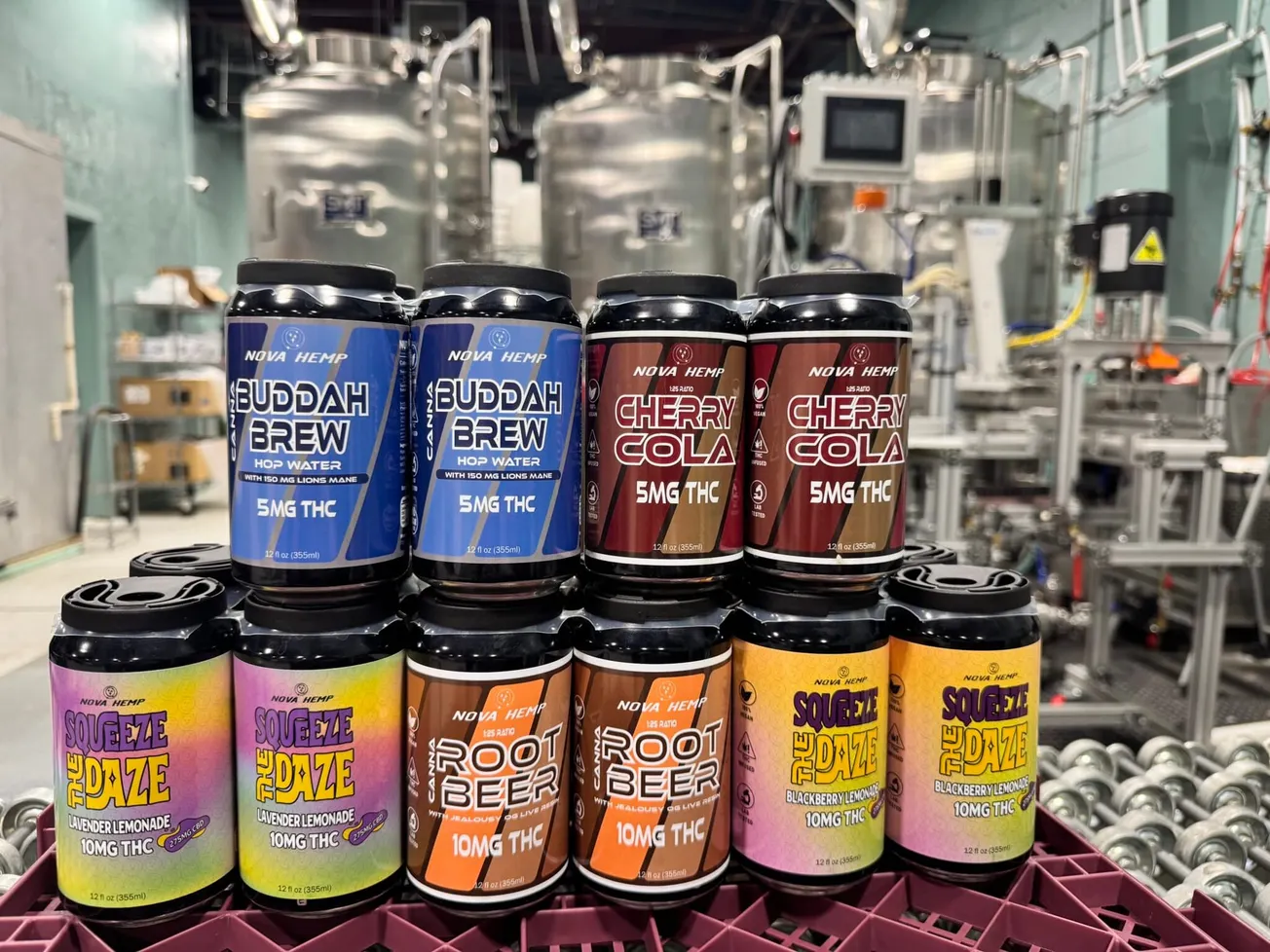
Travis Lane, operations manager at Nova Hemp in Middletown, said the company spent the last year and a half preparing to distribute beverages statewide and now has products that may become unsellable under the new restrictions.
“I have pallets of lemonade for example that will become a sitting duck,” Lane said in an email. “We are trying to figure out how to keep our staff on board because they are trained and it’s a big investment for companies to train employees. We don’t know what to do with them.”
Virginia adopted its current hemp framework in 2023 through legislation sponsored by then-Sen. Emmett Hanger, a Republican from Augusta County. The law established the 2-mg limit and the 25-to-1 exception while requiring child-resistent packaging, independent laboratory testing, warning labels and a minimum purchase age of 21.
Biddle disputed the state’s argument that eliminating the exception is necessary to protect children, saying the industry already operates under strict safeguards.
“This is not about safety – this is about corporate consolidation,” Biddle said, “Businesses invested millions of dollars into this industry just to be shut out without any formal hearings about the redefinition.”

State says regulated cannabis market will replace current system
Virginia officials argue intoxicating hemp products have proliferated in vape shops, convenience stores and other retailers that are not subjected to the rules governing licensed marijuana dispensaries.
Only 60 acres of hemp were harvested in the commonwealth in 2025, according to the Governor’s Office, leaving the state largely dependent on products imported from elsewhere. Shifting state and federal policies have left hemp growers and retailers navigating an uncertain market.
A Spanberger spokesman said last week some businesses have exploited the gap between Virginia’s hemp and marijuana laws.
“For years, untested and highly-intoxicating products have flooded Virginia with little oversight, inadequate protections for kids and teenagers, and few tools for law enforcement to address the illicit market — all because of a loophole in state law that bad faith actors have exploited and pushed the limit of its intended use,” the spokesman said.
He said Virginia’s adult-use cannabis market will replace that system with a regulated framework designed to better protect consumers while creating new opportunities for small businesses and producers.
Under the budget approved in late June, recreational marijuana sales are scheduled to begin July 1, 2027. The Virginia Cannabis Control Authority will oversee the market and regulate hemp products under the new system.
Virginia legalized adult possession and home cultivation of marijuana in 2021 but did not establish legal retail sales. Previous efforts to create a recreational market either stalled in the General Assembly or were vetoed before lawmakers and Spanberger reached a budget agreement this year.
Chelsea Higgs Wise, executive director of Marijuana Justice, said Virginia risks repeating mistakes it made after legalizing marijuana possession, when consumers, businesses, local governments and law enforcement were left with little guidance about what the new law meant.
“No matter when hemp law changes occur, educating the public on these changes and their impact on consumers remains vital,” Higgs Wise said. “Since a replacement market for products with more than 2 mg of THC will not be available until July 1 of next year, the commonwealth urgently requires more comprehensive guidance.”
She said that the state also needs to explain what businesses should do with products they cannot legally sell after Aug. 15 and help communities prepare for the possibility that some products move into the illicit market.
“A true public health approach should incorporate a micro-plan allowing business owners to clear their inventory over a set period, strategies for parents and communities to monitor the illicit market, and widespread public education to ensure overall consumer safety,” Higgs Wise said.
Jones said he is prepared to defend the new retail market once it is set up.
“This new law creates clear standards for business participation in the marketplace, and sets up enforcement mechanisms to address the illicit market and protect consumers from dangerous products,” Jones said in a text message. “My office stands ready to defend this law that will keep Virginians safe.”

But the businesses argue the new standard focuses on the total amount of THC in a package without considering its concentration, serving size and intoxicating effect. They also contend the state will treat THC products differently depending on whether they are sold by a hemp business or through the coming licensed marijuana market.
“It doesn’t make sense that in 11 months a consumer will be able to buy a 100-mg, 12-ounce drink of THC with 10 servings in it, and right now a 12-ounce, 10-mg drink with 250 mg of CBD in it will be illegal,” Lane said. “The state of Virginia already has a group of responsible business owners that could help them start up the entire market for them. It didn’t need to be a blackout.”
States take different approaches
States have responded in different ways to the growth of intoxicating hemp products since the 2018 federal Farm Bill legalized hemp containing no more than 0.3% delta-9 THC by dry weight.
California imposed emergency regulations in 2024 prohibiting food, beverages and dietary supplements containing detectable THC or other intoxicating cannabinoids. State officials later reported inspectors found nearly universal compliance after visiting more than 11,000 businesses.
Minnesota instead chose regulation, allowing hemp-derived beverages and edibles containing up to 5 mg of THC per serving and 50 mg per package, along with age restrictions and testing, labeling and packaging requirements.
Texas, however, took a more restrictive path. A prohibition on delta-9 and other THC isomers took effect this summer after the Supreme Court of Texas upheld regulators’ authority to classify delta-8 as a controlled substance.
Separate from the Virginia dispute, federal rules are also poised to tighten.
Last year, President Donald Trump signed a government funding measure that redefines hemp and, beginning Nov. 12, limits finished hemp-derived cannabinoid products to 0.4 mg of total THC per container — well below Virginia’s new 2-mg cap. The change is expected to remove the most intoxicating hemp products from the federally legal market.
Since signing the measure, however, Trump has called on Congress to preserve access to full-spectrum CBD products and directed his administration to work with lawmakers on revising the federal definition of hemp.
The Virginia businesses are asking the court to preserve the 25-to-1 exception while the case proceeds. Biddle said an injunction would give lawmakers time to either reconsider restrictions or determine whether affected businesses should be compensated.
“We are hoping that a judge will rule the law change unconstitutional,” she said. “If an injunction is granted, it will buy us time and allow lawmakers a chance to either figure out just compensation for the industry or reevaluate the removal of the 25:1 ratio altogether. I’m leaning towards the latter.”
For Lane, the immediate request is more time for businesses to adjust before the new limit takes effect.
“We seriously would prefer an official transition period,” he said.
Virginia Mercury is part of States Newsroom, a nonprofit news network supported by grants and a coalition of donors as a 501c(3) public charity. Virginia Mercury maintains editorial independence. Contact Editor Samantha Willis for questions: info@virginiamercury.com.