Flock cameras are a ‘gamechanger,’ Henrico Police chief says, but residents' privacy concerns still abound
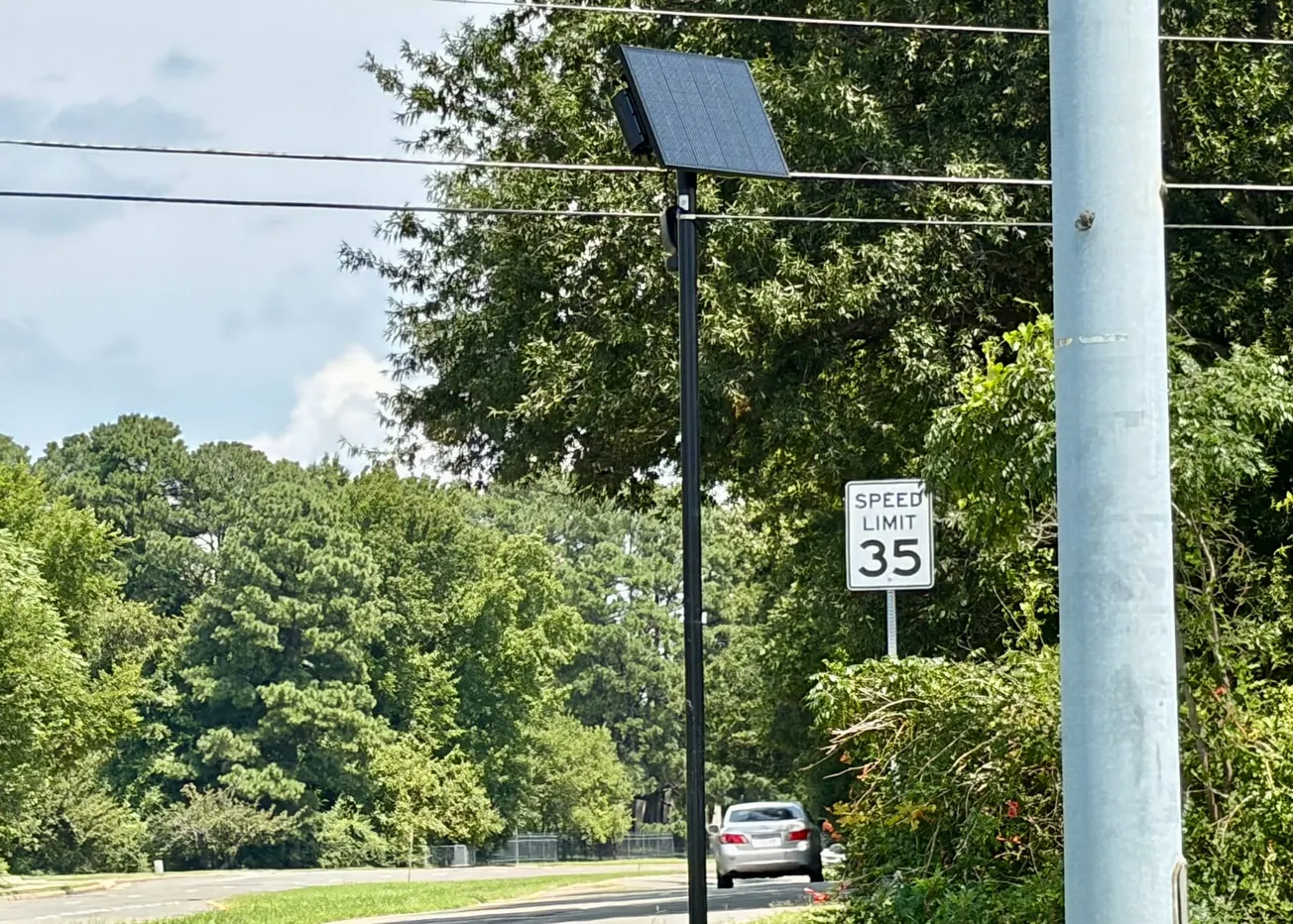
Henrico Police Chief Eric English has cited Flock cameras as “one of the best investigative tools” for the department, but pushback continues from both Henrico residents and officials.
HPD has partnered with security company Flock Safety since 2022, and in April of 2026, the department renewed its annual Flock contract for $348,000. Since April, HPD already has added 16 new Flock automated license plate reader cameras, increasing the total number of Flock cameras in the county to 128 as of Aug. 11.
The cameras are placed throughout the county and locations are chosen based on crime trends and the number of residents in each area, said English. The 128 ALDR cameras (122 are stationary, 6 are mobile) capture photos of the back of any vehicle that passes through the viewpoint to record the license plate and the vehicle’s make, model, and color.
But Flock cameras do not possess facial recognition software to identify who is driving the vehicle, English said, and are not pointed towards schools or churches. Altogether, the cameras capture only a little more than 1.5 miles of roadway, with English saying there is “no way” for HPD to track residents from “place to place” using the cameras.
“There's no way you can say that's a surveillance tool when you only covered a mile-and-a-half of roadway out of 3,500 miles of roadway in your county,” he said. “I just want people to understand that there's no way we can tell where you're going because it only takes a photo of a short period of time where your car passes through that location.”
HPD mainly uses Flock to track hits on stolen vehicles, said English, but also for human trafficking and missing person cases. The cameras have helped HPD pursue leads in criminal investigations much more quickly, he said; on only the third day of testing out the cameras, HPD was able to make an arrest in a shooting at St. Luke’s Apartments by locating the suspect’s vehicle through Flock.
“We were able to make a case within 24 hours that, without Flock, would have probably taken an extended period of time before an arrest was made. And we see that quite often with the utilization of Flock cameras,” English said. “Flock has been a gamechanger in terms of technology. It’s one of the best investigative tools I’ve ever experienced in my almost 37 years of policing.”
The department also has Flock Raven gunshot detection devices located in two locations – near Engleside Drive and Newbridge Road (areas that have a “high volume of firearm discharges”) – that identify gunfire, pinpoint the specific location, and send real-time alerts to HPD. Since February of 2025, HPD has received more than 2,700 alerts from the devices, with more than 740 tied to gunshots.
English said that during an incident in September of 2025, Raven devices were able to alert officers about a shooting in the Newbridge Apartments, which allowed HPD to respond to the incident about a minute before a 911 call was made.
The website DeFlock.org allows users to add the locations of cameras to its system of maps (see below), though cameras noted on the maps are not guaranteed to be accurate.
Supervisor: 'I don't trust Flock as far as I can throw it'
However, Three Chopt District supervisor Misty Roundtree said she stands in firm opposition to the county’s use of the AI-powered system, saying she has “very grave concerns” about how entities other than HPD could access and misuse Flock data to violate the privacy of Henrico residents and visitors.
“Candidly, I don’t trust Flock as far as I can throw it,” Roundtree said in a social media post. “Even if Henrico Police does everything 1,000% correct with that technology, Henrico residents are still at risk just because of the way that that platform is built and the way that the goal of Flock is to have a national mass surveillance system.”
HPD retains all of the images captured by Flock cameras for 21 days, after which they are deleted – unless they are related to a criminal investigation. An individual image of a vehicle may be harmless, Roundtree said, but the collection of everywhere that vehicle has been in the county is invasive and may prove dangerous.
“Flock cameras, in the aggregate, know everywhere you went for about 21 days – your medical appointments, your legal appointments, your places of worship, any political meetings that you attended, your children’s school and activities,” Roundtree said at a Henrico Board of Supervisors meeting back in April. “AI paints a picture of you, whether it's a right or wrong picture, that can be used by an incredibly wide scope of people for an incredibly wide scope of purposes.”
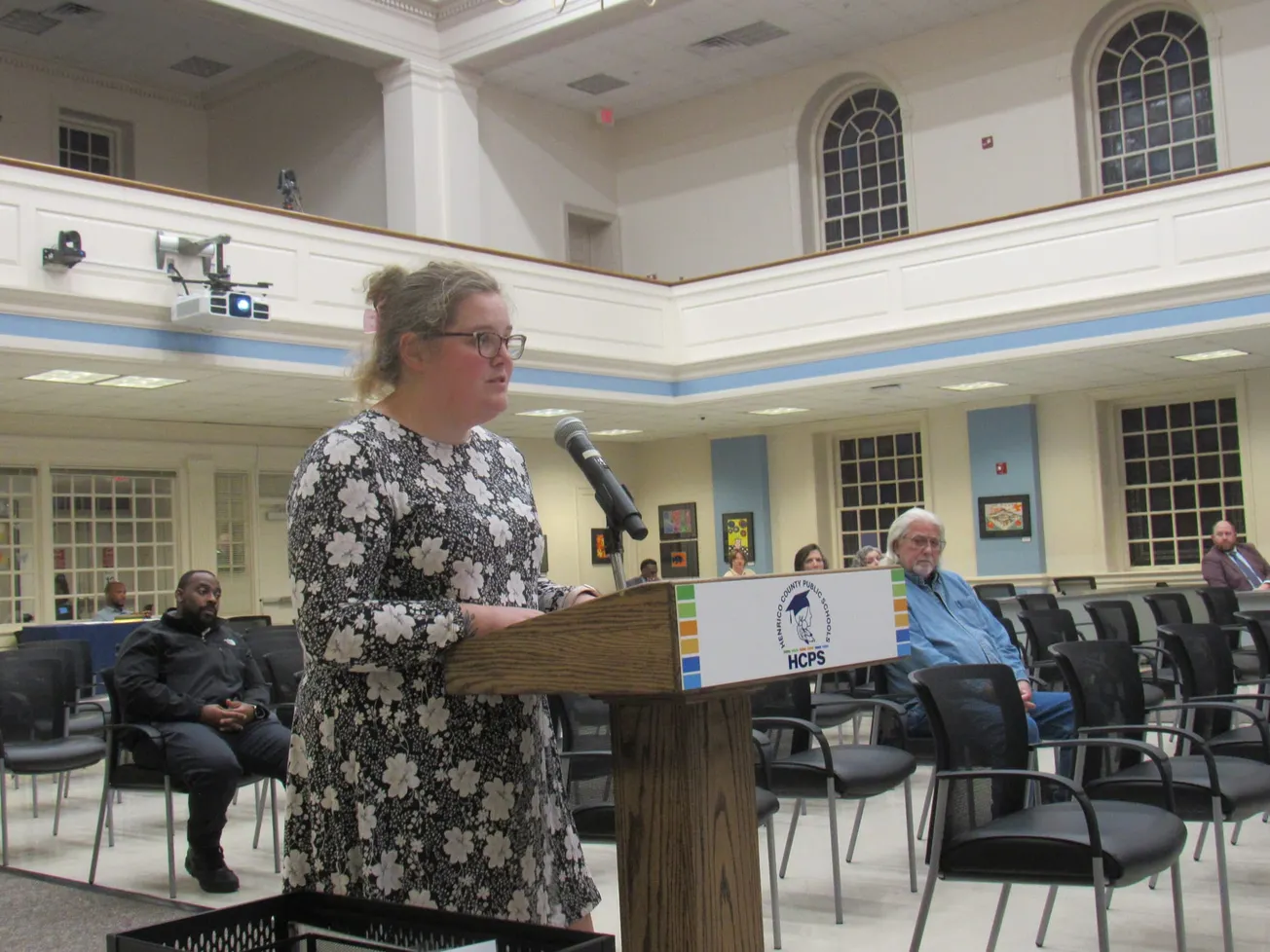
At a Henrico supervisors' meeting on Tuesday, several Henrico residents spoke on their concerns about the county's use of Flock cameras, urging the board to discontinue Henrico's Flock contract.
"It's essentially turning what our home is into a surveillance state," said David Parker. "I don't think that Flock cameras need a place in our community."
Residents also commented on the placement of the cameras, saying that many are near low-income areas but not within other wealthier subdivisions.
"I live right behind like Tuckahoe Middle and Ridge Elementary. The only two spots right by my house that have Flock cameras are outside of apartments that are lower-income apartments," said Cory Rutledge. "There's none within any of the subdivisions or houses around. I don't think that that sends a great message out there."
Henrico doesn't share Flock data directly, but state partners may
In March of 2025, an incident involving Flock cameras in Richmond City heightened fears about misuse of the technology; a federal agent was able to access Richmond’s Flock data to assist in the search of four people who escaped from an ICE detention center in Farmville. Since then, Richmond Police have blocked all federal agencies from accessing Flock data and have stopped sharing Flock data with other Virginia localities that collaborate with ICE.
Under Virginia law, HPD cannot share Flock data with federal agencies, including U.S. Immigration and Customs Enforcement, English said, and the agency does not conduct any data searches on behalf of other agencies.
However, Henrico is able to share Flock data with other law enforcement agencies in Virginia, including agencies that do share information with federal entities such as ICE.
HPD has published a Flock transparency portal that reveals the number of vehicles detected and the number of searches conducted during the most recent 30 days. The department conducts monthly audits of Flock usage, according to English, but those audits are not subject to release under the Freedom of Information Act (FOIA) and HPD does not have to submit Flock usage data to the Virginia State Police until April 1, 2027.
Other national incidents involving Flock – including a Texas deputy who used Flock cameras to track a woman who had an abortion and police officers who misused Flock cameras to track ex-partners or romantic rivals – have spurred more local pushback against the cameras in the Central Virginia region.
But Roundtree said that without more vocal opposition from Henrico residents, the county is unlikely to switch its tune on Flock.
“I am only one of five [supervisors] and cannot do anything about Flock unless and until a majority of our Board [of Supervisors] agrees,” she said. “My fellow [Democratic] colleagues have been open to hearing my concerns. . . Candidly, what is missing is a public push from residents of Henrico. It’s always a tough conversation when public safety is implicated, so it can be hard to get traction if it doesn’t seem to be a big issue for residents.”
Liana Hardy is the Citizen’s government and education reporter. Support her work and articles like this one by making a contribution to the Citizen.