Book excerpt: The Heart of the Matter, Chapter 10
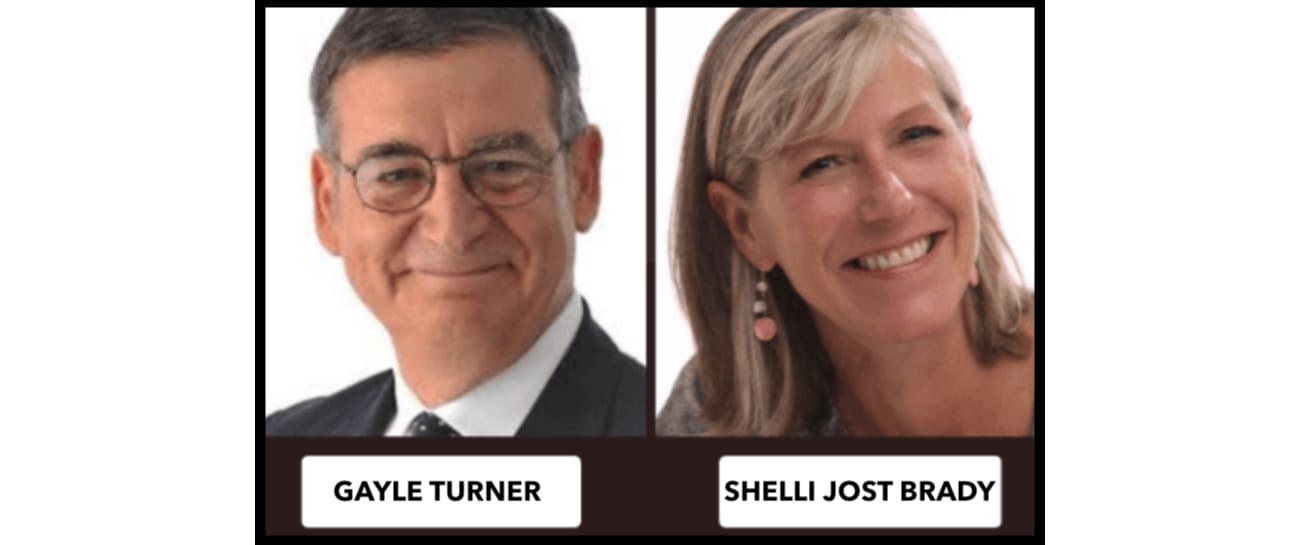
Editor's note: Each week, the Henrico Citizen will present a new chapter of The Heart of the Matter, a forthcoming book by Gayle Turner and Shelli Jost Brady, longtime Central Virginia leadership consultants, storytellers, and community builders. Through stories and reflection, the authors explore how the values people hold and the stories they tell shape the decisions they make — at work, at home, and in communities. Follow along each week as the book unfolds, one chapter at a time.
Chapter 10 — Trust Is built at the speed of behavior
Trust does not grow at the speed of intention.
It grows at the speed of behavior.
You can declare trust in a single sentence.
You can destroy it in a single moment.
But you can only build it through repetition.
Slowly.
Predictably.
Publicly.
Trust Begins with Emotion Many leaders talk about trust as if it were a feeling—something people either “have” or “don’t have.” Trust is not a feeling in and of itself. Trust is a calculation the nervous system makes over time, frequently in the blink of an eye: Are you predictable? Are you consistent? Are you safe under pressure? Do your actions match your words? Do you protect people—or protect yourself? The decision to trust or not follows that calculation. | Trust Begins with Feeling Many leaders talk about trust as if it were a rational choice — something people consciously decide to extend or withhold. That isn’t how trust works. Trust is not created by reasoning. The nervous system is constantly scanning for patterns of safety and threat. Am I safe here? Only after it decides does the mind begin telling itself a story about why. That story often justifies our response to these concerns: Are you predictable? The feeling comes first. The decision to trust is simply the story the brain tells about a conclusion the body has already reached. |
The behavior-to-trust equation
People watch leaders for three things above all else:
1. Patterns
2. Pressure
3. Who gets protected
Trust rises or falls based on:
• What the leader does again
• What the leader does when it costs
• Who the leader defends when interests collide
Grand gestures rarely matter.
Quiet patterns of behavior always do.
Why trust accelerates or decays so quickly
Trust moves faster than reputation.
Because it doesn’t rely on storytelling alone.
It relies on memory.
People remember:
• How you handled their mistake
• How you treated someone who couldn’t defend themselves
• Whether you listened when it mattered
• Whether the rules changed midstream
These memories become the emotional database that determines:
“How much of myself is safe to offer here?”
The illusion of 'high-trust cultures'
Some organizations believe they have trust because:
• People are polite
• Conflict is muted
• Meetings run smoothly
That is not trust.
That is conflict avoidance.
Real trust shows up not in silence—but in:
• Dissent
• Questions
• Risk-taking
• Candor
• Shared vulnerability
If people aren’t willing to disagree with you, they don’t trust you.
They are managing you.
How leaders unknowingly teach distrust
Leaders rarely say: “Don’t trust me.”
They teach it through:
• Overreaction
• Inconsistency
• Retaliation
• Favoritism
• Avoidance
Every one of these teaches the same lesson:
“Protect yourself.”
Once that lesson takes hold, collaboration collapses into choreography.
Everyone knows the steps.
No one feels safe to improvise.
Trust and the gallup insight
Gallup’s research consistently shows that what people want most from leaders is:
• Hope
• Stability
• Trust
• Compassion
What’s striking is that:
• Not one of these is a skill.
• All of them are emotional conditions created by behavior.
Hope comes from:
• Leaders who point somewhere worth going.
Stability comes from:
• Leaders who act consistently.
Trust comes from:
• Leaders who protect integrity under pressure.
Compassion comes from:
• Leaders who see people before they see performance.
None of these can be faked for long.
The trust curve of every leader
Every leader begins with borrowed trust.
People assume:
• Good intent
• Honest effort
• Fair judgment
From that point forward, trust is no longer assumed.
It is earned—or spent.
Every decision is a small withdrawal or deposit.
Over time, people know the balance—even if the leader does not.
Why broken trust spreads faster than broken process
Processes break and get repaired.
Trust breaks and relocates underground.
People don’t usually announce:
“I no longer trust you.”
They simply:
• Stop telling you the truth
• Stop bringing you problems
• Stop asking you for help
• Stop risking their reputation around you
And leaders mistake silence for health.
It isn’t.
It’s withdrawal.
The compounding return of trust
Where trust is strong:
• Communication accelerates
• Conflict shortens
• Creativity rises
• Ownership deepens
• Accountability feels fair
Trust reduces friction everywhere it touches.
Not because people are nicer—but because they are less afraid.
Trust is the dividend of integrity
Clarity names what matters.
Integrity defends it daily.
Trust is the resulting dividend.
You cannot demand it.
You cannot rush it.
You cannot substitute for it.
You can only behave your way into it.
Closing reflection
Trust moves at the speed of behavior—
not at the speed of speeches, promises, or good intentions.
Every leader is writing a trust story every day:
• With how they respond
• With what they tolerate
• With who they protect
• With what they refuse to excuse
And over time, that story becomes the invisible structure on which everything else depends.
Strategy rests on it.
Culture flows through it.
Performance rises or falls with it.
Trust is never the soft side of leadership.
It is the load-bearing wall.
Discover what matters most to you by taking "The Culture Compass" free to discover and prioritize the values that guide your decisions; visit storytellerschannel.com/culturecompass.