Skip to content
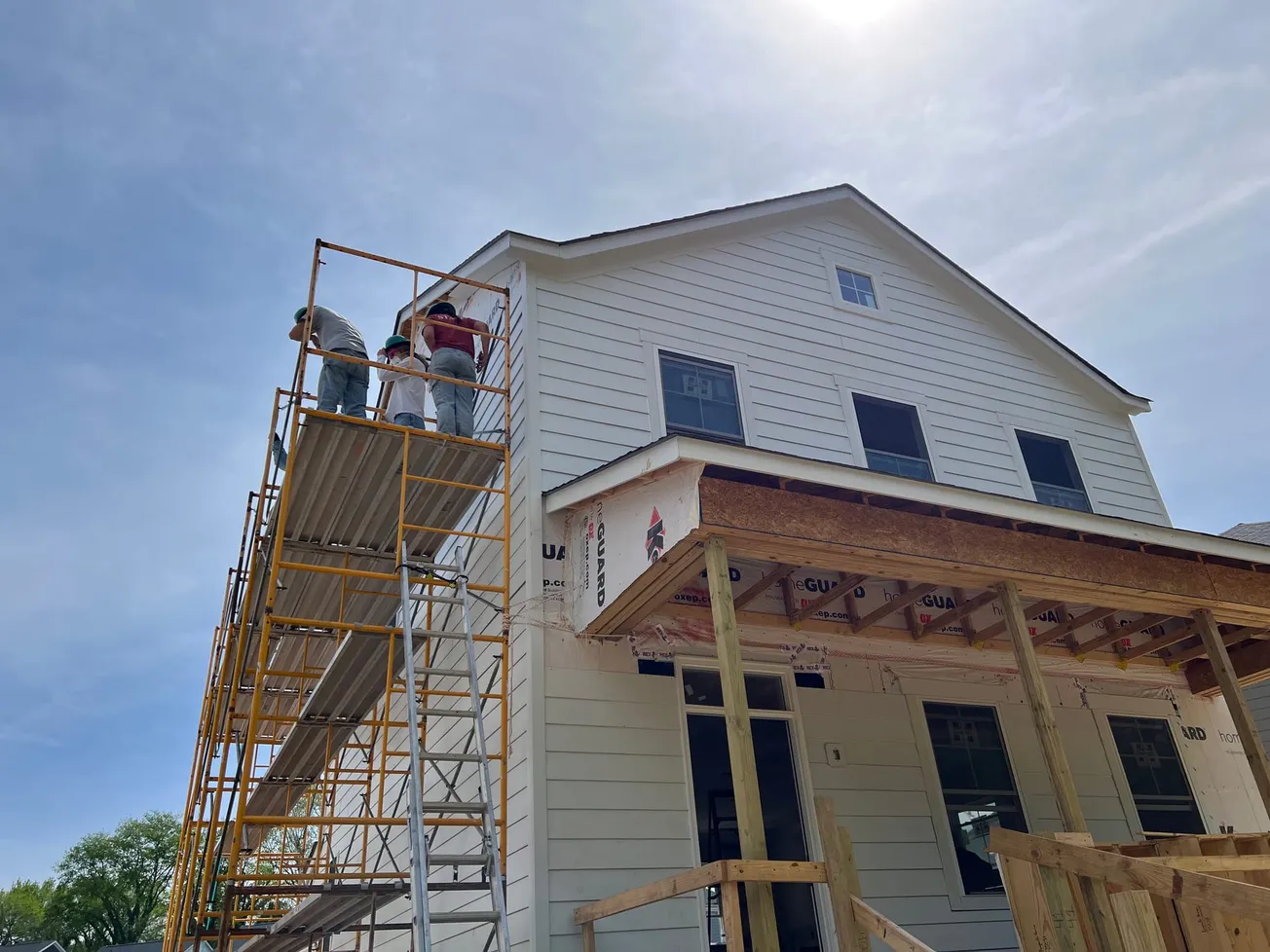
Volunteers work on the Richmond Metropolitan Habitat for Humanity's 400th home. (Contributed photo)

Before Henrico resident Beverly Humphries and her family moved into a Richmond Metropolitan Habitat for Humanity home, they were living in a rental house that was literally falling apart around them – then the house was condemned, forcing them to leave.

They crowded in with family. When it got to be too much, they moved into an extended stay hotel.

So, when she moved into her RMHFH house renovated by the nonprofit’s staff, volunteers and her own hands, she felt relief.

“Financially, I was able to have a lifestyle that I could afford,” Humphries said. “That was all I wanted – not lavish, not extravagant – but I knew that at the end of the month I would be able to afford the bills that I had. It was no longer like I can’t feed kids tomorrow because I have rent to pay that was three times what I was paying for this house.”

In her RMHFH-built home, Humphries can pay her mortgage, buy groceries and even have a little left over.

“If not, no big deal, because we have a backyard and the kids have their own rooms to play in,” Humphries said.

Half of the 400 homes that the RMHFH nonprofit has built in the area in its 40 years have been for homeowners in Henrico County.

That’s made a big difference for people like Humphrey who have left overcrowded, substandard, unsafe or unaffordable rental housing for safe, more permanent homes.

In a recent survey, RMHFH homeowners said homeownership helped them strengthen their stability, improve their safety and security, and increase their self-reliance. Others told how stable housing allowed their children to pursue their educational and career goals.

An important aspect of the housing nonprofit’s work is ensuring the homeowner’s expenses should not exceed 30% of their gross income.

That’s critical because of the great need and rising cost of housing in and around Henrico. One in four renters in Virginia are severely cost-burdened, according to Census data, spending more than 50% of their income toward rent, leaving very little for other life necessities like food, childcare, transportation, utilities and healthcare.

The average monthly rent for a three-bedroom house in this area is $2,100, whereas the current median mortgage payment range for current for Habitat homeowners is between $600 to $1,000 a month.

Marking a housing milestone

This month, the organization with a mission to bring people together to build homes, communities and hope marks a milestone: building its 400th home. The ceremony on May 16 in Highland Grove is open to the public.

Staffers, volunteers and the many residents of the RMHFH homes across the region are asking for 400 members of the community to support homebuilding through financial and in-kind donations, and volunteerism.

In the Week of Building Hope, which kicks of May 11, a general invitation is extended to the public to join RMHFH’s celebrations, as well as lend a hand with home construction, landscaping, furniture building, and in Habitat’s ReStores. The yearly, gender-specific Women Build program, underway right now, is another way to have a hand in the milestone.

In addition to donation solicitations and volunteer opportunities, the week starts with a pancake breakfast on May 11th at First Baptist Church and ends with a casual celebration on May 16th at Hardywood Park Craft Brewery.

“Our mission has stayed the same of bringing people together to build homes, communities and hope,” said Lauren Marshall, director of marketing and communications at RMHFH. “But the need feels like it's even greater now than when we first started here 40 years ago.”

One challenge is that the pace of wages has not kept up with home prices and rent costs. 

“There are many factors that go into the limited affordable housing we do have in our region. It's reached the fever pitch of where people just aren't able to find it. We're seeing hundreds of people who are coming to our homeowner info sessions to learn more about our programs because there is such a need,” Marshall said.

More than half of the RMHFH homeowners are single-parent households and 87% are families of color. All are at 80% or under the area median income. For a family of four, that is below $90,000. They take homeownership education classes and do one-on-one budgeting sessions to show their commitment.

With its headquarters located on Gaffey Street in Henrico County, RMHFH is part of a 50-year-old national organization with spiritual origins. 

With $7 million in total revenue, in 2025, 33 homeowners moved into Habitat homes here. A total of 1,697 volunteers helped in Habitat’s Northside and Chesterfield ReStores. Volunteers donated 25,903 hours of their time to support Habitat through 4,791 volunteer shifts. And last year, the nonprofit, with a staff of 60, received $2.6 million in gifts and grants raised by 820 donors.

In-kind donations like the Tyvek house wraps also keep the cost of houses down. Habitat officials are careful to diversify funding streams so they aren't over-reliant on one that could dry up. There are, however, some limitations; there is a lack of available land on which to build and homes that are accessible or affordable for the organization.

Impacting affordable housing

RMHFH is not the only low-income homeownership program here.

Henrico County’s Affordable Housing Trust Fund has invested $60 million to produce 750 homes for first-time home buyers earning between 60% to 120% of the area median income.

A June 2003 Richmond Metropolitan Habitat for Humanity home build in progress. (Contributed photo)

Habitat home locations are primarily determined by where they can acquire land through donations, purchases or partnerships.

Volunteers help Habitat keep homes affordable and get the community engaged in the process.

“Homeowners come in and do sweat equity or volunteer time helping to build their own homes,” Marshall said. “That's a really cool part of the program because not many people can say they help put up the walls or know exactly where the electrical is in their house and all of those cool features. But our homeowners know exactly what's going in and help to put it there.”

Volunteers get a sense of empowerment and acquire new skills, while knowing that they are helping to build a home for somebody in the community.

“Anytime a volunteer comes out on site, they don't have to have any prior construction knowledge or know anything about building a home,” Marshall said. “Our site supervisors are really awesome in guiding them to use tools they've never used.”

With the homeowners out on site helping to build their house with their sweat equity, volunteers can feel that personal impact and connection to the new homeowner.

“Our homeowners come away with knowing that the community is really behind them and feeling the sense of togetherness and hope with having a new safe, affordable roof over their house with endless opportunities for the future,” Marshall said.

Since it began in the Richmond area 40 years ago, Habitat has continued to evolve and run newer programs including a home repair program.

“We used to just be able to do actively leaking roofs for repairs in Henrico County, but now we are able to address a lot more of the critical repairs needed to keep people safely in their homes,” Marshall said.  

A 3-D printed home development is planned on Darbytown Road in Henrico.

On the horizon, Habitat is implementing programming to address neighborhood revitalization in a holistic way, working with residents to focus on needs including housing, transportation and green spaces.


Dina Weinstein is the Citizen’s community vitality reporter and a Report for America corps member, covering housing, health and transportation. Support her work and articles like this one by making a contribution to the Citizen.

Comments