Skip to content

At RIC, Spirit Airlines shrinks, FBI imprint grows, summer traveler numbers expected to fall with geopolitical issues, rising fuel costs
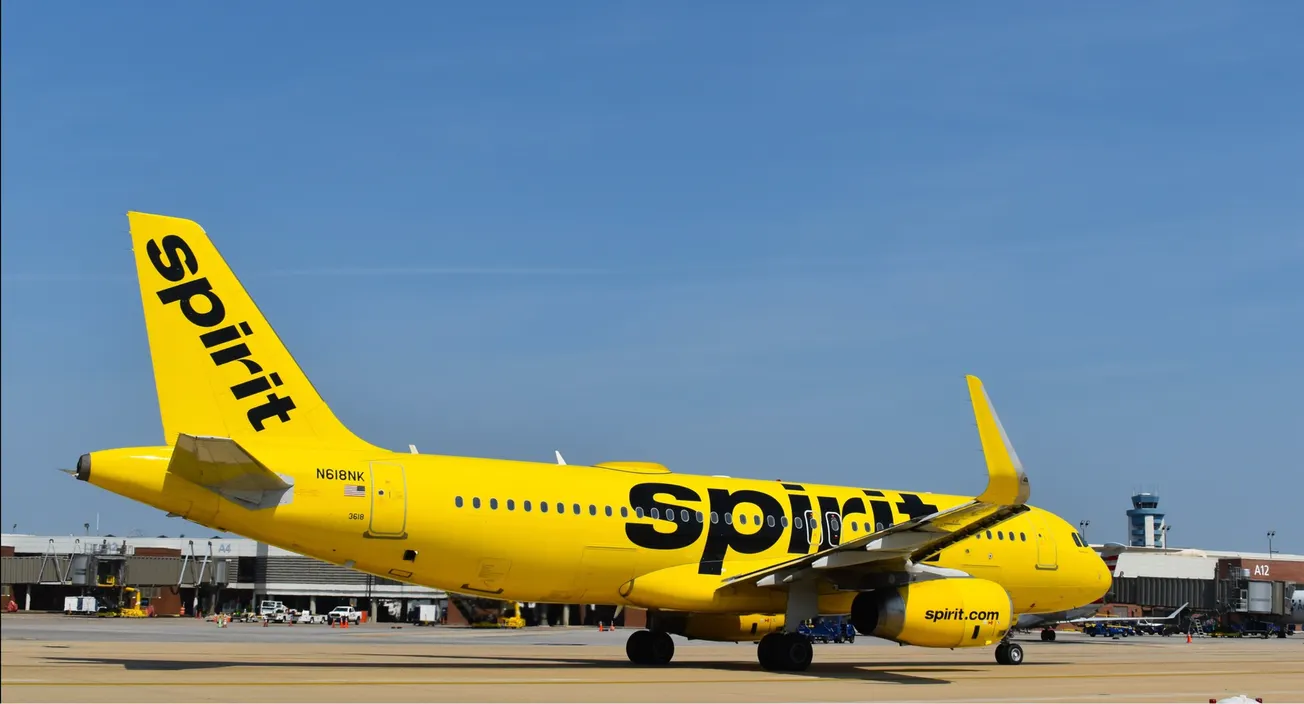
(Courtesy Richmond International Airport)

Richmond International Airport is feeling the economic ripples of the current geopolitical turmoil.

At Tuesday’s Capital Region Airport Commission meeting at Richmond International Airport, the board voted to amend Spirit Airlines’ operating agreement, shrinking the budget airline’s footprint at a time when skyrocketing oil costs on the heels of its August bankruptcy filing are threatening its future.

Rising costs also are expected to impact other airlines at RIC and, as a result, lead to a slight decline in passenger totals this summer, during what typically is a busy season for flying.

In the Spirit amendment, the CRAC board approved Spirit relinquishing its baggage service office and two ticket counter positions, effective Friday with a new lower monthly lease.

The Spirit Airlines operating agreement amendment was proposed by the airline, which filed for bankruptcy protection in August for the second time in less than a year. It was aiming to exit that in late spring or early summer after striking a preliminary deal with lenders, according to reporting by the Associated Press.

But that plan was disrupted when U.S. and Israeli strikes on Iran sent oil prices soaring above $100 a barrel, with jet fuel costs doubling in some markets as the fighting in the Middle East continues to disrupt global oil supplies.

Most recently, the ultra-low-cost carrier made a $2.5 billion federal government aid request, which would need approval from both the House and the Senate.

U.S. Transportation Secretary Sean Duffy expressed hesitation about the bailout as well as a separate plan for a $500-million government rescue package for Spirit Airlines.

Details of the Spirit Airlines operating agreement amendment are shown in a Capital Region Airport Commission meeting presentation April 28, 2026. (Dina Weinstein/Henrico Citizen)

Spirit Airlines has 4% of RIC’s market share, and it isn't the only airline seeking help.

Last week, a group of budget airlines including Frontier and Avelo, which executes deportation flights, formally asked the federal government to create a $2.5 billion liquidity pool to offset rising fuel costs, the airline industry publication Aviation Circle is reporting.

“The young man who's calling me is working every one of his accounts to try to reduce the cost of daily operations at the order of the bankruptcy court,” said Scott Knight, RIC director of concessions.

It’s also not the only airline pulling back operations.

“United Airlines, a major network carrier, for one, has already announced some cuts this summer. Some of it's going to happen in Chicago where the flights have been capped at O'Hare,” said Troy Bell, RIC spokesperson. “Spirit is in cash-conservation mode. They have reduced their flights here, at least for the time being. The routes that they serve from here go to Ft. Lauderdale and Orlando and are served by other carriers. It may be good news for the other guys, a little less competition.”

Bell said United Airlines is strong at RIC and he was not aware of any flight cutbacks by that carrier in Richmond, where it experienced 10% growth, along with American Airlines.

“When you look at the tea leaves and the data for schedules, yeah, we can see that we have gains, but the gains are less than they were if we were looking three or four months ago,” Bell said. “Air carriers are pulling back capacity in some markets. Lufthansa is looking to take 20,000 flights out for the summer to conserve cash.”

Prices increase, airline traffic decreasing

RIC staffers reassured CRAC members that they communicate the schedule of major events in the Richmond area to air carriers to handle demand. This spring, airport leaders have been meeting with more than a dozen air carriers, many of which are international, to advance route development and retention.

After overcoming the government shutdown, delays and cancellations during the winter, passenger numbers during the spring break season were strong. Last month, RIC reported just more than 417,600 passengers, making this March its busiest ever with a 5.5% increase over the same period a year ago (nearly 396,000 passengers).

For fiscal year-to-date 2026, passenger traffic has increased 3% over last year, a gain of more than 100,000 passengers. American Airlines was the month's market leader with a 30.8% share of passengers, followed by Delta at 24.8%, and United at 12.5%.

Richmond International Airport's March 2026 aviation activity report showed a new March passenger record but also showed passenger projections for the summer are down. (Courtesy RIC)
Richmond International Airport's March 2025 aviation activity report showed steadier growth throughout the summer as well as a prediction of higher seat counts throughout the summer. (Courtesy RIC)

While the airport’s financial department reported year-to-date operating revenues totaling $58.7 million, which is greater than RIC’s budget by $4.4 million (or 8%), passenger projections for the summer are down.

Airport officials attribute those projections to travelers holding back their travel plans because of current economic pressures. With airline prices increasing, airline traffic is decreasing. Carriers are starting to try to match capacity to that reality.

“Airlines have become a lot more conservative in terms of growth,” Bell said regarding lower-than-usual numbers of passengers projected for May as well as through the summer. “It's industry pressures. You've got geopolitical issues. There's a known lesser number of international travelers. There’s the fuel shock. When your cost of fuel doubles in a month, it has a real impact on your business. It's usually the largest thing that airlines have to pay for. If you look at their expense components, fuel is already number one. Well, it just got to be number one at a much higher percentage.”

Bell said RIC may see slower growth as well as federal government budgetary issues having another local impact. Transportation Security Administration agents are still not being paid in their normal cycle of payment.

“Funds that Homeland Security used to pay them has made them whole for a while, but they haven't resolved that issue yet. That's still out there. That’s looming in the future if they don't find a resolution,” Bell said.

Despite current outside forces impacting the number of flyers, the CRAC commission discussed aspirations for an international flight from RIC.

Details of the Federal Bureau of Investigation's facility lease amendment on the airport grounds as shown during a Capital Region Airport Commission meeting presentation April 28, 2026. (Dina Weinstein/Henrico Citizen)

FBI imprint growing

Next month several seasonal routes are poised to restart at RIC, including Nashville on Allegiant; Charleston, Islip, Jacksonville, Los Angeles and San Francisco on Breeze; and Minneapolis/St. Paul on Sun Country.

The CRAC also voted to approve a proposed amendment to the lease of the Federal Bureau of Investigations facility on the airport grounds.

Scott Knight, RIC's director of concessions, said the change will simplify annual rent increase calculations and provide certainty as to rental amounts.

“It's from an average with a cap of 3% to a flat 2.7% every year,” said Knight. “Just boom, it's done. The airport financials staff could sit down and say, here's what the rent is in 2027, here's what it is in 2028. And here's what it is before it expires in 2029, and we're done. It's just administratively cleaner.”

The FBI has three years left on its lease term.

“That helps finance to be able to forecast revenue. It helps the federal government forecast expenses. Their budget cycle is different from ours, we had to do a true up or a reconciliation and it just created every year chaos. We couldn't get the information fast enough,” Knight said. "They needed it. Now we agreed on a number."

The FBI currently has separate hangars on the east side of the airport where it has offices and stores planes.

As one of the airport’s largest tenants, the FBI is planning on expanding its existing apron, which includes 258,500 square feet of apron pavement and two connector taxiways. The project is an expansion, building an 80,000-square-foot hangar with a total cost of $17 million. The expansion is not part of the current contract.


Dina Weinstein is the Citizen’s community vitality reporter and a Report for America corps member, covering housing, health and transportation. Support her work and articles like this one by making a contribution to the Citizen.

Comments