Third-party study highlights dysfunction, lack of transparency in Henrico’s HVAC management

Neither Henrico County nor Henrico County Public Schools has a formal set of practices or a centralized system for addressing the numerous HVAC problems occurring throughout the county, according to an outside study.
During a 30-day assessment, CapTech Consulting delved into the county’s HVAC operations and spoke to both county and HCPS staff to identify what caused the widespread HVAC outages that occurred this past August.
The answer: no centralized system to track what HVAC work was completed, no record of preventative maintenance done on HVAC systems, no record of how much and what type of HVAC equipment the county has, decisions based on individual judgement rather than objective data, and a disconnect between HCPS’ central office and school staff.
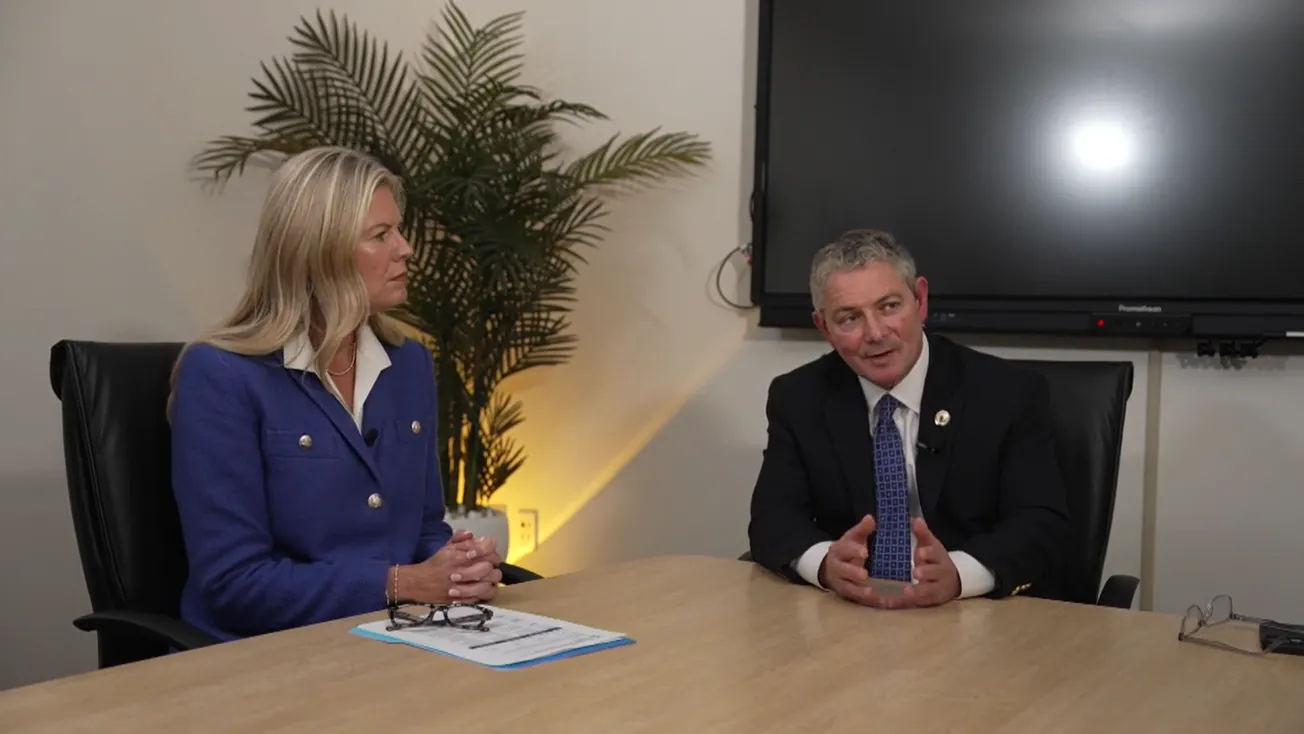
In presentations to the Henrico Board of Supervisors and Henrico School Board this week, CapTech Public Services Lead Adam Hofheimer, who is also an HCPS graduate, said that with the right steps forward, the county could see significant progress within a year. But, he said, it might get worse before it gets better.
“HVAC is a symptom of the lack of integration and data and process and information flowing from the systems themselves,” said Hofheimer. “We've provided a comprehensive roadmap. We've given you a timeline that we believe is realistic. [But] there are varying levels of decisions you all have to make.”
Hofheimer said that the county must reconsider its current work order system, which is “completely and utterly ineffective.” HCPS’ work order system is much more efficient, although there is much more the division can do with the platform, he said.
But HCPS has a number of other problems, he said:
• a lack of transparency with families where “no one knows what’s going on;”
• an estimated $92-million need for new equipment according to a past third-party study;
• and despite a “very strong” school-level response to HVAC issues, a large disconnect between schools and central office, where the issue remains unsolved once “it leaves the building and goes to central facilities,” Hofheimer said.
HCPS central facilities staff, similar to county staff, also have no overarching system to effectively track work orders, equipment history, and vendor transactions, he said.
“No one in this body can log onto a system every day and see how many work orders are submitted in any school, and that needs to change in the future,” Hofheimer said. “Typically, when we do this work, we’re able to look at the dollars spent. We’re able to look at all the assets to be able to measure the lifespan of the assets you have. We didn’t have a lot of that information because it’s just all over the place.”
Who's to blame?
This past spring, county supervisors and school board members sparred over widespread HVAC issues in the schools, with school board members arguing that “stagnant funding” for school HVAC from the board of supervisors had accelerated problems.
Now, supervisors are saying that CapTech’s assessment proves that the main issues are not funding-related.
“Our hands have become tied because the narrative is that HVAC is messed up and then we’re arguing back and forth about the money part of it,” said Varina District supervisor Tyrone Nelson. “I think everybody is now saying it’s really not about the money. It’s about the process.”
But Hofheimer said that at this point, CapTech is unable to determine exactly what financial situation HCPS’ HVAC operations are in because there is not enough information or record on work that has been done and equipment that has been purchased.
“Well. . . we don’t know the extent of the financials of the equipment across the 10 million square-feet that you have until we understand the data and where the data is pointing,” he said. “So right now, the most important thing that you can do is build understanding of the equipment and assets that you have.”
Even if the county followed the results from the third-party study conducted by Moseley Architects (which identified a need for $92-million in new HVAC equipment) but used the same practices it currently has in place, it would be “right back at the same place” in a few years, Hofheimer said.
Hofheimer said that many of the fundamental issues stem from “the hand people have been dealt, not the one they created.”
“It’s no one’s fault. This is not meant to point fingers at anyone,” he said. “We’ve met with many people in the county and the schools. . . I think there is a committed staff on both sides that want to solve this issue.”
School board members also said that the situation was not caused by any “one person” or “underfunding.”
“I think that I can speak for the rest of my colleagues that we have absolute faith in [HCPS Superintendent Amy] Cashwell to get this right,” said School Board Chair Madison Irving (Three Chopt District). “I think that while it may be cathartic to assign blame for previous action or inaction, that doesn't actually fix things.”
Micky Ogburn, Irving’s predecessor on the school board, said that years of redirecting meals tax funding (which typically goes toward school maintenance projects) toward new school rebuilds instead compounded a “perfect storm” of aging infrastructure, rising costs, and operational issues.
“Maintenance needs do not disappear when funding is postponed. They accumulate, and delays make repairs more expensive,” she wrote on the school board’s public forum. “Historically, as meals tax funded projects are completed, new maintenance needs continue to emerge. It is never ending.”
She also encouraged the current school board to collaborate with county supervisors.
“Moving beyond the blame game and working together toward lasting solutions must be the priority,” she wrote.
Where do things go from here?
Hofheimer said the county government could tackle the issues through two different ways: either keep the county’s and schools’ HVAC operations largely separate, or consider merging work order systems, HVAC workforces, data, and capital planning.
“I do believe there are economies of scale to be gained by combining forces,” he said.
Henrico County Manager John Vithoulkas said he would work alongside Cashwell to ensure the HVAC operations for both the county and schools see major improvements, although he did not say the level of collaboration the county intended to pursue with HCPS going forward.
“If we need to change an approach, we will absolutely do that,” he said. “Dr. Cashwell and I spoke with media earlier, and there was a commitment that was made by both of us that our residents would not see [next August] what they saw this August.”
Since the completion of CapTech’s assessment, county staff have already begun to identify and collect data on county-owned HVAC equipment. HCPS has also begun the work of collecting information on their equipment, said HCPS Chief of Operations Greg Dunaway, using vendors who are already performing preventative maintenance at schools.
Dunaway said that CapTech’s findings “independently validated the direction HCPS has already begun pursuing.”
“Several recommendations align directly with the priorities we shared in September, and implementation efforts are underway,” he said. “Including a review of our work order system, a new preventative maintenance contract with our eight vendors, building automation system improvement review, and recruiting and adding new leadership roles.”
But Hofheimer warned that as the county and schools implement necessary operational changes, HVAC work orders may temporarily increase.
“Through transparency, things will not get lost. Things will get fixed and they will get prioritized,” he said. “It might get worse before it gets better.”
Liana Hardy is the Citizen’s government and education reporter. Support her work and articles like this one by making a contribution to the Citizen.