Richmond airport commission approves growth in 2027 budget
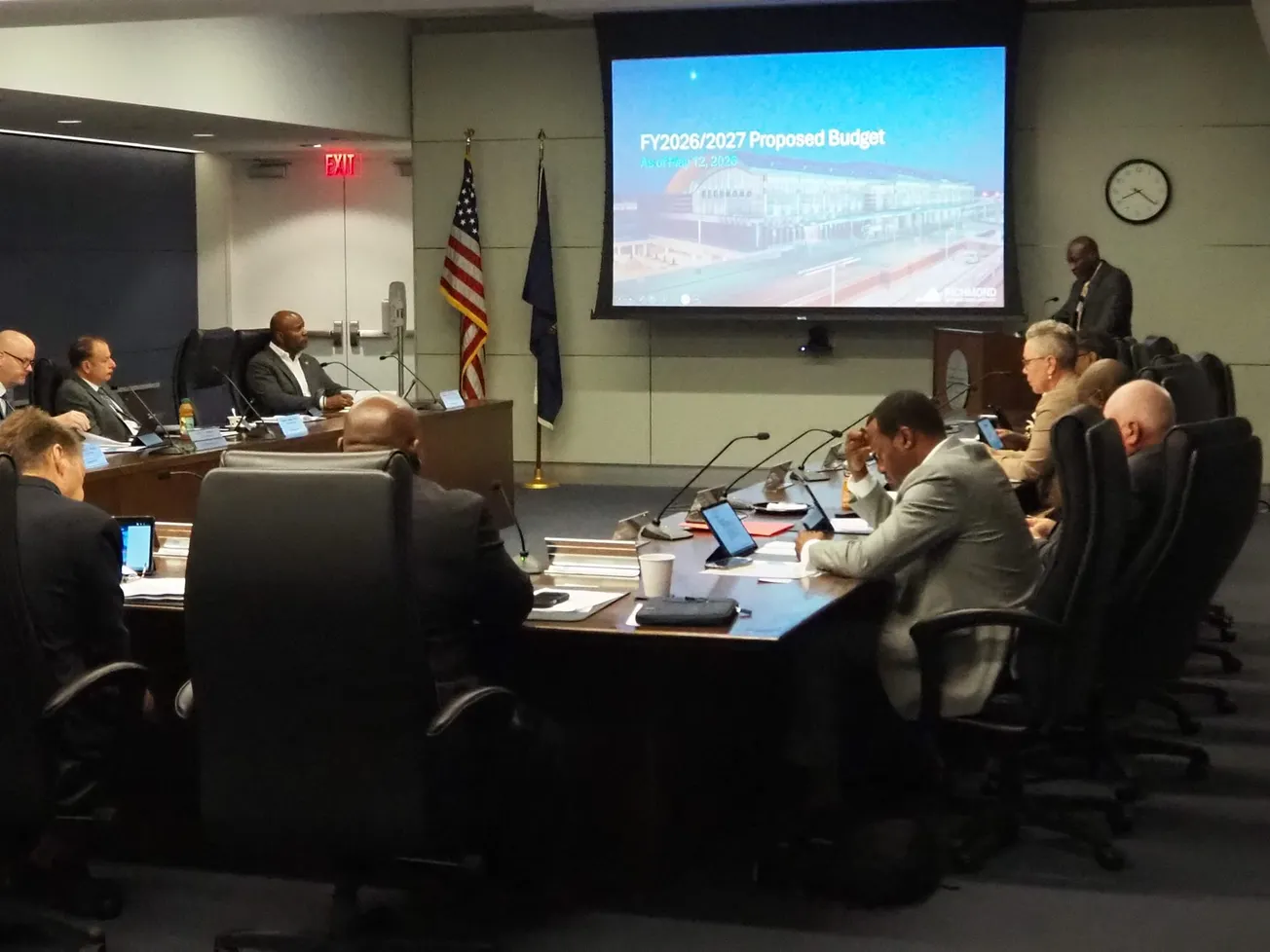
The Capital Regional Airport Commission approved its 2027 fiscal year budget last week, highlighted by the start of 34 new capital projects totaling $148.1 million.
Factoring in ongoing capital projects that will continue in the coming fiscal year, the commission earmarked a total of about $166.5 million for its capital budget – a dramatic increase from the $31.8 million it's spending on that budget during the current fiscal year.
While the current high-dollar capital improvement item – an aircraft rescue and firefighting facility (with a total anticipated cost of $34 million) – is out of passengers' view, the highest ticket item in the FY27 budget will be the construction of a highly visible consolidated security checkpoint and addition of 103,000 square feet of new space, along with the renovation of 84,000 square feet of existing space.
The commission allocated $120 million toward the project in the coming fiscal year; it's expected to cost $253.1 million in total over its multi-year buildout.
The project will merge the existing checkpoints on Concourses A and B into a central location so that passengers can move between both concourses without needing to pass through security multiple times.
“This budget supports our long-term growth plan and financial sustainability,” said RIC Chief Financial Officer Basil O. Dosunmu at the May 26 CRAC meeting. “This project helps all five airport pillars; this ensures passenger experience, drives enterprise revenue and growth, and ensures we support operational excellence and innovation. We are also trying to make sure we support and strengthen workforce development and contribute to the regional impact.”

The airport’s five-year fund balance forecast – the financial resources expected to be available for future use at a given point in time – varies through FY31.
Next fiscal year’s fund balance is projected at $92 million, and the FY28balance is forecasted to be at $37 million. The balance for FY29 is expected to jump to $176 million and assumes the issuance of revenue bond funding for the consolidated checkpoint, taking on long-term debt of $250 million.
Gisela Shanahan, managing director of the New York-based independent municipal advisory firm Frasca & Assoc., presented a plan of finance, which analyzed financial expenditure projections based upon projects in a five year program. Those included the airport’s checkpoint, the rental car garage expansion and the public parking garage renovation construction project, all part of a $932.3-million capital improvement plan.
The airport will seek federal and state grants to fund those projects, with the remaining portion then needing airport revenue bonds to be issued to fund the projects.
For FY27, operating revenue is set at $79.2 million and operating expenses are at $49.7 million, with the biggest revenue source expected to be parking at about 41%. RIC staffers are projecting year-over-year growth at 2%.
The CRAC also approved a resolution to enter into a licensed agreement with Dominion Packaging, Inc. for use of an additional parking lot at 5700 Audubon Drive; and approved a bylaw amendment to allow executive staff payment and disbursement of CRAC funds of equal to or less than $100,000.
Three resolutions the CRAC approved pertained to growth of cargo. It approved two leases for airlines that handle cargo (ATI and Sun Country, which also offers some passenger service), extending their current leases.
The body also approved a new lease for Quantum Aviation Services, whose previous lease had expired. QAS supports American Airlines with its partner operations.
Additionally, the board approved Aviation Facilities Company, which services major air carriers and logistics operators handling freight in the Mid-Atlantic region, to reallocate bonds, an issue that later went before the Henrico Board of Supervisors.
“In the last few years, we've been fortunate to report passenger growth and cargo growth, both,” said airport spokesperson Troy Bell.
While cargo and freight at the airport have consistently been up in data shared, geopolitical events continue to have an impact, with general aviation down in April 11% from the previous year.
A summer travel projection from Airline Data, Inc. showed an expected decrease of year-over-year change of passenger seats at RIC in July of 2.5% and August of 1.6%.
Bell attributed those expected changes to geopolitical tensions that have impacted the cost of fuel.
“You've had airlines make some schedule changes because of that,” Bell said. “Another factor too is they put a cap on how many flights are able to go into O'Hare. They pulled some of that back.”
Airlines have seen a sudden spike in fuel costs, which previously accounted for about a third of airlines' costs.
“With geopolitical tensions, all of a sudden, it's jumped up. It's become a much higher and a higher percentage, almost at 50% of total costs are just fuel. So it has a big impact. Fuel goes up, it makes a difference, it affects schedules,” Bell said.
Travelers, data shows, are feeling that too, with the rising costs of numerous expenses and airline tickets.
Dina Weinstein is the Citizen’s community vitality reporter and a Report for America corps member, covering housing, health and transportation. Support her work and articles like this one by making a contribution to the Citizen.