RIC airport commission plans for growth, prepares for slight drop in end-of-year passenger traffic
The Capital Region Airport Commission approved several facility expansions at its board meeting Oct. 27, along with strategic planning initiatives to support airlines and staff.
The commission approved two major infrastructure projects.
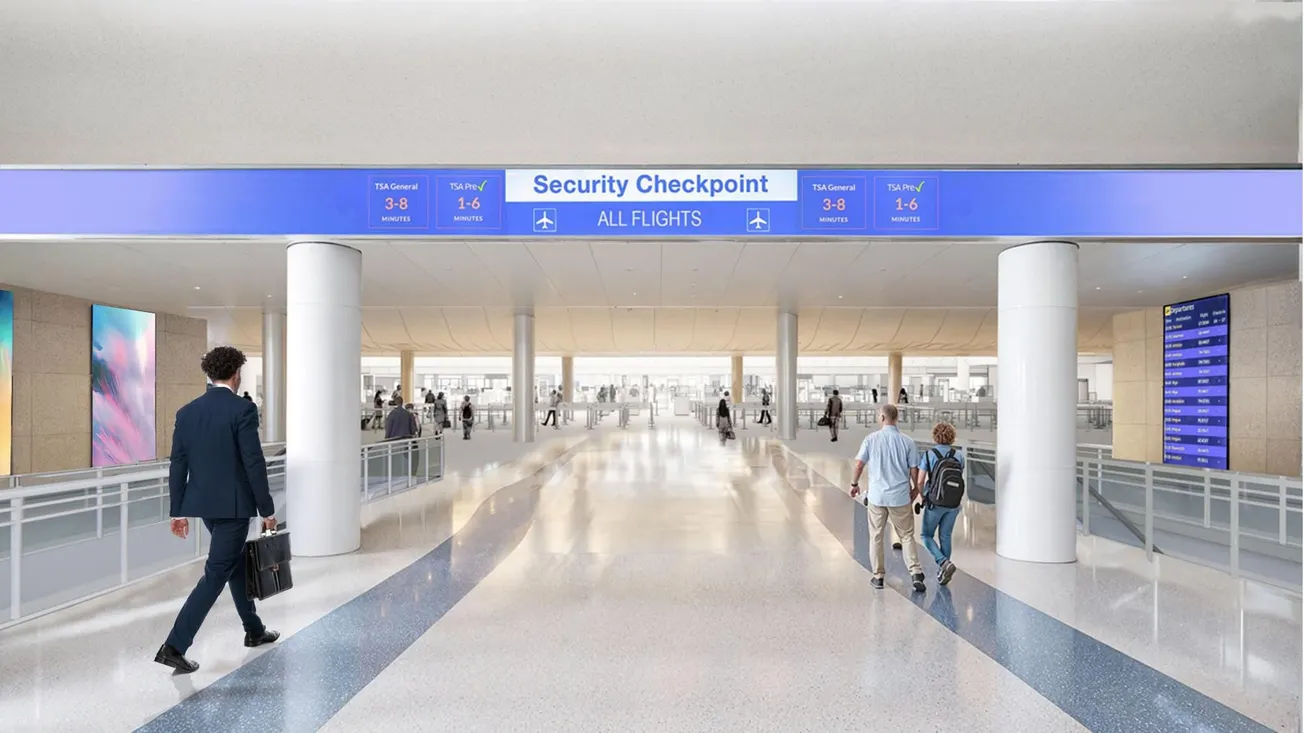
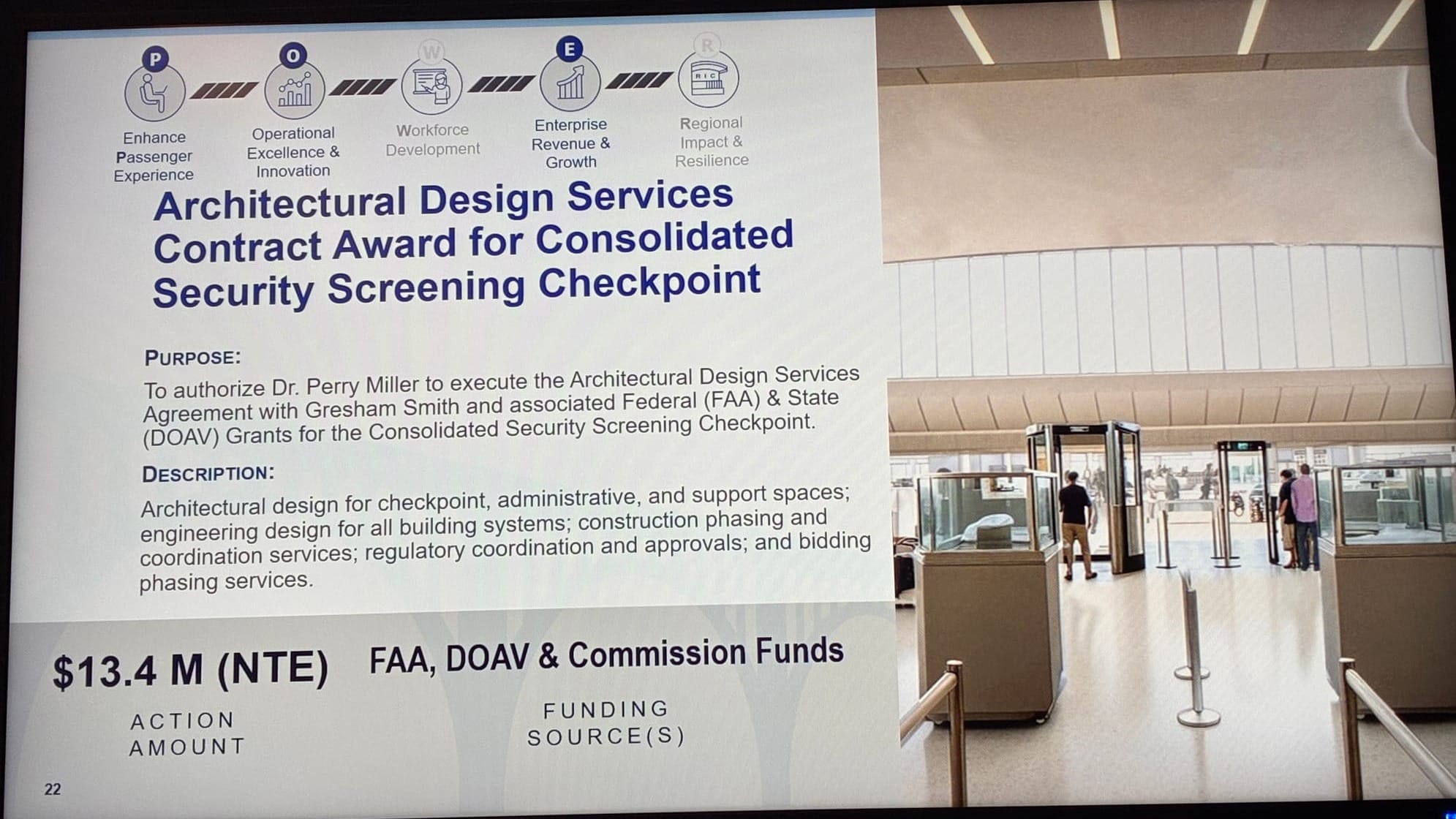
After winning an RFP award this summer, Gresham Smith was formally selected as the lead architectural design firm to coordinate the design and construction of the proposed Consolidated Security Checkpoint at Richmond International Airport. The $13.4 million budgeted for the work, which will consolidate two existing checkpoints at concourses A and B into one main checkpoint and allow passengers to move freely between concourses, comes from the Federal Aviation Administration, Virginia Department of Aviation and commission funds.
The architectural design and services are contracted to include design of the larger checkpoint space along with administrative and support spaces. The work will include engineering design, construction phasing and coordination services, regulatory coordination and approvals, and bidding phasing services. Six subconsultant firms are slated to be a part of the project.
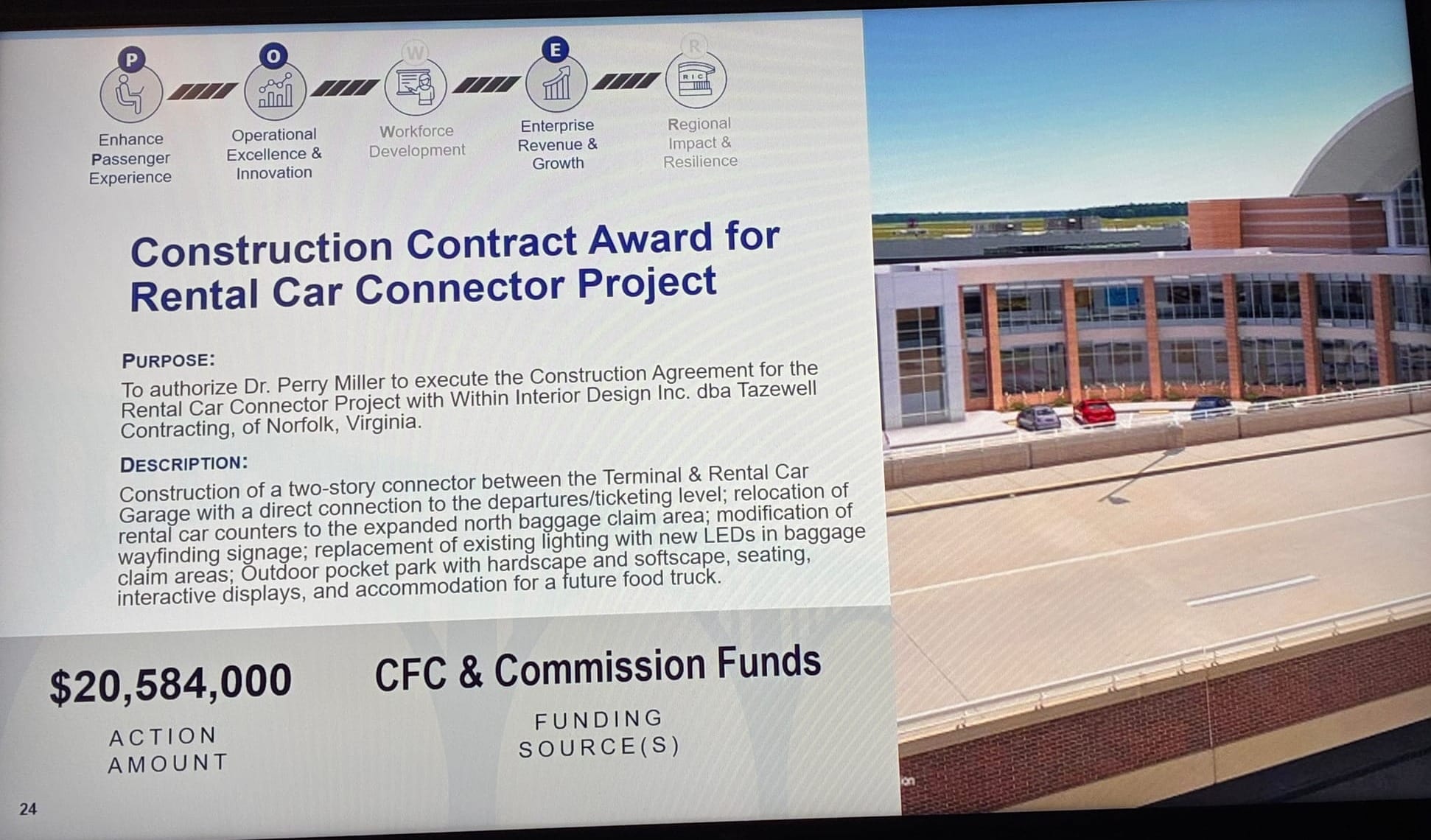
The commission also awarded a $20.5-million contract to Tazewell Contracting of Norfolk for an upcoming rental car connector project, consisting of a two-level enclosed pathway between the terminal and the rental car garage.
The rental car project will be a two-story structure between the terminal and the rental car garage with a direct connection to the departures/ticketing level. It will relocate the rental car counters to the expanded north baggage claim area and include modified wayfinding signage and new LED lighting in the baggage claim areas. An outdoor pocket park with seating and interactive displays will accommodate a food truck.
Strategic planning for growth
The CRAC also approved an updated air carrier incentive program to expand air service, promote competition and reduce route launch risks, with a budgeted funding amount of $174,000.
RIC's ACIP program consists of two types of incentives compliant with Federal Aviation Administration policy – marketing assistance in support of route launches and operational incentives to provide temporary, time-limited relief from airport fees.
Additionally, the commission adopted a fact-finding plan for a special committee made up of CRAC members to conduct reviews of the fixed base operator environment and fuel infrastructure, reporting back in June 2027. FBOs Richmond Jet Center and Million Air provide both private terminals and services such as fueling. The commission is weighing developing a fuel farm to have a clearer control over cost of fueling services.
The CRAC is currently providing a combined $1.7 million in improvements to Richmond Jet Center and Million Air facilities as a part of RIC’s capital improvements.
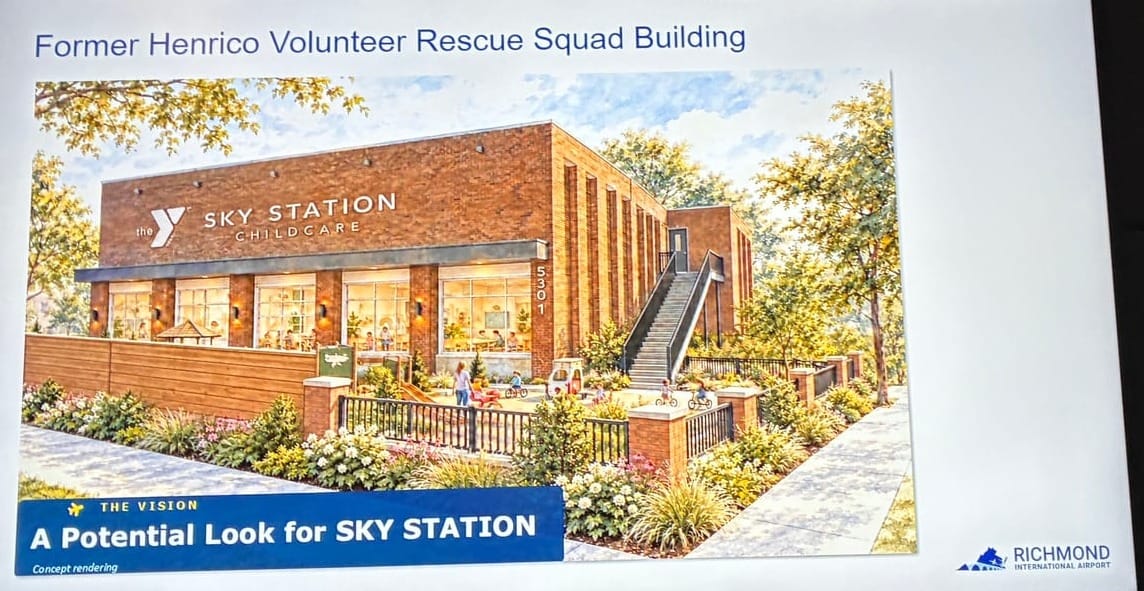
RIC CEO Perry Miller also presented a plan to renovate the former Henrico Volunteer Rescue Squad building at 5301 Huntsman Road into a 15,000-square-foot childcare facility in collaboration with the YMCA of Greater Richmond. The project aims to serve approximately 140 children per shift, with potential for up to 400 children if operated 24 hours, prioritizing airport staff.
According to Miller, the childcare facility is expected to have a construction budget of approximately $5 million, with a potential targeted soft opening early 2028 and full opening later that spring 2028.
The construction project requires hazardous material abatement and a final memorandum of understanding with the YMCA. A public zoning hearing for the childcare facility is scheduled for November 10.
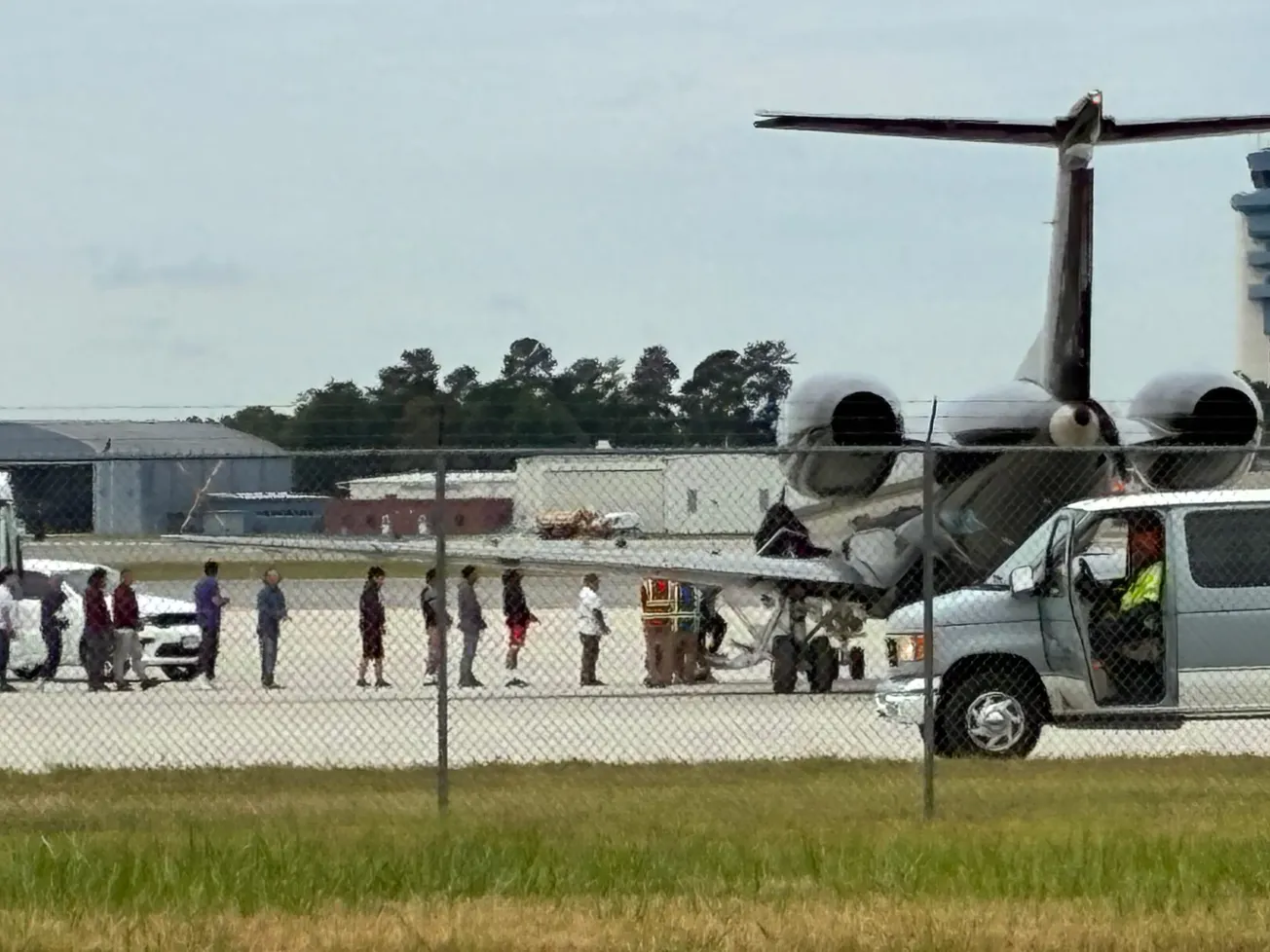
In the area of regulatory matters, CRAC general counsel Warren David Harless provided an update regarding U.S. Immigration and Customs Enforcement operations at the airport during a closed session.
Publicly, he clarified that the commission cannot prohibit or restrict these operations due to federal grant agreements, the airport deed, and the supremacy clause of the U.S. Constitution. He noted that the FAA has successfully taken punitive actions against airports attempting to restrict such activities.
Human rights activists and immigrant rights advocates have objected to the ICE deportation flights at RIC.

Jet fuel costs more than double in a year
In the area of aviation operations, RIC saw just more than 397,000 passengers in September, making it the second busiest September on record, according to RIC spokesperson Troy Bell.
Delta remains the market leader with a 29.8% share, followed by American Airlines at 28.9%. United showed the highest growth at 13.7%. Cargo reached a record of more than 20 million pounds.
Breeze is on track for the launch of Cancun service in January and Southwest Airlines is planning to launch weekly service to Dallas Love Field in June.
But world geopolitics impacting the price of airline tickets continues to affect travelers’ budgets.
“We are continuing to track fuel costs,” Bell said during his aviation activity presentation to the commission. “It has a direct correlation to what we see in terms of scheduling and risk aversion or risk worthiness by air carriers.”
Fuel costs tracked by a trade industry group showed jet fuel currently trading at $4.68 per gallon – more than double the 2025 price of $2.27 per gallon.
“That's a huge jump year-over-year,” Bell said.
Dina Weinstein is the Citizen’s community vitality reporter and a Report for America corps member, covering housing, health and transportation. Support her work and articles like this one by making a contribution to the Citizen.