
Skip to content

Parham Doctors' Hospital's new intensive outpatient program expands behavioral health continuum of care
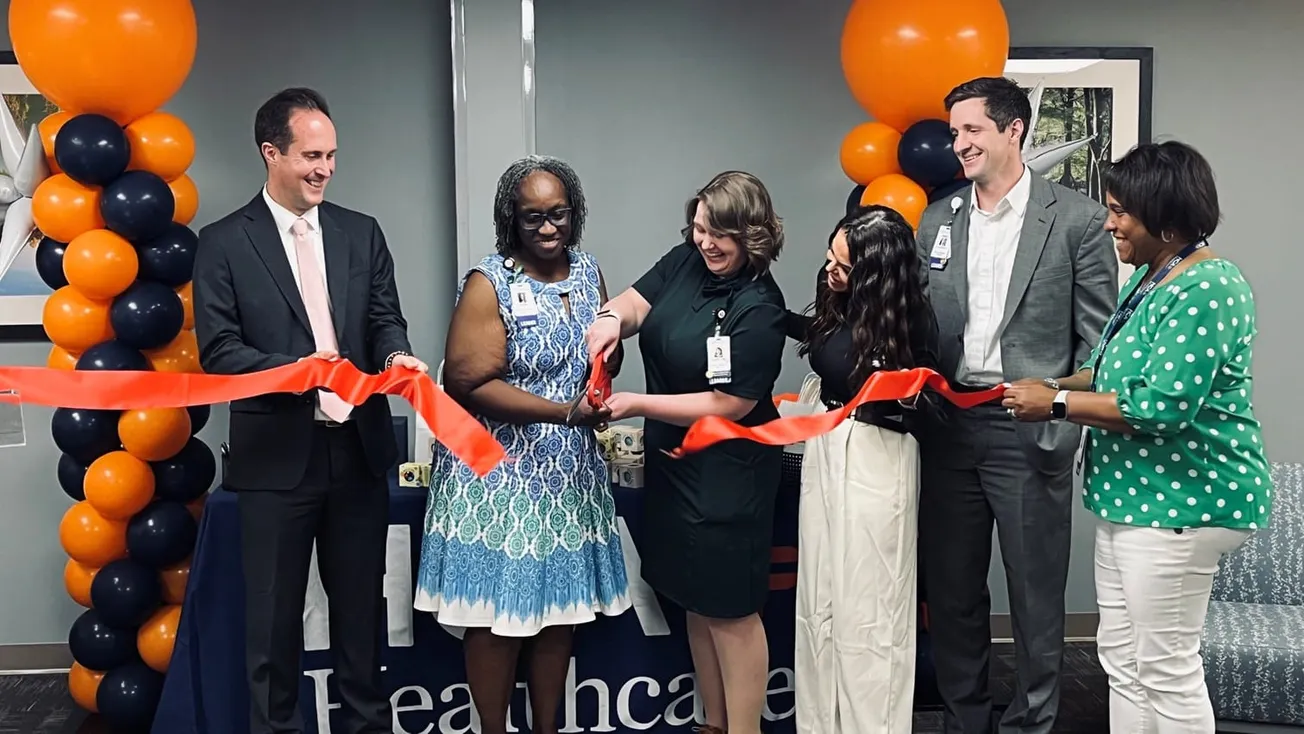
From left: Virginia State Sen. Schuyler T. VanValkenburg; Ryan Banks, director of behavioral health programs for Henrico, Parham and Retreat Doctors’ Hospitals; Kaitlyn Streeter, outpatient behavioral health manager at the Intensive Outpatient Program; Jessica Machado-Potts, chief nursing officer at Parham Doctors' Hospital, Caleb Higginbotham, Parham Doctors' Hospital CEO; and Lisa Acquaye, Director of Physician and Provider Relations HCA Virginia. (Courtesy HCA Healthcare)

Parham Doctors’ Hospital recently launched a new adult intensive outpatient program, expanding access to behavioral health services for people who need more support than traditional outpatient care but do not require an inpatient hospital stay.

The new program is designed to serve adults experiencing mental health challenges such as depression, trauma, post-traumatic stress, grief or difficulty managing daily responsibilities. Participants receive structured treatment while continuing to live at home and remain connected to work, family and community life.

The new program builds on Parham Doctors’ Hospital’s existing behavioral health services, which include inpatient care and a partial hospitalization program. By bringing the intensive outpatient level of care to the Parham campus, hospital said the program can offer patients a more complete continuum of behavioral health support in one location.

Intensive outpatient care typically provides about nine hours of treatment per week. It can serve as a step-down level of care for patients leaving partial hospitalization or inpatient treatment, or as a step-up option for individuals in the community who need more structure than weekly therapy or medication management.

“Many people think of hospitalization as the only option when someone needs a higher level of behavioral health care, but there are other important levels of support,” said Ryan Banks, director of behavioral health programs for Henrico, Parham and Retreat Doctors’ Hospitals. “This program gives patients the opportunity to receive intensive treatment while still returning home each day and continuing to engage with their lives outside of treatment.”

'Behavioral health care is no one-size-fits-all'

At the facility’s recent opening, Banks said mental health professionals at Parham Doctors’ Hospital worked to expand to include the intensive outpatient program because they saw a need to allows people to have continuity with providers, continuity with location.

“We want the community to know that behavioral health care is not one-size-fits-all,” Banks said. “There are multiple levels of care that can support someone’s journey toward mental wellness, and our hope is that Parham Doctors’ Hospital is seen as a place where people can find the level of support that best fits their needs.

“We think that that will help with the ability for stabilization and integration in the community. It also allows for individuals to maybe avoid hospitalization altogether if there's a wider continuum. Community can refer to us on either level of care and they can also step down from an inpatient hospital stay. Now with this full continuum, it allows for the best fit for the individual to be available.”

Banks said the hospital has seen an increased demand in mental health related concerns, but there's been a limited availability in the marketplace for mental health specific care.

“The mental health specific resources have been pretty limited between that inpatient behavioral health space and the individual therapy and medication management space,” said Banks. “And there are often people who fall in between that continuum who still need a higher level of care and support and continuity of care before they can really be supported successfully at that individual level. We're trying to meet the increased demand of mental health, for the people who fall into that in-between who need more of that structure and support as they're trying to navigate changes in their life stressors, increases in their mental health symptoms and the need for rebuilding the structuring routine of their daily life.”

Helping patients access the right care at the right time

The program is voluntary and is intended for patients who are clinically appropriate for outpatient care.

Patients may be referred following an inpatient stay or may enter from the community when they need additional support to regain stability and coping skills. Support is available for people experiencing difficulties with mood disorders, depression, bipolar disorder, and more the mood-based components including anxiety related service, and people facing life transitions challenges, but not an active psychosis.

A key feature of the Parham program is access to medication management, which is available through the hospital’s shared behavioral health resources. Banks said that is not always available within intensive outpatient programs and can make care more convenient and coordinated for patients.

Staff members on the team have a wide range of experience and include a nurse practitioner, and RNs who help with medication management for the partial hospitalization program for intensive outpatient. They can make referrals to providers for patients’ medication management. Art therapists and music therapists provide services in the program along with licensed professional counselors and social workers who provide group therapy

“Our goal is to help people access the right level of care at the right time,” Banks said. “At Parham, patients can move across inpatient care, partial hospitalization, intensive outpatient care and traditional outpatient support as their needs change.”

The program initially will serve adults in an integrated model, with the ability to expand into separate general and trauma-focused tracks as enrollment grows. The anticipated capacity is up to 20 patients per track, or 40 total as the program develops.

“Diagnoses we treat are mood disorder, anxiety and some thought disorders, if they are well-managed with their medication,” Banks said. “We have the ability to treat individuals with trauma backgrounds, but we're not a trauma program, but there's a lot of overlap. Anyone can come here, we'll do an assessment and if they're not appropriate for us, we will make sure that they get to the appropriate program or service.”

Kaitlyn Streeter, outpatient behavioral health manager at the Intensive Outpatient Program at Parham Doctors' Hospital, who got her start in the mental health field as an art therapist shows the art therapy room at the new program. (Dina Weinstein/Henrico Citizen)

Kaitlyn Streeter, outpatient behavioral health manager at the Intensive Outpatient Program said it is meant to support people in their environment in the community while still helping provide crisis stabilization that they require.

People going through challenges at different life stages in adulthood can find support in the program, Streeter said at the opening.

“For the sandwich generation, we see quite a few patients who are coming in where they've been a high functioning professional for a long time, but now the demands of taking care of aging parents and trying to parent their own children and themselves, all of the demands of life are becoming overwhelming and they notice that they have more anxiety and more irritability and everything feels so much harder to do because demands outweigh resources that they used to use to manage that,” Streeter said. “And that life stage change, no one prepares you for ‘How do I navigate all of these new things and is there a space for me to even talk about that?’”

In the aging process, some people at retirement may feel a big loss of structure and purpose that accelerates depression and anxiety that they may have not been aware of. Physical health changes may start to accelerate or create new mental health symptoms they may have not been aware of. And for some people it's the cognitive changes that may create intense anxiety and depression and related to cognitive changes or health status related changes.

People who are even older than Baby Boomers, may feel challenged to talk about their feelings or know a way of how or where to get help.

Large and small rooms offer space for discussions; an expressive therapy space offers art therapy or quiet breaks at the Intensive Outpatient Program.

“It is a privilege to know someone on their hardest day, and it is an honor to be a safe place for someone to return to when they need it most,” Streeter said at the recent Intensive Outpatient ribbon cutting where dignitaries and mental health professionals from around the area gathered to meet the staff and see the facilities for future collaboration.

“When folks would complete treatment with us and they need aftercare options like Intensive outpatient or PHP, since we're a residential level of care, then they would step down to a level of care like this where they may be living at home or more living at a sober living residence and they need continued care services at a lower level on an outpatient level,” said Justin Mangold, clinical director at the Farley Center, which treats substance use.


Dina Weinstein is the Citizen’s community vitality reporter and a Report for America corps member, covering housing, health and transportation. Support her work and articles like this one by making a contribution to the Citizen.

Comments