New touchless parking coming to RIC
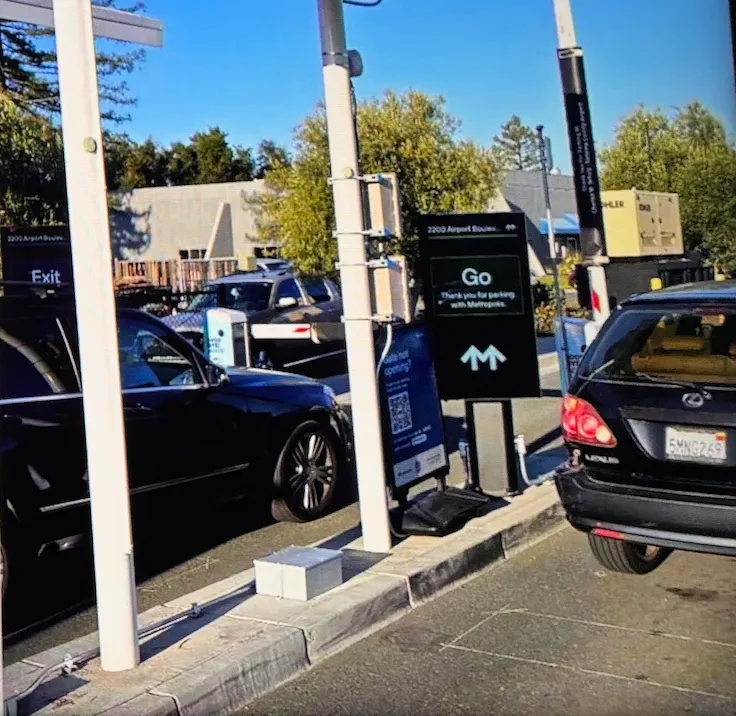
This winter, people who park at Richmond International Airport facilities will encounter a new ticketless and touchless parking access and payment technology system.
The Capital Region Airport Commission voted Sept. 29 during its board meeting to approve a new two-year contract with SP Plus (now owned and operated by Metropolis) for a 20% service fee that airport staffers said should result in a net increase of approximately $150,000 in revenue to the airport, without raising customer fees at all.
“This puts us at the forefront of innovation, because this system will allow customers who opted into creating an account with RIC to just drive out automatically without taking any action,” RIC Chief Growth Officer Martin Rubinstein said at the board meeting. “This frictionless entry and exit system will reduce the time that it takes to process payment by 80%, strongly enhancing our passenger experience.”
The new parking system is in line with the airport’s aims of increasing customer loyalty program, Rubenstein said.
“On the revenue side, we're going to be able to begin offering our customers product bundles and personalized offers, and we are going to be able to implement online ordering across all of our product offerings. That means parking, food, etc.,” he said.
The new system will not increase the airport's parking rates, he added.
Metropolis will be entitled to receive a monthly platform fee (payable by the CRAC) in the initial amount of $10,000.00 per month, subject to a 3% annual escalation; and a service fee (chargeable to users) in the amount of $0.99 per paid parking session for less than two hours and $1.49 per paid parking session of two hours or more (which may be increased to $1.99 per session in the second year, upon proof of certain customer satisfaction metrics).
The platform fee replaces the maintenance fee the CRAC pays its current parking platform, which is about $214,000 – or almost double Metropolis’ charge, according to Rubenstein.
RIC will not incur a cost for the new parking technology, he said.
“Metropolis is investing $1 million in this technology,” Rubinstein said. “RIC will save the cost of implementing the new entry/exit technology, and Metropolis has agreed to pay the commission a revenue share of the transaction fee [equivalent to 20% of those fees].”
That should result in an additional $150,000 to $200,000 in revenue for the airport, he said.
CRAC board chair Charles S. Macfarlane urged staff to keep the parking fees low and free for those who park for less than an hour.
Last fiscal year, there were 218,000 parking transactions for drivers in RIC lots for less than an hour and 555,000 parking transactions for drivers in lots for more than an hour.
“It's not a significant raise,” Rubinstein said. “The parking study that we did for pricing shows that we can significantly raise our rates because we're very underpriced still. We were at $12 last year. We're at $15 this year. We decided not to raise rates this year. We're going to wait until next year for the next raise. But we are significantly under market in the price of parking,” Rubinstein said.
He said the forthcoming Metropolis parking payment system is one that will allow the airport to create user accounts.
“Once you have user accounts, you're going to know your customers' preferences and we're going to be able to offer them multiple things that we can’t offer today.”
Among those: a loyalty program that could provide a discount to frequent parkers, and possible discounts on food at the airport.
Loyalty relationships usually exist between the airline and the passenger, Rubenstein said, but airlines don't share information about passengers with airports. The only way that airports can create similar relationships is through the products that travelers use at the airport, he said, with parking being the most important one and concessions being the next one.
“By creating user accounts, now we know when somebody is coming ahead of time because they [will be able to] make a reservation ahead of time, and then we can say, ‘Hey, when you're here on this date, here's a discount for food, or maybe you can reserve a premium spot,’” Rubinstein said. “It allows us to have this relationship with the customer that provides a better customer experience, especially for the frequent flyers.”
Cargo gets 'yes' votes
The CRAC also voted to approve a number of lease agreements that mainly support cargo operations at RIC, including:
• a new annual $247,000 lease agreement with the Hertz Corp. rental car quick return area facility;
• a new annual lease agreement of $12,000 with F&E Aircraft Maintenance, LLC for a cargo bay and office space, plus $2,000 a year for use of a common maintenance area.
• a new annual space lease agreement with Air Transport International of $9,000 in Cargo Building 2, plus $1,500 for use of space in the common maintenance area;
• a new annual lease agreement of $58,000 with Global Aviation of North Carolina under PrimeFlight GSE Maintenance;
• a new annual lease agreement of $43,000 with PrimeFlight Aviation Services for ground handling support for multiple airlines, including office functions, break areas and air-to-ground operational communications.
• a new annual lease agreement of $42,000 with PrimeFlight Aviation Services for wheelchair assistance within the terminal;
• a new annual lease agreement of $21,000 with PrimeFlight for additional trailer parking space.
RIC is building a consolidated receiving and distribution center in its Cargo 3 building. Prime Flight was occupying a portion of the building in which the new center is being constructed, and those offices are currently moving to the new building.
“Prime Flight acquired other companies. So there are many formerly named companies that are now doing business as PrimeFlight [including one] of the ground handlers and the company that has an agreement with the airlines to move the wheelchairs. They also have an agreement with Prime Air, and they operate cargo for Amazon, so they have multiple businesses,” Rubinstein explained.
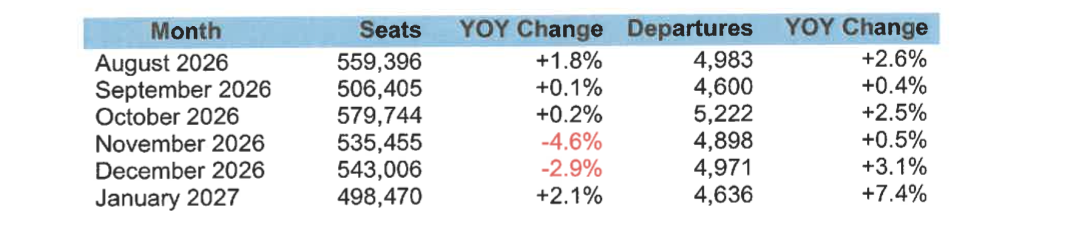
Statistics show cargo is an important part of RIC. The latest RIC Aviation Activity Report showed passenger traffic slightly higher than 3 million so far in 2026 (a 0.80% increase from 2025).
But according to the August 2026 RIC Aviation Activity Report, freight is up 6.8% from last calendar year at 135 million pounds in 2026. Mail is up 18.6% from last year, with 12 million pounds of letters and packages flown in and out.
And cargo has increased 7% this year, with 148 million pounds of commercial goods flown in and out of RIC according to the latest activity report.
“Cargo is not necessarily the one that generates the most revenue for the airport, but it's certainly the one that generates the most economic impact for the region, so it is important for us to focus on it because it attracts business,” Rubinstein said. “We don't downplay it at all. It is part of our priorities. It is growing, and we will have more initiatives specifically for cargo in the coming years.”
Nationally, numbers of airline passengers are down because of geopolitical issues raising the price of oil and airline ticket prices. Passenger levels at RIC are slightly up and better than average, Rubinstein said.
“When we compare our own performance in the last few years, we are used to being up by a lot more. So, everything considered, we're doing really well,” Rubinstein said.
The executive board meeting that followed briefly touched on issues surrounding an in-progress study focusing on a possible fuel infrastructure modernization program; an update on a new legislative special committee that is focusing on advocating for an international flight; exploration of Virginia Resource Authority Financing option; and the development of a collaborative daycare project in development with the YMCA of Richmond at a former Henrico County property.
Dina Weinstein is the Citizen’s community vitality reporter and a Report for America corps member, covering housing, health and transportation. Support her work and articles like this one by making a contribution to the Citizen.