Skip to content

Table of Contents

The Henrico School Board has asked the county for a $14 million increase in capital improvement funding for next school year to address the division’s “critical” infrastructure needs.

The board approved a $48.4 million capital improvement plan proposal on Nov. 13, requesting $15 million in mechanical funding to tackle a long list of 72 maintenance projects that are estimated to cost about $57 million in total. Henrico Schools has been chipping away at the list of projects, said HCPS Chief of Operations Lenny Pritchard, but rising construction costs and inflation have slowed progress.

Last year, HCPS received a total of $34 million in maintenance funding – a significant increase from previous years. But with more than half of the division’s 73 school buildings over 50 years old, HCPS will need another boost in funding, said Pritchard.

“It makes a huge difference, the amount of repairs that you can make, the proactiveness of looking at your systems,” he said. “It has a lot of weight to make changes within the schools.”

“Without the money, we start having breakdowns that become very difficult for us to replace,” said Susan Moore, HCPS’ director of facilities. 

Until this past school year, HCPS received only $2.5 million a year combined for both mechanical and roofing needs. Bringing students back into the classroom after COVID also put more strain on HVAC units, said school board chair Marcie Shea (Tuckahoe District).

“Not only was [the funding] smaller than it needed to be for many decades, COVID had a significant impact on our HVAC systems,” she said. “We needed to get the kids back in the building, it was the right thing to do, but continuing to flush the systems and put higher filters in has wear and tear on our systems. And we’re paying that price.”

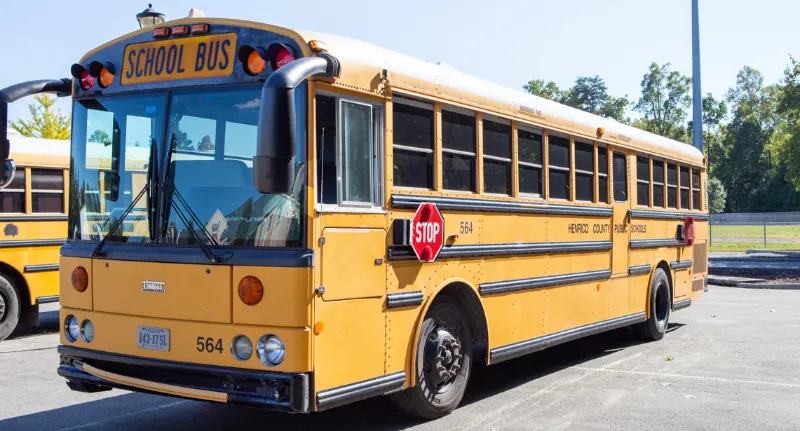
Along with the $15 million for mechanical and HVAC repairs, the school board has requested funds for roofing repairs, school bus and other vehicle replacements, playground replacements, and technology upgrades – which will be voted on by the Henrico Board of Supervisors this spring.

HCPS’ Capital Improvement Plans, 1998-2026:


2026 request

2025 budget

1998-2024 budget

Mechanical

$15 million

$10 million

$2.5 million per year (mechanical and roofing)

Roofing

$6 million

$6 million

$2.5 million per year (mechanical and roofing)

Technology

$2 million

$2 million

$2 million (new in 2024)

Bus replacements

$7 million

$6 million


Vehicle replacements

$1.5 million


Playground replacements

$1.6 million

$1 million

$1 million per year (new in 2023)

Meals Tax projects


$15.3 million


$9 million


$9 million per year (new in 2014)

TOTAL

$48.4 million

$34 million


2024: $14.5 million

2023: $12.5 million

2014-2022: $11.5 million per year

1998-2013: $5 million per year

School board members push county on redirected maintenance funds

For the first time, the school board has also asked the board of supervisors to increase maintenance funding from the annual meals tax revenue, collected from a 4% tax imposed on prepared food and drinks in the county. 

Since the tax was first introduced in 2014, HCPS has typically received $9 million each year for deferred maintenance projects such as bathroom and lighting upgrades, security system replacements, and parking lot improvements. 

But during three of the past 11 years, meals tax maintenance funds have been redirected to support HCPS’ bigger construction projects, such as the new J.R. Tucker and Highland Springs high schools buildings, which have caused years-long delays for some maintenance projects.

“I have concern with the deferred meals tax that we continue to see, and how we can advocate for getting our meals tax money,” said Shea. “We continue to have deferred maintenance projects in our buildings that need to be addressed.”

The meals tax is a “vital source of funding” for HCPS, said Pritchard, and without an increase, the division will not be able to make necessary security improvements to schools. 

But Deputy County Manager Brandon Hinton, one of Henrico’s top financial officials, said that increasing HCPS’ maintenance funding from the meals tax may not be possible.

“Those funds are already obligated, I’m not sure how we would get the $15.3 million in meals tax. That doesn’t work out,” Hinton said in an interview with the Citizen. “The math is the math, and we’re going to always budget conservatively. We don’t ever want ourselves in a position where we’ve over budgeted something.”

In recent years, the meals tax has brought $40 million in revenue annually, and “every single penny” goes to the school system, said Hinton. While only $9 million is set for maintenance projects, $16 million is allocated for schools’ debt service, $10 million to HCPS’ operating budget, and another $5 million is set aside in reserves.

When maintenance funds have been redirected, it has been to cover funding shortfalls for HCPS’ big capital projects that were approved by voters in the 2022 Bond Referendum, said Hinton, such as the Tucker and Highland Springs rebuilds and the rebuilds for R.C. Longan and Jackson Davis elementary schools.

“The public voted on those projected in the referendum. We owe them those projects because we made a promise, and we’re going to commit to those promises,” he said. “We have more schools projects that are coming from the 2022 Bond Referendum…and we want to make sure we have sufficient funds to cover those shortfalls for large projects.”

When it comes to mechanical and HVAC funding, Hinton said that the county has contributed “a lot of cash” outside of the Meals Tax to school needs over the years. 

But some school board members still expressed concerns about the meals tax allocation, saying that only $97 million for deferred maintenance projects over the past 11 years is too small a number for a tax that brings in around $40 million annually.

“Since inception, we’ve spent a combined $96,690,470. I want to put that number in perspective,” said school board vice-chair Madison Irving (Three Chopt District). “Because over the last three years, the meals tax has brought in more than $100 million in revenue.”

All funding redirected from maintenance projects is still used for school needs, said Hinton, including money held in reserves. 

“We’re not accumulating money intentionally. We’re making sure we hold off and get the project we promised our residents done first,” he said. “If there’s a need for schools, then we can always have a conversation…we’re happy to reeducate our school board as to how those resources are used. But at the end of the day, the numbers are the numbers.”


Liana Hardy is the Citizen’s government and education reporter. Support her work and articles like this one by making a contribution to the Citizen.

Comments