Henrico has proposed a 3.4% budget increase: here is where the money would go
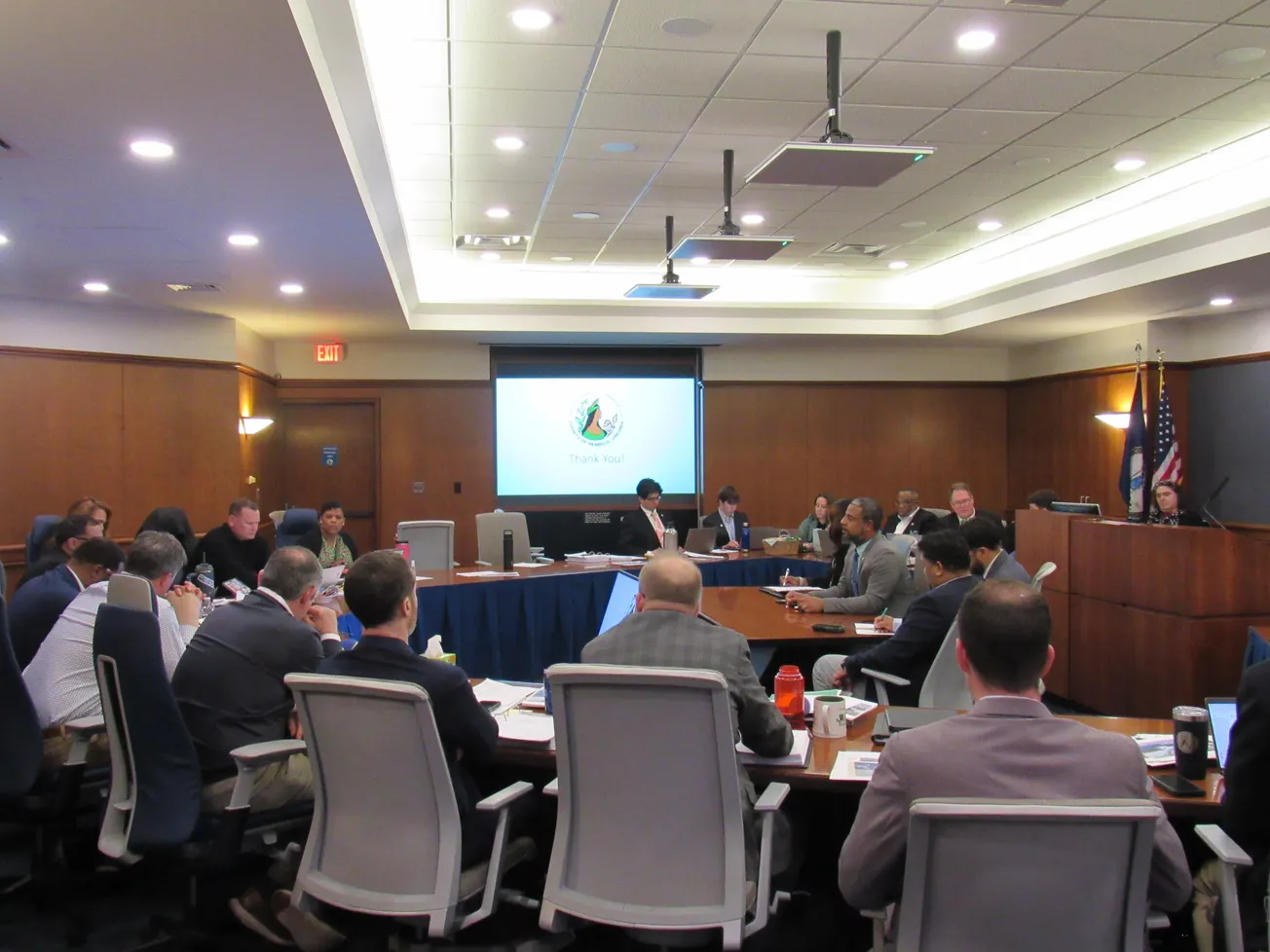
On April 14, Henrico’s Board of Supervisors is set to vote on a nearly $2-billion budget for Fiscal Year 2026-2027, an increase of $65 million from the current fiscal year.
About 83% of that $65 million would go toward Henrico Schools and the county’s public safety departments, including Henrico Police, Henrico Fire and Emergency Medical Services, and the Sheriff’s Office. The budget boost would not impact Henrico’s tax rates this year, which remain unchanged.
Prioritizing additional funding for public safety and education has been a “long-standing practice of the board,” according to Henrico Budget Director Justin Crawford.
“It’s essential to funding everything else we do,” he said. “In order to grow our local economy, businesses want to feel like they’re bringing their employees to a safe community where their children can grow up and have as many opportunities as possible through our school system.”
But despite a predicted 3% growth in revenue for the county this upcoming year, Henrico officials are remaining cautious due to recent economic trends at the state and federal level, said Henrico County Manager John Vithoulkas. Not only has state aid for education plateaued for the next two years, but Vithoulkas is also worried about federal “macro economic policy” and increased costs to electricity, gasoline, and construction materials.
“All of these things are causing us to really take a step back and make sure that any budget we put forward is on solid footing,” Vithoulkas said. “We took a very conservative approach.”
The proposed budget would implement a 3% reduction to all county department budgets as an “exercise in fiscal prudence,” Vithoulkas said. The 3% reduction would not result in any reductions in county services, he said.
To maintain an overall budget increase of $65 million, Henrico is using 98% in local funding, an unprecedented move that “has not ever happened in my career with the county,” said Vithoulkas.
Schools: $914 million budget (2.9% increase)
The proposed budget for HCPS, which would total about $971 million when including revenue not distributed by the county, includes 91 new staff positions for 2026-2027, with 20 new English Learner teachers, 15 positions for the new Living Building, and seven new exceptional education staffers. Current HCPS and county staff would receive a 3% raise.
The budget also puts $84 million toward capital projects (much of which will fund a $40-million new Fairfield District elementary school), $20 million toward mechanical and HVAC improvements, and $9 million of meals tax money toward other maintenance projects.
But the county’s proposal also would implement a $23-million reduction to HCPS’ initial budget request, requiring HCPS to hold off on hiring an additional 62 staff positions, most of which would be more English Learner and exceptional education teachers. At a joint budget meeting with the board of supervisors last month, Henrico School Board members criticized the reduction in new staff positions.
The county’s proposed budget also would not grant HCPS’ request for additional meals tax money to be put toward maintenance needs. The county prioritizes HCPS’ maintenance needs, said Crawford, but also has to fund other priorities such as additional staff positions and raises for current staff – which was more difficult this year because of the fallout from state aid.
“We recognize the maintenance needs that the school system has, but we had to find a way to fund that $25-million increase,” Crawford said. “So while it might have been nice to put the revenue towards ongoing maintenance needs, we recognized that we needed to keep teachers around and more staff were needed in the classrooms.”
Police: $117 million budget (3.4% increase)
Nearly 91% of the Henrico Police budget would be spent on funding the department’s 800 total staff members, but $1.2 million in additional funding to the HPD budget also would go toward technology and specialty equipment upgrades.
HPD would use the budget increase to purchase “LifeRaft,” an online threat detection platform that monitors the internet and social media to identify potential threats, planned protests, and growing anti-government sentiment. HPD also would upgrade its cell phone extraction software, “Cellebrite,” to aid in investigations related to organized crime, white-collar crime and missing persons.
Additional funding would allow HPD to upgrade ballistic shields due to the higher threat-level of weapons officers encounter, replace bomb suits, replace emergency communication equipment, and purchase new DNA extraction equipment so that the department can address the backlog in cold cases.
The county’s budget would require HPD to make $3.4 million in reductions, which will be identified during the 2026-2027 fiscal year.
Fire: $106 million budget (3.2% increase)
The majority of Henrico Fire’s $3-million proposed budget increase would go toward additional medical supplies and equipment upgrades. The division has used additional funding during the past few years to build a current fleet of 102 firetrucks and transport units, which puts Henrico in a spot that is “better today than we were 40 years ago, but there’s still work to do,” according to Henrico Fire Chief Jackson Baynard.
Around $1 million would go toward overtime costs, and $780,000 would fund seven new positions for Henrico’s Emergency Medical Services, including two firefighters and five paramedics, to improve the division’s EMS response. Staffing continues to be a “large challenge” for the division, Baynard said, but Henrico Fire will be fully staffed starting this July.
The division would need to implement $3 million in reductions to the field operations budget.
Public Utilities: $167 million budget (2.3% increase)
Most of the budget increase to Henrico’s Department of Public Utilities would go toward expanding county water and waste disposal services to more households. Public Utilities spent more than $64 million last year to provide an additional 304 properties with public drinking water and 353 properties with public sewer services.
Public Utilities would receive an increase of $1.9 million to purchase chemicals to treat water for drinking purposes and to treat wastewater before it flows back into the James River. Those additional costs would be offset by a 5% rate increase the department plans to implement this fiscal year.
About $374,000 would go toward expanding the department’s waste collection services. While Henrico currently provides 55,000 households with refuse collection, the board of supervisors aims to expand collection to all single-family homes in the county by the end of 2027.
Public Utilities also would need to implement $3.7 million in reductions to the budget excluding debt service, which represents a quarter of the department’s budget and addresses $378 million in outstanding debt.
Public Works: $70 million budget (0.1% decrease)
While Henrico’s Department of Public Works would see a slight decrease to its budget, the department would continue work on major road improvements, sidewalk construction, and street light additions in the upcoming fiscal year.
About $27.5 million would be used to prioritize mobility projects on roads such as Liesfield Farm Drive, Three Chopt Road, and the Richmond-Henrico Turnpike. Public Works also would put $7.8 million toward pedestrian improvements, including sidewalk construction on areas of West Broad Street, Williamsburg Road, and Patterson Avenue, as well as $1.5 million toward more solar panel-powered street lighting.
Public Works has more than 100 active road improvement projects and 50 active drainage projects underway, but the department will need to implement $2 million in reductions in the upcoming fiscal year.
Employee healthcare: $201 million budget (17.7% increase)
Healthcare expenses for the county are projected to increase by more than $30 million, with the growth in healthcare claims, particularly pharmacy claims, being the primary driver of these cost increases. About 69% of the healthcare budget is funded directly by the county, while the remainder of the budget reflects anticipated payments from employees.
Liana Hardy is the Citizen’s government and education reporter. Support her work and articles like this one by making a contribution to the Citizen.