Henrico Community Revitalization director: Data from report helping guide county’s response to affordable housing crisis
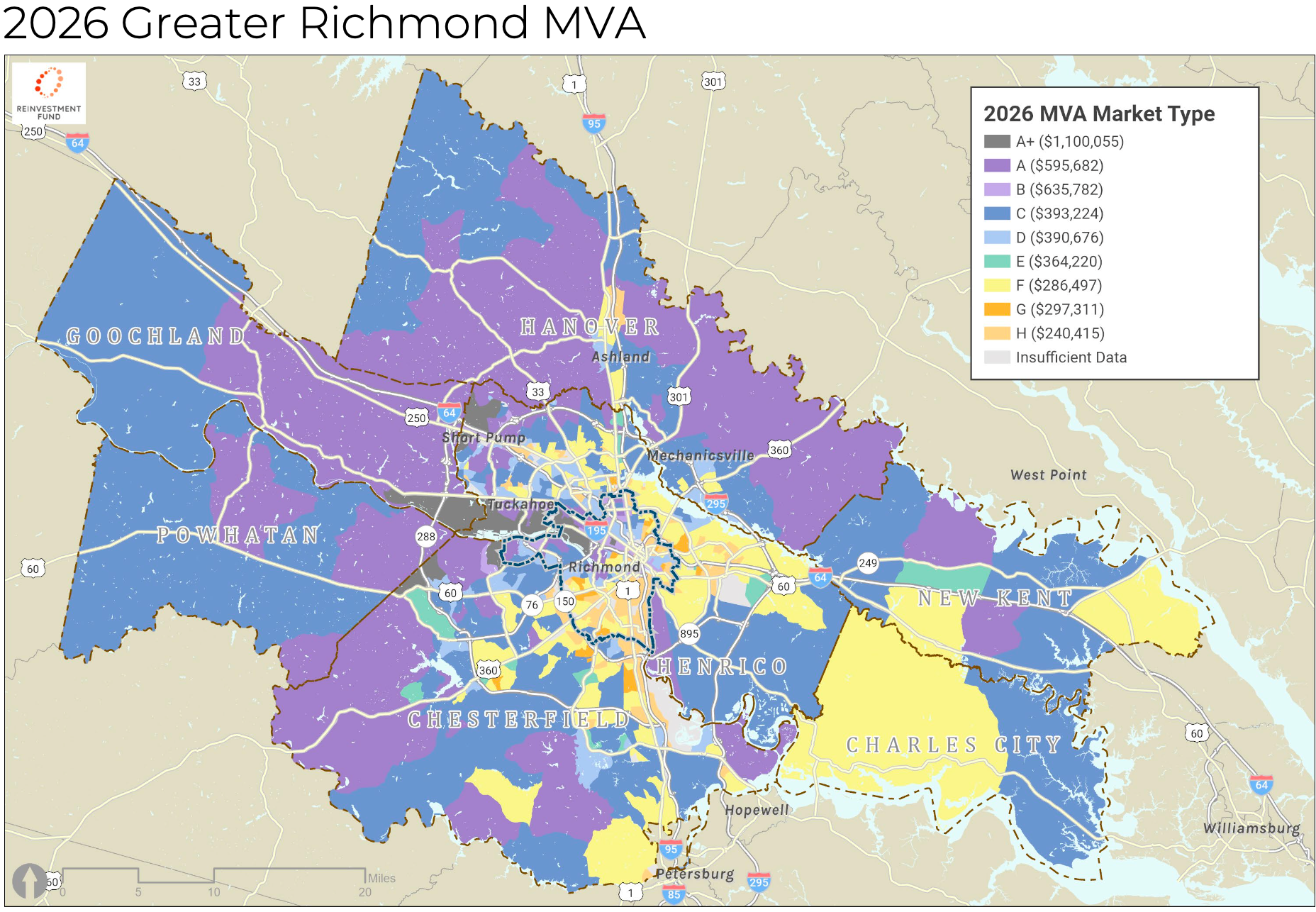
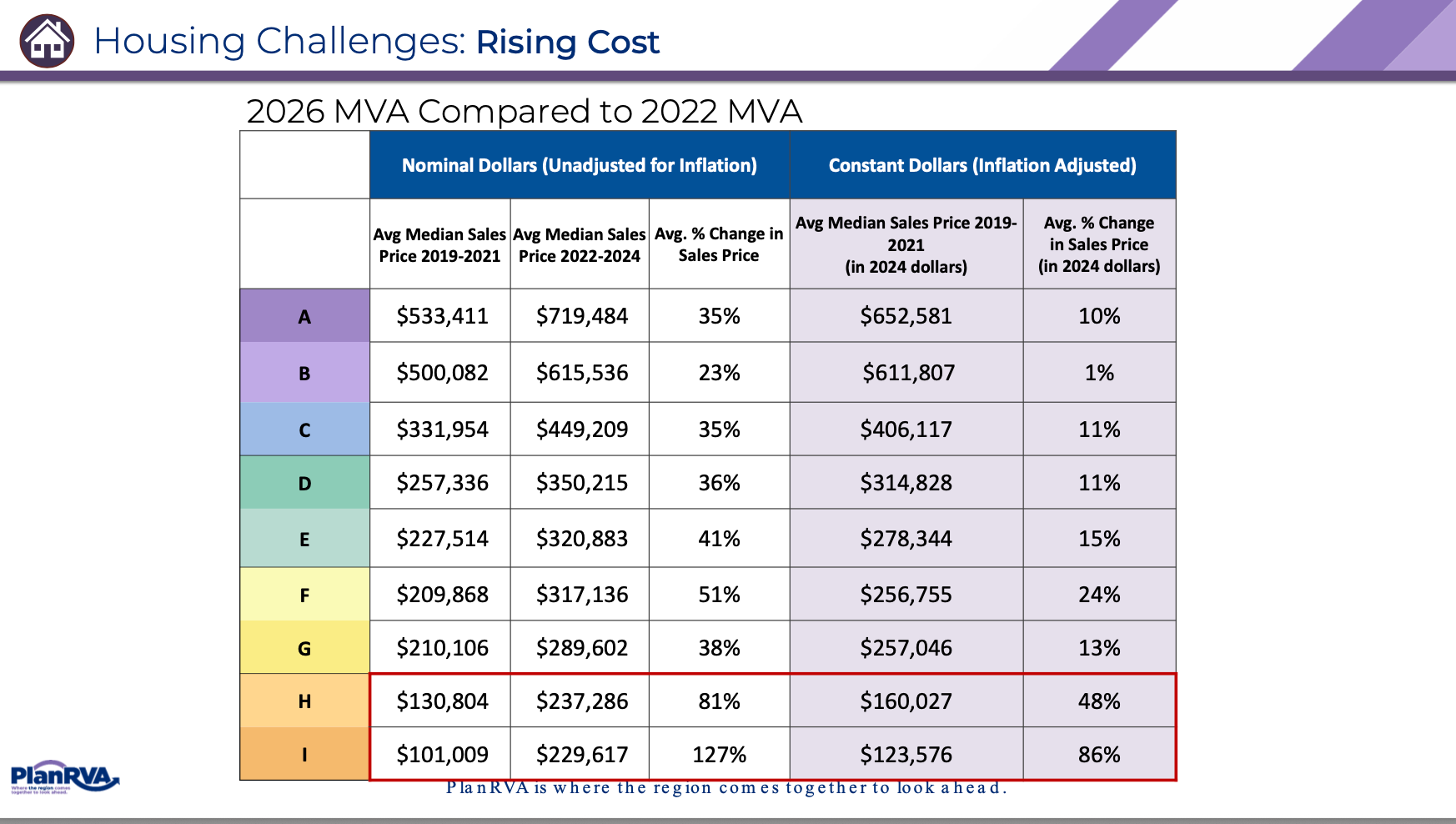
New Market Value Analysis data shows that Henrico County has some of the most expensive housing in the region on the one hand and high levels of evictions and displacement on the other.
MVA is an analytic tool using data to represent market conditions measuring housing investment, housing distress, types of housing, tenure and housing characteristics. It’s useful, according to officials, to help guide community revitalization, stabilization and investment efforts.
Presented by PlanRVA (the regional planning district commission), the MVA provides a clear picture of how the housing markets in Henrico County and eight surrounding jurisdictions have changed over time and in comparison with each other.
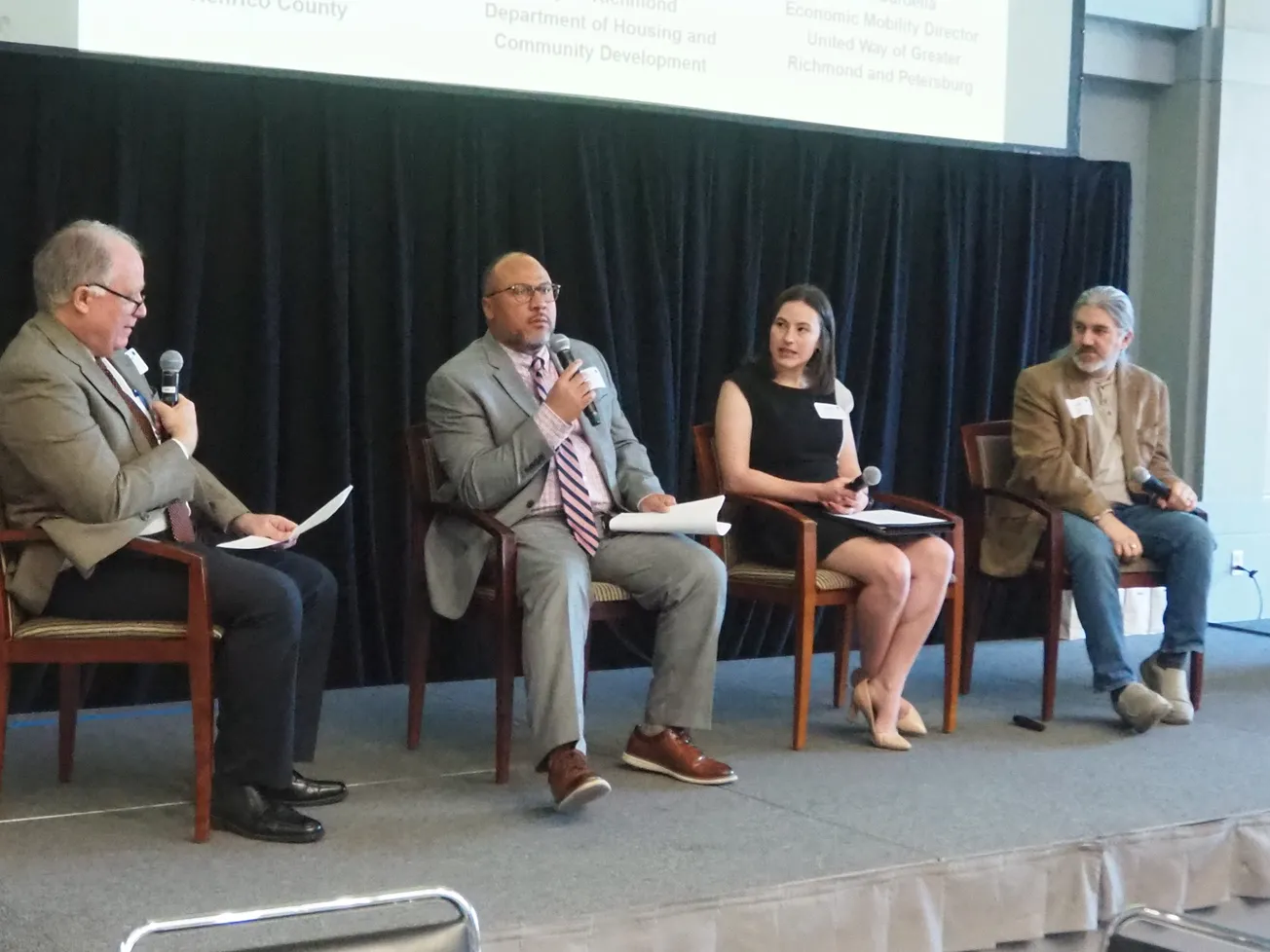
Speaking in a recent housing expert panel at the PlanRVA “Pathways to the Future” yearly summit focusing on transportation, housing and economic data, Henrico Community Revitalization director Eric S. Leabough said MVA data has been a wakeup call to spur county leadership to make strategic investments in affordable housing.
“MVA maps are very telling in terms of where people can actually afford to live and not afford to live,” Leabough said. “We've used the data in a way to help educate our leaders, our elected officials and our employers in the region so that they understand the challenges, and the importance of housing and its inter-relatedness to economic development. Employers make decisions about where they locate based on housing availability and where can their workers live. They understand the importance of living close to your work and the productivity as it relates to that.”
Leabough shared the stage with City of Richmond Department of Housing and Community Development Policy and Special Projects Manager Rachel Hightman and United Way of Greater Richmond and Petersburg Economic Mobility Director Frank Cardella. Matthew Bolster, Virginia Housing senior strategic housing officer, moderated the panel.
Addressing an audience of 100 local elected and appointed leaders, the housing experts discussed the urgent housing needs the region faces. The MVA lays bare the challenges as to how leaders and residents might address housing challenges as well as how housing and transportation are interconnected across the Richmond region.
Henrico has several initiatives to initiate housing development and improve affordable housing, spurred by the MVA. The county deployed $60 million in funding to support its Affordable Housing Trust Fund, working with the Partnership for Housing Affordability to address the challenges of housing affordability.
“We often think about nonprofits building 30 to 40 homes a year,” Leabough said. “When we look at the for-profit community, they're building hundreds of homes. The cost of materials is much cheaper when you're buying it for 400 homes versus 30. So, we’re leveraging the buying power of some of these larger builders and developers.”
Housing policy decisions as a recruitment tool
Henrico’s Employee Home Purchase Assistance Program, which provides as much as $25,000 in down payment closing costs for eligible county employees who are buying their first homes, makes a way for county staffers who otherwise could not afford to be homeowners where they work.
“We're doing very strategic things to be able to help our workforce because we not only see that as a resource for them, but we also see it as a recruitment and retention tool,” Leabough said. “We want to attract and keep talent within our county.”
Other efforts to provide housing development and improve affordable housing include expedited planning reviews to help developers and donating surplus land to affordable housing projects.
The MVA has influenced Henrico County’s housing policy decisions, instating programs that assist the elderly and the disabled to stay in their homes.
The Real Estate Advantage Program provides a tax exemption for senior homeowners 65 and older and people who are permanently and totally disabled, through which they receive as much as $3,200 in tax exemptions on their real estate taxes.
The RECAP program caps assessments at the time of application for the same groups of people, subject to other qualifications.
Rising home prices shown in the MVA have motivated Henrico to present a new types of housing with its new R-5B classification, a smaller single-family lot size.
“We need to think about how we can all collaborate and work together as a region and figure out how to house the people that want to live here,” Leabough said.
He acknowledged the strength of PHA’s Regional Framework as a larger way to come up with broader solutions to housing needs, along with collaborations with the City of Richmond and Chesterfield County “to figure out how to provide housing for people that are formerly homeless to regionally solve a problem that's not unique to Henrico.”
Person-centric development
Addressing how building infrastructure is a huge cost for affordability, Leabough highlighted the redevelopment of the Glenwood Farms buildings, which was a dilapidated 294-unit apartment complex near the intersection of Laburnum Avenue and Mechanicsville Turnpike that was razed and is being redeveloped into 950 units for residents with mixed incomes.
Henrico’s Economic Development Authority is the conduit bond-issuer for the project, which also is receiving assistance from Virginia Housing.
“That was a horrible situation,” Leabough said. “We provided a number of infrastructure incentives to support that person-centric redevelopment. The county provided the loan to the current developer to buy the property. We provided several incentives as it relates to infrastructure to make that deal feasible. But without it, that project for that development would not move forward.”
Henrico County officials continue to look at how they can leverage the EDA in various ways to deploy funding for housing developments and community redevelopment, he said.
In the area of the connection between health and housing, Leabough felt the lack of affordable senior housing posed particular concern.
He would like to see more affordable housing projects that are being developed through efforts like the Henrico County Affordable Housing Trust Fund, where partnerships with for-profit builders, bolstered by funding from the county, make those units more accessible to some first-time home buyers.
PlanRVA Executive Director Martha Shickle said other localities and community partners are meeting with staffers at the regional planning organizations to analyze the MVA data.
“These conversations will help us understand its utility better and ensure it's a useful tool for many,” Shickle said.
Area residents can weigh in on future PlanRVA studies including the Long Range Transportation Plan and the Regional Safety Plan survey.
Dina Weinstein is the Citizen’s community vitality reporter and a Report for America corps member, covering housing, health and transportation. Support her work and articles like this one by making a contribution to the Citizen.