Habitat for Humanity’s 3D printed walls destined for a Henrico County affordable housing development project

When Richmond Metropolitan Habitat for Humanity celebrated its 40th anniversary earlier this year, the nonprofit marked the construction of 400 homes over the years.
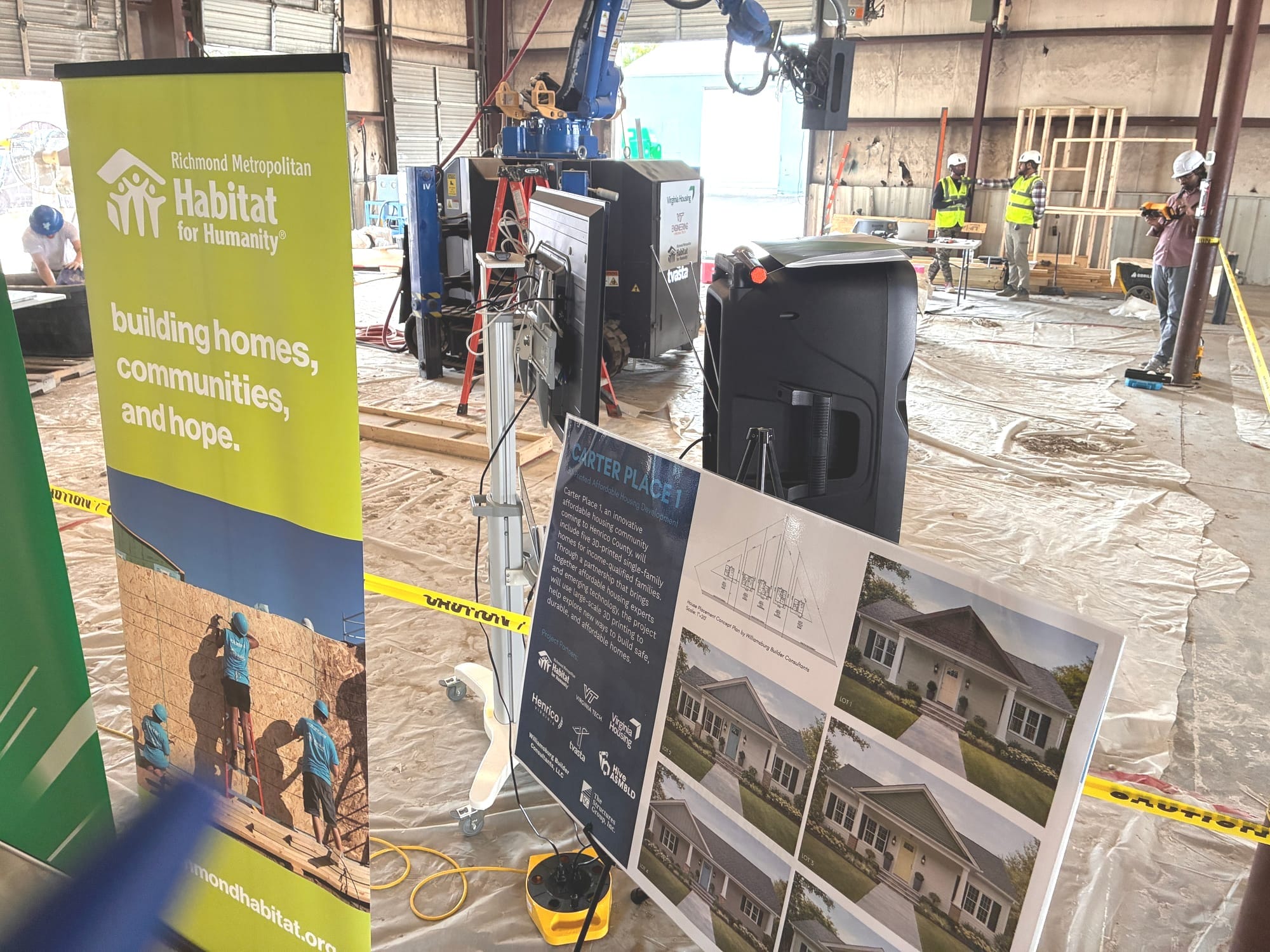
Last week, the home builder that relies on donations, volunteers and sweat equity to renovate and build affordable residences, demonstrated an innovative, mobile, 3D concrete wall printer that could potentially change the pace and cost of the organization’s homebuilding.
In a dusty warehouse, a robotic arm-based printer designed for complex geometries and smaller-footprint architectural build, squeezed out neat lines of a wet geopolymer on a narrow rectangle base that grew to six and eight feet tall.
The mixture of water and heat set in approximately 20 minutes to support subsequent layers forming a support wall for future homes in Carter Place I in Eastern Henrico County with a $1.1 million Innovation Demonstration grant from Virginia Housing and support from the Henrico County Affordable Housing Trust Fund.
While experimental in the U.S., Richmond Habitat is working collaboratively with Tvasta, the Chennai, India-based 3D printer manufacturer along with Virginia Tech professors and graduate students in the Myers-Lawson School of Construction, Center for Housing and the University’s Department of Civil and Environmental Engineering to explore affordable construction techniques.
“The analog for this is basically cinder block,” said Matt Waring, the chief operating officer of Richmond Metro Habitat for Humanity. “Workers will lay, and you have to have skilled labor and five to six guys out there laying, moving mortar, mixing mortar separately and stacking blocks. That's a skilled labor position. We can do these walls with two or three people who are dumping buckets. They hope that the production capability will help bridge some of the gap between the lack of skilled labor in the market and the ability to produce.”
A time-lapse video shows the 3D printer building a wall. (Courtesy Richmond Metropolitan Habitat for Humanity)
Habitat is also working with HiveASMBLD, a Houston-based automated 3D-printed construction company, on an 80-unit development in Texas.
“So when you get to scale, there are other things that you can do. All this material can go into silos, and then you can use a truck mixer, and it'll all mix automatically. You don't have to mix it by hand before doing it,” Waring said.
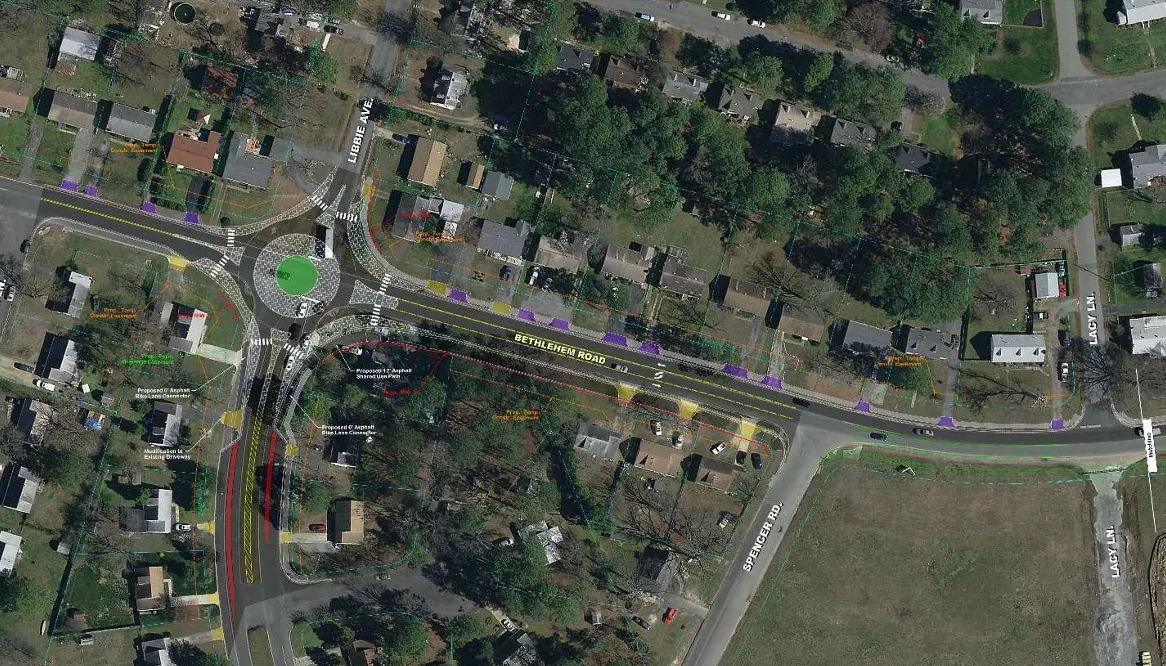
The planned five-house development on Darbytown Road features two two-story homes and three single-story homes.
“We hadn't really done it in the Mid-Atlantic using this kind of material in this process, so it's innovated in that way. We do think also for affordable housing it's going to be extremely durable. it's disaster resilient, flooding resilient and will require very little maintenance long term,” Waring said.
The printing material consists of 90% recycled content, specifically fly ash mixed with a proprietary geopolymer binder. A specific fine aggregate sand must be used because traditional concrete contains large aggregates that cannot pass through the printer's hose.
Waring said the printed walls offer high thermal mass and insulation performance that is approximately 20% better than standard stick-frame homes. The technology provides disaster resilience against flooding and requires very little long-term maintenance for affordable housing units. Using mobile robotic systems allows for more economical movement across sites compared to older crane-based systems used in previous projects.
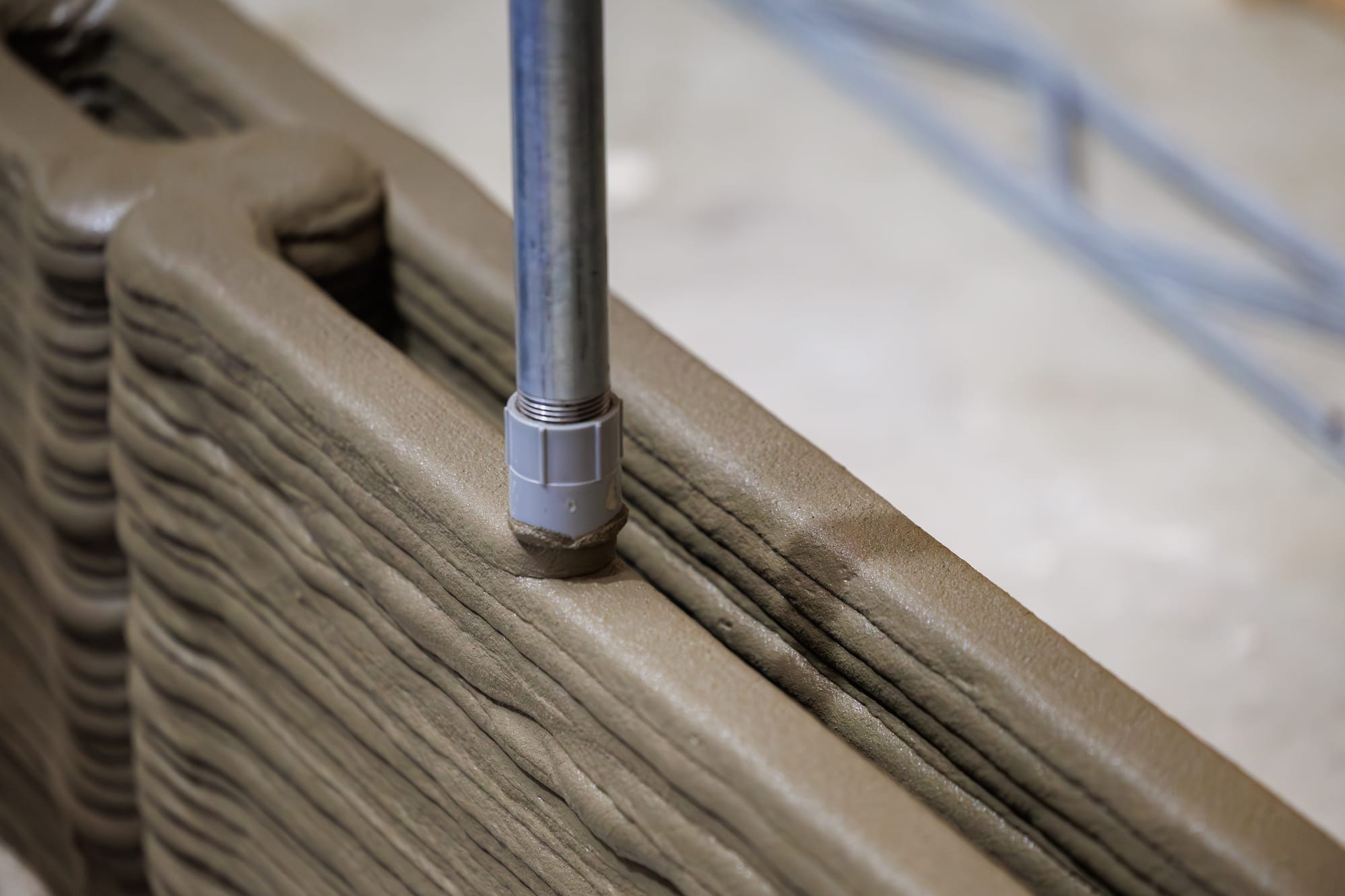
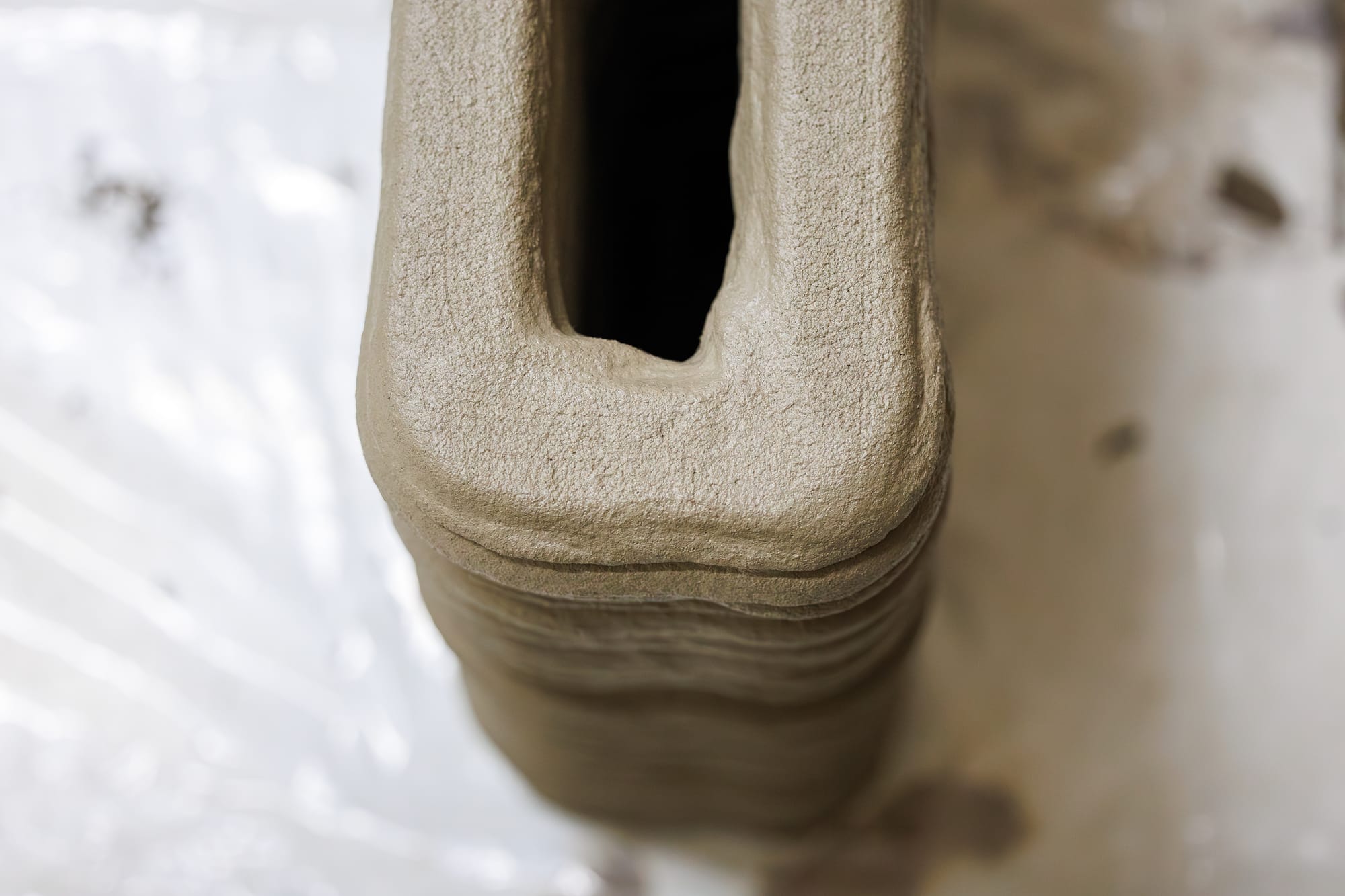
Close up view of a mobile, 3D concrete wall printer at a Richmond Metropolitan Habitat for Humanity warehouse this week. (Courtesy Richmond Metropolitan Habitat for Humanity)
Virginia Tech researchers are studying the material properties, environmental impacts and how to create a statewide building code standard with their research focusing on converting this technology from an academic phase to an industry-adoptable phase via standardized manuals.
“Our role is to standardize this technology so that the builders can use it. I'll study how the process is going on, and I'll make sure what all the pinpoints are in there, and we'll make sure that it is simple to follow for any builder. So essentially, we'll create a standard manual or instructions. Anyone can take that and this printer, and they can print on their own,” Waring said.
For this project, Virginia Housing provided innovation grants to support this research into advanced building technologies like modular multifamily buildings and accessory dwelling units.
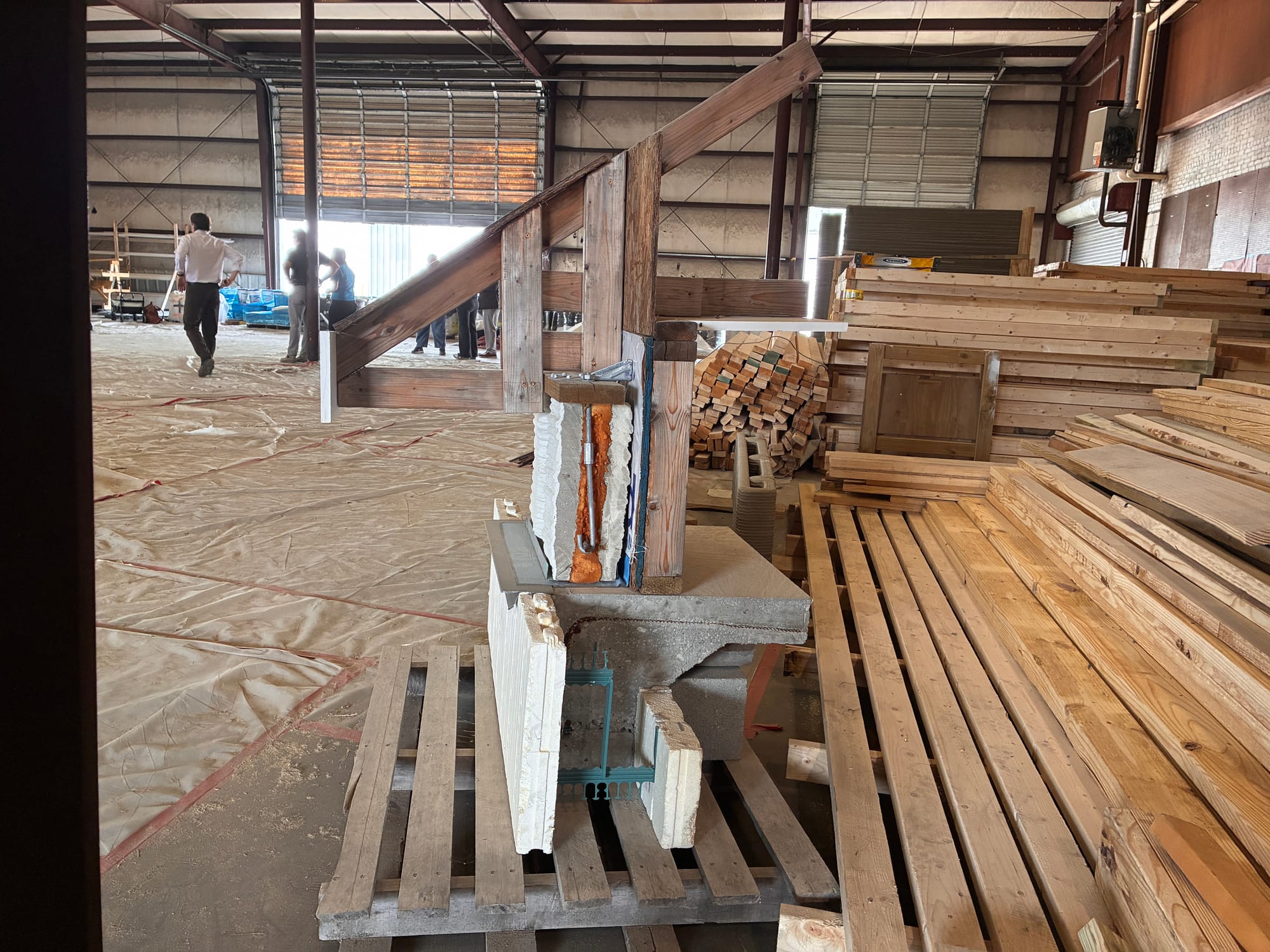
A section of the 3D printed wall with an orange filling on the side shows how it sits on a foundation and below roofing which is slanted atop at the Richmond Metropolitan Habitat for Humanity warehouse 3D support wall printing demonstration this week. (Dina Weinstein/Henrico Citizen)
Rising costs are making it difficult for first-time buyers to enter the housing market. The nonprofit aims to increase the housing inventory and lower costs through manufactured and modular housing.
Virginia Housing is also exploring new products, including duplex modules made from manufactured housing, to increase supply.
Habitat plans to move the printer from its current warehouse location to the Carter Place I development on Darbytown Road in approximately three weeks. For anyone aged 16 and above with time and curiosity, there are volunteer shifts open to help with the 3D printing.
Three of the homes at the site are still available. Habitat for Humanity families chosen as future home owners are involved in the project and are required to complete 100 hours of sweat equity during construction.
Dina Weinstein is the Citizen’s community vitality reporter and a Report for America corps member, covering housing, health and transportation. Support her work and articles like this one by making a contribution to the Citizen.