Skip to content

GRTC, Plan RVA investigate long term planning and community support to sustain fare-free transit

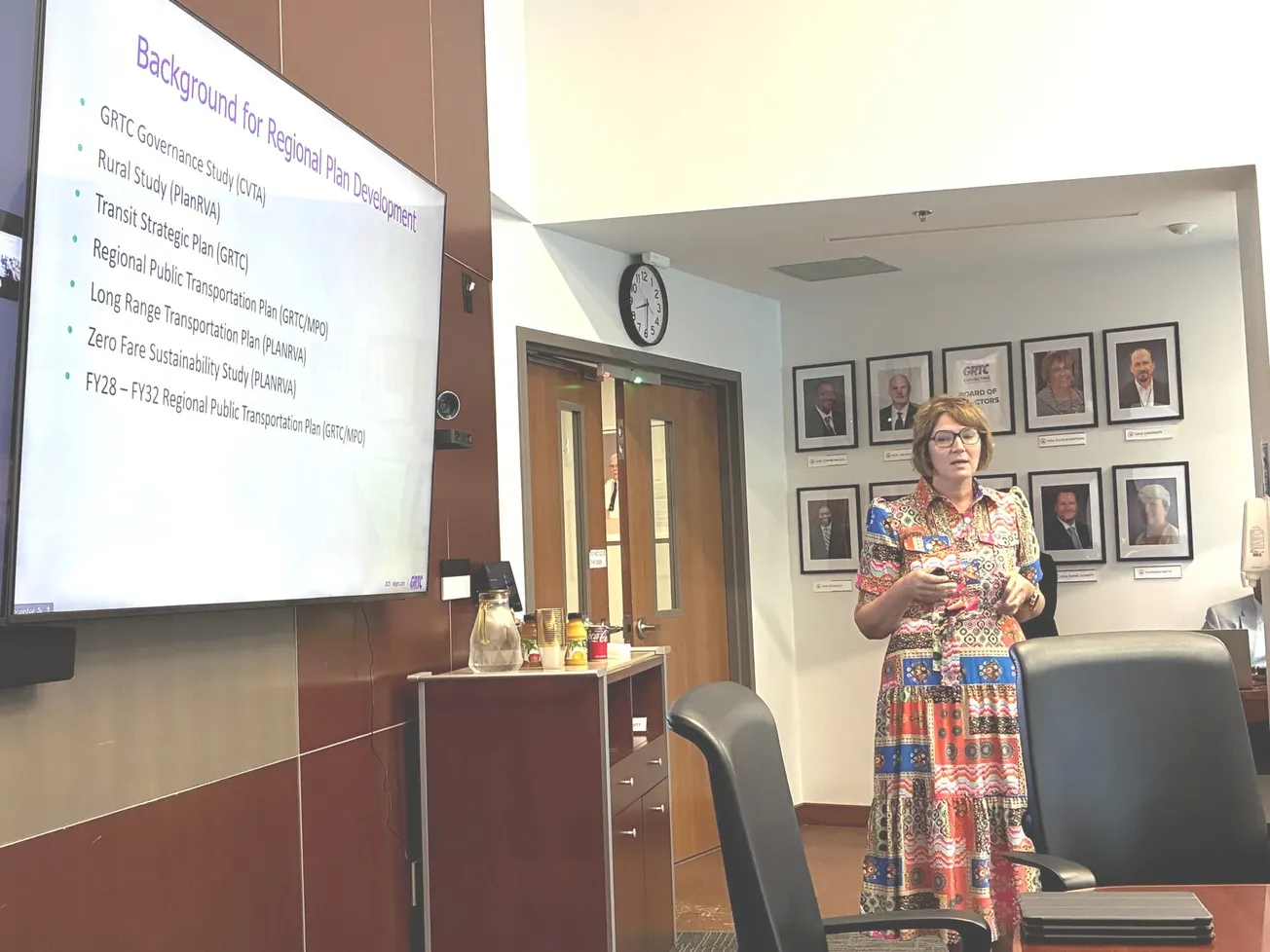
At Tuesday’s GRTC board meeting, Plan RVA executive director Martha Schickle gave some details on the regional planning organization's study as consultants look at the financial sustainability of fare free transit systems across the country. Plan RVA staffers also are connecting with local business leaders to gauge sentiment about the value of transit in the region, seeking opportunities to partner with them in support of zero-fare transit. (Dina Weinstein/Henrico Citizen)

Two planning efforts are studying the long view for sustainable, fare-free public transit in Henrico County and the region.

GRTC’s next five-year financial outlook looks at projected funding needs and alternative scenarios developed in collaboration with the region's nine jurisdictions and Plan RVA, a regional planning organization.

Separately, Plan RVA also is conducting a regional transit study, honing in on sustaining zero-fare transit considerations into the future.

GRTC is providing 12 million rides yearly, with plans to expand service in Henrico and Chesterfield as well as micro-transit into broader jurisdictions.

Plan RVA's collaborative effort highlights the critical role transit plays in supporting mobility, workforce access, economic development, healthcare, and education, while identifying the resources needed to sustain and grow transit service throughout the region, according to board materials. Information developed through both processes will help inform both GRTC's Transit Strategic Plan and the Regional Public Transportation Plan.

At a July 21 GRTC board meeting, Plan RVA executive director Martha Schickle gave some details about the regional planning organization's study, as consultants look at the financial sustainability of fare free transit systems across the country.

Plan RVA staffers also are connecting with local business leader to gauge sentiment about the value of transit in the region, seeking opportunities through which the business community could help support zero-fare transit.

That effort is in line with the board’s directions to GRTC staff to explore the possibilities and potential of public-private partnership opportunities to maintain and grow the service over time. The studies also look at the need for transit, including in rural areas, as well as how the region could provide funds to match that need.

“I personally was really surprised and impressed how many of these community leaders were right into the value of transit in our community and the value it brings,” said Shickle. “I think a lot of that comes from they think about their employees and the reality that they know that many of their employees across the region are traversing global government boundaries on the daily to get to work. They know that it's important.”

Commuting data post-2020, along with the shifts to emphasize personal health and safety of people, and to the reasons why GRTC stays with zero-fare model, impressed the business leaders Shickle spoke with, she said.

An inter-city trip to Phoenix, Arizona (which has light rail), as well a focus on the need for transit around the Amazon headquarters search a few years earlier also made an impression on some of the business leaders interviewed.

Shickle said she and staff at Plan RVA are wrapping up reports from the financial feasibility study that looks at different models for how to fund open-access transit across the country and digging into the sentiments of the business leaders to drill into options for support.

“A big takeaway was that the region was saying that they see the importance in the economic development relevance of transit as well as the access piece, but as far as how do we get the investment where it's enough to get what all the needs and jurisdictions wants, we're not there,” said Adrienne Torres, GRTC's chief of staff.

GRTC staffers are continuing with the TAP Into Transit fundraising and outreach efforts with regional partners to continue to have similar conversations around funding and support from the community.

At left, Adrienne Torres, GRTC chief of staff, presented to the board and staff information about the impact of the TAP Into Transit event last week. She also presented GRTC's timeline to develop its next regional five-year-plan. (Dina Weinstein/Henrico Citizen)

GRTC's five-year plan

GRTC also is developing its regional five-year-plan, which involves speaking directly with the nine area jurisdictions to develop regional transit scenarios. Various scenarios will be presented for public comment ahead of approval in the spring.

GRTC currently has a five-year plan running from 2025 to 2030.

Plan RVA’s Transportation Planning Organization will assist in bringing the regional five-year plan in front of area leaders from jurisdictions that do not sit on the GRTC board.

GRTC board members emphasized the need to express the clear budget constrictions and policies when brought to the public for input.

For that five-year plan, Torres estimated that the cost of meeting the gap to fund fare-free transition would be about $20 million in about five years (based upon a $100-million budget today). That translates to 20% more such funding than the GRTC has today.

The meeting followed the GRTC’s TAP Into Transit fundraising community event held last week with approximately 400 attendees at Richmond’s Main Street Station; and approximately $40,000 raised from fundraisers, including an online artwork auction through the end of the week.

“Fundraising is not going to be enough to fill beyond millions of dollars,” Torres said elaborating on current and longer-range planning. “So that conversation needs to be bigger. It needs to be the jurisdictions, the community coming together and doing a coalition to find out a way to really invest in transit.”

While this year’s TAP Into Transit event partnered largely with the visual arts community, GRTC officials said they were planning on continuing to broaden the outreach support effort going forward.

GRTC’s financial report analyzed the FY 2026 budget, taking into consideration the forecasted versus actual revenue, income, grant funds, operating expenses, expenditures and cash flow projections. The report showed new advertising revenue of $550,000.

An analysis of the actual versus budgeted income showed favorable aspects in the areas of direct funds, equipment and maintenance, services, and general and administrative expenses.

However federal, state and local funds were shown as being short, due to the timing of grant-funded projects.

The five-year plan with the public’s engagement, stating community aspirations, hopes for expansions and financial restrictions, will be worked out with the GRTC staff and board, which will form a vision for the five-year plan in collaboration with the Metropolitan Planning Organization.


Dina Weinstein is the Citizen’s community vitality reporter and a Report for America corps member, covering housing, health and transportation. Support her work and articles like this one by making a contribution to the Citizen.

Comments