
Skip to content

Future of historic Varina site: ‘Like the rediscovery of Jamestown all over again’

Work begins next month to restore Varina on the James – the home that serves as ‘Henrico’s front door’ on the site once occupied by John Rolfe and Pocahontas
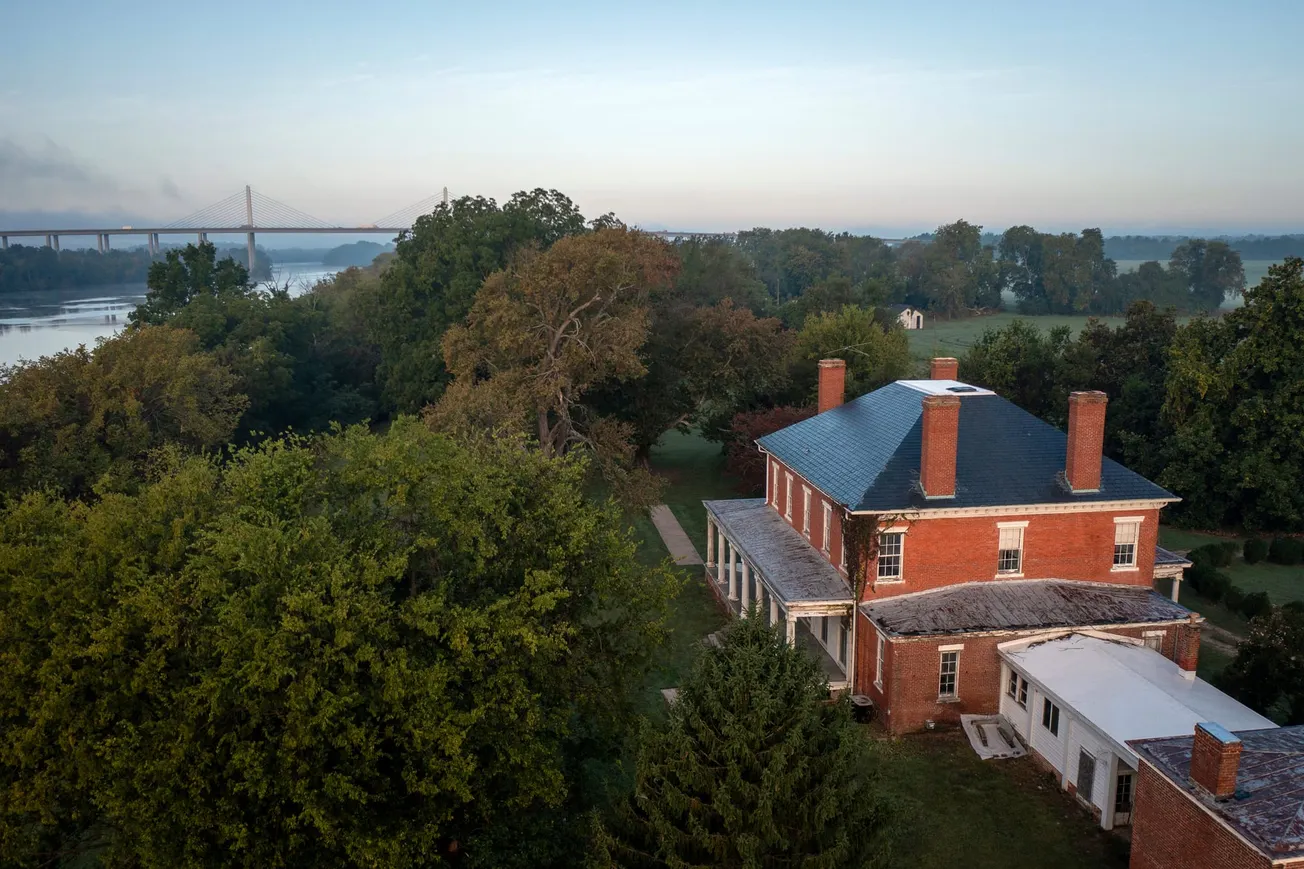
Varina on the James (Courtesy Henrico County)

Julian Charity couldn’t contain his excitement earlier this year when a ground-penetrating radar scan returned evidence of 18th century buildings just steps away from the historic 153-year-old Varina on the James home along the James River in Eastern Henrico, in the shadows of the Varina-Enon Bridge.

“I hollered out loud,” said Charity, the director of History, Heritage and Natural Resources for Henrico County Recreation and Parks. “That’s how exciting it was.”

That those buildings (which officials believe could be part of the original Henrico courthouse or remnants from when the Randolph family occupied the 2,100-acre site) existed on the site was not a surprise. But Charity’s excitement came from the reality that the county and archaeologists soon will have a chance to unearth them, along with many other unknown artifacts that have been buried there by time.

“This is like the rediscovery of Jamestown all over again,” Charity said Aug. 19, standing in a shaded spot in front of the home. “What if we find the original confines of that village of Varina? The original courthouse that was here on Varina on the James. What if we find the actual house that John Rolfe lived in? What if we find the actual property where Pocahontas gave birth to Thomas?”

“I don’t even know how to describe it, for a historian to come into something that has not been done before. That’s what makes it exciting from a historic preservation standpoint.”

Varina on the James is one of the most historic properties in the United States.

It is the site on which John Rolfe developed a new strand of tobacco whose proliferation saved the failing Virginia Colony at Jamestown in the early 1600s and gave rise to the birth of a nation. It’s also where Rolfe lived with his wife, Pocahontas, whose image adorns the Henrico County seal and flag.

The county itself traces its roots to the site, where the village of Varina was established following Rolfe’s death in 1622 and where the county seat was established a decade later and remained for 120 years.

Varina Farms (as it was known originally) also served as a headquarters for Union Maj. Gen. Benjamin Butler during the Civil War and as one of two primary prisoner-exchange locations in the South during the war. (The home took cannonball fire, likely from Confederate forces, and its occupants at some point later filled cracks in its exterior with some of those very cannonballs, which remain in place today.)


In 2023, Henrico County spent $1.3 million to purchase the home and about 5.6 surrounding acres from the Stoneman family, which had owned it since 1910. In early 2024, the county bought the remaining 2,095 acres of the site for $17.25 million, with the intent to preserve it and examine ways to make it available in various ways to the public.

Earlier this month, the county’s board of supervisors voted to award a $1.6-million contract to Suburban Remodeling Corp. to repair and restore the exterior of the historic home, built in 1853 by the Aiken family.

The contractor will work to stabilize the home’s exterior (including its bricks and mortar, roof and windows) – most of which are noticeably tattered.

“In order to get to a point where we can do anything in this house, we have to make sure it’s encapsulated and that it can be climatized,” Charity said.

The structure’s white paint, or what’s left of it, is chipped almost everywhere it still exists – on the wooden porch floors, roof, facade, ceiling, window frames. The doorframe leading to the kitchen area is crumbling and has separated in spots from the bricks surrounding it. Holes or cracks are evident at the top of a column on the front porch, at spots in the brick exterior and in the porch overhang and elsewhere.

The building’s roof was ripped off during a 1941 tornado, and the replacement one came off about two decades later in a hurricane. Interior bedroom windows still contain the diamond engagement ring-etched names of at least one Aiken woman who once lived there, as per tradition at the time (both, Charity said, to mark the family’s presence and also to determine whether the diamond was real).

The building’s exterior tells more of the same aging story, with peeling paint and wallpaper evident in every room. (The Stoneman family last regularly occupied the structure about a quarter-century ago, according to Charity.)

But the home’s bones are strong, Charity said, and this first phase of renovation will ensure that its foundation is restored to handle whatever future may await it. That, he said, may not be known for some time.

“Really there isn’t a plan,” Charity said. “There is no plan. As [Varina District Supervisor] Rev. [Tyrone] Nelson said when we first acquired this property, this is a long play. It’s a long plan. If nothing has happened here in 40 years, that’s ok. If nothing has happened here in 50 years, that’s ok too.”

County officials intend to solicit bids for interior repair work as the exterior work nears its conclusion next year, Charity said, even though future uses for the home are not known and may not be known for some time.


Ask Charity what may be possible for the structure and the site in the future, and there’s little he discounts.

Might it eventually be to Henrico what Montpelier (James Madison’s home) is to Orange County, what Monticello (Thomas Jefferson’s home) is to Charlottesville or what the Voorhees Archaearium (which houses thousands of 17th century artifacts) is to Jamestown?

Might Henrico Advanced Career Education Center students play a role in refurbishing the home and learning how to conduct restorative masonry work on historical buildings, at a time when fewer and fewer professionals are doing so?

Could students from Henrico schools and local universities assist with regular archaeological digs on the property?

Are recreational opportunities with public access to the James River ahead?

“Yes” is an answer he could happily utter to each concept.

“This is preserving the front door of Henrico’s history,” Charity said. “The possibilities are endless, but we don’t want to start with a master plan and then have to work our way backwards. . . Let’s figure out what’s here first, how we can stabilize that, and not jump into something that we regret later.”

When significant archaeological work eventually begins at the site, Charity hopes that students from Henrico, the region and regional universities will be involved.

“One of the things that we would love for this to be is a field school, very much like a Jamestown,” he said. “That’s what we’re hoping this can be. For a student that is coming up through Henrico County schools now, or any one of the regional schools, what if you could come and do an excavation right in your backyard?”

The initial ground-penetrating radar scans were designed to provide a starting point for such work, he said.

“There have always been stories about where things were,” Charity said. “We wanted to get to a point where we know exactly where things are before we just kind of start doing archaeology and kind of waste time and resources with that.”

The next such scans on the site will take place on a 20-acre cornfield that sits just across the gravel driveway from the first parcel, he said. Charity is hopeful that archaeologists eventually will locate the structure of the original Henrico Parish, one of the oldest Episcopal parishes in the United States that was founded in 1611 by Sir Thomas Dale and Rev. Alexander Whitaker.

Henrico officials intend to be intentional and diligent in working to determine future uses for the property, Charity said.

“What better place to tell the entire story of Henrico than where Henrico, in many essences and definitions, began, and then is going to continue to go?” He said. “This property isn’t just fixed into one period of time. As different owners have come into ownership of it, they’ve brought it to that era. The Stonemans did that, bringing it up to the 20th century, and now it’s Henrico’s job to take it to the 21st century and further.”

Comments