Workers, Speaker Scott criticize plan to axe data center tax exemption as budgets advance
The Senate proposal to end the sales and use tax exemption that’s saved data centers over $1 billion annually passes with bipartisan support
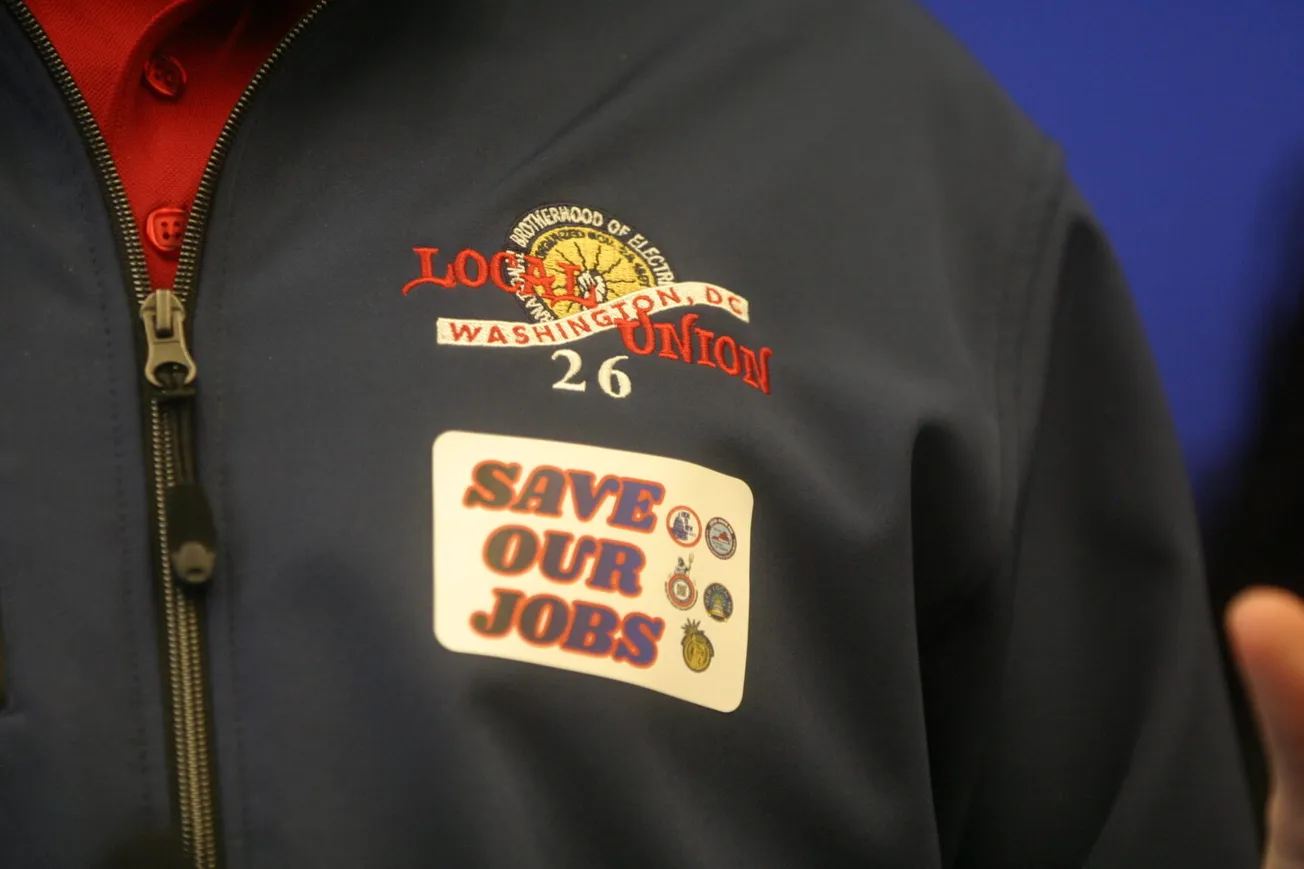
In a General Assembly room cramped with electrical workers from across the commonwealth, a group of bipartisan lawmakers on Thursday marched in one by one to tell them that they support the data center industry and the construction jobs that come along with them.
It was hours before the House passed its proposed budget and the Senate advanced its spending plan, which would repeal the sales and use tax exemption for data centers starting in the next calendar year.
‘I love the jobs that they create, and I love Virginia’s economy to do well,” Speaker Don Scott, D-Portsmouth, said. “So it’s not just that I love data centers, I love the fact the jobs they produce. We have to be realistic about what we’re producing … good union jobs.”

The electrical workers, part of varying chapters of the International Brotherhood of Electrical Workers, traveled to Richmond to plead with legislators to not go forward with the Senate’s budget plan.
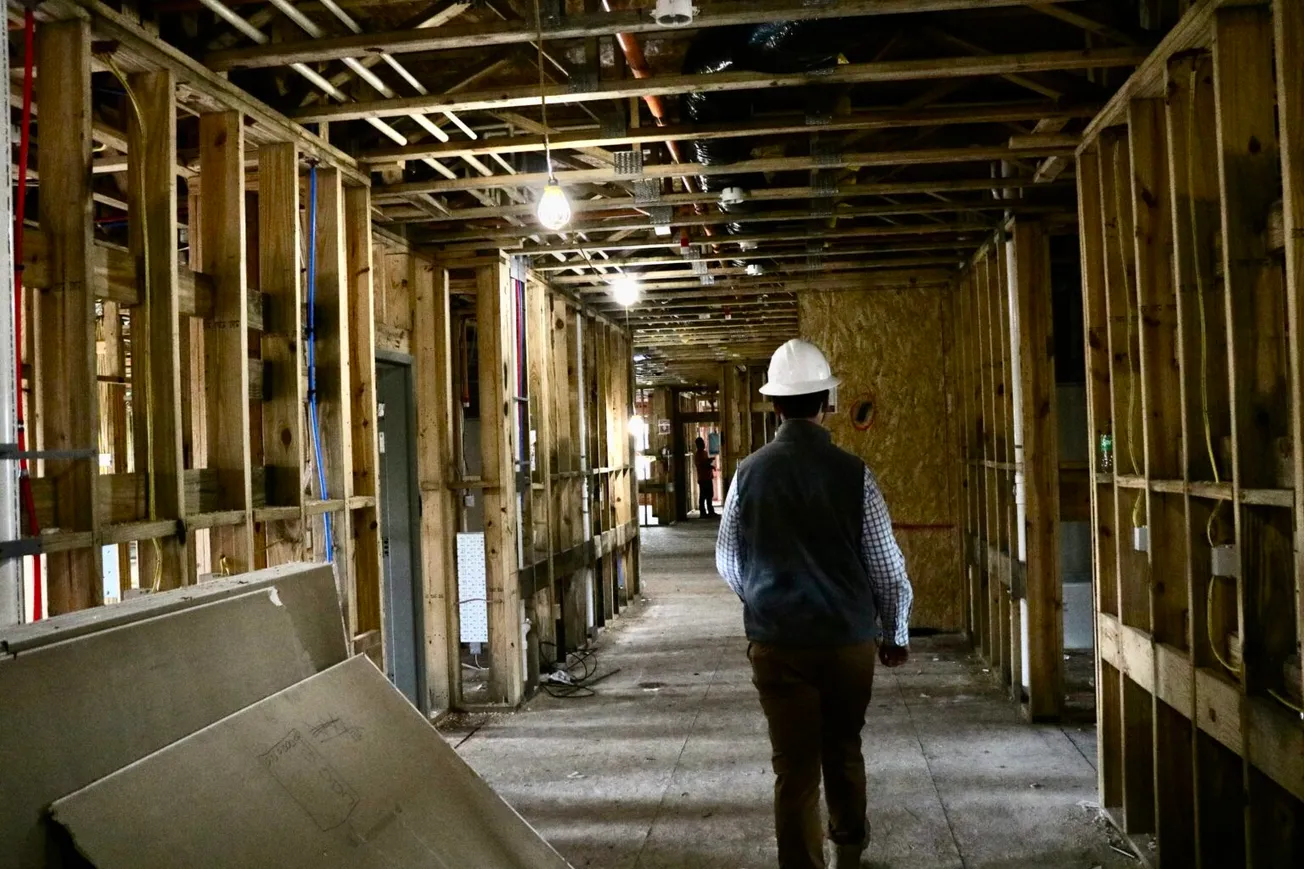
The union members said the data center boom has allowed many of them to significantly increase their wages. They are concerned that removing the incentive will cause the companies to leave Virginia for the dozens of other states who have similar incentives in place, they told legislators.
“This is a coveted industry around the country, and it’s very important to us here in Virginia, so we ain’t got to pack our bags and go travel to do this work we’re doing right now,” said Jason Parker, Vice President of IBEW LU 1340.
Lawmakers said this week the state misses out on an estimated $1-2 billion dollars annually by allowing the data center industry to bypass the 5.3% state sales tax on the equipment and software used inside the warehouse-style facilities.
Sen. L. Louise Lucas, D-Portsmouth, has led the move to repeal the exemption, saying it would ensure the data center industry is “paying their fair share” of costs to operate in the state.
“I want (the money) to go towards hard working families. We’ve got people who are struggling to put food on the table, to put a roof over their heads, pay for their car payment, their kids school. I want that money to go back to them,” Lucas said.
Conversely, the Data Center Coalition highlighted over $100 billion the industry has invested into the state over the last three years and the jobs it has created.
The 2024 Joint Legislative Audit and Review Commission report on data centers found that the majority of jobs the industry created are construction roles and there are far fewer permanent jobs at the centers once they are built.
Data centers reported to state authorities that they’d created 1,197 net new jobs during fiscal year 2024, an investment equaling about $32 billion. Roughly $21.7 billion of that covered equipment or software that was exempt from state sales tax.
In fiscal year 2025, they reported 1,610 net new jobs and an investment of approximately $48.6 billion, $33.2 billion of which they said was exempt from sales tax. The state exempted over $3.2 billion in fiscal years ‘24 and ‘25 of the total $80 billion in industry investments over those two years.
Senate Democrats have framed the proposed end of data centers’ tax exemption as a way to ease financial strain on cash-strapped Virginians and an extension of their affordability agenda.
But Sen. Ryan McDougal, R-Hanover, diverged, telling the union members that the General Assembly should honor the commitment the state made to the industry.
“We made a deal. We can say in the future, we’re not gonna make the same deal, we want a different deal in the future,” McDougal said. “But you don’t change the deal on people while you’re in the process.”
Members of the House from both sides of the aisle, including Scott, are concerned that getting rid of the exemption would curb data center development here. The chamber’s spending plan keeps the exemption through 2035 but adds environmental and energy investment requirements data centers would have to meet to keep the carveout.
“We can’t continue business as usual. It has some other concerns we’re dealing with,” Scott said before the union members. “There’s a lot of different things that I wanted to do in exchange for getting the extension. That’s where I am. So I would love this industry to continue to grow. I don’t want to kill the golden goose.”
Mixed reactions during floor debate

On the Senate floor Thursday afternoon, the budget received bipartisan support, but also a fair amount of criticism. Sen. Mark Obenshain, R-Harrisonburg, called the repeal of the sales and use tax exemption “economic destruction.”
“To say that across Virginia, counties that are struggling to be able to afford basic infrastructure, to be able to afford basic services … that you can’t enjoy some of the benefits that some of the counties have enjoyed, is simply wrong,” Obenshain said.
Several Democrats and Republicans stood to speak in favor of the repeal, citing growing concerns from their constituents about data centers’ water use, land supply, and increased energy demands that are projected to add costs to utility bills.
Sen. Danica Roem, D-Manassas, identified data centers as a top priority for her constituents who live in Northern Virginia, where most of the facilities are concentrated.
“We’ve got to do something about this,” Roem said. “This is the do-something moment.”
The budget negotiations will continue for the next few weeks. Now that each version has passed their respective chambers, they will have to be consolidated and hashed out in closed door conference committee meetings.
Gov. Abigail Spanberger will then have the chance to make changes to the budget after the legislature presents it to her before signing it into law next month.
Virginia Mercury is part of States Newsroom, a nonprofit news network supported by grants and a coalition of donors as a 501c(3) public charity. Virginia Mercury maintains editorial independence. Contact Editor Samantha Willis for questions: info@virginiamercury.com.