With free roof panels, Solar Access Henrico program participants are loving their lower electric bills
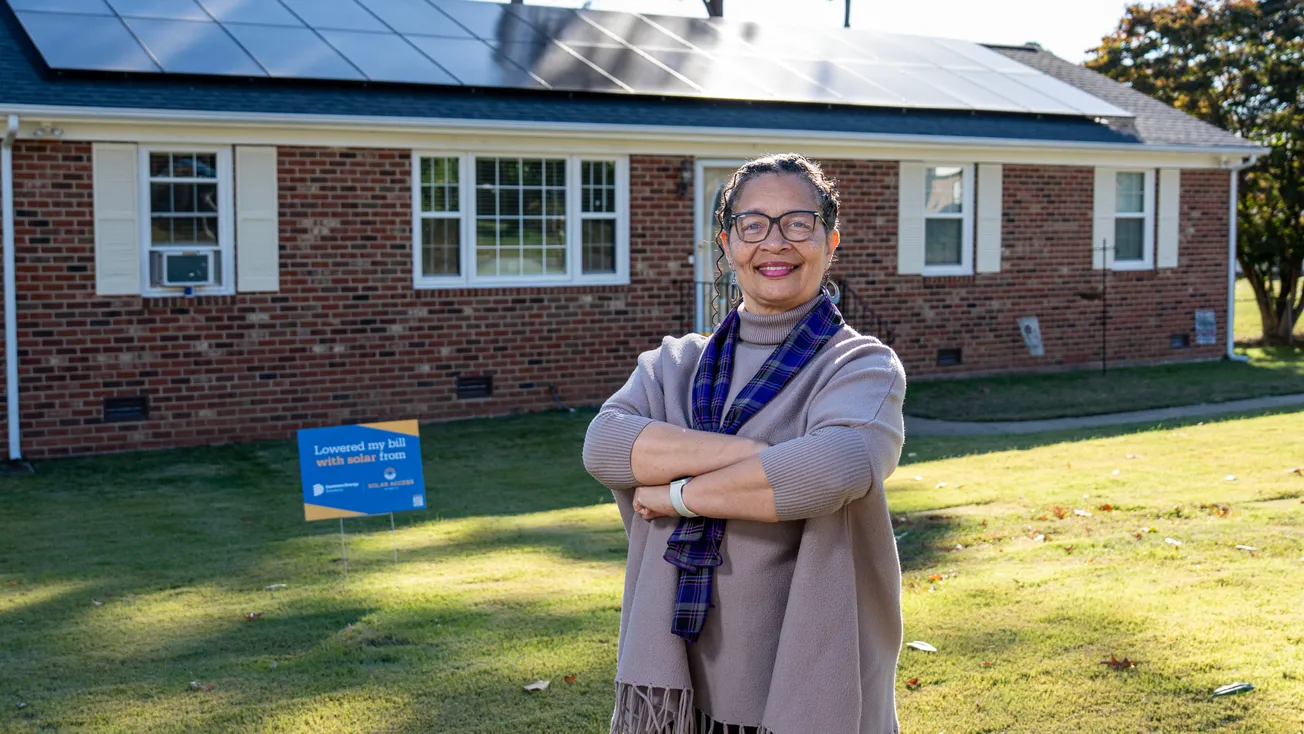
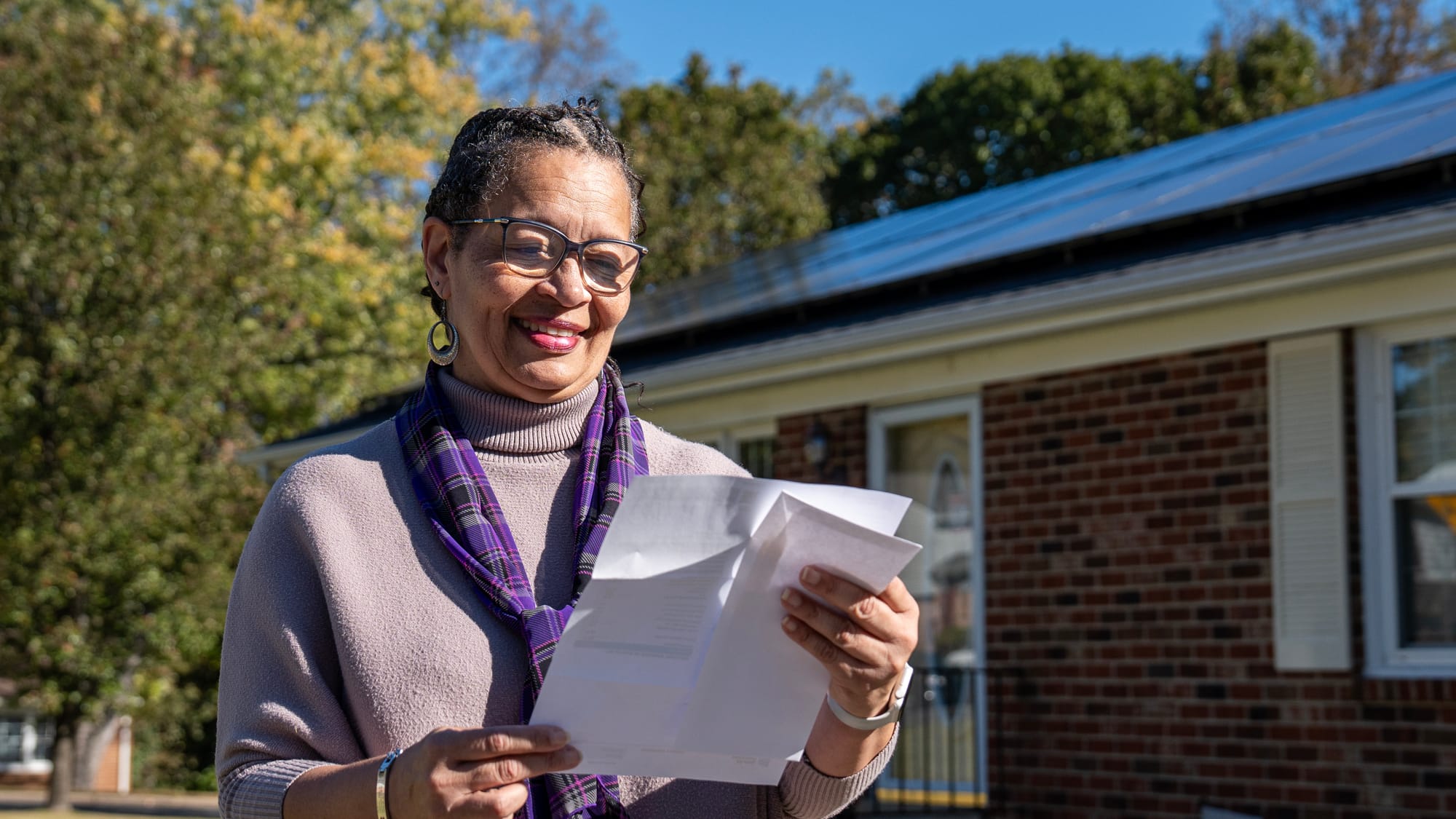
Henrico resident Desiney Lowery, 60, brought her recent energy bill into work to show her co-workers.
Not because it was exorbitantly high, but because her energy bills this winter were shockingly low.
“I ran around the office showing everybody because I was like, ‘Y'all better get in on this! You better come and check this out! It's for real, y'all!’ In the spring and summer, I went from a bill of normally about $160 to $8,” Lowery said.
What brought her bill down, while her heating system was keeping her home cozy and warm during the chilly winter weather, was Lowery’s new solar panels.
“And then last month, I was like, ‘Okay, here we come with this foolishness. What is this bill going to look like?’ Because my winter bills are normally over $300. But the first one was $25 and some change,” Lowery said.
During the height of the winter storms, Lowery’s solar panels were covered with ice and snow, blocking the rays and boosting her bill up to $200.
“It helps the world, the sustainability, using the sun versus using electricity,” Lowery said. “It’s a win-win. I'm living paycheck to paycheck. I'm stressing out. I love paying $8 for electricity. That leaves me more money to worry about other things. I'm a breast cancer patient, so I can use my money toward my medication or use it towards my appointments.”
Lowery is one of about 100 people in Henrico County who have lowered their electricity bills this winter through the Solar Access Henrico program, which has been in effect for about a year and works collaboratively with Dominion Energy Solutions.
Lowery described the installation process as communicative, unobtrusive and swift. She learned about the solar program through a co-worker who saw a report about it on TV.
“I qualified. And the next thing I know, wham! Full of panels,” Lowery said.
But best of all, the cost and installation were completely free.
“The program came about through a data center rezoning case out on the East End at the White Oak Technology Park. As part of that, the county secured $5 million to create a residential solar program,” said Sam Hudson, Henrico 's sustainability division director.
“With the spike in energy bills, anything that we can do to provide relief to our citizens, that's really what this program is all about. The primary goal is to help residents reduce their energy bills. We don't know of any other locality doing this, helping our residents reduce greenhouse gas emissions. It's a program that is completely unique from anything that I've seen, certainly in the state of Virginia. No other locality is providing free solar to residents.”
Dominion Energy officials acknowledged that many of their customers are receiving higher bills than they have seen in the past, with the largest driver in cost for what people are experiencing on their December and January bills being the extended period of extreme cold.
The Solar Access Henrico program allows the county to install between 200 and 250 systems valued at around $25,000 apiece.
Residents can check their eligibility for the program on the Henrico Solar Access program website. Besides being a Henrico County homeowner, interested residents must have a household income at or less than 100% of the area’s median income. A four-person household cannot have an income that exceeds $106,000 annually.
Homes must be a good fit for solar panels (receiving enough sun) and have a roof in good condition. One recipient told the Henrico Citizen that her 45-year-old roof was replaced before she got her panels.
Dominion Energy Business Strategy and Marketing Director Eric Weissbart said the solar panels for an average $20,000 system are about seven kilowatts, translating to around 16 panels.
Lowery was interested in getting the solar panels because she had seen them before on homes. She was intrigued by the concept, a bit fuzzy on the inner workings, but clear on the environmental benefits how the panels contributed to the sustainability of the earth. Quotes she got from other solar installers said installation would be about $50,000.
“The funny thing was my HVAC system went out two weeks after I got my solar panels. So it was hilarious in a sense, because I was like, Oh my God, had I paid for solar panels, how would I be able to afford an HVAC system?” Lowery said.
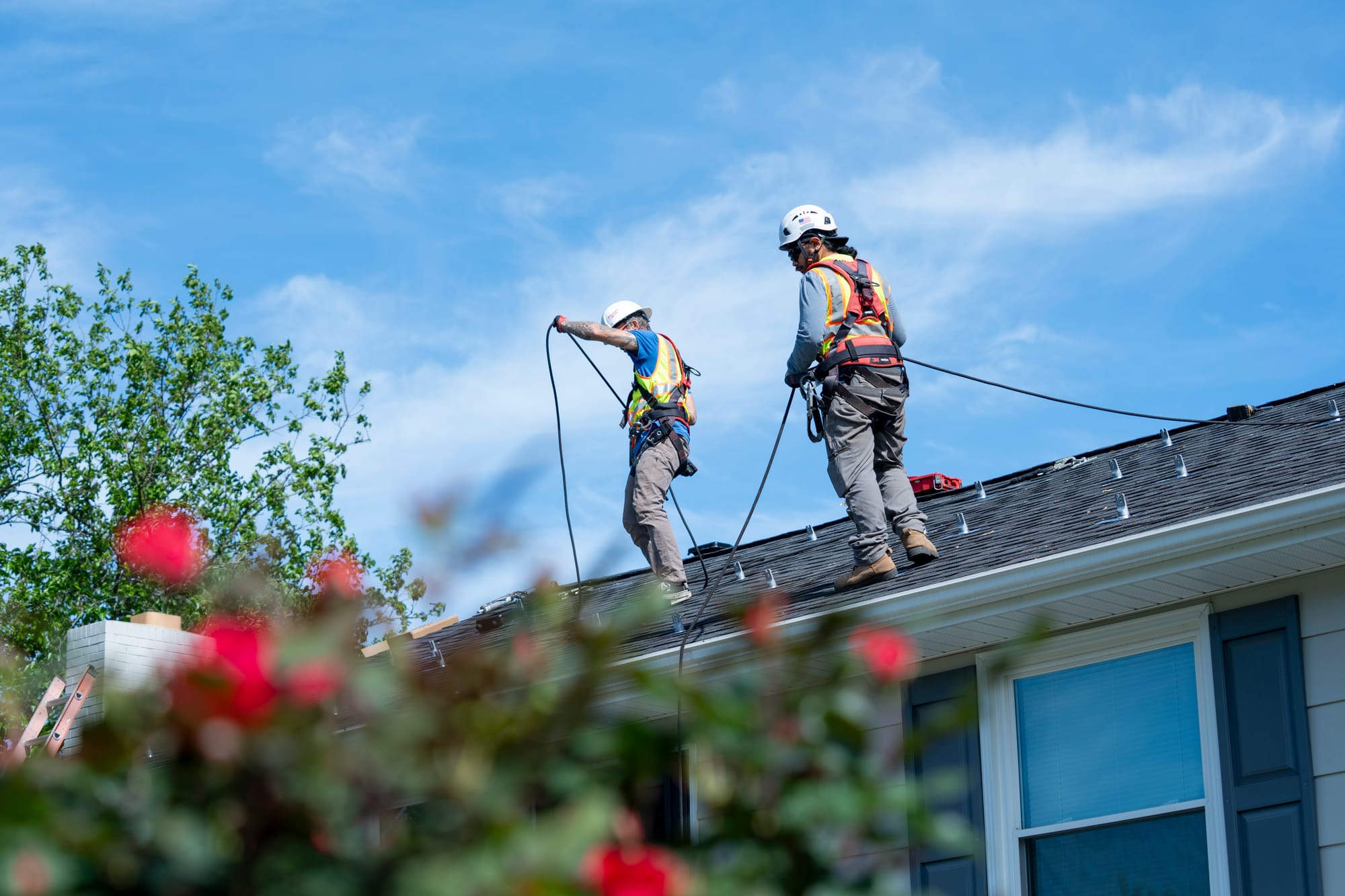
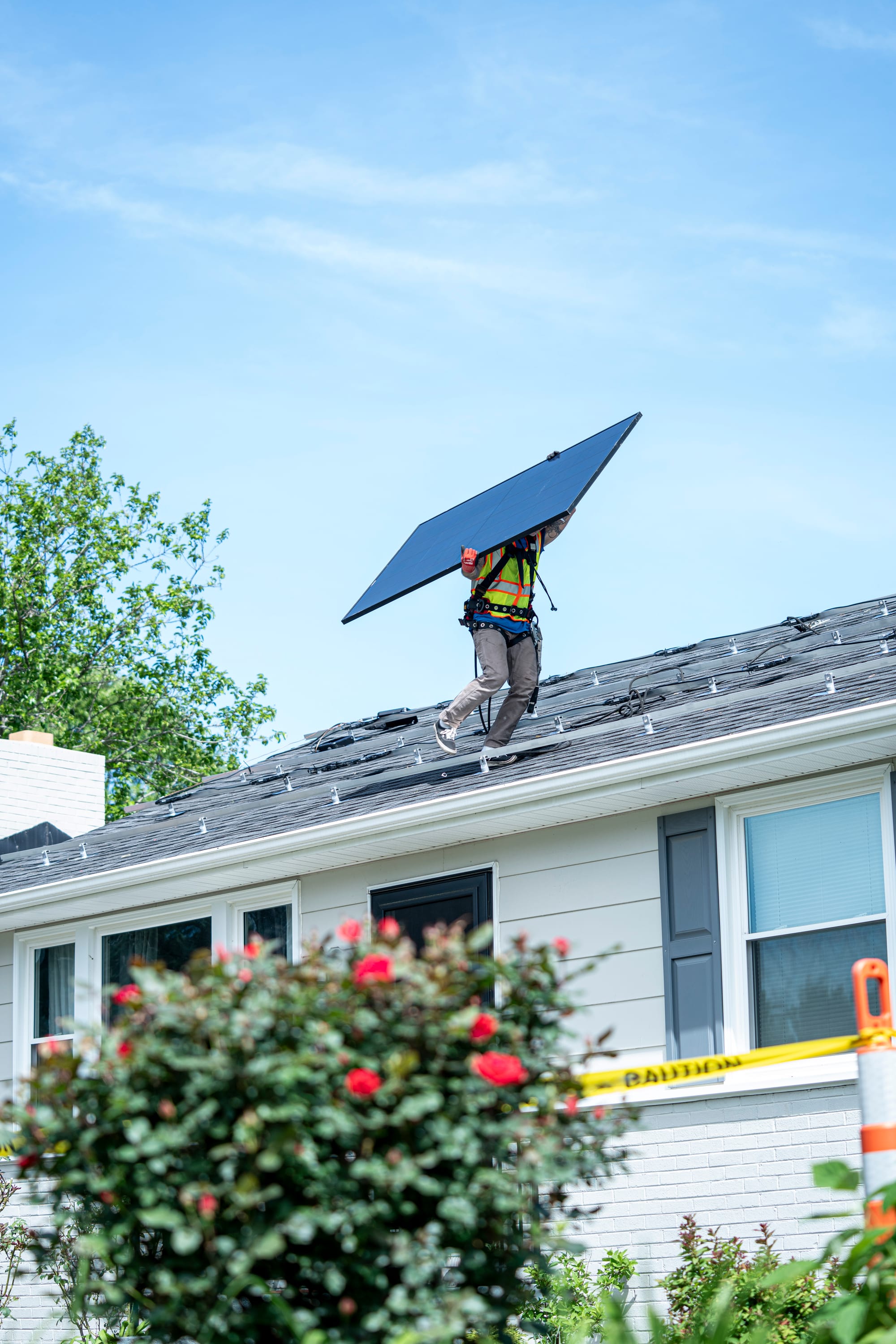
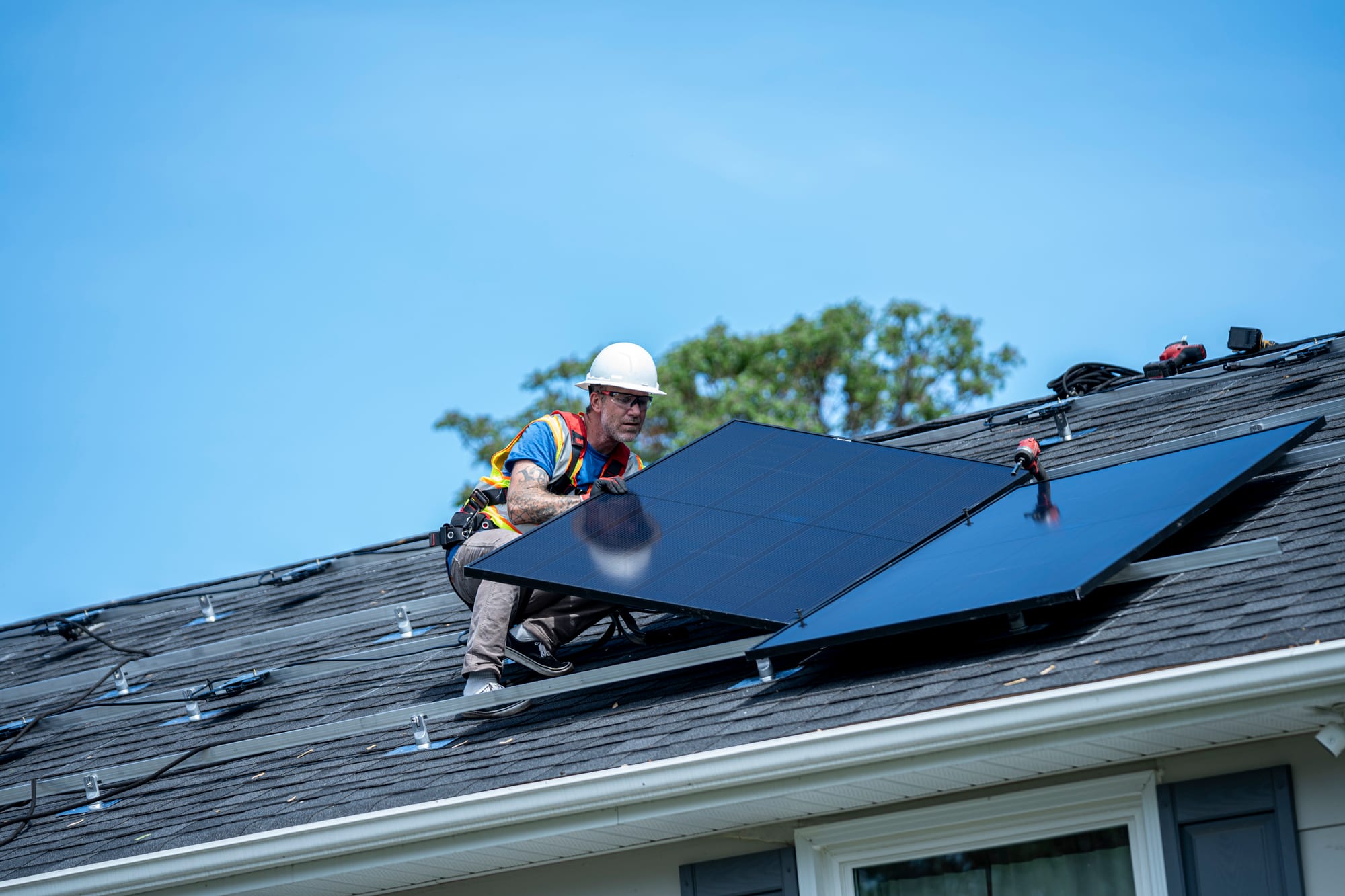
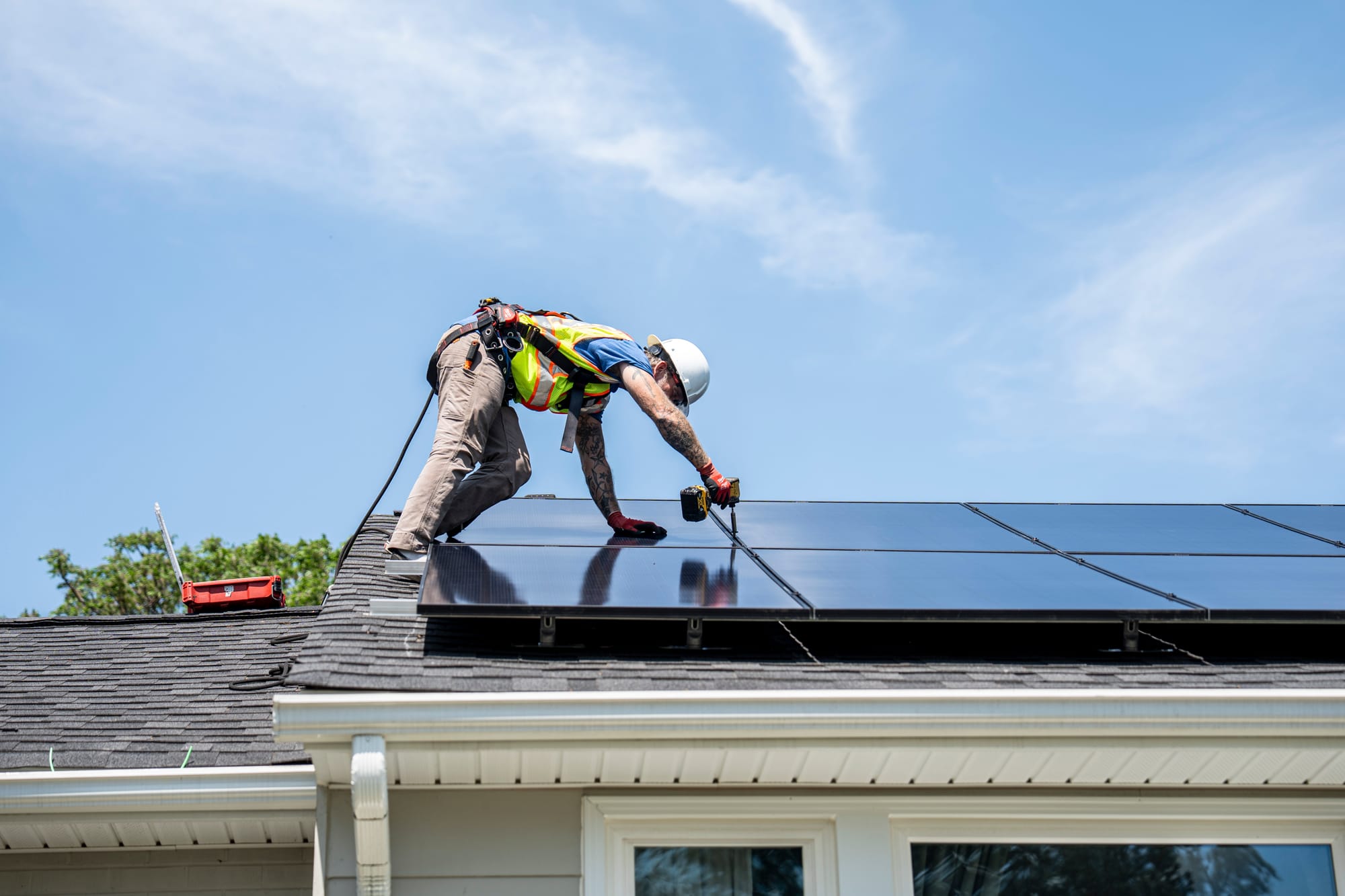
Dominion Energy Solutions contractor Convert Solar getting harnessed before a Solar Access Henrico installation in accordance with safety standards, carrying a panel for positioning and then attach it to the solar racking. (Courtesy Dominion Energy)
“They collect energy from the sun, and that energy is in the form of direct current energy that runs to what's called a solar inverter,“ Weissbart said.
Residents who qualify for the program work with a dedicated energy advisor. They'll have a welcome call with the homeowner to explain what they can expect during the installation process and while the system is in operation.
Once a customer is enrolled, a contractor will conduct a site survey to ensure that the home’s roof is structurally suitable to hold the additional pounds per square foot associated with the solar panels.
The roof also gets assessed from an engineering perspective during the permitting process. That includes a look at the attic, shingles and roof trusses supporting the solar panels,
Once everything checks out, Dominion gets its engineering plans over to the Henrico County permitting department for building and electrical permits, which takes about four weeks. Then Dominion lines up an installation date with the homeowner. It typically takes about six to eight weeks from the initial conversation with the homeowner until panels get installed on the roof.
“The size systems that we've seen for Henrico solar access is typically only about half a day,” Weissbart said about the installation. “And then within about four days thereafter, the utility company will issue permission to operate to the homeowner. And at that point, their system's energized, and they're saving money on their utility bills and are off and running.”
Solar does not produce as much energy in the winter, with the sun up only for eight hours versus 16 hours in the summertime.
“Virginia is a net metering state, which means that to the extent that you produce energy above and beyond what you need, it builds up what's called a net metering credit on your utility bill, that then can be used for billing purposes in the wintertime, say, to offset those months when your house is using more than the solar array can produce,” Weissbart said. “So, you become indifferent to the seasonality of solar production and these net metering credits can be accrued.”
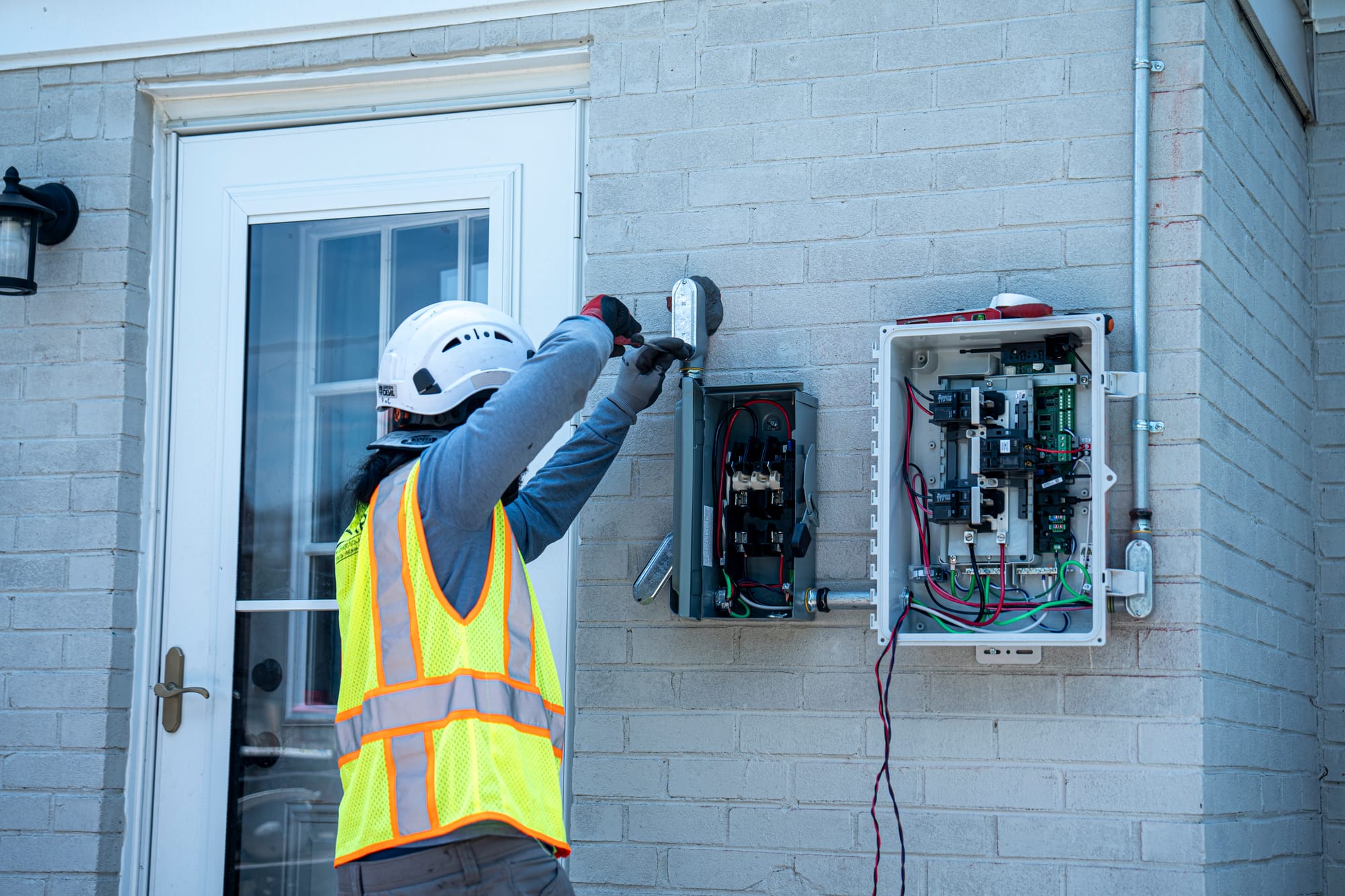
Lowery and other residents interviewed for this article can monitor each solar panel’s functioning through a portal and app.
Some aspects of the solar panels took adjustment. Arthur Morton, another Henrico resident with solar panels, said that the ice that collected on the panels after the winter storm slid off the panels in sheets.
“It's coming up on a year. And all I can tell you is I wish more people would take a chance because all you have to do is qualify,” said Lowery, who thinks the solar panels lined up on one side of her roof will help increase her home’s value.
“It's so beautiful the way that they did it,” Lowery said.
Dina Weinstein is the Citizen’s community vitality reporter and a Report for America corps member, covering housing, health and transportation. Support her work and articles like this one by making a contribution to the Citizen.