‘We don’t want to become the dumping grounds’: biosolids bill advances
Community concerns over PFAS continue to grow across the commonwealth
The growing concern over the presence of “forever chemicals,” per- and polyfluoroalkyl substances (PFAS), in municipal waste has prompted a slew of bills that are now under review in the Virginia General Assembly session.
That waste is often turned into a sludge called biosolids, which is then used as fertilizer on farms across the commonwealth. The state doesn’t test the biosolids for PFAS before it is spread on farms by specially permitted companies.
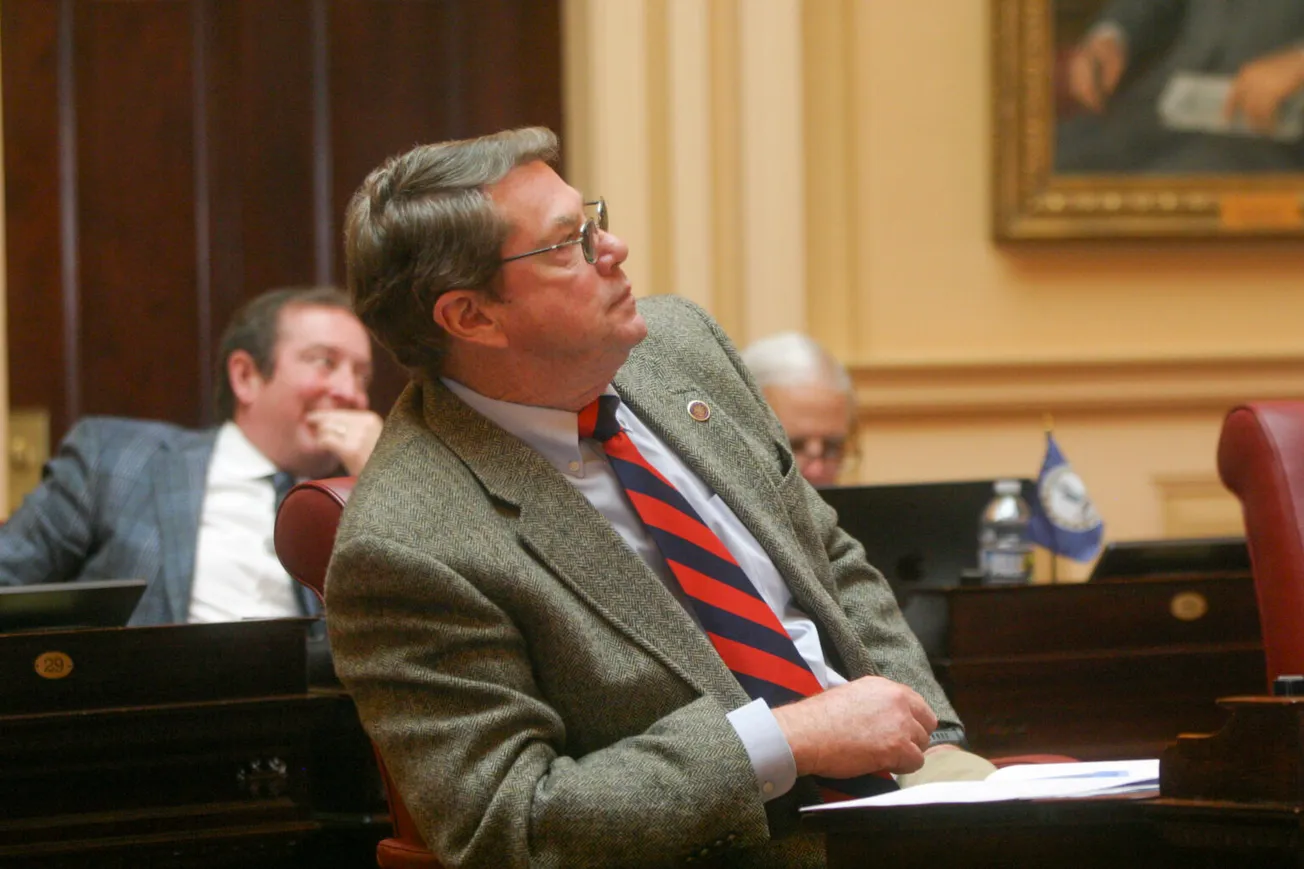
Senate Bill 386 sponsored by Sen. Richard Stuart, R-King George, would effectively ban the use of biosolids if there is any presence of PFAS in them. Forever chemicals present in everyday products like cookware, water resistant clothing, fast food packaging and industrial runoff can leech into the wastewater and become concentrated in biosolids.
The bill would also levy a penalty via fines on any company that spreads biosolids containing PFAS.
Synagro, a company that provides biosolids to Virginia farmers, has previously expressed concerns about PFAS and supported potential legislation to remove the chemicals at the source or to implement discharge limitations for manufacturers to stop it from ending up in wastewater.
“Synagro is a passive receiver of PFAS from municipalities, who themselves are passive receivers from their customers,” a company spokesperson noted in November.
Stuart said Tuesday his constituents have been testing their well water and have found PFAS present. While they can’t directly blame the biosolids for putting them in their water, biosolids being spread on the surrounding farms does pique fears.
“The only thing I know is to stop applying it with the PFAS in it, or whatever level the experts think is appropriate,” Stuart said. “This bill represents the right answer for human health and for the environment.”
Maryland recently lowered their threshold for the presence of PFAS in biosolids to 100 parts per billion; after that point, officials recommend the spreading be stopped. Stuart said the neighboring state’s new policy could mean more of the municipal waste will be shipped to Virginia to be used as biosolids.
“I understand that zero tolerance is a lot,” Stuart said. “I know that there is a percentage somewhere that people may be able to live with.”
Proponents for the bill said that a zero tolerance is warranted due to the risks PFAS pose to human health. Some of the potential dangers include an increased risk of certain cancers, heightened cholesterol and lower pregnancy rates, according to the Virginia Department of Environmental Quality.
“The question that the body is wrestling with in all of these vehicles is how much is safe,” said Jay Ford with the Chesapeake Bay Foundation. “Sen. Stuart’s bill is right. He’s correct on the number. It’s zero.”
Other states such as Maine have banned the use of biosolids completely, and Connecticut has banned the use of biosolids that have traces of PFAS in them. Three other states have enacted reporting requirements for PFAS in biosolids.
Multiple bills have been filed that reflect a range of efforts to test the biosolids and for wastewater treatment facilities to test for the presence of PFAS.
House Bill 880, which has not yet had a hearing, requires sewage treatment facilities to test for PFAS once a month. Another bill, SB138, requires the testing be done each quarter of a year; if PFAS is found, then the testing would be allowed to be extended.
Those bills are similar to 2024 legislation that tasked water regulators with locating the source of major PFAS in drinking water.
“You’ll hear about those bills that other members of the General Assembly are carrying,” Stuart said. “The problem is they don’t do anything, and we’ve got to do something. We can’t continue with this.”
But not everyone is on board with his bill.
The Virginia Farm Bureau opposed the bill because biosolids are significantly cheaper fertilizer compared to synthetic fertilizers. If biosolids were to be banned, it would create a major cost to farmers, representatives of the Bureau said.
The Virginia Municipal Drinking Water Association spoke against it because biosolids are a key use for leftover sludge after wastewater is treated. They pointed out that landfills don’t want the sludge, and incinerating it creates toxic emissions.
“Most communities around the Commonwealth rely on this practice for handling the solids that result from the clean water treatment process,” said Chris Pomeroy, counsel for the association. “We agree with the notion of reducing PFAS, and we’re here to help.”
The bill advanced out of the subcommittee on Tuesday with a promise from lawmakers to work on finding a compromise to prevent outright banning biosolids, and determining an acceptable percentage of PFAS in biosolids that farmers, localities and others can agree to. The bill now moves on to the full Senate agriculture committee.
Virginia Mercury is part of States Newsroom, a nonprofit news network supported by grants and a coalition of donors as a 501c(3) public charity. Virginia Mercury maintains editorial independence. Contact Editor Samantha Willis for questions: info@virginiamercury.com.