Virginia moves to launch legal cannabis marketplace after years of delay
General Assembly approves retail sales framework and sends measure to Gov. Spanberger after repeated vetoes under former Gov. Youngkin
Five years after Virginia legalized possession of small amounts of marijuana but failed to create a way for people to legally buy it, state lawmakers last week approved legislation establishing a regulated retail market for adult-use cannabis, potentially ending years of uncertainty over how cannabis could be legally bought and sold in the state.
Late Friday, the Senate approved the conference committee compromise on House Bill 642 by a 21–18 party-line vote. The House of Delegates followed on Saturday, the final day of the 2026 General Assembly session, passing the measure 64–32 and sending it to Gov. Abigail Spanberger’s desk.
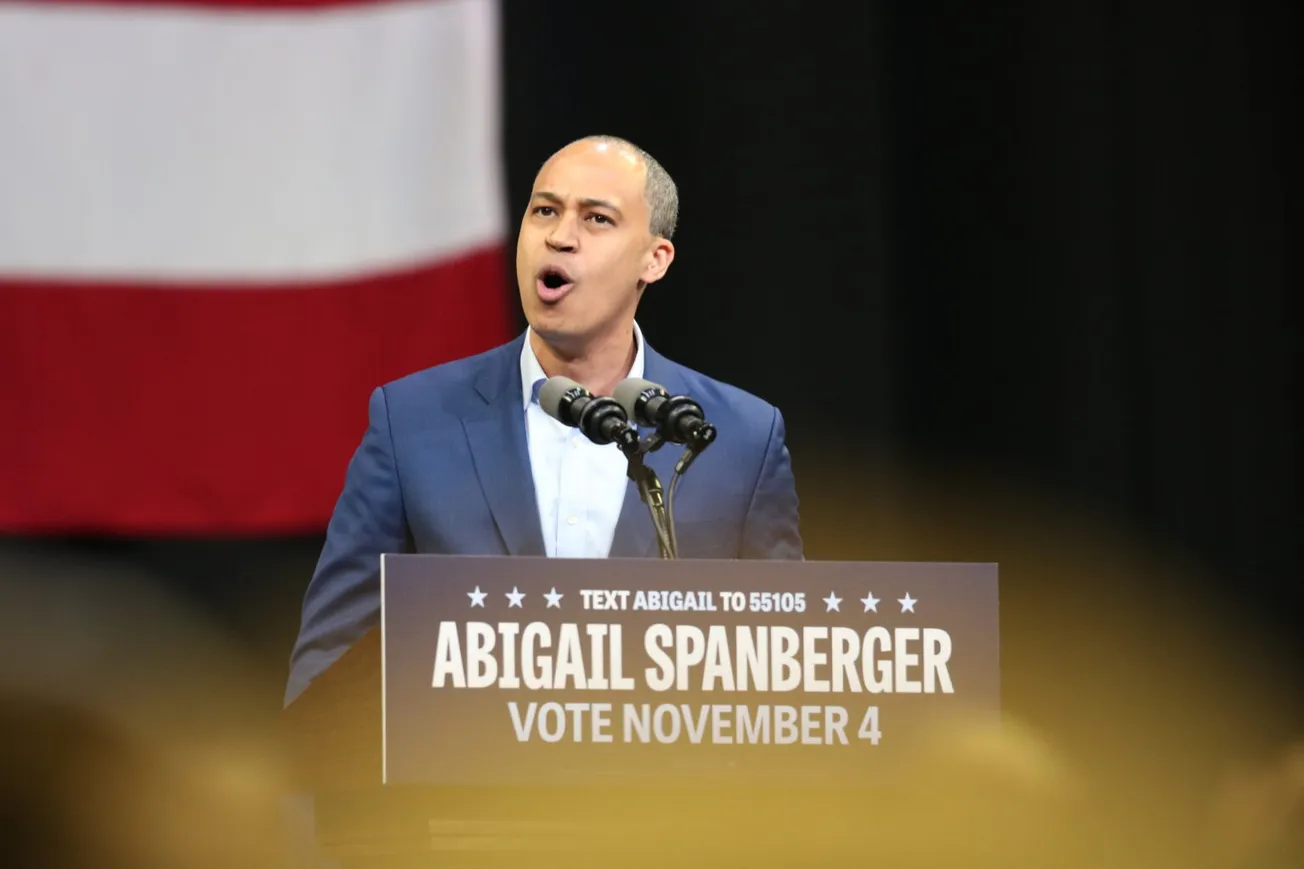
If the Democrat signs it — as she said she would during an interview with The Mercury last summer — the bill would allow Virginians 21 and older to legally purchase cannabis beginning Jan. 1, 2027.
The vote marks a significant shift after years of failed efforts, after legislators legalized adults possessing up to an ounce of weed in 2021, and allowed people to grow up to four plants at home. Republican Gov. Glenn Youngkin repeatedly vetoed legislation that would have allowed retail sales.
The measure approved in the closing hours of the 2026 session would create a statewide licensing system, tax structure and regulatory framework overseen by the Virginia Cannabis Control Authority. The legislation lays out standards for cultivation, processing, distribution and retail sales of marijuana products through regulated businesses.
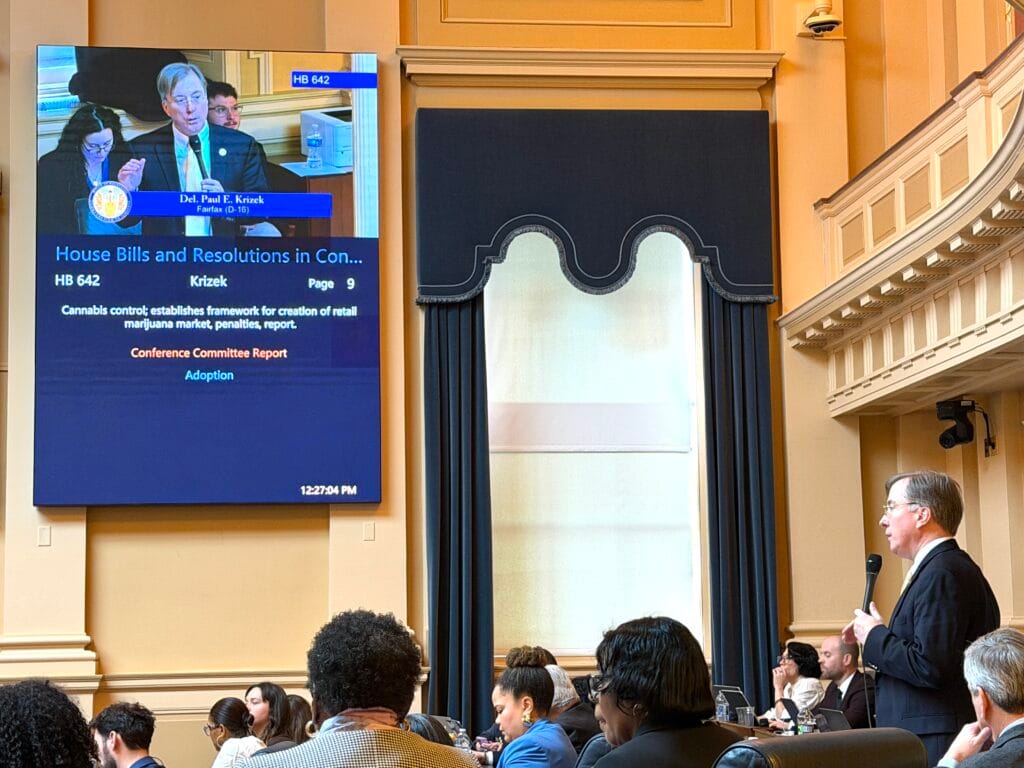
Del. Paul Krizek, D-Fairfax, who sponsored the House version of the legislation, said it reflects years of negotiations and public input.
“It’s been a long and arduous journey, but it’s also been good, because with that time, we were able to really get input from all walks of life, from all over the commonwealth, the stakeholders, individuals, constituents,” Krizek said in an interview.
“It’s what Virginians have asked for, and we’ve spent the time, and had many, many hours of hearings where there was public input, and lots of emails, letters, texts, and conversations with the general public, and this is the product from all of that hard work.”
Conference negotiations shape the final bill
Although both chambers supported establishing a retail cannabis market, lawmakers disagreed on several details, including the timeline for launching sales, the tax structure and regulatory oversight.
Krizek’s House bill would have allowed retail sales beginning Nov. 1, 2026, while the Senate version sponsored by Sen. Lashrecse Aird, D-Henrico, set a later launch date of Jan. 1, 2027.
The compromise adopted the Senate timeline.
“Less than a year from now, you’ll be able to legally buy cannabis products for adult use, recreational, throughout Virginia,” Krizek said. “I guess it won’t happen exactly on January 1, but it will be legal at that point.”
The legislation also blends competing tax proposals, establishing a 6% state cannabis tax while allowing local governments to adopt an additional tax between 1% and 3.5%. Combined with existing sales taxes, total taxation on cannabis products would typically fall between about 12% and 16%.
Existing medical cannabis operators would be allowed to enter the adult-use market by paying a $10 million conversion fee, a compromise between the lower fee proposed in the House and a higher fee suggested in the Senate.
The final proposal also caps the number of retail cannabis establishment licenses at 350 and increases Virginia’s legal possession limit from one ounce to 2.5 ounces.
Under the legislation, businesses involved in cultivation, processing, wholesale distribution, retail sales and microbusiness operations must obtain licenses from the Cannabis Control Authority. Licensed establishments must display official decals showing they are authorized to sell marijuana products.
The new state agency would oversee licensing, enforce regulatory compliance, collect cannabis taxes and monitor the supply chain.
Krizek noted that the Cannabis Control Authority may conduct lotteries if the number of applicants exceeds available permits, and that retailers will need time to secure financing, obtain licenses and establish operations. Businesses would have up to two years to activate their licenses before losing them.
Civil penalties for violations could reach up to $10,000 per day, including for operating without a license or displaying falsified licensing decals.
The bill also creates enforcement provisions addressing underage possession, rules governing seizure or destruction of marijuana held by suspended or revoked licensees and mechanisms for collecting unpaid cannabis taxes, including liens or business closures.
Selling marijuana without a license would carry escalating criminal penalties, starting as a Class 2 misdemeanor and rising to a Class 6 felony for repeated offenses.
Statewide access over local opt-outs
One provision removed from a previous proposal would have allowed local referendums for communities to opt out of cannabis retail sales.
Aird said lawmakers rejected that approach after reviewing data from other states showing that patchwork systems often allow illicit markets to continue operating.
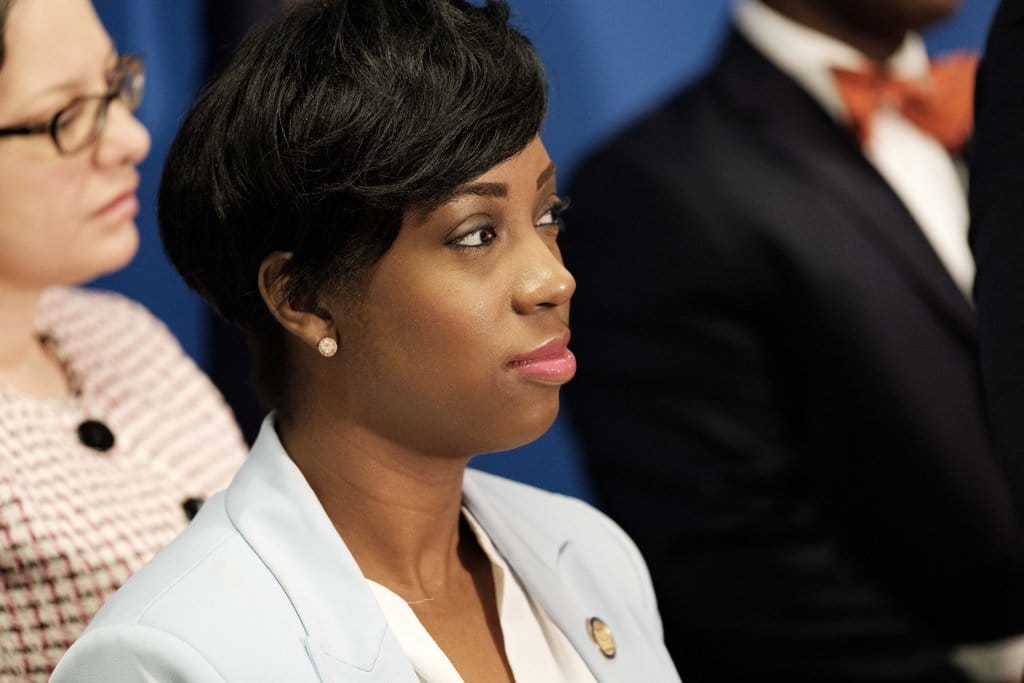
“Honestly, I don’t have any emotion for a locality that feels upset that there is not a referendum,” she said in a phone interview Tuesday. “Because we did all of the research, it is simply not safe to have a patchwork of access relative to the retail marketplace.”
Lawmakers concluded that inconsistent access across localities would undermine both consumer safety and enforcement goals, Aird added.
“But when we met with law enforcement, when we met with health professionals, and we took just a really broad look at what would the state look like if you have some access here and no access there, it’s just not practical.”
Instead, local governments will be allowed to impose their own local cannabis tax within the range authorized by the bill.
Aird also acknowledged concerns that illegal cannabis sellers could continue operating alongside the legal marketplace.
She pointed to related legislation, Senate Bill 543, which strengthens enforcement tools for shutting down unlicensed sellers.
“We have dropped in significant provisions to give law enforcement and localities a much stronger hand to shut down stores, these vape shops, these pop-up smoke shops, that are found to have illicit products being sold on site,” Air said of that proposal.
Those enforcement provisions would take effect July 1, well before the retail marketplace opens.
Economic opportunities and equity provisions
Advocates say the legislation is designed not only to regulate cannabis but also to address the long-term effects of drug enforcement policies.
Aird said the bill includes provisions aimed at helping individuals disproportionately affected by past marijuana laws participate in the new industry.
Supporters say those provisions are meant to address racial disparities in marijuana enforcement during the decades-long War on Drugs.
A report by the American Civil Liberties Union found that despite similar marijuana use rates among Black and white Americans, Black people were 3.73 times more likely than white people to be arrested for marijuana possession nationwide.
“I think that’s one of the most satisfying parts about this legislation,” she said.
The proposal creates microbusiness licenses, partnership agreements and a Cannabis Equity Reinvestment Fund designed to support entrepreneurs historically affected by drug enforcement.
“That will go in the hands of real people, to be able to launch their own entity within this marketplace,” Aird said.
Forty percent of the state’s cannabis tax revenue would be directed toward early childhood care and education programs, while 30% would fund the equity reinvestment program.
Industry groups say the legislation could unlock major economic opportunities.
Rodney Holcombe, vice president of public policy at LeafLink, the nation’s largest cannabis wholesale platform, said the measure reflects lessons learned from other states.
“Virginia is on the verge of taking a major step forward by establishing a responsible, well-regulated adult-use cannabis market,” Holcombe said.
“Lawmakers clearly took the lessons learned from other states to heart, crafting legislation with a thoughtful licensing structure, a workable tax framework, and safeguards to ensure localities cannot opt out and undermine the stability of a statewide market.”
Holcombe said the industry hopes Spanberger will sign the legislation into law.
“Doing so will unlock meaningful economic opportunity across the commonwealth and ensure Virginia’s cannabis market launches on a strong, stable foundation,” he said.
Advocates see progress — and concerns
Some advocates welcomed the legislation while raising concerns about implementation.
Chelsea Higgs Wise, executive director of Marijuana Justice, said her group pushed lawmakers to strengthen equity and consumer protections as the legislation evolved this session.
“The General Assembly took many steps to add positive provisions to the bill such as protecting small businesses from predatory contracts, including a labor peace agreement, adding a compact for tribal governments, adding education for vape shops and consumer protections, expanding equity opportunities,” Wise said.
However, she said some issues remain unresolved, including zoning restrictions and potential supply chain bottlenecks if the market launches too quickly.
“Even though we have been here before, we remain hopeful that (Spanberger) will listen to the stakeholders, sign the bill but also improve it,” Wise said.
Unlike her predecessor, the Democratic governor has said she supports establishing a legal cannabis marketplace. She can sign the bill, propose amendments or veto it.
For Aird, the legislation represents the culmination of years of debate following the state’s initial legalization vote — and a long wait for the retail market many Virginians expected to follow.
“Now that it is real,” she said, “I think people feel like they’re going to be a lot safer. They’re going to have increased access, and it has been such a labor that is hard to believe. It is very surreal, but it is very satisfying to have arrived at this moment.”
Virginia Mercury is part of States Newsroom, a nonprofit news network supported by grants and a coalition of donors as a 501c(3) public charity. Virginia Mercury maintains editorial independence. Contact Editor Samantha Willis for questions: info@virginiamercury.com.