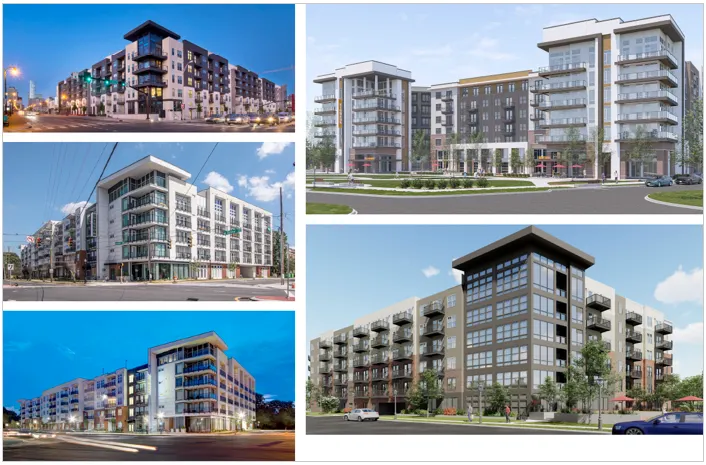
Virginia lawmakers want to build affordable housing opportunities

Virginia lawmakers worked this session to address high housing costs.
Nearly eight in 10 cost-burdened renters in Virginia spend more than 30% of their income on rent, which qualifies them as extremely low-income, according to federal standards. The state has 35 affordable and available rental homes for every 100 households in need, according to the National Low Income Housing Coalition Gap Report.
Zoning
House Bill 594, introduced by Del. Shelly Simonds, D-Newport News, allows districts to streamline zoning approvals for developments with 75% of their units designated for lower-income households. Gov. Abigail Spanberger signed the bill, which passed with bipartisan support, on April 8.
The bill grants localities and their zoning administrators the authority to approve rezoning, rather than the city planning commission or elected board. To be approved, projects must comply with Virginia Fair Housing Law, have access to public water and the sewage system and be located in or near areas that can support increased density.
“We’re opening up more land in urban areas, land that already has utilities and sewer kind of hooked up to the land,” Simonds said. “It’s important because only 5% of land in Virginia right now is zoned for multi-family housing.”
Virginia follows Dillon’s Rule, a legal principle that limits local governments to the powers expressly granted to them by the state. Under Dillon’s Rule, localities previously did not have the authority to streamline zoning approvals in this way.
Local governments will still have flexibility to design their own expedited approval processes, which can include public input, Simonds said.Virginia needs more consistent zoning policies to help local governments build housing and remain competitive with other states for talent.
Landlocked cities need inclusionary zoning
In Richmond, the approval process varies depending on the project,according to Carolyn Hindle, the legislative analyst for the City of Richmond at the office of intergovernmental affairs.By-right projects, or projects that comply with zoning ordinances, typically take 60 to 90 days for approval. Small projects under $1.5 million can be reviewed in 10 business days or less, while projects requiring special-use permits can take up to six months.
Planners are focused on gradual housing growth in neighborhoods in higher density areas, such as downtown, Manchester, Shockoe and Stony Point, according toHindle.The Code Refreshinitiative encourages denser, more affordable housing while giving residents the chance to provide input before changes take effect.
The General Assembly made progress on increasing housing supply, but landlocked cities, such as Richmond, need to redevelop existing land, Hindle said. Inclusionary zoning encourages mixed-income, multi-family housing with some affordable units and is an important step to make development more feasible.
“The biggest barrier for affordable housing is, in my opinion, just the cost of development and upkeep when the return on investment is obviously lower because it is affordable,” Hindle said. “So being able to support and provide one more still in that ecosystem of giving them the grants, the bonds, whatever they need to make that a reality.”
Most affordable housing projects that receive grants, loans, or other incentives have a 30-year affordability period, Hindle said. Some bills this session also give localities the right of first refusal if a project’s affordability period expires, allowing the city to take steps to keep them affordable.
Manyresidents worry that additional housing could cause neighborhood changes and gentrification, Hindle said.
'Not in my backyard'
People often make the statement ‘Not In My Backyard’ about concerns that affordable housing will bring crime, lower property values or change the character of their neighborhoods, according to Sheila Herlihy Hennessee, director of faith organizing at Virginia Interfaith Center for Public Policy. She described those fears as largely unfounded, stating that everyone needs housing.
“The better answer to why NIMBY is so common, and NIMBY attitude is so common, is because people are afraid," Herlihy Hennessee said. “They're afraid that people who live in affordable housing are of a different racial background, have different cultural standards.”
Property values near affordable housing developments tend to remain stable or rise slightly, and while traffic can increase, communities cannot attract young families if there is no place for them to live, Herlihy Hennessee said.
“It’s not just a shortage of affordable housing, it is a shortage of housing across the board,” Herlihy Hennessee said.
Higher-income residents may occupy moderately priced units, limiting options for families who need them, Herlihy Hennessee said. The housing deficit is estimated at 200,000 to 300,000 units statewide, making it difficult for people to find homes that fit their needs. This includes older residents who want to downsize, as well as recent graduates struggling to enter the housing market.
Getting localities to follow through
Herlihy Hennessee has shifted to local outreach and training to help communities adopt such policies. While local governments are required to update comprehensive plans every five years and address housing accessibility, those plans are often not fully acted upon.
Now localities may find it easier to follow through, Herlihy Hennessee said. Market-rate developments would continue through the standard rezoning process.
“I think everyone knows housing is a problem, and yet taking a stand to actually make a difference, and especially in terms of housing supply, has been a really touchy subject for many years,” Herlihy Hennessee said.
Housing grants and loans
Lawmakers introduced several additional bills this session to address affordable housing.
House Bill 820 would create a two-year pilot program to provide low-interest loans for developing or improving mixed-income housing, with annual reporting on project outcomes.
Senate Bill 285 directs the Department of Housing and Community Development to develop criteria for the Urban Public Private Partnership Redevelopment Fund, providing grants and loans to help stressed urban jurisdictions prepare sites for affordable housing.