Virginia House committee moves bill to require new standards for private schools that receive public money
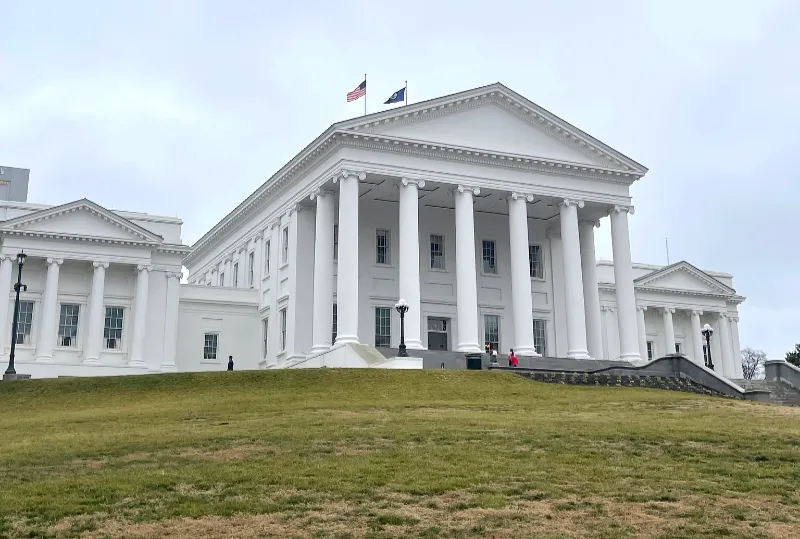
A key Virginia House of Delegates committee advanced legislation which would set new standards for private schools that receive public funding, despite opposition from Republicans and some religious school leaders.
HB 359, patroned by Del. Dan I. Helmer, D-Fairfax, would require schools to administer Virginia’s Standards of Learning (SOL) assessments, receive accountability ratings from the Board of Education and comply with nondiscrimination rules related to admissions, discipline and access to educational programs.
The House Education Committee voted 13-7 along party lines Monday to advance the bill to the House Appropriations Committee.
Helmer said the bill is intended to protect students and taxpayers by ensuring public money is only used at schools that meet basic standards.
“What this bill does is protect students, consumers and taxpayers in Virginia by ensuring that where we provide opportunities for state-backed or federally backed funding for private schools in Virginia, that those private schools meet standards that public schools also have to meet that ensure excellence,” he said.
He added that the bill would not regulate private schools that do not accept public funds, and it would allow religious instruction in religious schools to continue.
Chad Stewart, on behalf of the Virginia Education Association, spoke in support of the bill and said that it would create basic safeguards if federal voucher funding entered Virginia. He said that states that rapidly expanded vouchers saw low-quality schools open and close within a few years, which is harmful to students, he said.
Stewart referred to HB 359 as an accountability bill.
Eleven people spoke in opposition to the bill. Many said the bill would harm faith-based schools and low-income students and raised Constitutional concerns.
Dan Zacharias, director of the Old Dominion Association of Church Schools, told lawmakers the bill is, “a serious violation of the principle of separation of church and state.”
He said the definition of public funds is too broad and could subject religious schools to state control of their curriculum.
“We view our schools as an integral ministry of the local church,” Zacharias said. “For the first time, it’s being suggested that VDOE have control of our curriculum.”
Multiple speakers cited recent U.S. Supreme Court rulings, including Carson V. Makin, Trinity Lutheran V. Comer, and Espinoza v. Montana. They said that the bill could violate the Free Exercise and Establishment Clauses.
Others framed the bill as a barrier to school choice.
Private school representatives and parents said the SOL requirement could undermine alternative curriculum and discourage participation in programs which help lower-income families afford private education.
“This would devastate private schools across Virginia, especially those that serve lower-income families,” said Courtney Palumbo, Head of Regents School of Charlottesville. “SOLs drive curriculum, and that undermines the entire premise behind private schools.”
During committee questions, Helmer reiterated that participation would be voluntary and schools could opt out by declining public funds. The bill preserves the status quo in Virginia while preparing for potential future federal programs, he said.
Del. Thomas A. Garrett Jr., R-Buckingham, said the bill infringes on core Constitutional protections and would allow the state to interfere with religious instruction and belief.
“This is terrifying to me,” Garrett said. “Not just because someone might force my child of my faith to recite something that’s abhorrent to our beliefs but because they might do that to a child who’s Muslim or Jewish.”