Virginia Democrats sharpen focus on ICE limits after Spanberger’s State of the Union rebuttal
Following Trump’s border security claims, legislative leaders point to measures restricting local cooperation and detention expansion
Virginia Democrats were already advancing legislation to curb state cooperation with U.S. Immigration and Customs Enforcement when President Donald Trump took the podium Tuesday night to tout record deportations and declare the border “secure.”
But his State of the Union address, and Democratic Gov. Abigail Spanberger’s pointed rebuttal, have now cast those state-level efforts in sharper relief.
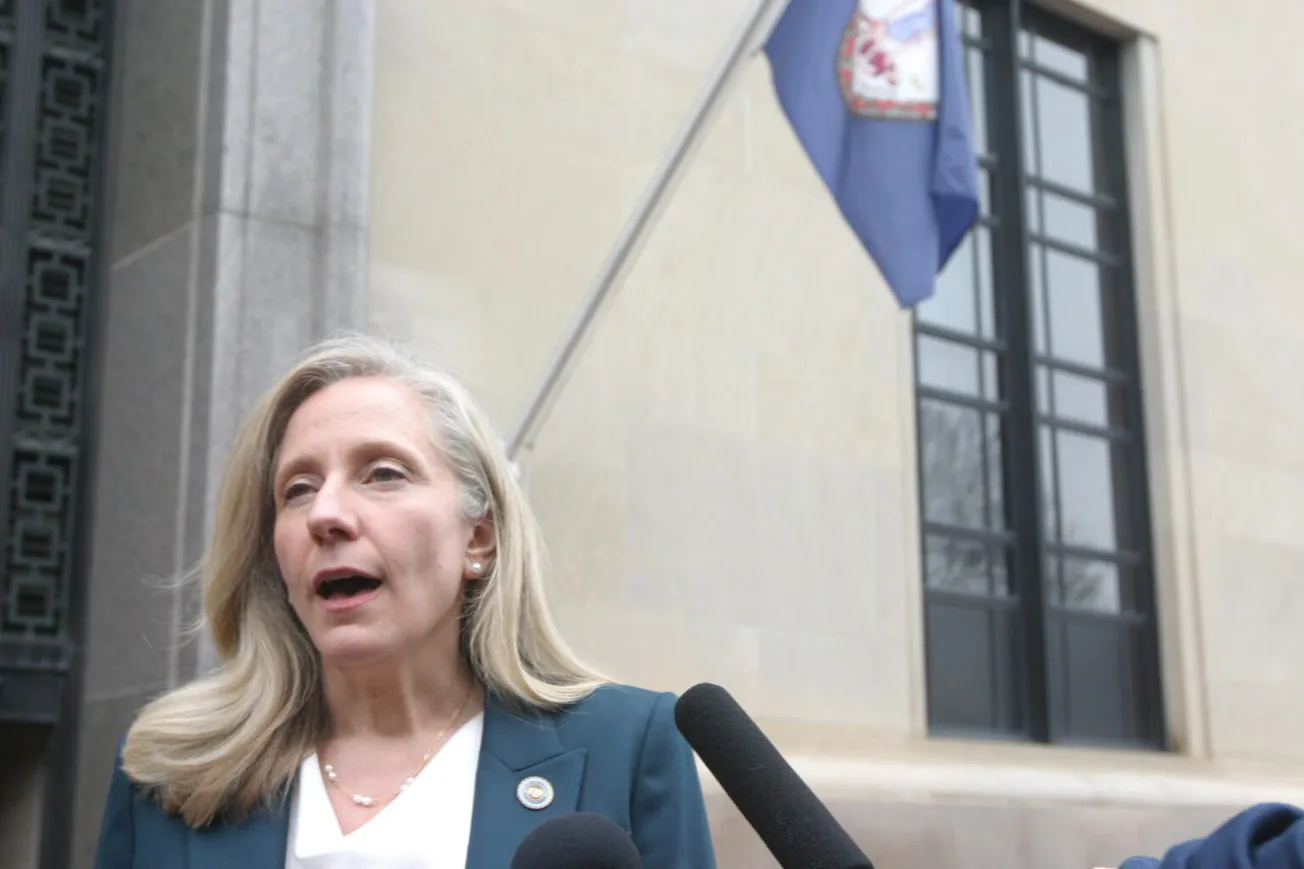
In her nationally televised response, Spanberger accused the president of sending “poorly trained federal agents” into communities “without a warrant” and argued that immigration enforcement must not come at the expense of constitutional rights or public trust.
By Wednesday morning, Democratic legislators doubled down on the governor’s message, highlighting a package of proposals moving through the General Assembly that they said would rein in ICE’s role in Virginia and refocus local law enforcement on community policing.
Among these measures are Senate Bill 783 and House Bill 1141, which would restrict law enforcement agencies from entering into agreements with ICE unless the federal agency follows constitutional guidelines for due process.
One of Spanberger’s first actions after taking office was to rescind Executive Order 47, a move that led her to formally end state police agreements with ICE. Her Republican predecessor, Gov. Glenn Youngkin, had expanded 287(g) agreements that required local law enforcement agencies to assist federal immigration enforcement.
According to the Commonwealth Institute for Fiscal Analysis, 27 local agreements remained in 25 Virginia localities as of Feb. 9. In the commonwealth, 287(g) agreements exist in several forms: the Warrant Service Model, the Jail Enforcement Model and the Task Force Model.
Democrats argue that those agreements divert local resources from community policing and erode trust, making some immigrant communities less likely to report crimes.
“Just as Governor Spanberger observed from her experience in law enforcement, poorly trained officers create chaos and undermine public safety and trust,” Del. Alfonso Lopez, D-Arlington, said in a statement Wednesday.
“This is even more evident as we witness federal immigration enforcement act irresponsibly, violate constitutional rights, and harass both naturalized and US-born American citizens. With HB 1441, we can protect Virginia residents and ensure that local and state law enforcement are focused on keeping our communities safe.”
In the joint statement, Sen. Saddam Azlan Salim, D-Fairfax, linked the legislation to what he described as fear in mixed-status families since January 2025, when Trump assumed office.
“Since President Trump’s second term began, every traffic stop and every knock on the door can feel like a crisis for mixed-status families,” Salim said, adding that his measures reaffirm core freedoms enshrined in the U.S. Constitution and the Virginia Declaration of Rights that the president has chosen to ignore.
“In Virginia, we will always stand up for our values: due process, the rule of law, and keeping communities safe without weaponizing fear against our immigrant neighbors,” he said.
Clashing views on immigration enforcement and public safety
In his address to Congress, Trump blamed Democrats for failing to protect the border and described his enforcement policies as a success.
“After four years in which millions and millions of illegal aliens poured across our borders totally unfettered and unchecked, we now have the strongest and most secure border in American history, by far,” he said.
Spanberger, in her rebuttal, rejected that framing and focused on the impact of enforcement tactics inside American communities.
“Law enforcement officers across the country know that it’s a unique responsibility to do the serious work of investigating crimes, comforting victims, and making arrests,” she said.
“It’s about building trust, and that requires an abiding sense of duty and commitment to community. And yet, our President has sent poorly trained federal agents into our cities, where they have arrested and detained American citizens and people who aspire to be Americans — and they have done it without a warrant.”
Every minute spent sowing fear “is a minute not spent investigating murders, crimes against children, or the criminals defrauding seniors of their life savings,” Spanberger said.
“Our president told us tonight that we are safer because these agents arrest mothers and detain children. Think about that. Our broken immigration system is something to be fixed, not an excuse for unaccountable agents to terrorize our communities.”
Beyond SB 783 and HB 1141, lawmakers are advancing additional measures.
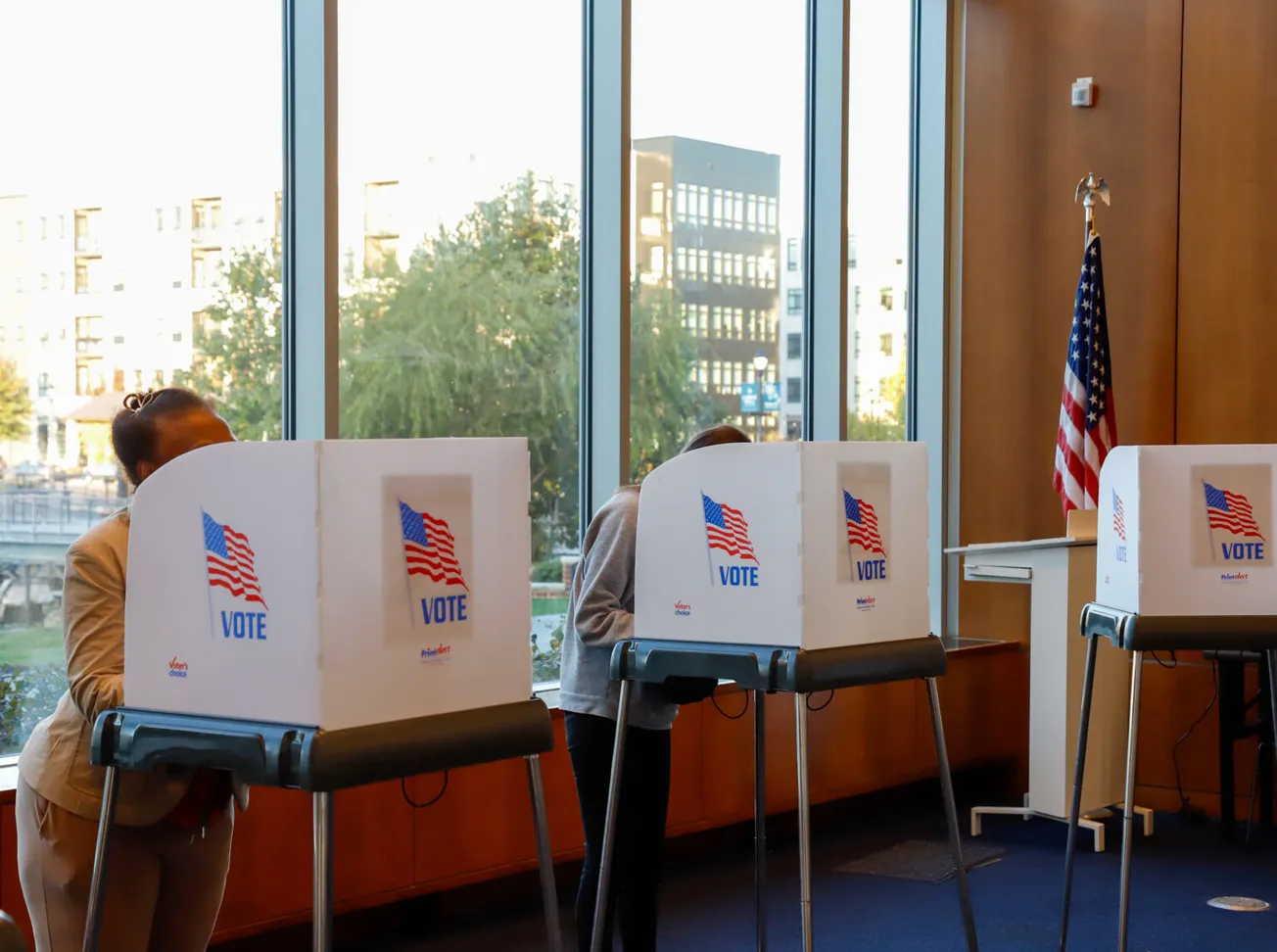
Salim’s SB 351 and HB 650, sponsored by Del. Katrina Callsen, D-Albemarle, would require judicial warrants before federal immigration enforcement officers may enter certain protected areas, including courthouses, polling locations and facilities owned by the commonwealth that are hospitals, schools, public institutions of higher education, or commonwealth’s attorney offices.
SB 352, also by Salim, and HB 1482, introduced by Del. Charlie Schmidt, D-Richmond, would prohibit state and local law enforcement officers from wearing facial coverings while engaged in the performance of their official duties.
Immigration rights advocates say masked officers and warrantless entries undermine accountability and public confidence, particularly in immigrant communities.
ICE detention facility proposals face resistance in Virginia
The debate over ICE’s presence in Virginia has also surfaced in disputes over federal detention facilities.
On his last full day in office, Youngkin directed state officials to proceed with selling the shuttered Augusta Correctional Center in rural Augusta County, a maximum-security prison that closed in 2024 after years of operation.
Internal documents obtained by the ACLU of Virginia suggested the facility was being considered as one of several possible sites for expanded federal immigration detention under ICE.
Shortly after taking office, Spanberger withdrew Youngkin’s sale order and reopened the process, directing the Department of General Services to review all offers under standard procedures.
Spanberger’s office did not explain publicly whether concerns about ICE’s interest influenced the decision. ICE said it had “no new detention centers to announce at this time” but emphasized it was continuing to expand detention capacity nationwide.
In Hanover County, hundreds of residents packed a Board of Supervisors meeting last month to oppose a federal proposal to establish an ICE processing facility on a 43-acre property off Lakeridge Parkway in Ashland.
Supervisors said they had only recently received a letter from the Department of Homeland Security identifying the site and stressed that the county had not been consulted before the federal government selected it.
Since the meeting, the Canadian developer that owns the property said the sale to DHS will not proceed. The fierce opposition to the facility reflects broader public tensions over ICE’s enforcement role and how and where immigration detention operations are sited.
At the federal level, the Department of Homeland Security budget has risen to more than $170 billion to increase ICE funding, expand family and adult detention facilities and build a border wall. In 2025, ICE sent 600 children to federal shelters, with many held longer than average lengths during prior administrations.
“We are at a watershed moment. Virginians and communities across the nation are clamoring for real solutions to rein in ICE,” said Monica Sarmiento, executive director of the Virginia Coalition for Immigrant Rights, in a statement Wednesday.
“On day one of her administration, Governor Spangberger took decisive action to limit collaboration with ICE, and the Virginia State Assembly is working to enact critical legislation to keep communities safe.”
Virginia Democrats see their legislative effort as an attempt to set clearer limits on how immigration enforcement is carried out in the commonwealth — and to underscore their differences with the president as the debate over border security and deportations escalates nationwide.
As the bills move forward, Spanberger on Tuesday described the stakes in no uncertain terms.
“They have ripped nursing mothers away from their babies, they have sent children to far-off detention centers, and they have killed American citizens on our streets. And they have done it all with their faces masked from accountability,” she said, arguing that Virginia’s response must ensure immigration enforcement does not override constitutional protections or public accountability.
Virginia Mercury is part of States Newsroom, a nonprofit news network supported by grants and a coalition of donors as a 501c(3) public charity. Virginia Mercury maintains editorial independence. Contact Editor Samantha Willis for questions: info@virginiamercury.com.