Va. bill to boost local approvals of solar projects advances
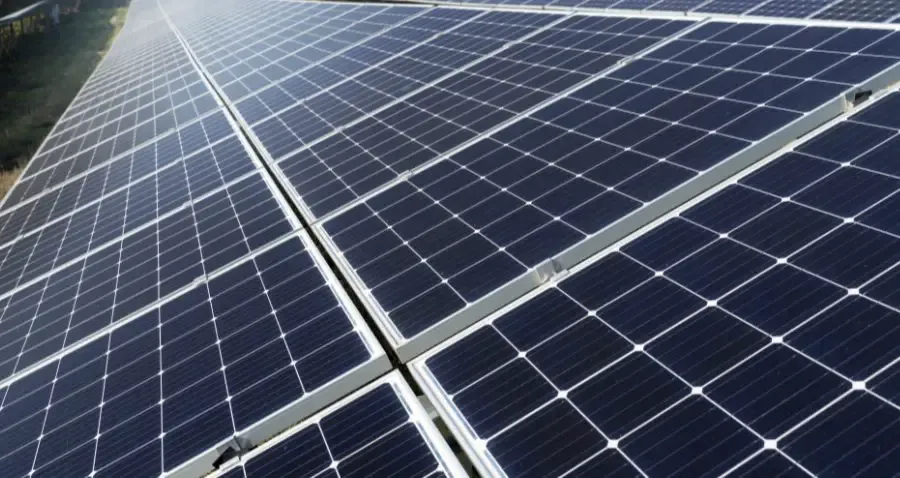
A bill that would set up a framework for siting solar projects that localities could follow and that prohibits the premature rejection of solar infrastructure development has passed the Virginia Senate.
Senate Bill 347 by Sen. Schulyer VanValkenburg, D-Henrico, is a way to meet the state’s growing energy while combating political messaging against renewable energy sources that hampers development, the senator said.
“One of the big complaints has been that there are solar developers who come in and don’t do it the right way,” VanValkenburg said. “And so this lays out kind of basic guidance about what the right way might look like.”
The bill is not a mandate for localities to approve solar projects but it would keep them from outright barring the energy projects from even applying for permits. Localities would still have the ability to approve or withhold permits.
VanValkenburg said there are counties more readily approving data center development than they are energy production projects, which has made it more challenging for utilities to keep up with energy demands.
“When you actually look at the individual project, you talk to the property owner, you look at the economics of it for a locality. I think we’ll get more projects,” VanValkenburg said.
The recommended solar siting guidelines proposed in the bill are considered best practices that can give localities a framework for solar projects. The key recommendations for the location of the solar arrays:
• The project should be between 150-200 feet from the nearest point on the outer wall of existing occupied community buildings and dwellings on non-participating properties.
• The project should be between 50-100 feet from the outside edge of the roadbed of any road abutting the property.
• The project should be between 100-250 feet from the edge of tidal wetlands or non-tidal wetlands, or perennial streams
• The project should be between 50-75 feet from the nearest shared property line for nonparticipating properties.
During debate on the House companion bill, House Bill 711, representatives of the Virginia Farm Bureau and the Association of Counties raised concerns that the standards laid out in the bill are one-size-fits-all parameters, although solar projects will vary.
“Whether it’s a one megawatt project, to a 100 MW project, they vary in size from several acres to square miles. There’s also differences in geography and physio-geographic provinces across the commonwealth,” said Joe Lerch with the Virginia Association of Counties.
The bill may meet pushback from localities, Lerch said, “because our members just want to retain that ability to craft those ordinances and craft those agreements at the local level.”
The senator emphasized that the legislation is not a requirement for localities to approve solar projects but it is an effort to help bridge some of the gaps in local decisions when it comes to determining how a solar project could look in their area.
“We do not believe that this is a magic bullet that is going to solve affordability and reliability and get more clean energy on a grid,” said Sarah Graham Taylor on behalf of Marec Action, a coalition of renewable energy agencies that promotes the build out of solar and wind projects. “But it is an important step forward to getting more good projects sited, while still protecting landowner rights and local voting.”
With the increasing demand for energy and the requirements under the Virginia Clean Economy Act, VanValkenburg said this is a first step to prevent needing state intervention.
“But I’d rather try doing that than do nothing. And in 2-3 years (if we do nothing), now we have to do something, you’ve left us with no choice. Every day that goes by where they do green light data centers and reject energy projects, that decision making gets moved up,” VanValkenburg said.
In the hearings for the bills, Virginia Farm Bureau representatives broached a common concern: the potential loss of agricultural land to solar projects. During community meetings in rural portions of the state, it is a familiar theme among residents, who often want to preserve the character of the county.
“I get everybody being afraid that, you know, farmland’s gonna go away or, you know, this or that thing is gonna happen. But it’s really important to note that we’re not mandating anything here,” VanValkenburg responded.
Del. Charniele Herring, D-Alexandria, who is carrying the house version of the bill, said that it won’t ensure that all solar projects are approved, but it is meant to weed out bad actors to put local residents at ease when it comes to considering a solar project.
“It sets the project standards ensuring communities and trust in solar facilities are well designed and responsibly managed,” Herring said.
SB 347 cleared the Senate with a vote of 21-17. It now heads to the House for more debate. HB 711 awaits a vote on the House floor.
Virginia Mercury is part of States Newsroom, a nonprofit news network supported by grants and a coalition of donors as a 501c(3) public charity. Virginia Mercury maintains editorial independence. Contact Editor Samantha Willis for questions: info@virginiamercury.com.