Staples Mill Amtrak station commuters and travelers adjust to new schedule as D.C. bridge construction gets underway
On a recent weekday early morning, before the sun came up, Brie Craddock walked briskly through the Staples Mill Amtrak Station parking lot to board the number 86 Northeast Regional train bound for Alexandria, where she would transfer to the Washington Metro to reach her job in Arlington managing events for Amazon.
Craddock is used to waking early for her long commute, but a scheduling change has meant she and thousands of other commuters have had to shift their alarm clocks to adapt to a recently implemented scheduling change.
“The train that we had before was at 7:27 a.m., and then there was an 8-something [train] after that, so I had multiple opportunities later in the morning,” Craddock said as she hurried down the platform to board the train.
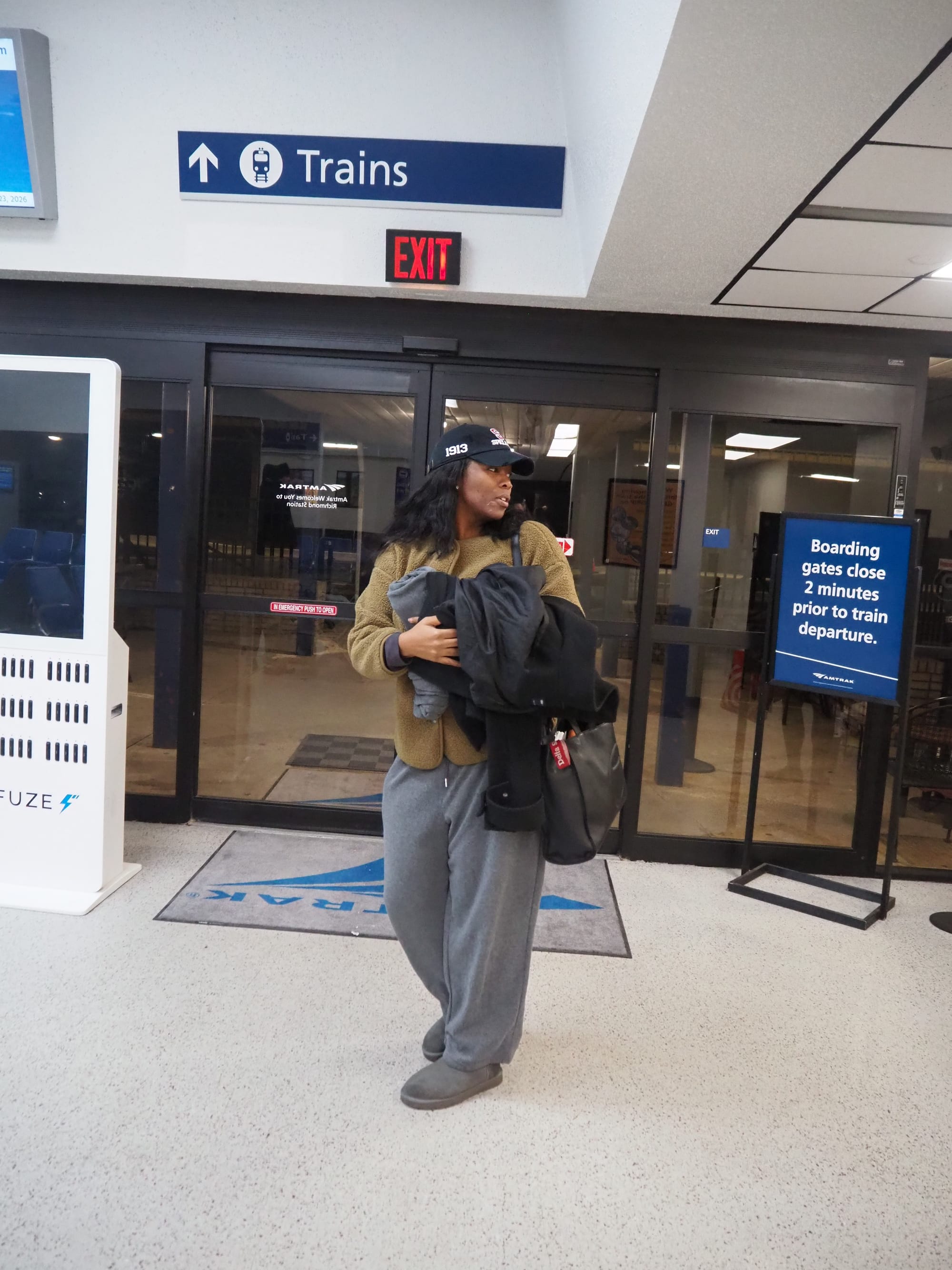
Since Jan. 12 when the scheduling changes went into effect, Craddock’s alarm shakes her awake at 4:40 a.m. to catch the Amtrak No. 86 train for a 5:54 a.m. departure.
The brutally early schedule change was spurred by a momentous construction project more than 100 miles north from Staples Mill Amtrak station, that when finished four years from now is expected to transform passenger rail travel in Virginia and beyond.
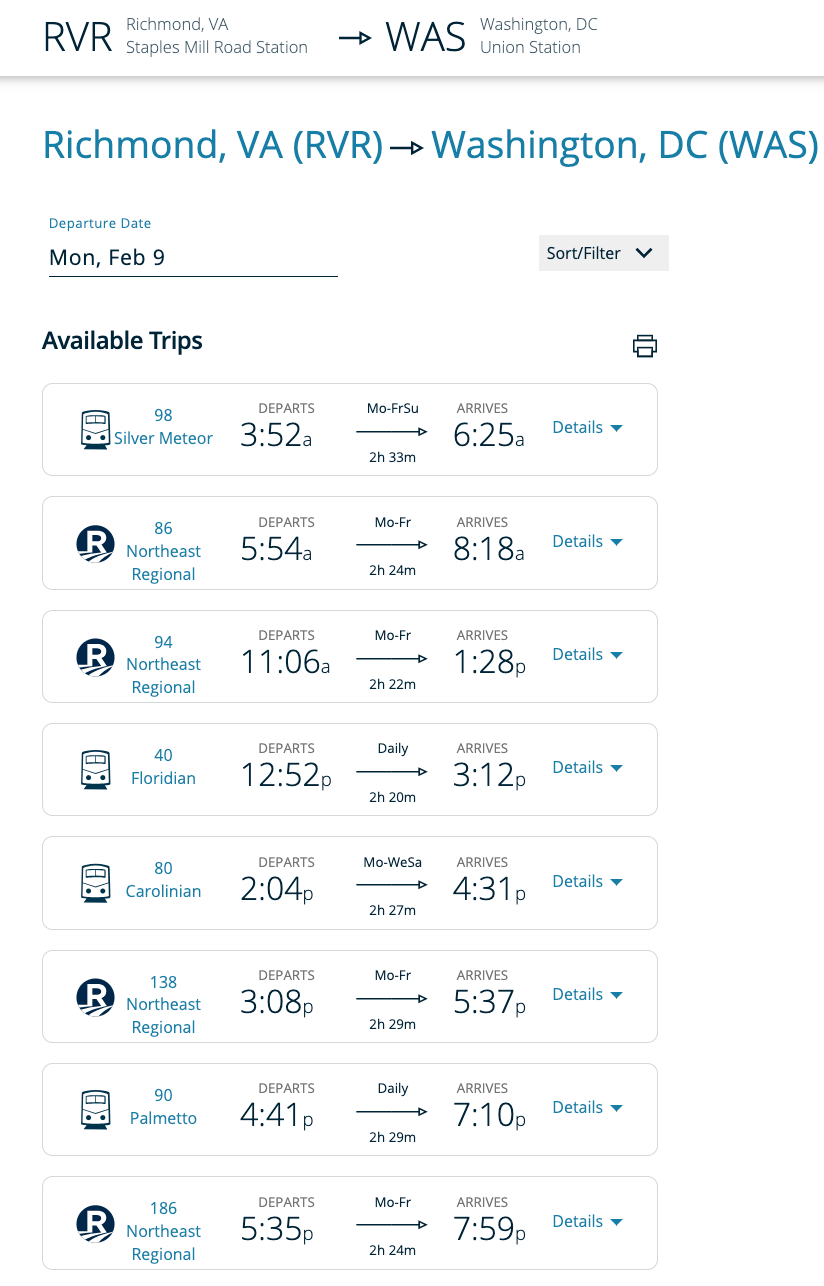
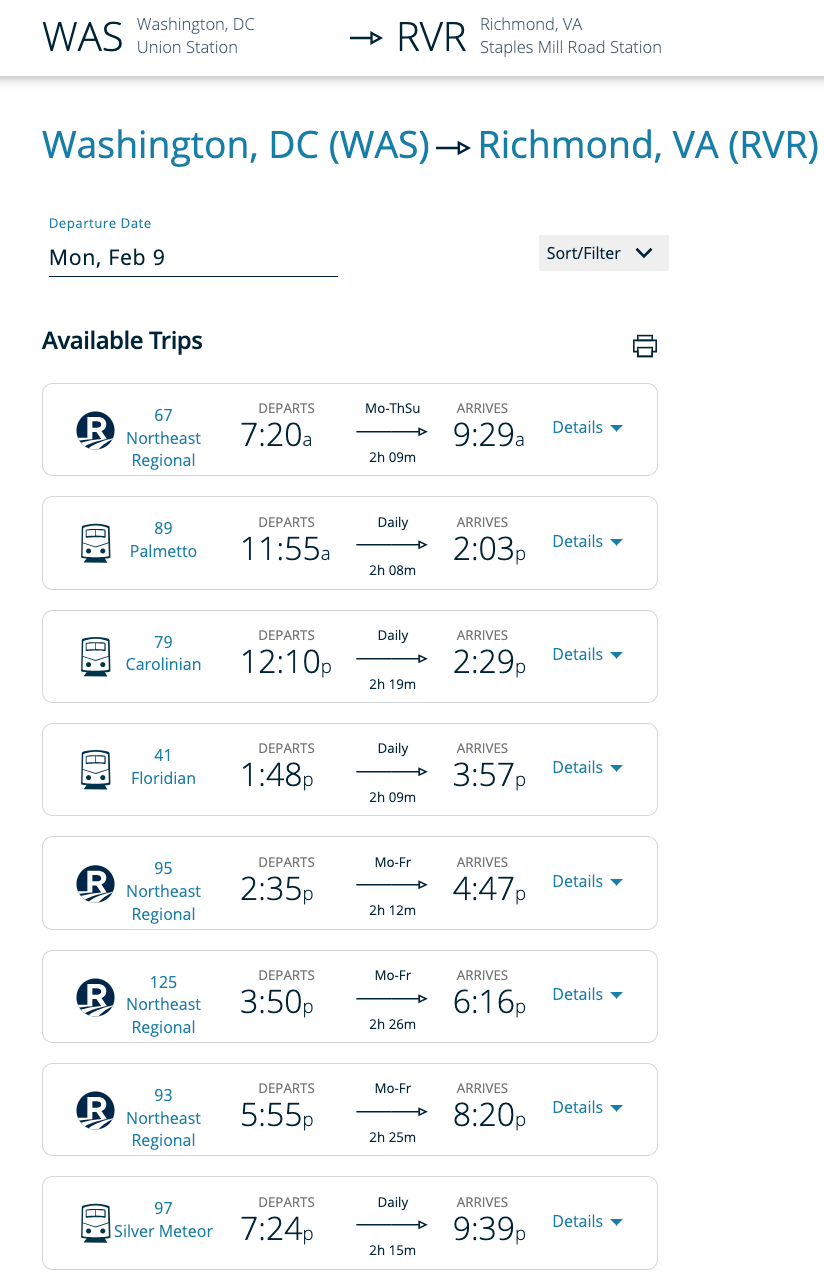
Screenshot of the weekday Amtrak train schedules from the Staples Mill station in Henrico County to Washington, D.C. Union Station.
The Long Bridge Project over the Potomac River, overseen by the Virginia Passenger Rail Authority, includes five new rail bridges and two new pedestrian and bicycle bridges. A new two-track rail bridge will be built over the Potomac River next to the existing Long Bridge, along with a new bike and pedestrian bridge connecting Long Bridge Park in Arlington to East and West Potomac Parks in D.C.
Annually, as many as 2 million Amtrak passengers and 3 million VRE commuters traverse the current Long Bridge, which operates at 98% capacity during peak hours, according to the VPRA. The project’s purpose also is to alleviate the rail congestion and bottlenecks seen on the existing two-track Long Bridge. The $2.6-billion project is estimated to be completed in 2030.
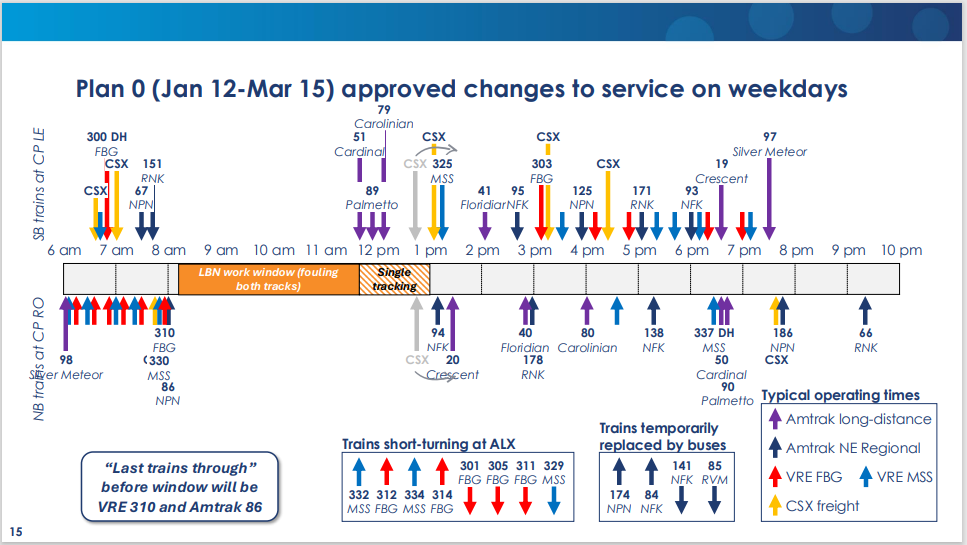
The construction is only permitted to take place from 8 a.m. to 11:45 a.m. Monday through Saturday because of D.C. noise restrictions and train schedules.
The changes impact the tens of thousands of people each month who choose to ride regional and long-distance trains to and from the Staples Mill Station and those who never even get out at the Henrico County stop.
VPRA’s ridership data for the Staples Mill Station for December showed 19,580 people boarded trains there and 18,805 people disembarked, making it the busiest station in Virginia.
The construction impact extends beyond Henrico County travelers. VPRA has instated express buses to and from Norfolk and Newport News, using the I95 express lane to travel swiftly to D.C. (and skipping Richmond). An express bus back south to these destinations makes the trip in the morning and the afternoon. VPRA is looking at busses for other markets during the construction of the Long Bridge.
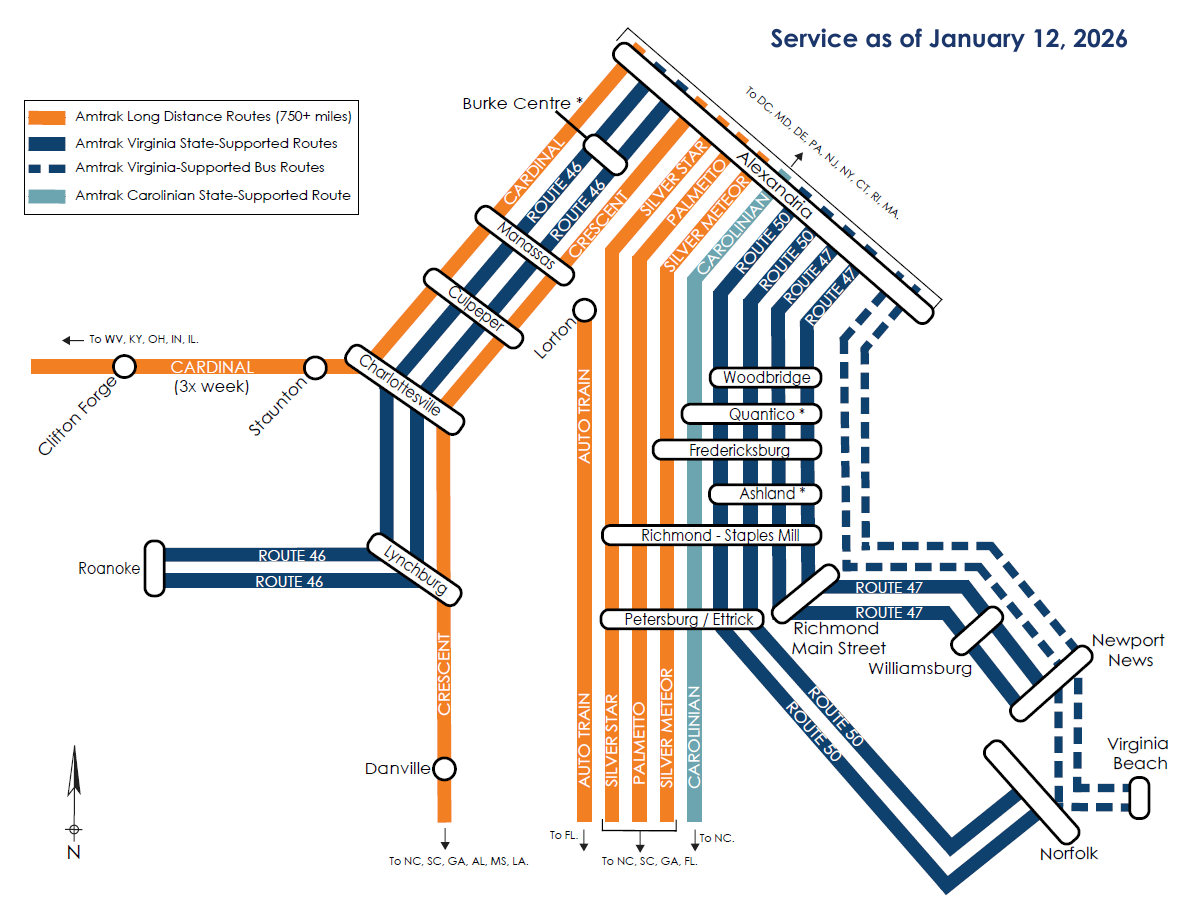
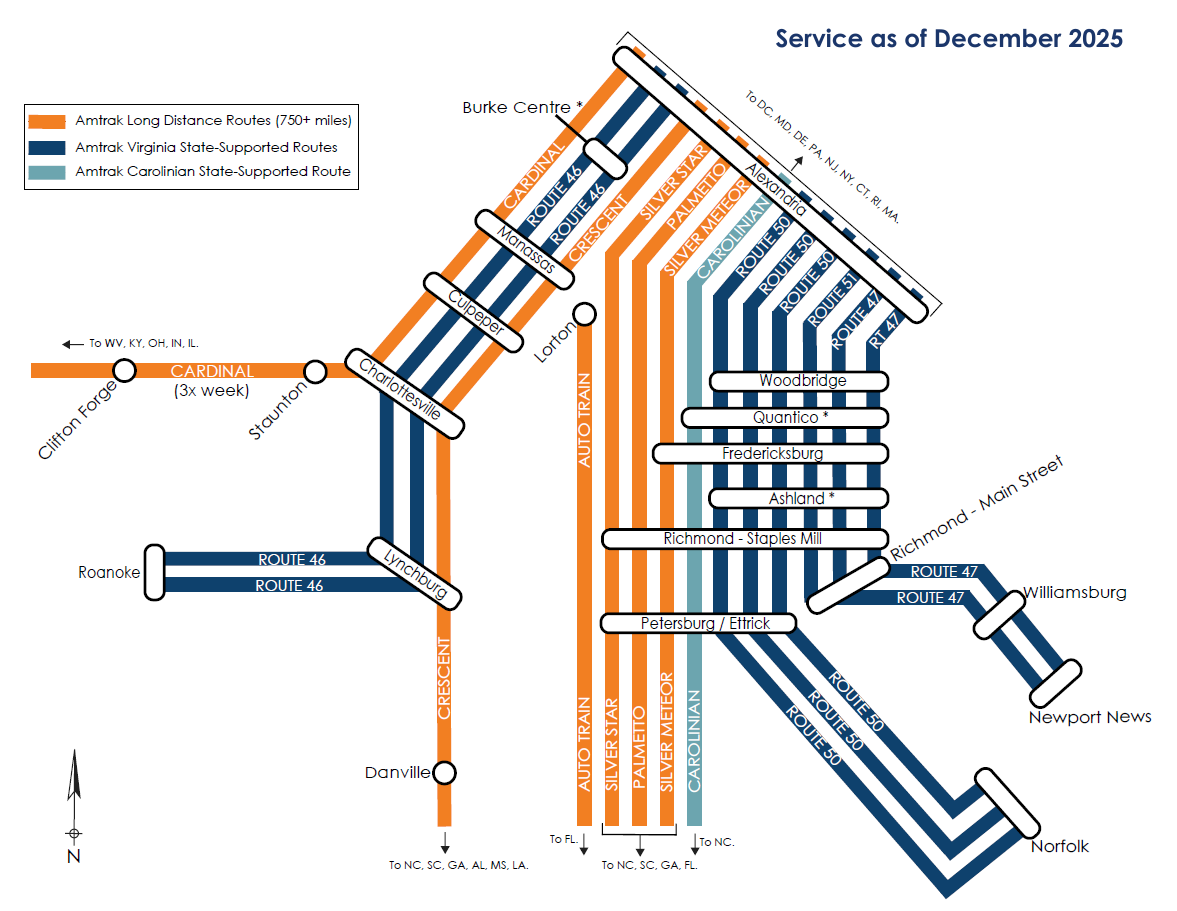
Graphic demonstrating the changes in Amtrak train service throughout Virginia including the Staples Mill station in Henrico County due to construction of the Long Bridge over the Potomac River. (Courtesy Virginia Passenger Rail Authority)
Long distance train delays can impact the construction.
“Delays can cascade throughout the day,” Jeremy Latimer, VPRA senior director of rail services said at the VPRA January board meeting. “So, the timing gets to the afternoon. We really need to be as efficient as possible so that we don't see significant delays.”
The Long Bridge construction project is not the only costly upgrade VPRA is undertaking this year.
Current VPRA construction projects to improve Amtrak’s route to and from the north include a fourth track at the Alexandria train station, a Franconia-Springfield Bypass, a Franconia-to-Lorton Third Track and railroad bridges.
The Long Bridge construction is a project that presented challenges with track shared with freight coordinating with other trains’ existing schedules.
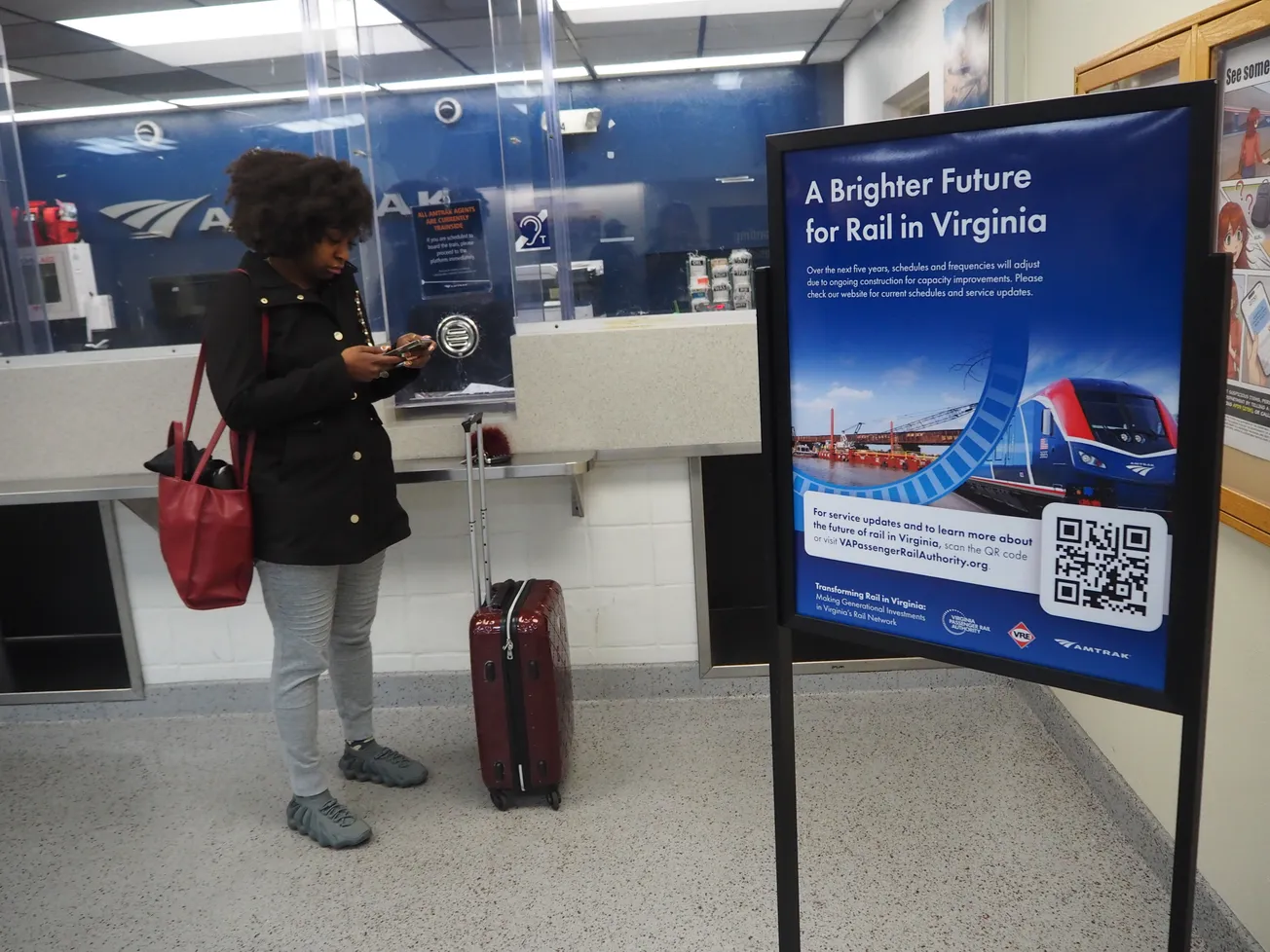
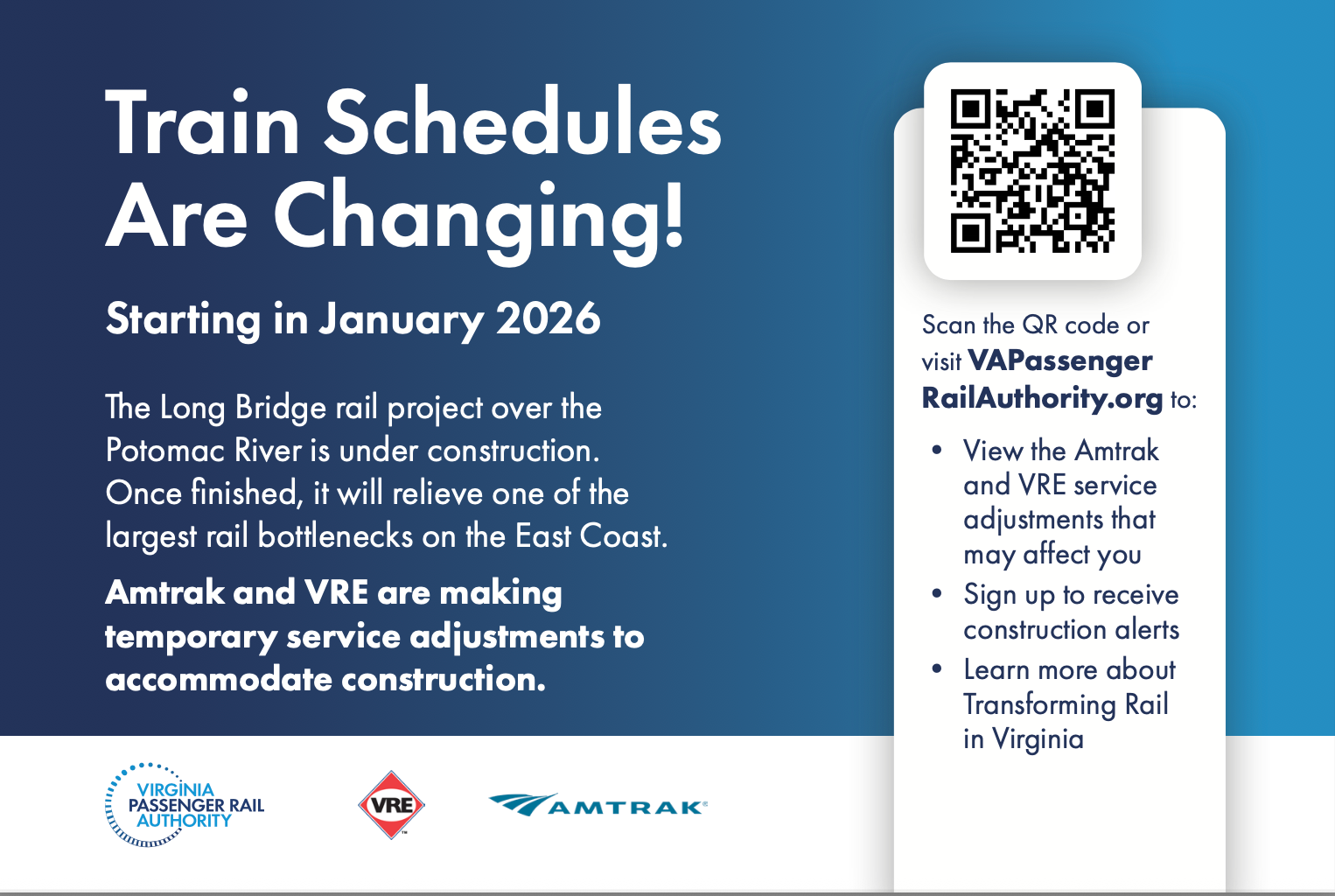
With occasional and regular riders having different needs, Latimer said the VPRA’s communications marketing teams distributed handouts to passengers at stations as well as posted informative signs with QR codes to the project websites for passengers to learn more.
They also fanned out across the state visiting stations where travelers were going to feel the impact the most during their early morning commutes.
“There were people that came to us and said, ‘I accepted a job in D.C., based on the schedule of the train you're taking away,” Latimer said. “There was a lot of feedback that we got. I wouldn't say it was all like, ‘Oh, thank you for being here and telling me you're taking away the train.’ One person said, ‘I guess coffee is an acceptable apology for me,’ but I think that really connected with our customers.”
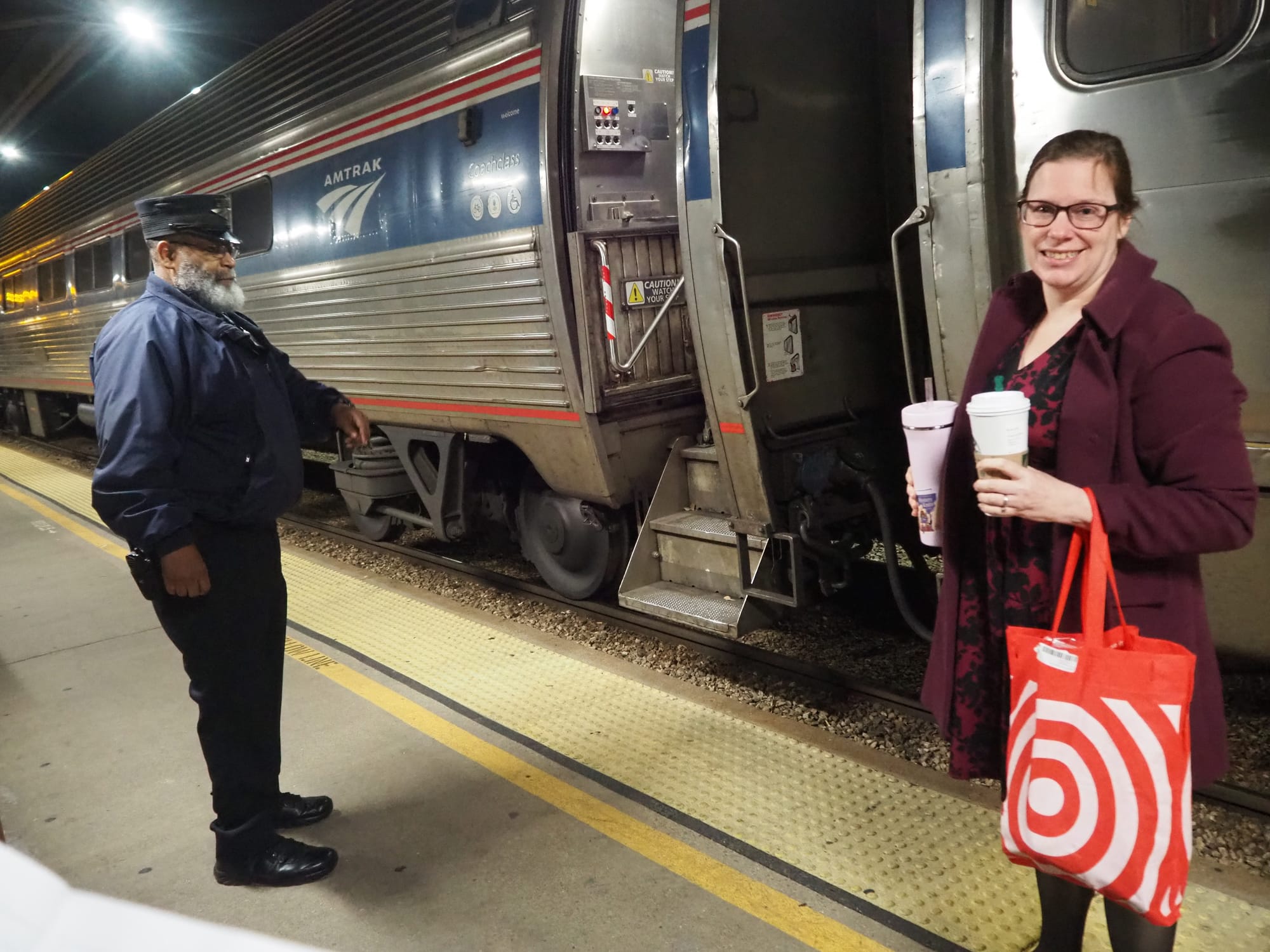
Erica Boulinger, a federal employee who commutes regularly to her job in Arlington, hurried along with Craddock to board the early train that January morning at Staples Mill.
“I live down near Moseley, so even just a 10- or a 20-minute change is huge, because it means I need to get up even earlier. I'm not a morning person. Getting rid of the 7 a.m. train is a really big deal,” said Boulinger, who felt she and other riders did not get enough notice about the train schedule change.
“It was a shock to me that they were changing the schedules. I only found out because the week before they changed, they said, ‘This is your reminder that it's changing.’ The very first Monday it was running 20 minutes late, so I just drove.”
Latimer and his staff said they are meeting with Amtrak station and train staff – who Craddock and Boulinger praise – to make sure they are in-the-know about the scheduling changes.
“These kinds of meetings are important to make sure that everybody, including station staff, inform customers,” Latimer said. “I don't want to sugarcoat it, it’s a significant impact to the riders that we have for trains. I think it's going as well as it can.”
Dina Weinstein is the Citizen’s community vitality reporter and a Report for America corps member, covering housing, health and transportation. Support her work and articles like this one by making a contribution to the Citizen.