Spanberger signs bills to send constitutional amendments to voters this year
Three civil rights amendments will be on November ballots while a Congressional redistricting amendment could be decided in April
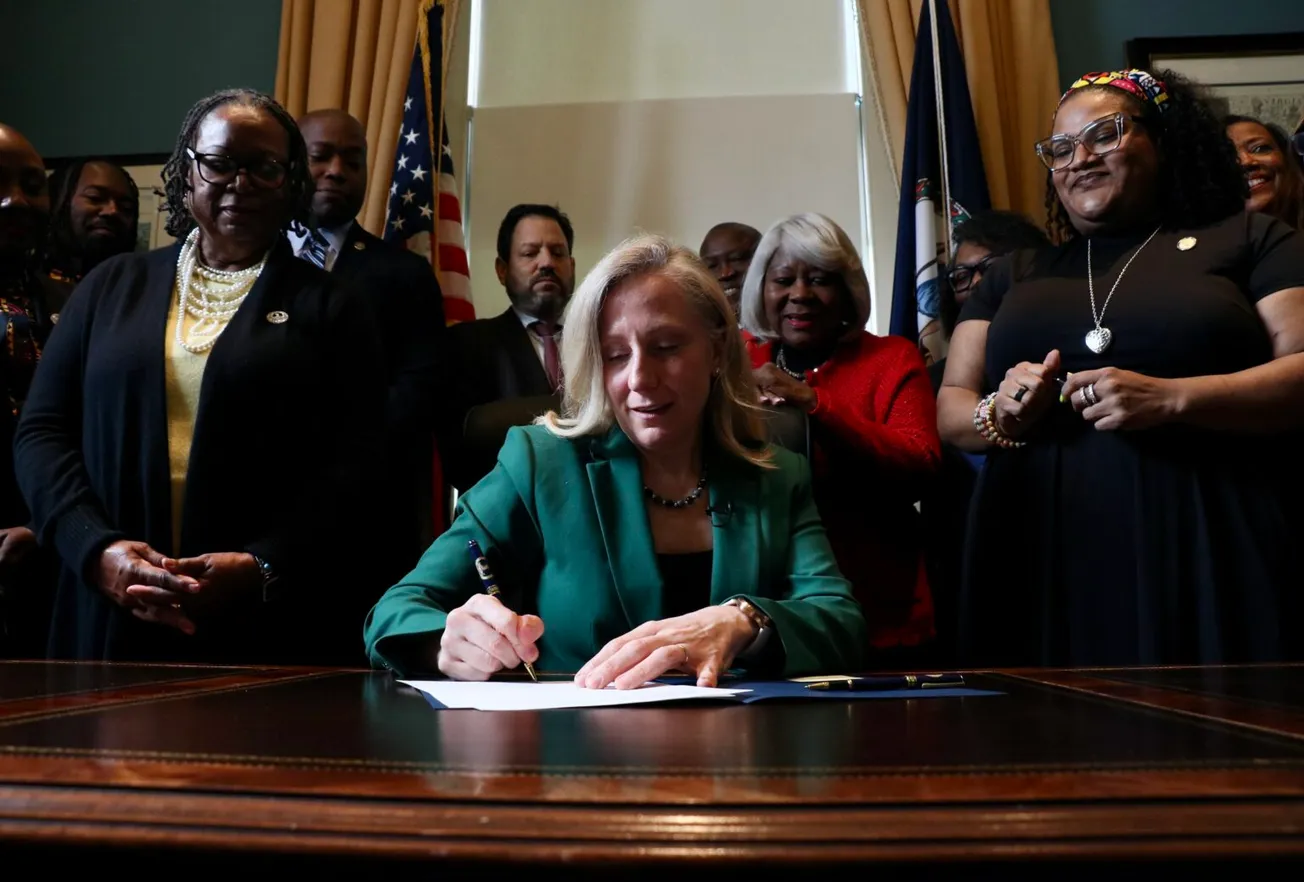
Gov. Abigail Spanberger signed bills to set a referendum for four constitutional amendments — some of which have been years in the making — officially sending them to Virginians to weigh in on this year.
The first three amendments, if approved by voters this November, will protect reproductive rights and same-sex marriages and allow people with felony convictions who have completed their sentences to automatically have their voting rights restored. The amendments were a campaign promise for Spanberger and Democrats, who gained majorities in the legislature in the 2023 and 2025 elections.
The fourth amendment, which has drawn both praise and condemnation, would allow a mid-decade redistricting of the state’s congressional maps.
Leading Democrats said this week the effort is necessary to “level the playing field,” after President Donald Trump prompted states to redraw their maps in ways that tilt favor towards Republicans. Democratic-led states like California, and now Virginia, have countered with their own processes. Republicans have denounced it as partisan gerrymandering that flouts democratic principles.
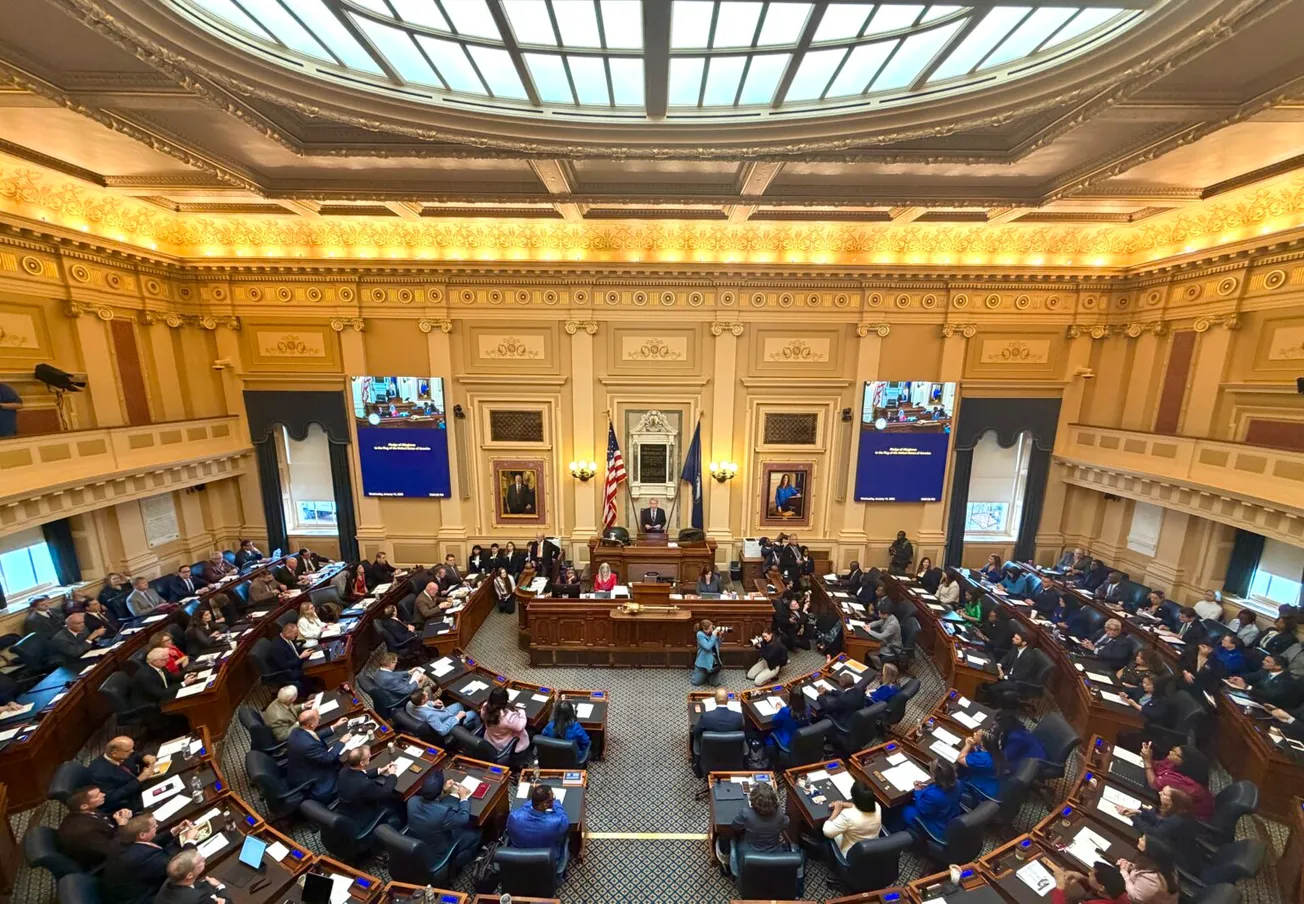
Democratic leadership of the legislature summoned lawmakers to a special session last fall to pass the fourth constitutional amendment — as amendments need to pass two legislative sessions in a row with a House of Delegates election in between. As the 2026 legislative session kicked off this year the chambers wasted no time in getting the bills to Spanberger.
Governor says redistricting amendment is ‘temporary and responsive’

As she signed the bill for the fourth amendment, Spanberger called the mid-decade redistricting proposal a “temporary and responsive” measure.
Ahead of releasing the maps on Thursday, Senate President Pro Tempore Louise Lucas,D-Portsmouth, framed the redistricting push as a means to counter the GOP-led gerrymandering supported by Trump.
“Look, Donald Trump knows he’s going to lose the midterms. He knows it,” Lucas said. “That’s why he started this mess in the first place. … These are not ordinary times and Virginia will not sit on the sidelines while it happens.”
Republicans have pushed back against the proposal at every step of the way — arguing that Virginia ostensibly ended gerrymandering in 2020 with a previous constitutional amendment and claiming that existing maps are fair. A legal challenge to the amendment is now up for review by the Virginia Supreme Court.
Republican leadership has also argued that the redistricting attempt is a diversion from key priorities. While a variety of bills aimed at affordability are advancing through both chambers, none have made it to Spanberger’s desk yet for potential signature.
In a chat with reporters on Friday after Spanberger’s bill signing, House Minority Leader Terry Kilgore, R-Scott, took aim at the proposed maps. With a cluster of compact districts tied to Fairfax County in Northern Virginia, he pointed out how it benefits the Democratic stronghold.
“Are we going to Fairfax the rest of Virginia?” Kilgore posited. “These are not fair lines.”
Concerning all the amendments, Kilgore said his party is “going to have to continue to fight those as we move through this, and hopefully the voters will agree with where we are.”
Spanberger said voters can expect to see her out and about later this year to support Congressional candidates and stump for the voting rights, marriage equality and reproductive rights amendments, but didn’t divulge how much advocacy she might lend to the redistricting amendment this spring.
“The redistricting amendment timing is a bit different, and there’s certain restrictions related to our ability to fundraise,” she said when asked how else she would support the measure ahead of the bill signings on Friday. “So within the constraints, certainly that exists in a very different manner.”
Virginian politicians are not allowed to fundraise during the legislative session so any campaigning, messaging and public events related to the amendment won’t ramp up until the 2026 legislative session adjourns in mid-March. The referendum for the amendment is set for April 21, which makes for tight turnaround.
Democrats currently hold six of the state’s 11 Congressional seats, and the new 10-1 map will likely bolster their representation. While the often-competitive 2nd Congressional District remains largely intact in Democrats’ proposed map, most other districts have been reworked to favor more Democrats and clump Republican representation into a single district spanning much of Southwest Virginia.
Voting rights amendment would make restoration automatic for former felons

“When Virginians have paid their debt to society, they deserve to regain their right to vote,” Spanberger said of the voting rights amendment.
Presently, Virginians with felony convictions permanently lose their voting rights unless a governor restores them. Three previous governors from both parties had streamlined the approvals by tweaking certain eligibility criteria and making the process automatic, so long as a prison sentence was complete. Former Gov. Glenn Youngkin, Spanberger’s predecessor, shifted back to a petition process.
With reductions in approvals, there was also little criteria to guide applicants on whether their petitions would be successful or not.
Several rejected applicants told The Mercury in 2024 that they were dismayed not to be able to participate in the presidential election and their local city councils. Having already repaid the debt to society that Spanberger referenced Friday, the rejected applicants were eager to once again engage in democracy.
Virginia House Speaker Don Scott, D-Portsmouth, bore a large grin on Friday as the governor signed the bill. Aside from being the state’s first Black speaker, Scott has gone from past imprisonment for a felony conviction to public service and political leadership. He said previously he supports this amendment based on his personal experience and would like others like him to benefit from it.
Marriage equality amendment
After signing the bill to send the marriage equality amendment to voters, Spanberger hugged Sen. Adam Ebbin, D-Alexandria, the bill’s sponsor in the Senate and one of the state’s openly gay elected officials. It is one of Ebbin’s last pieces of legislation before he joins Spanberger’s administration as a senior adviser to the Cannabis Control Authority.
The measure would cement protections for gay marriage in the state’s Constitution, to ensure same-sex unions would still be legal in Virginia even if federal protections are stripped away.
Supreme Court Justice Clarence Thomas has expressed interest in revisiting a pivotal case that solidified federal gay marriage rights. If the nation’s highest court were to strike down the protections, Virginia’s defunct 2006 ban would take effect unless removed.
Reproductive rights battle could ramp up later this year
After signing the amendment that would codify reproductive rights protections in the state Constitution, Spanberger said in a statement that Virginia women “deserve the freedom to make their own reproductive healthcare decisions without politicians dictating their choices.”
If approved by voters latest this year, the amendment would protect access to fertility treatments and contraception as well as the ability to get abortions or use abortion medications to manage active miscarriages, which can prevent infection.
Democrats have advocated for these protections for the past several years, and the amendment cleared the legislature last month.
No Republicans in Virginia have voted in support of the measure. They have cited concerns that the amendment would allow abortion up to the “moment of birth” — though infanticide remains illegal under state and federal law — and that the proposal doesnt’ reiterate existing laws about parental consent and care for newborns.
There are also some who simply do not support abortion unless it is needed to save someone’s life or if the pregnancy was the result of rape and incest.
The redistricting push will likely dominate political headlines in the coming months, but support and opposition campaigns for the other three amendments — particularly the reproductive rights one — are likely to accelerate as Congressional midterms approach.
Virginia Mercury is part of States Newsroom, a nonprofit news network supported by grants and a coalition of donors as a 501c(3) public charity. Virginia Mercury maintains editorial independence. Contact Editor Samantha Willis for questions: info@virginiamercury.com.