Spanberger makes affordability centerpiece of 2026 agenda as legislative session nears
Governor-elect proposes sweeping changes to health care, utility regulation and housing one day after Youngkin budget rollout
Table of Contents
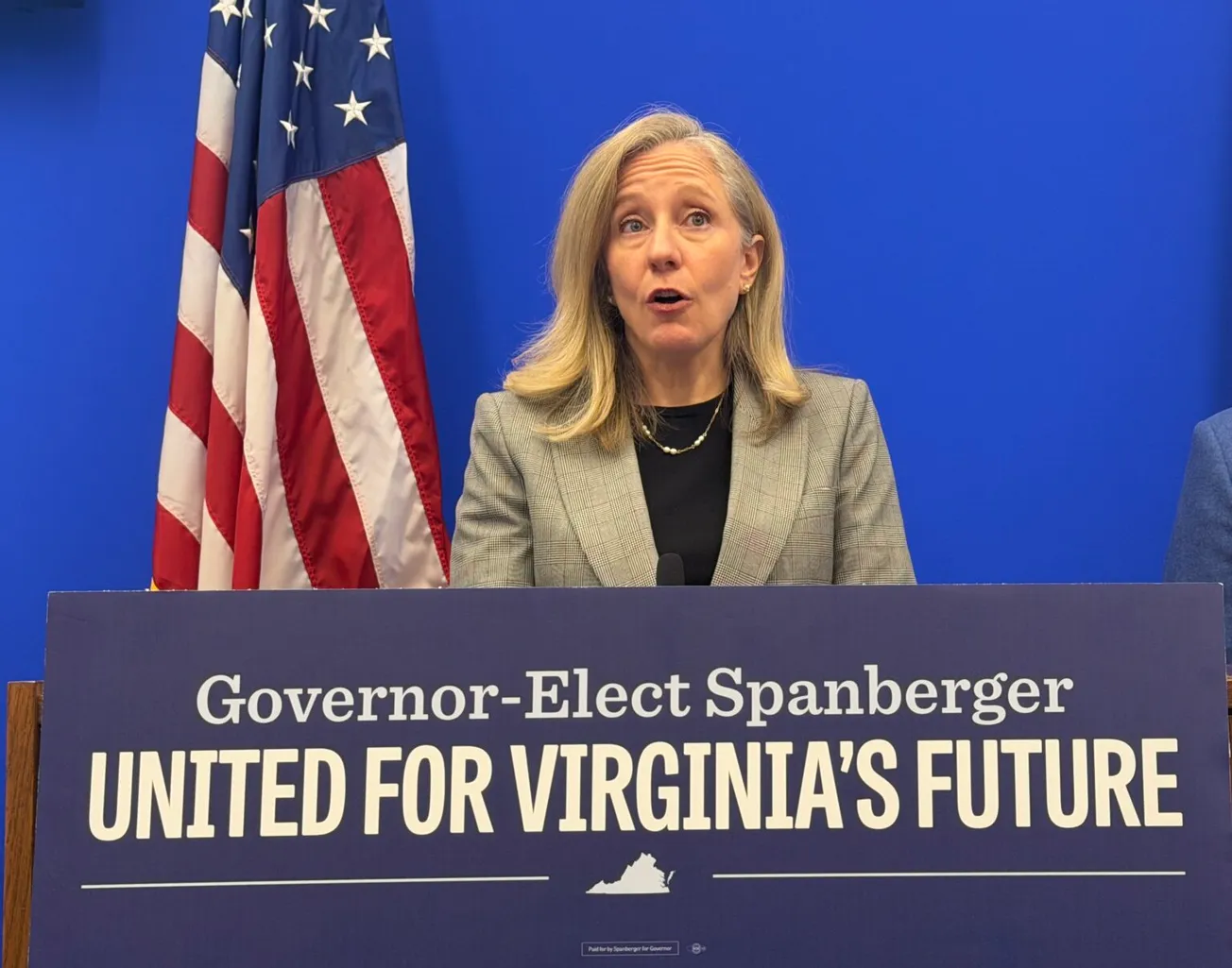
Less than a month before she takes the oath of office, Gov.-elect Abigail Spanberger on Thursday rolled out a comprehensive legislative blueprint she said will lower costs for Virginia families — from prescription drugs to utility bills to housing — in a session she framed as a turning point for the commonwealth’s economic health.
Spanberger’s Affordable Virginia Agenda, announced one day after outgoing Gov. Glenn Youngkin introduced his final biennial budget proposal to the General Assembly, outlines a suite of legislative proposals aimed at reducing consumer costs across three major categories: health care, energy and housing.
The plan comes against a backdrop of rising living expenses that many voters cited as their top concern during the 2025 elections, when Democrats swept all statewide races and increased their majority in the House of Delegates by 13 seats.
“Today, I am proud to unveil the beginning, the first step of these efforts, our agenda, to build a more affordable Virginia,” Spanberger said at a news conference in the state Capitol. “We cannot accept the status quo when it comes to the high cost of living. It is hurting the financial security of our economy, our communities, and our neighbors.”
Spanberger — the first woman to be elected governor in Virginia — rallied Democratic leaders behind her push but emphasized her willingness to work with Republicans where possible.
She said affordability is not merely a household concern but “essential” to Virginia’s economic competitiveness, a message she says resonated with voters from the Eastern Shore to Southwest Virginia.
Health care: scrubbing costs, curbing middlemen
At the heart of Spanberger’s agenda is a multifaceted health care package designed to tackle out-of-pocket costs and limit insurance practices she says have siphoned money from patients and providers. Much of her plan echoes the health care priorities she outlined on the campaign trail earlier this year.
A centerpiece of the plan would restrict the role of pharmacy benefit managers, or PBMs, which Spanberger’s plan describes as predatory middlemen that can inflate drug prices. A bill that created a sole PBM for the state’s Medicaid program was signed into law by Youngkin in May, setting the stage for further reforms in the coming legislative session.
The proposed 2026 bill would prevent PBMs from steering patients to affiliated pharmacies, require that drug rebates be passed through to health plans or patients, ban misleading statements, prohibit retroactive payment clawbacks and establish reimbursement standards for independent and community pharmacies.
“No Virginian should have to choose between paying their healthcare and putting food on the table,” Spanberger said, emphasizing the need to hold PBMs accountable for driving up drug costs.

Another proposal would limit prior authorization requirements, which often require insurer approval before patients receive medications or treatments. Spanberger argued that excessive prior authorizations delay care, can lead to complications and ultimately raise costs for patients and the system alike.
House Majority Leader Charniele Herring, D-Alexandria, said Spanberger’s health care proposals address real problems that families hear about every day.
“We need common sense answers to real issues of affordability that these families hear in the commonwealth,” Herring said. She cited lowering prescription drug costs, reforming prior authorization processes and expanding access to health care as critical steps forward. “It’s a brand new day for the commonwealth,” she added.
Spanberger’s agenda also calls for investing in the health care workforce, including a proposal to transfer management of health incentive programs from the Virginia Department of Health to the Virginia Health Workforce Development Authority, which she says will help ensure patients have access to both routine and complex care.
In addition, her plan would stabilize the Affordable Care Act marketplace through targeted premium assistance, establishing a pilot program for individuals most likely to drop coverage due to federal premium increases — a concern echoed by health policy analysts across the country.
Another measure, House Bill 1639, sponsored by Del. Patrick Hope, D-Arlington, earlier this year but vetoed by Youngkin, would remove the sunset on a law banning extra insurance premium charges for tobacco users.
Senate Democratic Caucus Chair Mamie Locke, D-Hampton, said rising costs have forced difficult decisions for many families this holiday season, including choosing between heat and housing or prescriptions and groceries.
Locke said the time for posturing is over. ”Gov.-elect Spanberger is ready to govern, and so are we,” she said. “The people are watching, and they are counting on us to deliver.”
Energy: efficiency, forecasting and storage
Spanberger also made stabilizing energy costs a priority, highlighting widespread concerns about utility bills in the midst of growing peak demand driven in part by data centers and other high-load infrastructure across the state.
Starting in January, she said, lawmakers will pursue expanded energy storage to help lower peak power prices by allowing stored energy to be used during periods of high demand. A revived 2025 proposal would raise energy storage capacity targets for Dominion Energy and Appalachian Power subject to approval by the State Corporation Commission.
“We will make expanded energy storage a top priority,” Spanberger said, “and we will improve energy efficiency across our commonwealth.”
The agenda also calls for expanding programs to reduce heating and energy costs for low-income Virginians and establishing a weatherization and energy efficiency task force within the Department of Housing and Community Development.
Small solar systems, such as balcony-mounted panels, would be exempted from typical utility approval requirements under her plan, facilitating wider adoption.
The agenda further advocates for improving utility demand forecasting to avoid overestimations that can lead to unnecessary infrastructure investments and higher rates for consumers.
Herring praised the plan’s emphasis on solar and renewable energy, saying it reflects a commitment to using technology to reduce costs and ensure a strong, resilient grid.
Housing: boosting supply, strengthening protections
Addressing the ongoing housing affordability crisis, Spanberger further seeks a combination of tenant protections and measures to expand the supply of affordable housing across the commonwealth.
Her proposals include extending the grace period before landlords can file eviction proceedings, authorizing localities to adopt affordable housing dwelling unit programs and giving local governments a right of first refusal to preserve existing affordable housing stock.
Spanberger’s plan also calls for creating a revolving loan fund for mixed-income developments, expanding the Virginia Eviction Reduction Program, and using the commonwealth’s bonding authority to support affordable housing projects.
“It doesn’t matter, either in Northern Virginia or Southside Virginia,” Spanberger said, “starting in January, we will give every locality the option to increase the supply of affordable housing in their community.”
Balancing affordability and fiscal stability
When Youngkin delivered his budget proposal Wednesday, he stressed a thriving economy and cautioned against policies he said could jeopardize Virginia’s business environment. The outgoing governor’s plan continues tax cuts and boosts spending on education, public safety, and Medicaid, though analysts have noted potential strains ahead due to federal shifts and slower revenue growth.
While Youngkin’s budget warns of anti-business policies, Spanberger underscored concerns about rising costs for families and the need to safeguard Virginia’s fiscal health.
She reiterated her support for maintaining the state’s AAA bond rating and fulfilling the constitutional requirement to balance the budget. Spanberger acknowledged that growth projections for the coming years are weaker than in the recent past and that lawmakers must navigate “real fiscal challenges” in crafting the next biennial budget.
“That is why many of these efforts to lower costs for Virginians either don’t utilize general fund dollars or are cost-neutral,” she said, noting that her team hopes to plan for worse economic scenarios than might materialize.
Spanberger’s pitch drew broad support from Democratic legislative leaders, who characterized the agenda as a direct response to voter concerns about everyday costs — and a mandate to act.
House Speaker Don Scott, D-Portsmouth, said voters didn’t send Democrats to Richmond to admire architecture but to deliver results.
“They sent us here to do a job, they want us to lower costs,” Scott said, taking aim at federal economic policies and asserting that Spanberger’s focus aligns with constituent priorities.
Senate President Pro Tempore Louise Lucas, D-Portsmouth, emphasized fiscal responsibility and stability, noting that Senate budget negotiators strive to protect taxpayers while investing in communities and ensuring prosperity.
Spanberger said her agenda represents a starting point from which lawmakers and stakeholders will build over the coming legislative session. She also expressed optimism about bipartisan cooperation, saying conversations with House and Senate leaders indicate a shared willingness to act on affordability.
“We will work to make everyday life more affordable for Virginians,” she said.
Virginia Mercury is part of States Newsroom, a nonprofit news network supported by grants and a coalition of donors as a 501c(3) public charity. Virginia Mercury maintains editorial independence. Contact Editor Samantha Willis for questions: info@virginiamercury.com.