Spanberger amends, signs sweeping gun legislation reshaping Virginia’s firearm laws
Governor’s actions clarify assault weapons ban, restore background checks on private sales, set new storage standards and expand restrictions on where firearms can be carried
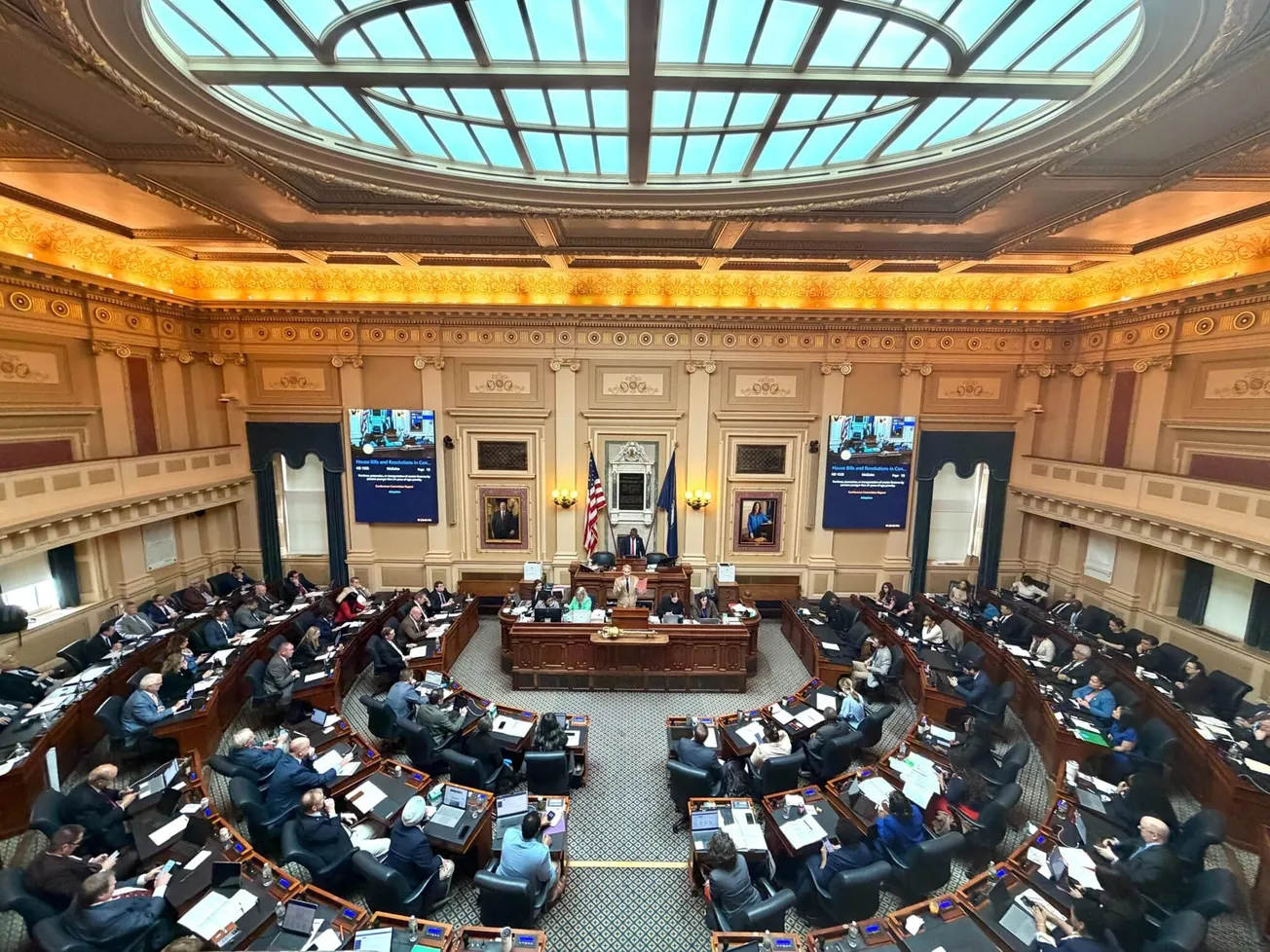
Just hours before a midnight deadline, Gov. Abigail Spanberger on Monday submitted a series of amendments to high-profile gun legislation passed by the General Assembly last month, while also signing several related measures into law.
Taken together, the changes mark one of the most significant overhauls of Virginia’s firearms laws in years, touching on how guns are sold, stored and carried across the commonwealth.
At the center of the package are measures that restrict the future sale of certain semi-automatic firearms, broaden background check requirements and set new standards for safely securing guns in homes and vehicles.
“I grew up in a family where responsible gun ownership was expected, and I carried a firearm every day as a former federal agent,” Spanberger said in a statement.
“I support the Second Amendment. But gun violence is the leading cause of death for children and teenagers in America, and that should motivate all of us to ask ourselves what we can do to mitigate this harm.”
Spanberger said her amendments are intended to provide clearer guidance to gun owners and law enforcement while ensuring the laws can be applied consistently once they take effect.
Amendments focus on enforcement, clarity
Among the most closely watched measures are House Bill 217 and Senate Bill 749, which prohibit the future sale of certain semi-automatic firearms classified as assault weapons, along with magazines capable of holding more than 15 rounds.
The legislation does not apply to firearms or magazines lawfully owned before July 1, 2026.
Spanberger’s amendments further define which firearms fall under the ban by outlining specific features and configurations, a technical change aimed at reducing ambiguity for law enforcement, gun owners and firearms dealers.
The amendments also exempt certain semi-automatic shotguns commonly used for hunting.
Del. Dan Helmer, D-Fairfax, who sponsored the House version of the bill, said the proposal represents years of work to limit access to weapons he said are designed for combat use.
“I’m so excited that with Governor Spanberger, and after seven years of work, we will have the first assault weapons ban in the South to make sure that weapons similar to those I carried in Iraq and Afghanistan are not terrorizing our communities anymore in Virginia,” Helmer told The Mercury in a phone interview Tuesday.
The governor also amended HB 1525, which restores universal background checks by directing Virginia State Police to resume checks on private firearm sales — a system that had been effectively halted following a court ruling in Lynchburg that invalidated enforcement of the state’s earlier background check requirement.
The amendment clarifies that private sales must again go through the same background check process used for purchases from licensed dealers and aligns the policy with related firearm legislation approved this session.
It also raises the minimum age to purchase handguns and certain semi-automatic firearms from 18 to 21, with exceptions for individuals in military or law enforcement training.
An emergency clause included in the amendment allows the background check provisions to take effect immediately upon legislative approval, aimed at quickly restoring enforcement statewide.
Additional changes affect safe storage requirements under HB 871 and SB 348, which require firearms to be secured in homes where minors are present. Spanberger’s amendments expand the definition of safe storage to include firearms rendered inoperable with a locking device.
The governor also clarified the intent of legislation allowing local gun buyback programs, emphasizing that they are designed to provide a structured and voluntary process for residents who choose to relinquish firearms.
Separately, amendments to a measure regulating firearm manufacturers and dealers narrow how civil liability can be applied, tightening standards for when companies can be found to have knowingly contributed to a “public nuisance” while preserving requirements aimed at preventing illegal sales.

Laws signed expand restrictions, liability
Alongside the amendments, Spanberger signed several gun-related bills into law without proposing changes.
One measure, HB 21, requires firearm manufacturers, dealers and distributors to adopt “reasonable controls” to prevent illegal sales and misuse, including efforts to deter straw purchasing and theft.
The law also allows the attorney general, local governments and individuals to bring civil actions against companies whose practices contribute to a public nuisance.
Another, HB 626, prohibits most people from carrying firearms or explosive materials inside buildings owned or leased by the commonwealth, including government offices, while narrowing exceptions for public colleges and universities.
A separate law, HB 40, bans the manufacture, sale, transfer and possession of unserialized firearms, often referred to as “ghost guns,” as well as certain unfinished components used to assemble them.
Under HB 93, individuals prohibited from possessing firearms — including those subject to certain protective orders — must transfer or relinquish any firearms they own within a set period.
Additionally, HB 110 prohibits leaving a handgun in plain view inside an unattended vehicle, requiring firearms to be secured or out of sight, with violations subject to a civil penalty.
The legislative push comes as polling suggests broad public support for several gun control measures in Virginia.
A February survey by Roanoke College found that 71% of Virginians support requiring gun owners to be licensed, while 67% favor requiring all firearms to be registered with the state.
The poll also found majority support for banning certain types of firearms and accessories, including semi-automatic rifles, semi-automatic shotguns and high-capacity magazines.
Fifty-nine percent of respondents said they support banning firearms often referred to as assault rifles, while half support banning semi-automatic handguns. Only 19% said they support banning all firearms.
In an average year in Virginia, 1,226 people die from gun-related injuries and 1,624 are wounded. Gun violence costs the state an estimated $14.2 billion annually, including about $288 million paid by taxpayers.
Advocacy groups praise measures; critics warn of legal challenges
Gun control advocacy groups praised the governor’s actions as a significant step forward after years of stalled legislation.
“This is a historic package of gun safety bills,” said John Feinblatt, president of Everytown for Gun Safety. “It speaks volumes about the changing political calculus around gun safety that Virginia is moving forward with measures like these to keep guns out of dangerous hands.”
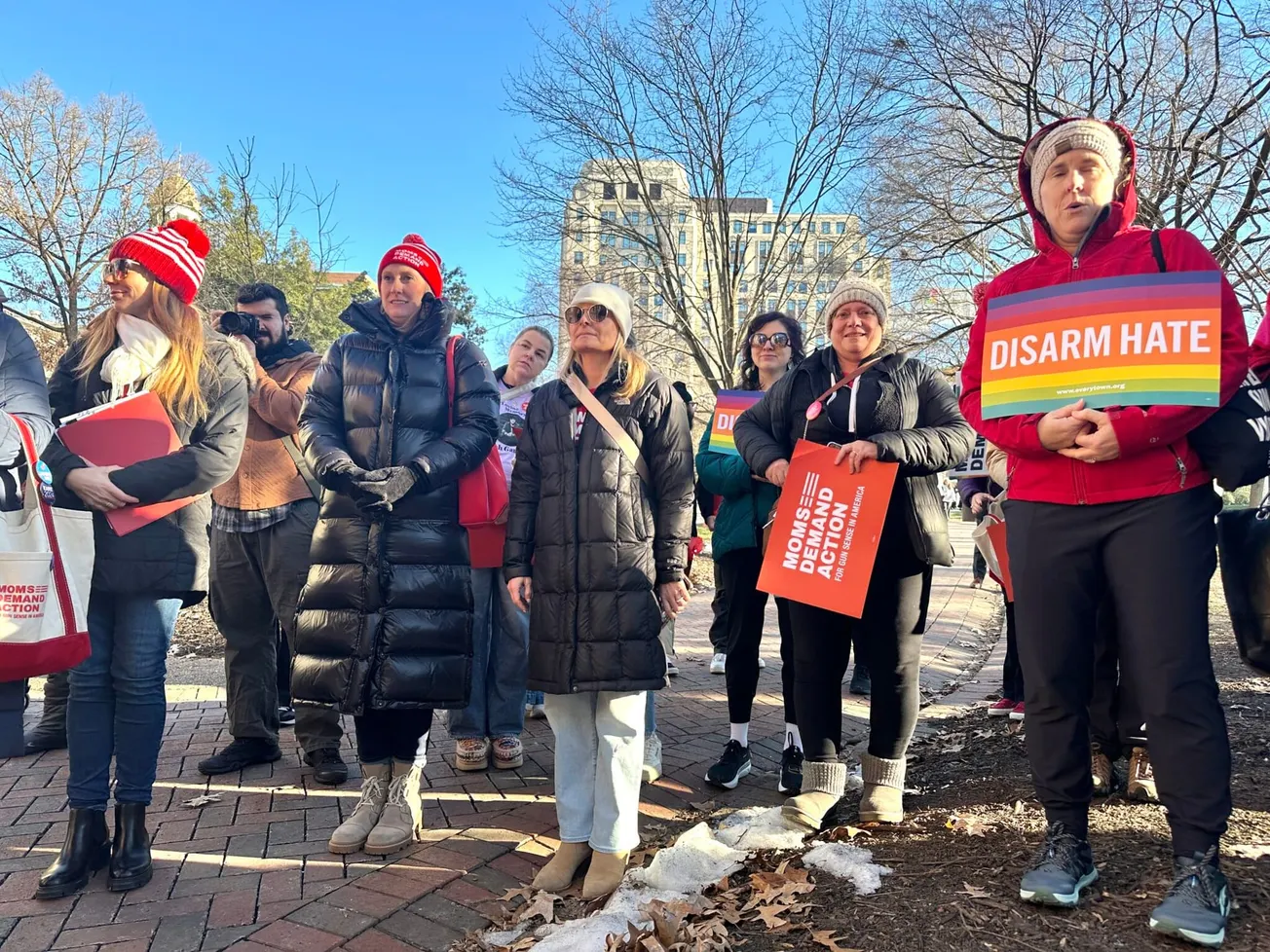
Angela Ferrell-Zabala, executive director of Moms Demand Action, said the legislation reflects years of organizing and advocacy.
“These laws show what’s possible when communities demand action and elected leaders respond,” she said, calling the package a “meaningful step toward protecting families and reducing gun violence.”
At the same time, the National Rifle Association sharply criticized the amendments, arguing they infringe on the rights of law-abiding gun owners and signaling potential legal challenges.
“Governor Spanberger’s last-minute amendments don’t fix the bills, they merely attempt to rebrand blatant violations of law-abiding Virginians’ Second Amendment rights,” John Commerford, executive director of the NRA’s Institute for Legislation Action, said in a statement.
Commerford added that the group is reviewing the measures and is prepared to pursue all available legal options if the legislation is implemented in its current form.
The General Assembly will take up the amendments when it reconvenes on April 22.
Virginia Mercury is part of States Newsroom, a nonprofit news network supported by grants and a coalition of donors as a 501c(3) public charity. Virginia Mercury maintains editorial independence. Contact Editor Samantha Willis for questions: info@virginiamercury.com.