Proposed laws would restrict some ICE operations in Virginia
Virginia lawmakers introduced dozens of bills this session that tackle immigration policy; several aligned with a recent executive directive to end local law enforcement cooperation with the U.S. Immigration and Customs Enforcement.
On her first day in office, Gov. Abigail Spanberger formally ended the 287(g) agreements established under former Gov. Glenn Youngkin, which required state and local agencies to cooperate with ICE operations. In early February, she directed state agencies to account for any agreements, terminate them and identify when they formally ended.
Virginia ranks No. 6 nationally in ICE arrests with over 6,600 arrests from January 2025 to the current day, according to a dashboard by a Maryland-based company that tracks immigration enforcement, among other data points.
The U.S. ICE website lists 29 Virginia agencies participating in the agreements, according to data last updated Feb.20. Spanberger’s directive urged law enforcement agencies to focus on public safety, investigating and preventing crime, building community trust and fair prison operations.
General Assembly bills move along party lines
Several bills have moved forward along party line votes, with Democrats holding a larger majority in the House than in the Senate.
Del. Alfonso Lopez, D-Arlington, sponsored House Bill 1441 which outlined restrictions for enforcement of federal immigration law. Del. Elizabeth R. Guzman, D-Prince William, patroned HB 1438, which was incorporated into Lopez’s bill.
The amended bill will prohibit law enforcement officers from assisting, operating, or authorizing resources to federal authorities to enforce immigration laws, unless presented with an official judicial warrant.
The bill would prevent state law enforcement agencies entering into an agreement unless the following provisions are made: they must provide the names of the federal officers seven days prior to an operation, clearly identify themselves, and they cannot conduct enforcement at schools, churches or courthouse.
Virginia’s local and state law enforcement focus should be on protecting and serving communities, not channeling limited resources to often “reckless” federal immigration enforcement, Lopez stated.
“That kind of participation undermines public safety by eroding trust between police and the community and diverting resources away from pressing public safety needs,” Lopez stated.
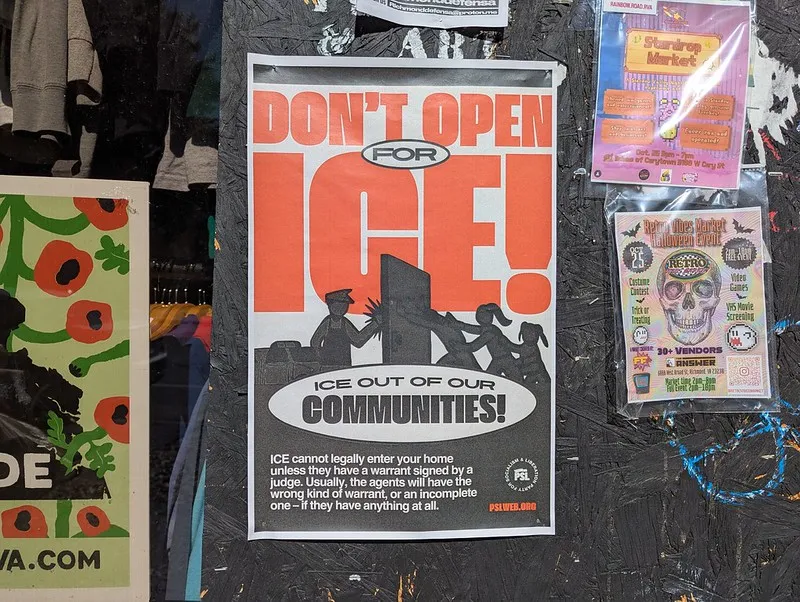
Sen. Saddam Azlan Salim, D-Fairfax, introduced Senate Bill 783 which states federal immigration officers cannot enter a home without a judicial warrant. It also says Virginia State Police will investigate shootings that occurred during an officer’s official duties, and that ICE cannot use surveillance technology to conduct immigration enforcement in the state.
“If they're part of ICE, they have to clearly identify themselves as ICE,” Salim said.
Virginia is acting to shield itself from federal agency actions, which has led to an increase in legislation pursuing similar objectives this session, according to Salim.
Sen. Glen Sturtevant Jr., R-Chesterfield, voiced strong opposition for SB 783 ahead of the bill’s final reading in the Senate. He saw several amendments as faulty, including safeguarding polling locations from operations, the surveillance technology restrictions and possible prosecution by the Virginia State Police of an ICE agent who commits a shooting during an operation.
“This is not about public safety, it’s about ideology,” Sturtevant said. “It’s the defund-the-police mindset repackaged against a new law enforcement target.”
Salim also introduced Senate Bill 352, which would ban most law enforcement officers from wearing face coverings that hide their identity on duty, with some exceptions.
A similar House Bill also establishes a penalty against officers who do not follow the policy and allows for civil suits up to $10,000. Sen. Michael J. Jones, D-Richmond, sponsored the first House version before he won a special election and moved to the Senate.
“Authorities need to be readily identifiable,” Jones said. Law enforcement officers are typically unafraid to wear a mask because they know they are not committing crimes.
“We should not wonder who's approaching us,” Jones said.
The VSP said in a media statement in Januarythat its partnerships with other local, state, and federal agencies are “purpose-driven and carefully tailored to certain mission needs.”
The agency added that its focus remains on dismantling criminal enterprises and protecting the safety and well-being of everyone in the commonwealth.
Advocates react
The Fairfax committee of We Are CASA, a national advocacy group for marginalized communities, gathered at the General Assembly building with other advocacy groups like the American Civil Liberties Union in late January.
Together, they spoke to bill patrons and shared personal stories and urged lawmakers to push for immigrant rights and protections. Advocates called for strengthening the trust between law enforcement and immigrant and working-class communities.
George Escobar, executive director of We Are CASA, said it is important that state resources are not used in an inappropriate manner when working with the federal government.
“Right now, ICE is a rogue, federal paramilitary organization that is going completely beyond the letter of the law in its tactics,” Escobar said.
A Washington Post-ABC News-Ipsos poll released on Feb. 20 found that although half of Americans support the deportation of undocumented immigrants, 62% of Americans do not support the way the campaign is carried out, and cited “aggressive tactics” of ICE agents. And over 75% of Americans, including Republicans, believe federal officers should have a warrant before entering a home, according to the Washington Post.