Skip to content
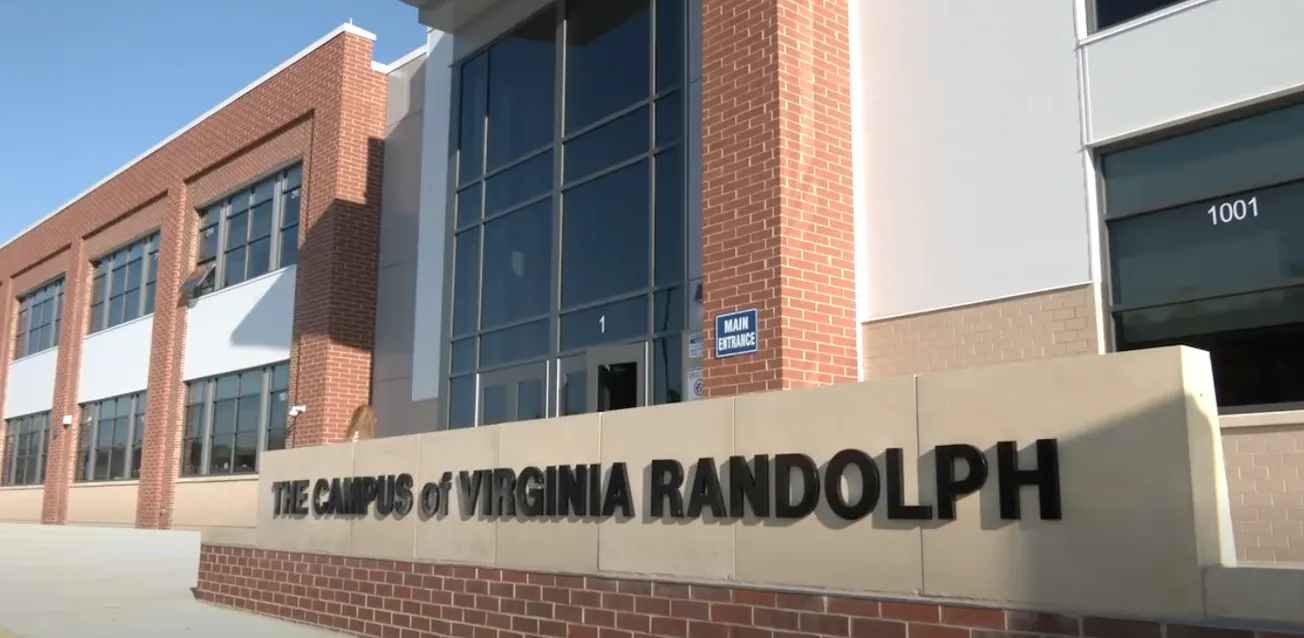
The Campus of Virginia Randolph (Courtesy Henrico Schools)

Walking into the new Campus of Virginia Randolph building, Lawrence Jordan can still see the brick archway entrance and the old beige tiles on the walls – remnants of what used to be Henrico County’s only Black high school.

For Jordan, who graduated back in 1969, the hallways evoke fond memories from his time at the school – his pride of playing on the football team, the warm guidance he felt from his teachers.

But those memories are tainted by the realities of segregation – the worn-out textbooks with whole pages torn out, hand-me-down football jerseys from the all-white schools.

“We had an old school building, but everything we had was old. This was the one Black high school in the county, so we couldn’t go to the other schools. And it’s kind of hard to say that now, it’s also kind of hard to hear, ain’t it?” Jordan said. “But the hallway, when I see the old tile, it just comes back – bam, this is home.”

Henrico Schools celebrated the long-awaited grand opening of the new Campus of Virginia Randolph building – a project that cost the division nearly $90 million – on Jan. 14 with county leaders and dozens of alumni from Virginia Randolph Community High School, the county’s all-Black high school into the 1960s. 

The site of the old high school now hosts HCPS’ alternative programs for students who need more academic and behavioral support – the Academy at Virginia Randolph for grades 9-12 and the Virginia Randolph Education Center for grades K-6 – as well as a career and technical education center for HCPS high-schoolers.

The new building has an open and modern design, with large windows lighting up the hallways, colorful murals donning the walls, and cushioned sitting areas for students to gather. It is everything Irvin Mallory Bey, a Class of 1965 alumnus from the old high school, wished he could have had when he was a student at Virginia Randolph. 

“I just wish I could have been a part of an environment that halfway looked like this when I was coming in,” Mallory Bey said. “But I’m excited about the rehabilitation of the structure. And coming back, it’s like when I was here as a freshman – I feel good, I feel excited.”

The Campus of Virginia Randolph (Courtesy Henrico Schools)

Randolph's philosophy: 'Every child mattered'

The Campus of Virginia Randolph has a long and notable history. Originally founded as a one-room schoolhouse for Black children in 1894 by the campus’ namesake, Henrico educator Virginia Randolph, the site was then transformed into an all-Black high school in the 1930s. 

According to local oral history, it was Mallory Bey’s own great uncle who gifted the land to Virginia Randolph more than a century ago. Mallory Bey still lives next door to the Virginia Randolph campus – the school where he was once the star quarterback.

All around the new building, murals depicting Virginia Randolph and her teaching philosophy decorate the walls. The building is a “powerful tribute” to Virginia Randolph and all that she believed in and hoped for, said Henrico School Board Vice Chair Ryan Young (Fairfield District).

“Virginia Randolph believed something powerful, something simple: that every child mattered. . . that education could open doors no matter your race,” Young said. “That belief lives on right here at this campus. These new buildings are more than just walls and windows. . . they represent a promise to our students and families that their future matters.”

David Chaffee, a history teacher at the Academy at Virginia Randolph, is in his eleventh year at the school. Since students and staff moved into the new building last spring, Chaffee said he has noticed a “big academic shift,” with students more focused on academics and less worried about other drama.

“The building was not always welcoming – chipping paint, things like that,” Chaffee said. “I really noticed the push to get back towards the roots of Virginia Randolph. Especially with this new campus, you’re just kind of making it that special place again. It makes students want to be here.”

Henrico County officials celebrate the completion of the renovation and expansion of the Campus of Virginia Randolph with a ribbon-cutting ceremony Jan. 14, 2026. (Courtesy Henrico Schools)

'The importance of being here'

Several years ago, current Henrico Board of Supervisors Chair Roscoe Cooper (then a member of the Henrico School Board) and HCPS Superintendent Amy Cashwell met with Henrico County Manager John Vithoulkas in the old Campus of Virginia Randolph building to discuss rebuilding the structure. At that time, the school board did not have the funds to reconstruct the site, but was later able to secure $55 million in federal COVID relief grants for the project.

“Literal chips of lead paint were falling. The building was in disarray,” Cooper said. “And we took care of this.”

The main structure of the old Virginia Randolph High School, “Building B,” still stands today, but the rest of the buildings have been replaced.

The blackboards, old auditorium chairs, football jerseys and trophies are long gone, said Jordan, prompting mixed emotions. Everything at Virginia Randolph was old hand-me-downs from the county’s white schools – the textbooks, football uniforms, band equipment, even the school buses – but Jordan said he cherished his time at the school and had immense gratitude for his teachers.

“I think it came more clearer to me maybe around my sophomore year. Before that, it was girls and football. When I got to my sophomore year, I realized the importance of being here,” Jordan said. “And the rarity of the teachers we had and their commitment – having to teach us, as I call it, with their hands tied behind their backs. And they still did a great job getting us prepared.”

The day-to-day was almost like being in “survival mode,” said Lawrence Jordan’s brother Lionel, who also graduated from the school in 1969.

On the way to school, his school bus would often get pelted with snowballs, sometimes even rocks, from the white students as they passed Henrico High. When Henrico County began to integrate, some Virginia Randolph students would transfer to the white schools, only to come back a year later because of the school fights and violence.

Virginia Randolph is interred just outside the front door of the museum that bears her name on the Campus of Virginia Randolph in Glen Allen. (Tom Lappas/Henrico Citizen)

A place of pride

But despite the difficulties, Virginia Randolph stood as a place of pride, family, and community for its students, said Lawrence Jordan.

“The teachers knew our parents. There were certain things we couldn’t have gotten away with, such as walking around with our pants hanging down, that was not going to happen,” he said. “Everybody knew each other, because everybody was from all over the county and all of us ended up here. I enjoyed being here.”

Back in the 1960s, students at the high school did not learn much about the building’s namesake, said Lionel Jordan. 

“We didn’t even know a whole lot about our parents, let alone somebody else’s parents,” he said. “The conversation just wasn’t past survival.”

But today, the Academy at Virginia Randolph’s history classes make sure to begin the year with Randolph and her legacy, said Chaffee. Students also visit the Virginia Randolph Museum right on campus, established in 1970 by preserving the original 1937 home economics cottage at the school.

The new building, revitalizing a larger focus on the importance of Virginia Randolph, is a testament to how far the campus and Henrico have come, said Chaffee.

“The school wouldn’t be here without her. I’m very, very proud of working here,” he said. “The more I learn about her, the more I feel like I found my place in this building. And I’m so proud that she’s been such an emphasis.”


Liana Hardy is the Citizen’s government and education reporter. Support her work and articles like this one by making a contribution to the Citizen.

Comments