On 16th anniversary of Affordable Care Act, Va.’s federal lawmakers and health leaders weigh risks
Virginia’s Democratic federal lawmakers and health care providers met in Hampton Roads to discuss lapsed parts of the ACA program and steep cuts to Medicaid funding
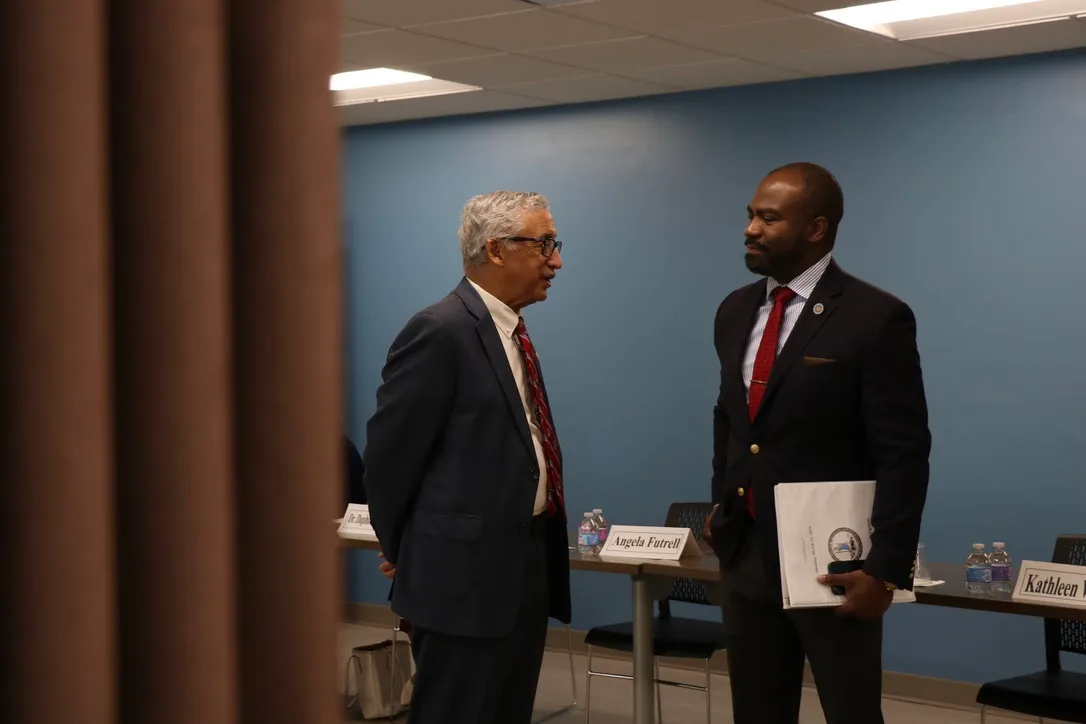
On Monday, Virginia’s Democratic members of Congress and state health care leaders commemorated the 16th anniversary of the Affordable Care Act online and at a roundtable in Newport News.
They also noted mounting concerns over America’s shifting health care landscape — especially lapsed parts of the ACA program and steep cuts to Medicaid funding.
The ACA helped establish state-run health insurance marketplaces for people without employer-provided insurance or who would have otherwise struggled to purchase private insurance on their own. The ACA also allowed states to expand Medicaid eligibility to help reach more people.
The policy was a hallmark of former President Barack Obama’s administration that has faced fierce Republican pushback from its inception, with calls to “repeal and replace” it. In 2017 during President Donald Trump’s first term, a repeal effort passed the House of Representatives but fell in the Senate.
“They almost got it, if not for John McCain’s iconic thumbs down,” U.S. Rep. Bobby Scott, D-Newport News, said at the roundtable hosted near his district. McCain, the now-deceased Republican U.S. Senator from Arizona, sided with his Democratic colleagues to protect the law.
Though Congressional Republicans have been unsuccessful in undoing the ACA, they’ve been able to undermine it and other federal health policy, Virginia’s Health and Human Resources Secretary Marvin Figueroa emphasized as he sat next to Scott at Monday’s gathering.
He likened GOP actions against ACA as “sabotage” to the program in lieu of being able to successfully eliminate it outright.
“When they were unable to repeal the Affordable Care Act, they started doing things. So you had a reduction of the period that people had to enroll. You had (them) playing around with the tax credits.”
An extension of ACA subsidies was allowed to expire at the end of last year, after Congress passed the One Big Beautiful Bill Act, a sweeping budget bill that slashed billions in federal spending on social service programs.
Congress shut down for over a month last fall at an impasse over renewing the credits — which help people at 100% to 400% of the federal poverty level purchase their ACA insurance.
By January, U.S. Rep. Rob Wittman, R-Westmoreland, became one of only 17 Republicans nationwide to support extending them. He framed his vote as a “strictly temporary” solution to spare his constituents from losing coverage while Congress explores other health policies. He has not yet clarified specifics of what those policies could look like.
The subsidies have not been renewed and thousands of Virginians have already fallen off their health insurance this year.
Twenty-five thousand Virginians dropped their ACA plans in Virginia as of late February — a number that is three times what it looked like last year, state marketplace director Keven Patchett said last month. About 100,000 of Virginia’s roughly 400,000 ACA clients had used the expired subsidies for their insurance. The full scope of those who dropped insurance will become clearer this spring, Patchett has said.
The roundtable panelists also weighed in on forthcoming changes to Medicaid that are expected to further spur loss of health insurance coverage in Virginia and nationwide.
State Medicaid director Jeff Lunardi told state lawmakers that about 500,000 Virginians could be at risk of falling off when the compliance date takes effect as dictated by the reconciliation bill.
Virginia state lawmakers will return to Richmond next month to finalize the next state budget. They will try to fund state-level subsidies and invest in state agencies handling Medicaid verifications to prevent significant coverage drop offs where possible.
While it’s a tall order for state lawmakers caught in the funnel between federal and local government, an array of health care providers are facing their own challenge: bracing for growing financial losses as more of their patients become unable to pay for their care.
Sentara vice president of government relations Andy Stephenson said that his health system is “getting hit on all sides” between its health insurance plan, its hospitals and clinics around the state.
Figueroa and Scott had met with him and regional health providers at the Sentara Community Care Center in Hampton Roads on Monday. The facility, a partnership between the hospital chain and local nonprofits, has wraparound services that include a health clinic, mental health services and a food pantry.
Stephenson said private insurers are likely going to raise premiums over time, due to fewer Virginians being covered by ACA or Medicaid.
Uninsured people are likely to put off care until emergencies arise and force them to visit hospital ERs. Hospitals must care for everyone regardless of their ability to pay, but over time negotiations with private insurers can lead to premium spikes and more cost for insured patients to help cover the uncompensated care.
“This is a big issue for not just all of us in this room, but for all our friends and families and neighbors,” Stephenson said. “Every single resident in the commonwealth of Virginia is going to be impacted by this bill.”
Virginia Mercury is part of States Newsroom, a nonprofit news network supported by grants and a coalition of donors as a 501c(3) public charity. Virginia Mercury maintains editorial independence. Contact Editor Samantha Willis for questions: info@virginiamercury.com.