Obama, Spanberger welcome Virginia Supreme Court ruling allowing redistricting vote
GOP ramps up opposition after high court clears path for early voting in statewide referendum
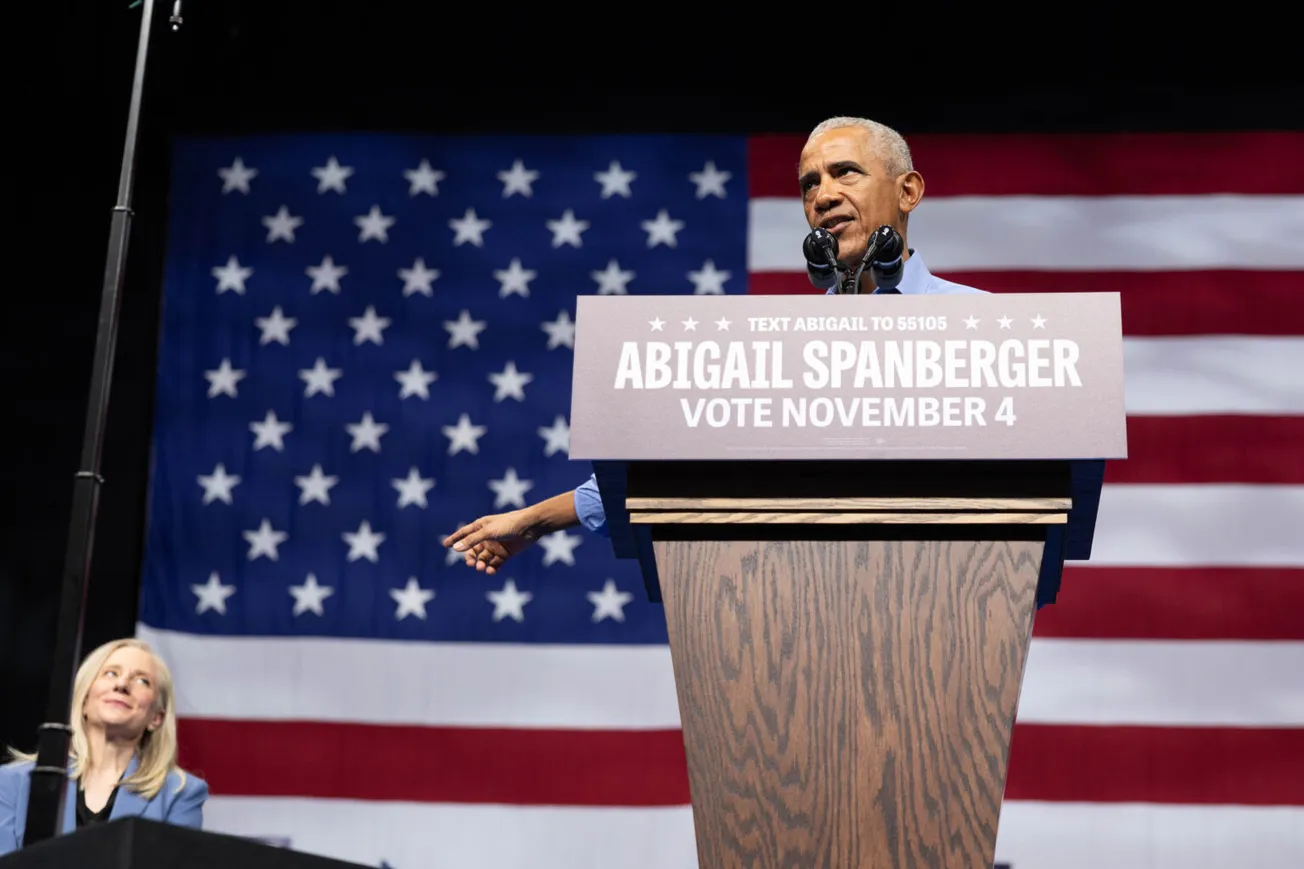
A ruling by the Supreme Court of Virginia allowing early voting to move forward in the state’s redistricting referendum has quickly reverberated beyond Richmond, drawing praise from former President Barack Obama and Gov. Abigail Spanberger while prompting new opposition efforts from Republican leaders.
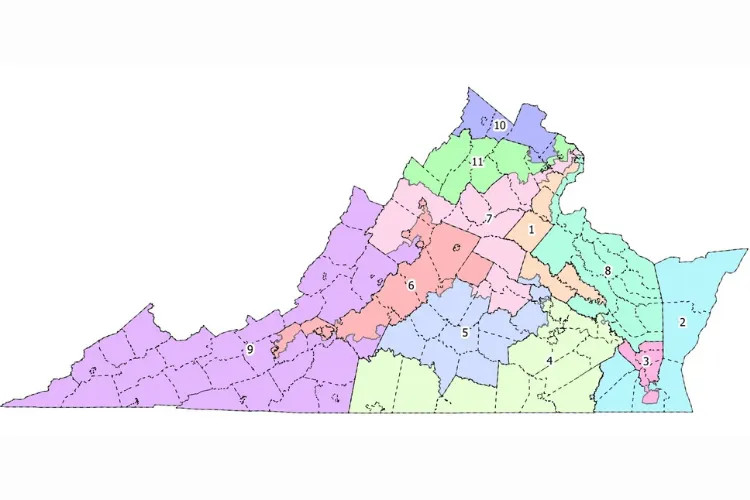
The court’s decision Wednesday afternoon cleared the way for early voting to begin Friday on a proposed constitutional amendment that could reshape Virginia’s congressional map — a vote that has become part of a broader national fight over partisan redistricting ahead of this year’s midterm elections.
Obama weighed in Thursday morning with a video posted on X, formerly Twitter, urging Virginians to support the measure.
“Free and fair elections are the cornerstone of our democracy. But right now, they’re under attack. Several Republican-controlled states have redrawn their congressional maps to give themselves an unfair advantage in the midterm elections,” Obama said.
“Now Virginia has a chance to help level the playing field. If you live in the commonwealth, early voting begins March 6, and Election Day is on April 21. Vote YES.”
Spanberger, a Democrat who took office in January and who had previously said she had “no plans” to redraw lines if elected, also welcomed the court’s decision and encouraged Virginians to participate in the vote.
“As early voting begins tomorrow on Virginia’s redistricting amendment, voters should know that Virginia’s approach is different,” Spanberger said in a statement Thursday morning. “It is temporary, directly responsive to what other states decide to do, and — most importantly, it preserves Virginia’s bipartisan redistricting process for the future.”
Spanberger noted that she still backed the voter-approved redistricting commission created in 2020 and said the current proposal reflects changing national political dynamics.
“That support has not changed,” she said. “What has changed is what we’re seeing in states across the country — and a president who says he is ‘entitled’ to more Republican seats before this year’s midterm elections. Virginians have the opportunity to take action in response to this extraordinary moment in history. That’s why, as a Virginia voter, I’m voting in favor of this amendment.”
Justices say courts should rarely intervene before elections take place
The political reactions came hours after the state’s highest court stepped in to keep the referendum on track following a legal challenge that had temporarily halted preparations for the vote on a state level.
In a unanimous order issued Wednesday, the Supreme Court of Virginia granted a petition for review and stayed a temporary restraining order issued by a Tazewell County circuit judge that had barred election officials from preparing for or administering the referendum until March 18.
The justices said the lower court’s order effectively functioned as a preliminary injunction, giving the Supreme Court jurisdiction to review it. The court concluded the injunction should be suspended while the underlying legal disputes continue to play out.
In its ruling, the court emphasized a long-standing principle in Virginia law that courts generally should not block elections before they take place, even when the legality of the election process itself is challenged. Instead, courts typically review those questions after voters have cast ballots if the results are contested.
The justices stressed their decision does not resolve the underlying legal claims about whether the General Assembly followed proper procedures in advancing the amendment.
Those challenges include allegations that lawmakers improperly expanded a special legislative session to consider the amendment, failed to meet election-timing and notice requirements, and used misleading ballot language.
The matter will return to Tazewell County Circuit Court, which the Supreme Court directed to move quickly toward a final judgment.
Republicans launch campaign to defeat amendment
Early voting on the redistricting amendment is scheduled to begin Friday, and Election Day is April 21.
Republicans, however, have sharply criticized the proposal and the referendum process.
U.S. Rep. Ben Cline, R-Botetourt, announced Thursday the creation of a new statewide campaign aimed at defeating the amendment.
Cline said he is launching a grassroots organization called “Stop the Gerrymander,” structured as a 501(c)(4) group, to organize opposition to the referendum. The effort will be funded in part with money from his campaign.
“This is an issue that affects my own district, of course, but it’s also unfair to all Virginians, which is why this must be a statewide effort,” Cline said. “And I am confident that our fair-minded citizens will reject this unconstitutional redrawing of district lines to benefit one political party over the other.”
At the same time, additional legal challenges to the redistricting effort are continuing in other courts.
On Wednesday afternoon, Del. Wendell Walker, R-Lynchburg, announced he has joined a separate lawsuit challenging the General Assembly’s attempt to enact a new congressional map through the state budget.
Walker and other plaintiffs argue that Virginia’s Constitution requires congressional districts to be drawn through the bipartisan redistricting commission created by voters in 2020 — or, if that process fails, by the Supreme Court of Virginia itself.
“The Constitution laid out a clear process for how congressional districts are drawn, and Democrats in Richmond simply do not have the authority to ignore that process because they want a different political outcome,” Walker said in a statement
That lawsuit, filed in Richmond Circuit Court, asks a judge to declare the proposed map unconstitutional and keep the current congressional districts — adopted by the Virginia Supreme Court in 2021 — in place for the 2026 elections.
For now, however, the Supreme Court’s ruling means Virginia voters will begin casting ballots Friday in one of the most closely watched redistricting fights in the country.
Virginia Mercury is part of States Newsroom, a nonprofit news network supported by grants and a coalition of donors as a 501c(3) public charity. Virginia Mercury maintains editorial independence. Contact Editor Samantha Willis for questions: info@virginiamercury.com.