Meet Sam McKelvey, new executive director of the Virginia Capital Trail Foundation
McKelvey hopes his background in history and other foundation work will help the trail’s expansion continue forward
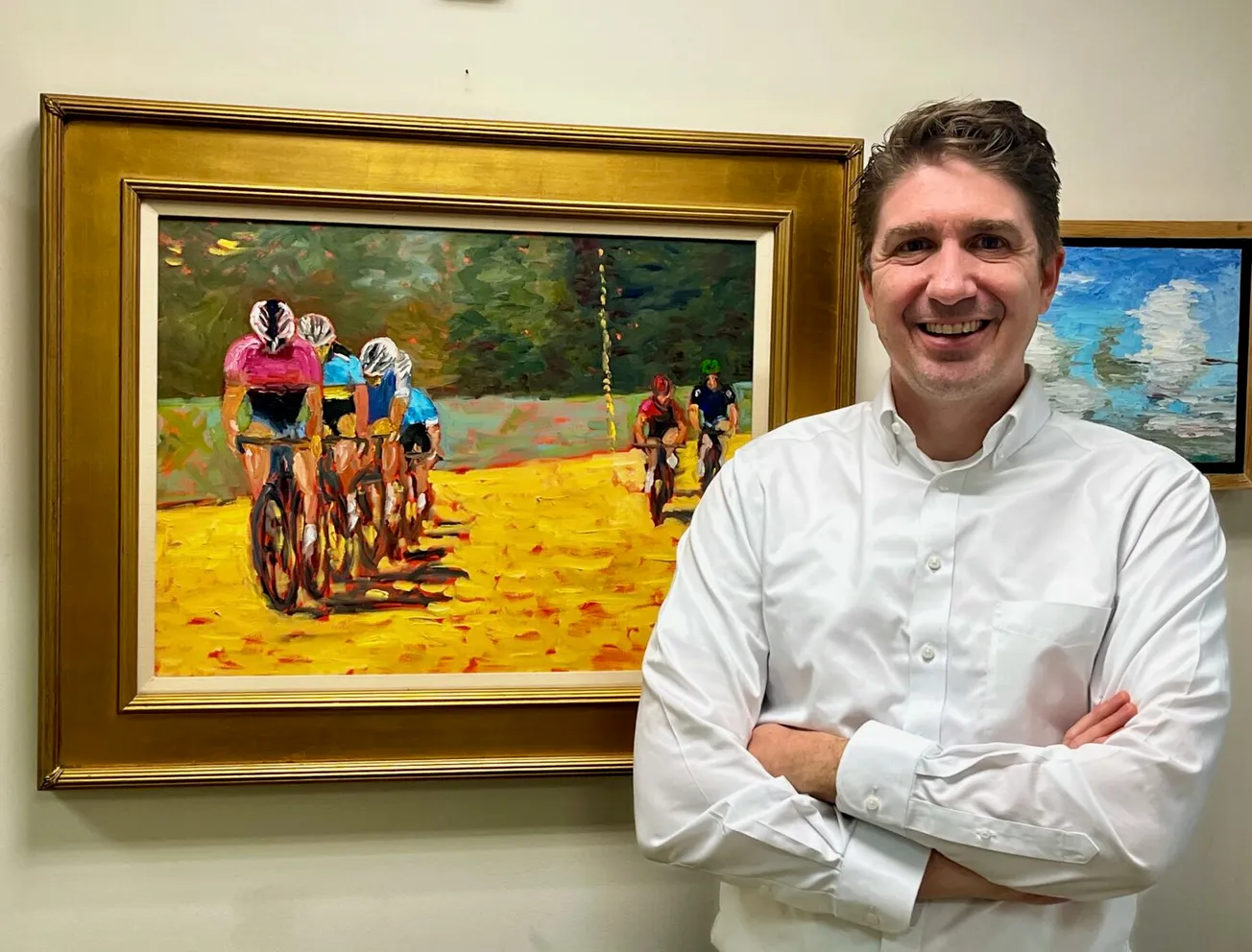
The car-free, 51-plus mile Virginia Capital Trail has been a staple for cyclists, runners, and roller skaters since 2015. But you could say that Sam McKelvey, the new executive director of the Virginia Capital Trail Foundation, still has his training wheels on.
He started in early February and is now navigating the position he took over from longtime director Cat Anthony, who left in December after eight years to become executive director of the Virginia Public Access Project.
“Right now it’s a lot of learning what Cat did,” he said. “I’ve been a long-time follower of what’s happened on the Capital Trail, but basically from a guest experience. Now it’s understanding everything, about who our partners are, where the opportunities lay, where our finances are.”
The Capital Trail runs from Richmond to Jamestown. Legislators recognized its foundation for over 10 years of service to the state with a resolution during this year’s legislative session, highlighting that it has “generated millions of dollars of economic activity in the Commonwealth” and “offers any number of outdoor adventures, promoting health and wellness and improving the quality of life for many.”
In 2024, the multiuse path counted more than one million trail usage counts, according to the foundation’s annual report. The foundation is run by only five people, including McKelvey.
He comes to the new role with similar experience under his belt. He led the Fredericksburg Area Museum as their president and was the executive director of the Menokin Foundation in the Northern Neck. That foundation oversees the national historic landmark home of Francis Lightfoot Lee, one of the signers of the Declaration of Independence.
“I’ve been involved in a lot of history organizations over the years,” he said. His focus has evolved from “doing everyday history” to “connecting those organizations and foundations to the communities around them.”
“What’s exciting about that is you have more than 400 years of Virginia history along the trail,” he said. “I think there’s more that we could do when it comes to history. There’s a lot of locations that don’t have signage or markers yet.”
McKelvey envisions an app that will let trail users explore the history that weaves through dozens of trail sections, including Sherwood Forest, which was the birthplace of the 10th U.S. President John Tyler.

The 44-year old McKelvey, an Ashland resident, also worked in the Henrico County Recreation and Parks department, where he saw the beginnings of another key Central Virginia bike and pedestrian infrastructure project — the Fall Line Trail.
“I was there actually at the time when the first shovels went in the ground and I saw it completed and the ribbon-cutting of that as well,” he said, adding that he’ll continue helping Sports Backer’s complete the trail.
Curves ahead
Access to federal funding via grants will pose a future challenge that McKelvey said he and his team are preparing to face.
“Across the nonprofit sector there’s a growing sense of uncertainty around federal funding. Many organizations that support outdoor recreation and active transportation are watching closely as federal transportation priorities shift and questions emerge about future funding for bike and pedestrian infrastructure,” McKelvey explained. “For organizations like ours, that means preparing for a more competitive and potentially smaller pool of federal grants.”
In February, Congress approved a new Transportation, Housing and Urban Development Appropriations Bill that shows little if any funding for bike infrastructure, according to a breakdown by the Senate Committee on Appropriations.
Before the bill was passed, more than 1,000 bike related organizations, including component manufacturer Shimano and United States bike maker Trek, signed a joint letter to the House Transportation & Infrastructure Committee and Senate Environment & Public Works Committee, stating that cutting funding streams for things like bike lanes and trails could be lessened or even eliminated with because of the bill, according to Cycling Weekly.
McKelvey said his foundation’s approach is to try to strengthen partnerships with state agencies, local governments and private donations “so projects like the Capital Trail extension can continue moving forward even as the federal funding landscape evolves.”
While much of the funds the nonprofit gets to install amenities like bike fix-it stations or shelters come from local and private sources, the foundation does rely on state and federal dollars — particularly when it comes to future expansion projects, such as extending the trail from Jamestown into parts of Williamsburg. That project is already underway, known as the Capital Trail Extension which would connect to the future Trail 757.
“It’s about a $30 million project to be able to extend seven miles from James City County into Williamsburg itself,” McKelvey said. “We are on the funding route right now, working with the different municipalities and locations to be able to apply for different grants. We’ve done a very good job on that so far.”
McKelvey said the foundation will continue to work with the federal government when it comes to securing money to complete the trail because it is a benefit to the state to have the trail in place.
Looking forward
McKelvey envisions a huge statewide trail network in the coming decades.
“I’d like to see connections all the way to the ocean and move it towards the mountains,” he said. “I’d like to be able to move throughout the state of Virginia without using a car. I think that would be kind of the ultimate dream of mine.”
In the future, McKelvey also sees expanding the number of businesses that open up along trail — without encroachment.
“I think we want to keep the Virginia Capital Trail special, and what makes that special right now is the user experience and what it looks like today,” he said. “I’m hoping to work more with some of the businesses that do kind of cater to Virginia tourism quite a bit more that we can do, that we can partner with them.”
In addition, McKelvey said he wants to make sure trail amenities, like parking, bike fix-it stations and more access points come online. His goal is to continue adding new programs, such as bikepacking and cycling 101 classes, and even offer programs for bird watchers.
“Birding. Yes, birding. I’d like to see more partnership opportunities with organizations that offer those,” he said.
With all the work ahead for McKelvey, there’s only one thing left for him to do.
“I’m purchasing a new bike right now,” he said.
Virginia Mercury is part of States Newsroom, a nonprofit news network supported by grants and a coalition of donors as a 501c(3) public charity. Virginia Mercury maintains editorial independence. Contact Editor Samantha Willis for questions: info@virginiamercury.com.