Legislature considers shifting power line costs from residents to data centers
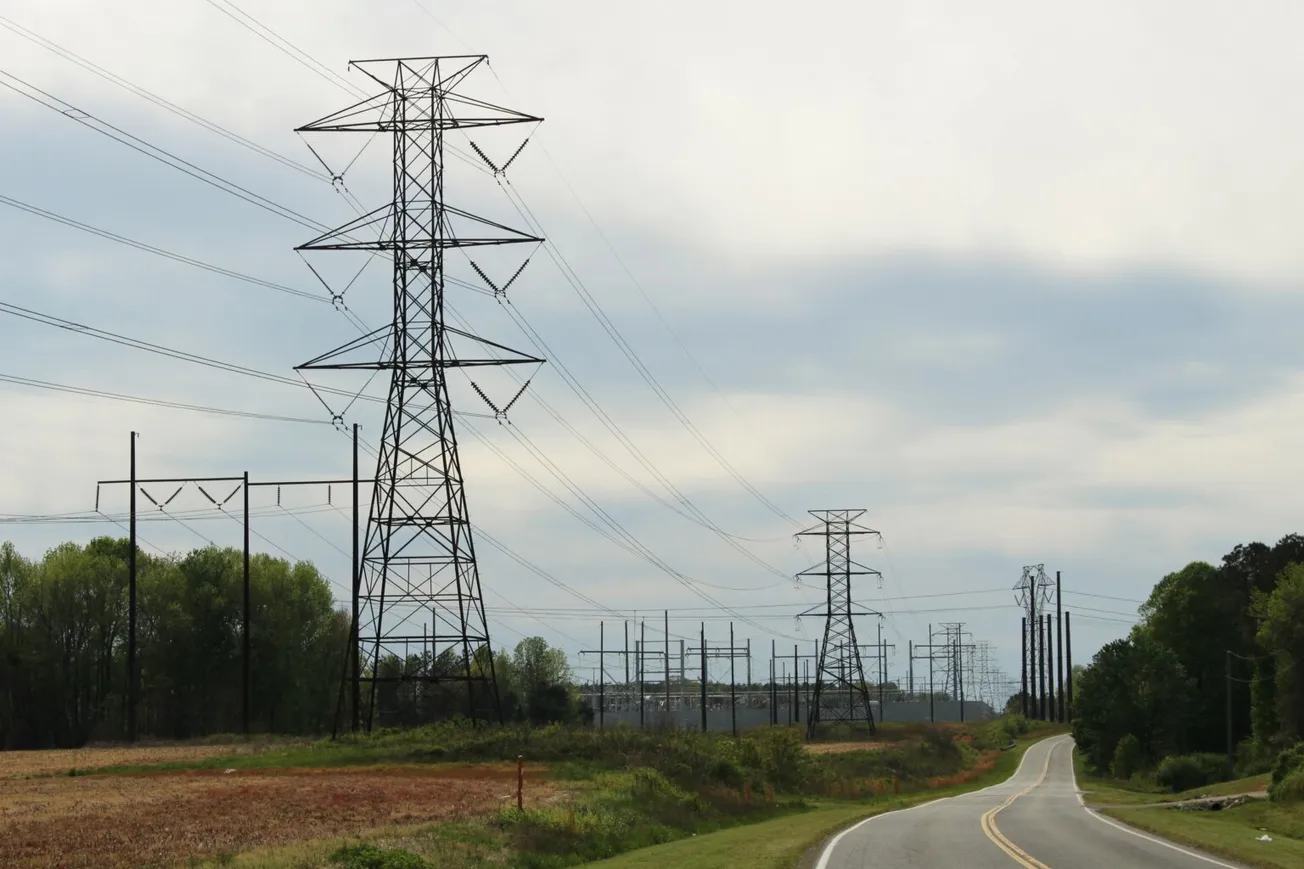
Multiple measures working through the General Assembly could put more of the costs that are driving up residential power bills onto data centers.
They range from direct mandates to shift the costs of distribution lines and capacity auctions, to urging the State Corporation Commission to investigate whether ratepayers are subsidizing energy infrastructure that’s primarily used by data centers.
Senate Bill 253
Senate Bill 253 by Sen. Louis Lucas, D-Portsmouth, cleared the chamber and now heads to the House for more hearings. The bill began as a proposal for Dominion Energy and Appalachian Power Company to extend weatherization programs for low-income households through 2038.
Now, it contains a provision to allow the SCC to determine if it is in the public’s interest for high-load Dominion customers — namely data centers — to cover the cost of distribution lines to data centers and the capacity auction costs for the utility to purchase more power from PJM, the regional grid operator.
In Dominion’s latest rate case, the utility created a new rate class called GS5 to encapsulate high-load users, which are mostly data centers and some manufacturers. If the bill passes, Gov. Abigail Spanberger signs it into law and the SCC approves the cost shift, it is estimated to save the average residential customers $5.52 on their monthly bills.
“Working Virginians (will) understand that we are doing this to try to make sure that down the road… they will be able to save more money,” Lucas said.
The bill also extends Dominion’s strategic undergrounding program which helps fund burying distribution lines in the areas of the state most at risk for outages. The cost of that program is $4.88 a month for the average ratepayer and was supposed to sunset in 2028. The bill aims to continue the program through 2033.
Sen. Scott Surovell, D-Fairfax, said that maintaining and expanding the undergrounding program will ultimately save ratepayers money in the long run, since the underground lines will presumably lead to fewer outages and more reliable power during storms.
The undergrounding program cost is already factored into customers’ bills, and Democratic lawmakers said the $5.52 Lucas’ bill would shave from power bills would be new savings. If the undergrounding measure fails and the program sunsets, its monthly cost of $4.88 would gradually roll off bills.
Dominion representatives said the undergrounding program is one of their more popular endeavors with customers.
“It significantly reduces storm-related outages, and it gets everyone’s power back on sooner after major storms. It makes a positive difference, and the results keep getting better as we reach more outage-prone areas,” Dominion spokesman Aaron Ruby said.
The bill limits Dominion to spending no more than $900,000 per mile for burying the lines, an increase from the current cap of $750,000 per mile. The bill also restricts them from spending more than 4% of their total distribution costs on the program, lowered from the current 5% cap.
The program started in 2014; by May of this year, 2,900 miles of distribution lines will have been buried. When the latest phase of the program is completed this spring, $1.4 billion will have been spent in burying lines.
A similar bill in the House would extend the supplemental undergrounding program but does not include the distribution and capacity auction cost shift portion present in the Senate bill.
SB 339
SB 339 by Sen. Russet Perry, D-Loudoun, does not mandate the cost allocation of high-voltage transmission lines be changed, but it does direct the SCC to take a closer look at if residential customers are unfairly covering costs for the lines that mainly supply power to the high load users, especially data centers.
“I think it’s looking at not every transmission line, but the ones that can be primarily designated as the ones that are driven by the data center industry or by high energy users and making sure that they’re paying the fair cost of those,” Perry said.
Perry said that her bill pushes the SCC to look at this issue before the next rate case for the major utilities takes place. High-load customers in Dominion’s rate GS5 rate class already have minimum demand charges of 85% for transmission, 85% for distribution costs.
The 2024 Joint Legislative Audit and Review Commission report on data centers confirmed that the data center industry is driving more transmission lines to be built to power them, setting the stage for higher power bills for customers.
“Data centers’ increased energy demand will likely increase system costs for all customers, including non-data center customers, for several reasons. A large amount of new generation and transmission will need to be built that would not otherwise be built, creating fixed costs that utilities will need to recover,” the report reads.
Both bills passed the Senate and await House committee hearings.
Virginia Mercury is part of States Newsroom, a nonprofit news network supported by grants and a coalition of donors as a 501c(3) public charity. Virginia Mercury maintains editorial independence. Contact Editor Samantha Willis for questions: info@virginiamercury.com.