In the throes of 'pothole-itis,' Henrico, VDOT fill dips left from winter storms
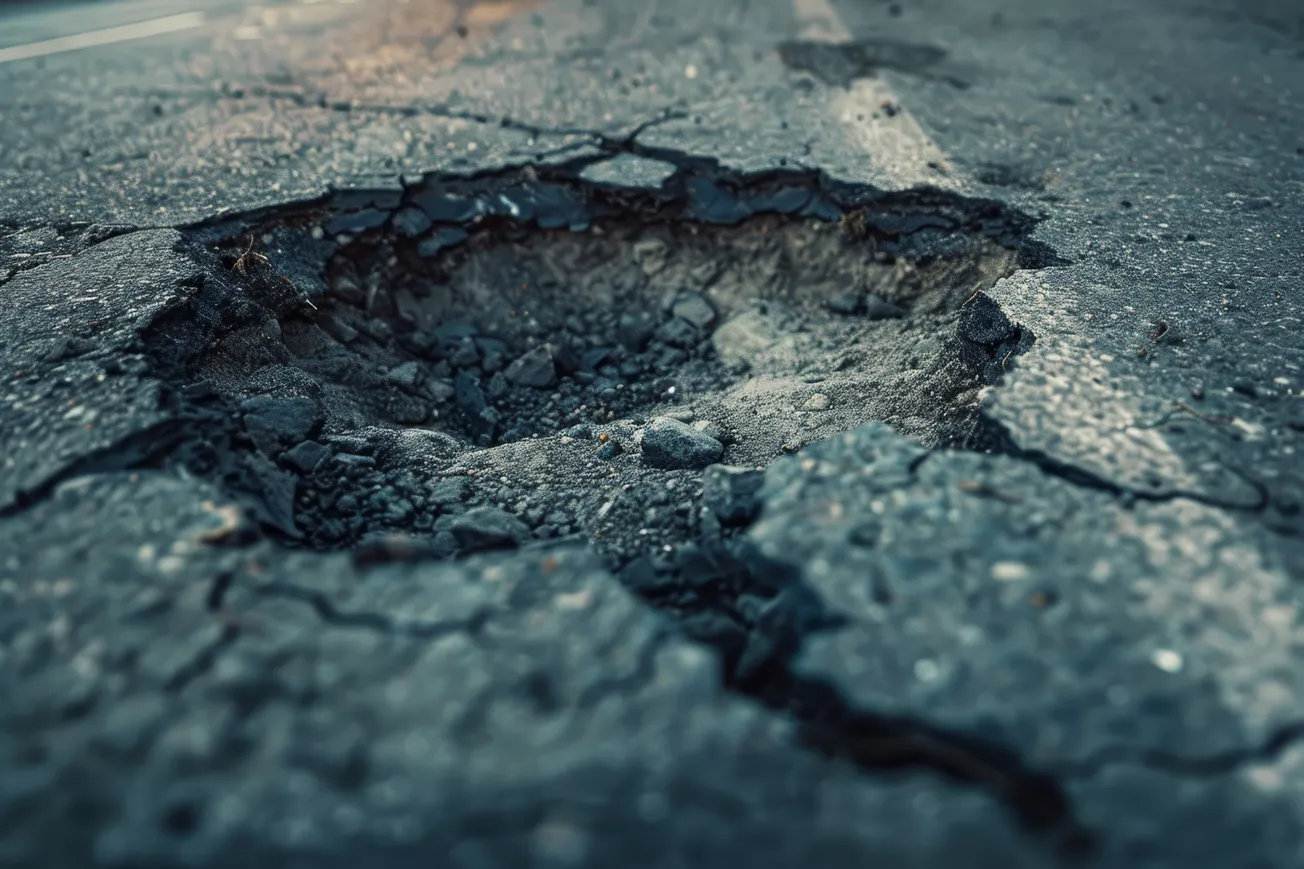
The snowstorms and slick icy roads last month may be behind us, but there are still memories on Henrico County streets.
Unlike the daffodils popping up all over, the plethora of potholes is not a welcome surprise.
“The sun is shining. It's not raining. It's not snowing. So, as is the case when we had the challenging winter, we've had a serious case of frost heave and pothole-itis,” Virginia Department of Transportation Richmond District Engineer Dale Totten, said earlier this week at a Richmond Regional Transportation Planning Organization meeting.
Crews also are working to stem a version of pothole-itis on roads throughout Henrico County, according to Henrico Public Works Director Terrell Hughes, who described the work of filling the road depressions as an ongoing task.
“We drive the main roads every day to see, because new ones are forming,” said Hughes. “We've been active replacing them. It's been an all-hands-on-deck approach the last couple of weeks.”
Henrico DPW crews use materials that they already have stockpiled, with costs coming out of Henrico’s road materials budget.
Potholes are created by the cycle of water or snow freezing and then thawing on streets.
“Water expands when it freezes. So, whenever it gets down in the cracks, it actually expands a little bit. And that can knock chunks loose. It's the freeze-thaw cycle. When anything gets into a little crack, it freezes, it expands, those pieces start to break off. And then as more traffic drives over, sometimes the potholes show themselves.”
Plows also can cause some potholes.
Henrico Public Works crews have seen more potholes on county streets this year than during the previous, more mild winters. This winter’s days-long deep freeze played a part in giving way to the potholes that have appeared on those streets.
“Crews have been working pretty much six days a week on potholes,” said Hughes, who described crews as patching potholes as they see them. “We still have crews working Saturdays. We're still dedicated to it until we figure out where all the issues are.
“All of our foremen with their pickup trucks have the pothole patch. When they see one, especially if it's a neighborhood street, they’ll patch it pretty quickly. Our ultimate goal is to make sure we're trying to address them as fast as we find out about them. “
VDOT crews also are routinely repairing pavement on roads right now, Totten said. VDOT manages roads in Henrico that are a part of the interstate system, along with state routes like West Broad Street (Route 250) and Staples Mill Road (Route 33).
Henrico maintains its own secondary road system. Some HOAs have public roads (which Henrico is responsible for repairing), while many other townhome or private-gated communities have private roads, which they are responsible for maintaining on their own.
How to report a pothole
If you see a pothole on a Henrico County street, you can email DPWroads@henrico.gov, report it online through the Henrico County website or call (804) 501-4393.
More specifically, report West End potholes to 804-727-8300 or East End potholes to 804-652-3975.
“We'll get someone out there,” Hughes said.
As spring unfolds, Totten encourage drivers to report potholes on state roads or interstates to VDOT’s 24-hour customer service center at 1-800-367-7623 (1-800-FOR-ROAD) so they can be filled.
AAA reported that Americans spend billions of dollars every year to repair damages caused by potholes, with an average price tag of almost $600 per repair.
If your car is damaged by a pothole, Henrico County and VDOT have portals where drivers who experience damage to their cars caused by a pothole can file a claim for compensation.
Henrico’s Division of Risk Management handles all claims for personal injury and property damage asserted against the County.
The form to submit a claim to VDOT can be found at this link.
AAA offered tips for avoiding potholes and minimizing damage:
- Beware of puddles – Puddles are often potholes in disguise.
- Look ahead – Make a point of scanning the road ahead for potholes. An alert driver is more likely to have time to avoid a pothole.
- Increase following distance – This will give you additional time to avoid potholes otherwise hidden by the vehicle in front of you.
- Limit distractions – Avoiding a pothole is much easier if you pay attention to the road ahead.
- Slow down – Slowing down will increase the chance of avoiding a pothole, and if you can’t avoid a pothole, reduced speed will likely mean reduced damage.
- Inspect tires – Make sure tires are properly inflated and have a healthy tread. Tires that are not road-ready are at greater risk of a blowout or flat.
- Don’t ignore noises/vibrations – A hard pothole impact can dislodge wheel weights, damage the tire or wheel and even break suspension components. Any unusual noises after a pothole hit should be inspected immediately.
Dina Weinstein is the Citizen’s community vitality reporter and a Report for America corps member, covering housing, health and transportation. Support her work and articles like this one by making a contribution to the Citizen.