Skip to content

In the Garden: Low maintenance impatiens for sun and shade

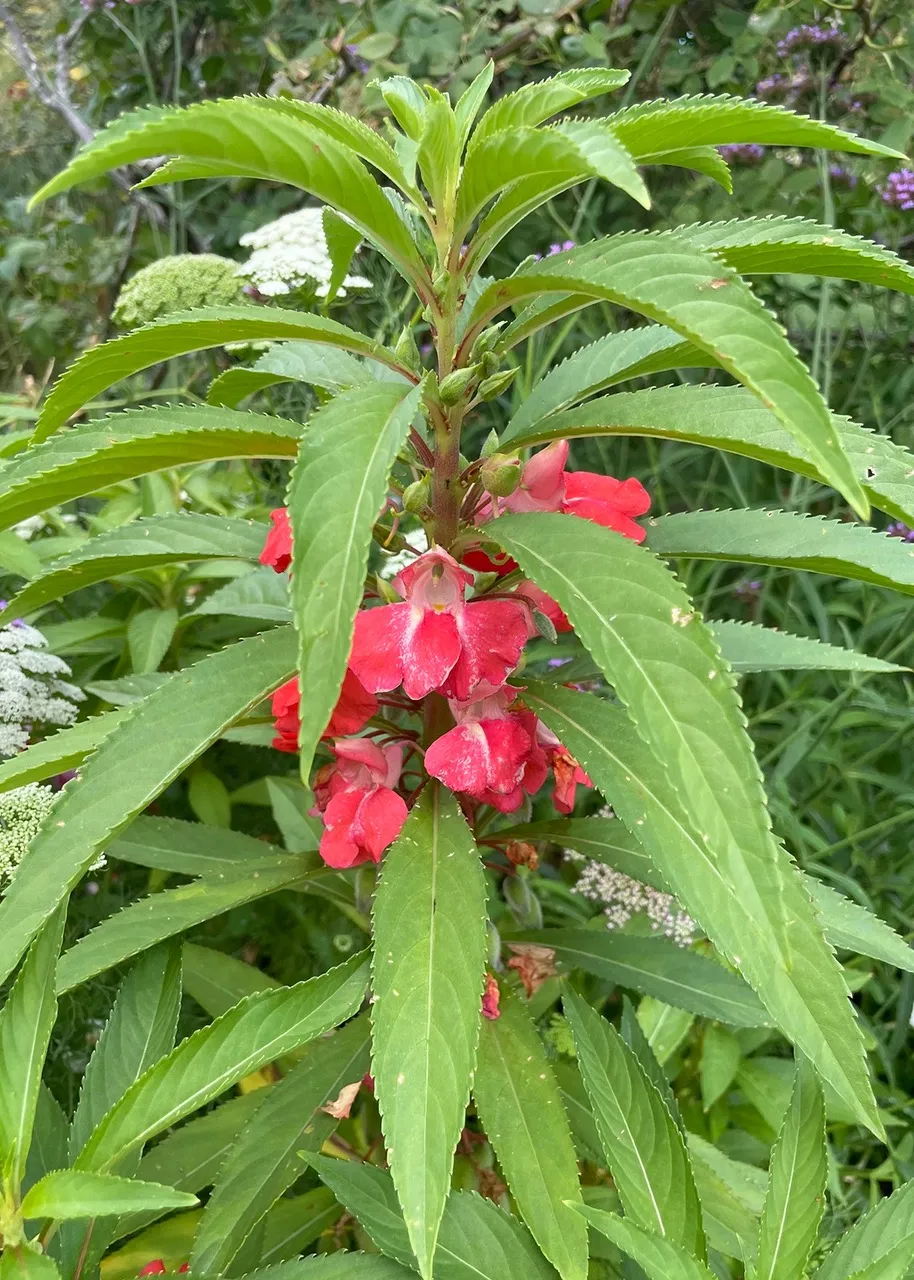
The unique impatiens balsamina has cup-shaped flowers that grow by the leaves all along the upright stems. (Courtesy MelindaMyers.com)

Table of Contents

Impatiens’ easy-care nature, season-long bloom and shade tolerance make it one of the most popular garden annuals. The introduction of downy mildew-resistant varieties has helped it maintain this status. For these reasons, as well as its butterfly and hummingbird appeal, the National Garden Bureau has declared 2026 Year of the Impatiens.

The name impatiens is Latin for impatient. It refers to the fact that the seeds abruptly exit the ripe seed pods. Orange jewelweed (Impatiens capensis) and yellow jewelweed (Impatiens pallida) are also known by the common name touch-me-not since their ripe seed pods burst at a slight touch. These two North American native plants attract and support bumblebees, other long-tongued bees, butterflies and hummingbirds.

Some impatiens species’ flowers undergo a sex change as they mature known as sequential hermaphroditism. Their flowers start as male and after the pollen sheds, they morph into a female.

Most gardeners are familiar with Impatiens walleriana, also known as Busy Lizzie, and have grown them in containers, hanging baskets and garden beds. You will find a variety of colors and double-flowered varieties like Musica®, Silhouette series, Glimmer™ and Fiesta. Look for Beacon®, Glimmer™ and Imara XDR, which are resistant to downy mildew disease that devastated many plantings of impatiens starting in 2011.

New Guinea impatiens (Impatiens hawkeri) is resistant to downy mildew, grows 12 to 15 inches tall and prefers partial shade. Introduced to the United States in the 1970s, you’ll find cultivars with dark green, bronze and variegated leaves and large white, pink, red, orange and violet flowers. Look for the flower color and plant size that best fits your container or garden design.

Interspecific hybrid impatiens were bred by crossing two different species of impatiens for some adaptability or aesthetic benefit. Bounce and Spectra® grow well in part sun to shady locations while Solarscape® XL and Sunpatiens thrive in a full or half day of direct sunlight. All are downy mildew resistant.

For something different, try growing a few Garden Balsams (Impatiens balsamina). Popular during the Victorian era, its cup-shaped flowers grow by the leaves all along the upright stems. The peppermint stick garden balsam cultivar has red and white flowers that are spotted, striped and ruffled. Camellia balsam impatiens have large double flowers reminiscent of the flowers on a camellia shrub.

Keep the soil consistently moist for healthy and attractive impatiens. Spread a layer of leaves, evergreen needles or other organic mulch over the soil surface to help retain moisture and suppress weeds. Regular fertilization according to label directions will help you maximize the floral display.

Pinch back leggy impatiens plants as needed. Use a sharp bypass pruner or snips to reduce the plants by up to one half their height. Make the cut just above a set of leaves or node to encourage more compact growth and a better-looking plant in just a couple of weeks.

With the many color choices and their adaptability, you are sure to find the right impatiens for your containers and garden beds.


Melinda Myers has written more than 20 gardening books, including the recently released Midwest Gardener’s Handbook, 2nd Edition and Small Space Gardening. She hosts The Great Courses “How to Grow Anything” instant video and DVD series and the nationally-syndicated Melinda’s Garden Moment radio program. Myers is a columnist and contributing editor for Birds & Blooms magazine, and her website is MelindaMyers.com, which features gardening videos, free webinars, monthly gardening tips, and more.

Comments